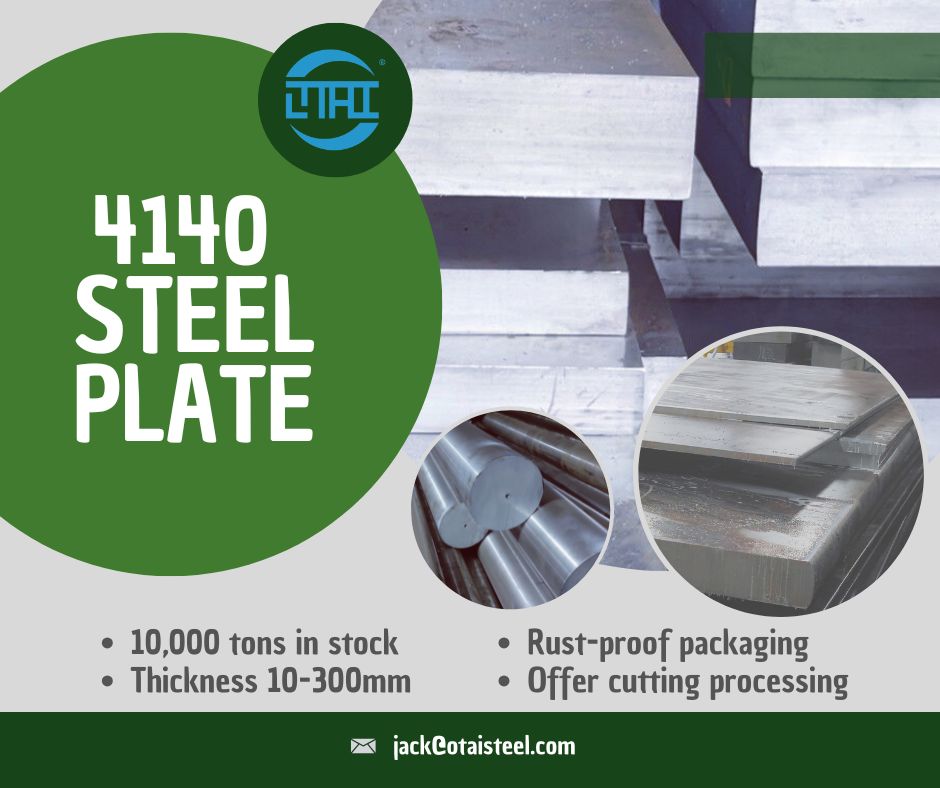
When engineers and buyers work with 4140 steel, one issue that sometimes arises in machining and service applications is galling. Galling is a severe form of adhesive wear where metal surfaces slide against each other, leading to localized welding, tearing, and surface damage. Understanding galling in 4140 steel is essential for applications involving fasteners, bushings, gears, or high-pressure contact surfaces.
This article explores the causes of galling in 4140 alloy, factors that influence its severity, methods to reduce it, and practical advice for industries that rely on this versatile alloy steel.
✨ What Is Galling in Steel?
Galling is different from ordinary wear. While abrasive wear removes material by cutting or scratching, galling happens when two metal surfaces with insufficient lubrication or hardness slide under pressure, causing:
-
Surface adhesion (micro-welding).
-
Material transfer between surfaces.
-
Severe scoring or tearing of the contact areas.
In the case of 4140 alloy material, galling may occur if the steel is used in fasteners, threads, or sliding contact without proper treatment, lubrication, or hardness control.
⚙️ Why Does Galling Occur in 4140 Alloy?
Several factors contribute to galling in 4140 steel components:
-
Material Properties
-
4140 steel contains chromium and molybdenum, which provide strength and toughness, but its moderate hardness in the annealed state (around Rockwell C 18–22) makes it prone to adhesive wear.
-
-
Surface Roughness
-
Rough surfaces increase the chance of localized friction and micro-welding.
-
-
Contact Pressure
-
High contact stress (such as in bolted joints or gear teeth) accelerates galling.
-
-
Heat Build-Up
-
Sliding without lubrication generates heat, softening the steel surface and worsening adhesion.
-
-
Improper Heat Treatment
-
Untempered or improperly quenched 4140 may lack the optimal hardness balance, making galling more likely.
-
📊 Galling Risk by Hardness Level
| Heat Treatment Condition | Typical Hardness (HRC) | Galling Resistance |
|---|---|---|
| Annealed 4140 Steel | 18–22 HRC | Low (high risk) |
| Quenched Only | 45–55 HRC | Moderate (better surface strength) |
| Quenched & Tempered | 28–40 HRC | High (balanced hardness and toughness) |
| Nitrided/Carburized | 55–65 HRC (surface) | Very High (excellent galling resistance) |
This shows that heat-treated 4140 steel has far better galling resistance compared to untreated material.
🔧 Practical Ways to Prevent Galling in 4140 Material
To minimize the risk of galling when using 4140 steel in engineering applications:
-
Apply Heat Treatment
-
Use quenching and tempering to achieve hardness around 28–36 HRC for balanced strength and wear resistance.
-
-
Surface Hardening Treatments
-
Nitriding or carburizing forms a hard outer layer (up to 65 HRC), significantly improving galling resistance.
-
-
Use Lubrication
-
Apply anti-seize compounds, oils, or dry film lubricants in threaded or sliding applications.
-
-
Choose Correct Surface Finish
-
A smoother surface reduces localized adhesion points. Polished surfaces are less likely to gall.
-
-
Material Pairing
-
Avoid pairing 4140 steel with the same grade in high-load sliding contacts. Instead, use a dissimilar but compatible alloy (e.g., bronze or stainless).
-
-
Controlled Tightening in Fasteners
-
Over-tightening bolts made of 4140 steel without lubrication increases galling risk. Use torque control methods.
-
🏭 Real-World Applications and Galling Considerations
-
Fasteners & Bolts
-
4140 steel is often used in high-strength bolts. Without lubrication or coating (e.g., zinc, phosphate), galling can occur during tightening.
-
-
Gears & Shafts
-
In machinery, gears made of 4140 steel benefit from carburizing or nitriding to reduce galling in meshing contact.
-
-
Bushings & Bearings
-
When used against other steel surfaces, untreated 4140 may gall quickly; pairing with bronze bushings prevents this.
-
-
Hydraulic & Oilfield Tools
-
Sliding and threaded parts in oilfield environments require surface hardening and anti-galling coatings.
-
🧪 Engineering Recommendations
For industries choosing 4140 alloy steel in galling-sensitive applications:
-
For fasteners → Use a surface coating (phosphate, zinc plating) plus anti-seize lubricant.
-
For gears/shafts → Opt for carburizing or nitriding for a hard surface with tough core strength.
-
For threaded connections in oil & gas → Use phosphate coatings, controlled torque, and lubricants.
-
For sliding parts → Avoid steel-on-steel pairing; instead, combine 4140 with bronze or other alloys.
🌟 Company Advantages – Why Choose Otai Special Steel?
At Otai Special Steel, we supply 4140 steel in plates, bars, and customized forms, all with quality certification and international standards compliance. Our advantages include:
-
Over 10,000 tons of stock in sizes from 6mm to 300mm.
-
Heat treatment services including quenching, tempering, and nitriding.
-
Ultrasonic testing (UT), composition analysis, and third-party inspection (SGS, TUV).
-
Customized cutting and machining for fast delivery.
-
Export experience with top companies like Thyssenkrupp, Schlumberger, and Borealis.
With our expertise, we help clients minimize issues like galling by providing the right heat-treated 4140 steel solution.
❓ FAQ
Q1: Is 4140 steel more prone to galling compared to stainless steel?
Not necessarily. Austenitic stainless steels often have higher galling risk than 4140, but untreated 4140 can still gall if not hardened or lubricated.
Q2: What is the best way to prevent galling in 4140 fasteners?
Apply lubrication and surface coatings (phosphate, zinc, or dry film) to reduce adhesion.
Q3: Can nitriding 4140 steel eliminate galling completely?
It significantly reduces galling, but proper lubrication is still recommended under extreme loads.
Q4: What industries face galling issues with 4140 steel?
Oil & gas, automotive, aerospace, and heavy machinery industries often encounter this issue in bolts, shafts, and gears.
Q5: Should I use dissimilar metals with 4140 steel to avoid galling?
Yes, pairing 4140 with bronze, brass, or dissimilar steels reduces the risk of adhesive wear.