 Normalizing 4140 Steel: When and Why
Is normalizing really necessary for 4140 steel?
If you’ve ever worked with 4140 alloy steel, especially after forging or heavy machining, you’ve probably wondered:
“Should I normalize this before quenching?”
“Will normalizing improve my machining tolerances?”
“Isn’t it just an extra step?”
You’re not alone—we get these questions from buyers and engineers every week.
The truth is, normalizing 4140 steel is one of the most underrated heat treatments, especially if you’re aiming for dimensional stability, improved machinability, or preparing for quench-and-temper hardening.
Let’s break down exactly what it is, how it works, and why it could save your project from costly distortions or inconsistent performance.
🌡️ What Is Normalizing (And What Makes It Different)?
Normalizing is a heat treatment process that brings steel to its austenitizing temperature—typically 870–925°C (1600–1700°F) for 4140 steel—followed by air cooling in still air.
Unlike annealing (slow furnace cooling), normalizing cools the steel faster, resulting in:
-
A finer grain structure
-
A slight increase in hardness and strength
-
Better microstructural uniformity
👨🏭 It’s often used as an intermediate step to improve how the steel responds in the next heat treatment phase (like quenching or nitriding).
🧪 What Does Normalizing Actually Do to 4140?
Here’s what’s happening inside the material:
-
🌾 Refines coarse grains left behind from hot rolling or forging
-
🔄 Equalizes grain size across the entire cross-section, especially in thicker sections
-
🧘♂️ Relieves internal stresses introduced during cold working, machining, or welding
-
🧼 “Cleans up” the microstructure for better predictability in hardness or toughness
For 4140—which already contains chromium and molybdenum to boost strength—normalizing ensures those elements are evenly distributed, so you don’t get hard and soft spots later on.
📊 4140 Steel Heat Treatment Comparison Table
Let’s see how normalizing stacks up next to other common treatments:
| 🔧 Treatment | Cooling Method | Hardness (HB) | Machinability | Main Use |
|---|---|---|---|---|
| Annealing | Furnace cool | 160–197 | Excellent | Softening for cold forming, max ductility |
| Normalizing | Still air cool | 197–235 | Very good | Refinement + stress relief |
| Quenching + Tempering | Oil + furnace | 280–360 (HRC 28–40) | Fair to poor | High strength, wear-resistant components |
| Nitriding | Gas or plasma | 900–1100 surface HV | Good (post-machining) | High surface hardness, fatigue resistance |
✨ Pro tip: Want good machinability now and high strength later? Normalize first, machine, then quench and temper.
🔩 When You Should Normalize 4140 Steel (and When You Shouldn’t)
✅ Normalize If:
-
Your parts are forged, hot rolled, or welded
-
You’re seeing warping, twist, or distortion during machining
-
You’re planning to quench and temper but need consistent results
-
You want to ensure grain refinement across thick cross-sections
-
You’re nitriding and want a clean, stable base material
🚫 Skip It If:
-
You’re buying pre-hardened 4140 QT (quench + tempered) and don’t plan to re-heat treat
-
Your application doesn’t demand tight tolerances or surface finishes
-
You’re using 4140 in low-stress, low-precision parts
⚙️ Real-World Example: Why a Client in Europe Normalized First
One of our clients in Germany produces large hydraulic piston rods from forged 4140. Initially, they went straight from forging to machining and quenching—but experienced uneven hardness and cracks in final inspection.
We recommended a normalizing step after forging, followed by rough machining, and then quench + temper.
✅ Result:
-
30% reduction in machining scrap
-
More consistent hardness (±2 HRC)
-
Better fatigue life in long-term tests
🔬 Normalizing Process for 4140 Steel (Step-by-Step)
Here’s what we typically do in our in-house heat treatment:
-
Heat to 870–925°C (depending on section size)
-
Hold 30–90 minutes, depending on thickness (usually 1 min/mm)
-
Cool in still air to room temperature
-
Test microstructure and hardness to confirm refinement
Optional: Add shot blasting or pickling afterward for a clean surface before machining.
🏭 Why Choose Otai Steel for Normalized 4140?
With Otai, you don’t just get steel—you get precision, speed, and peace of mind. 💼
Here’s what makes us different:
-
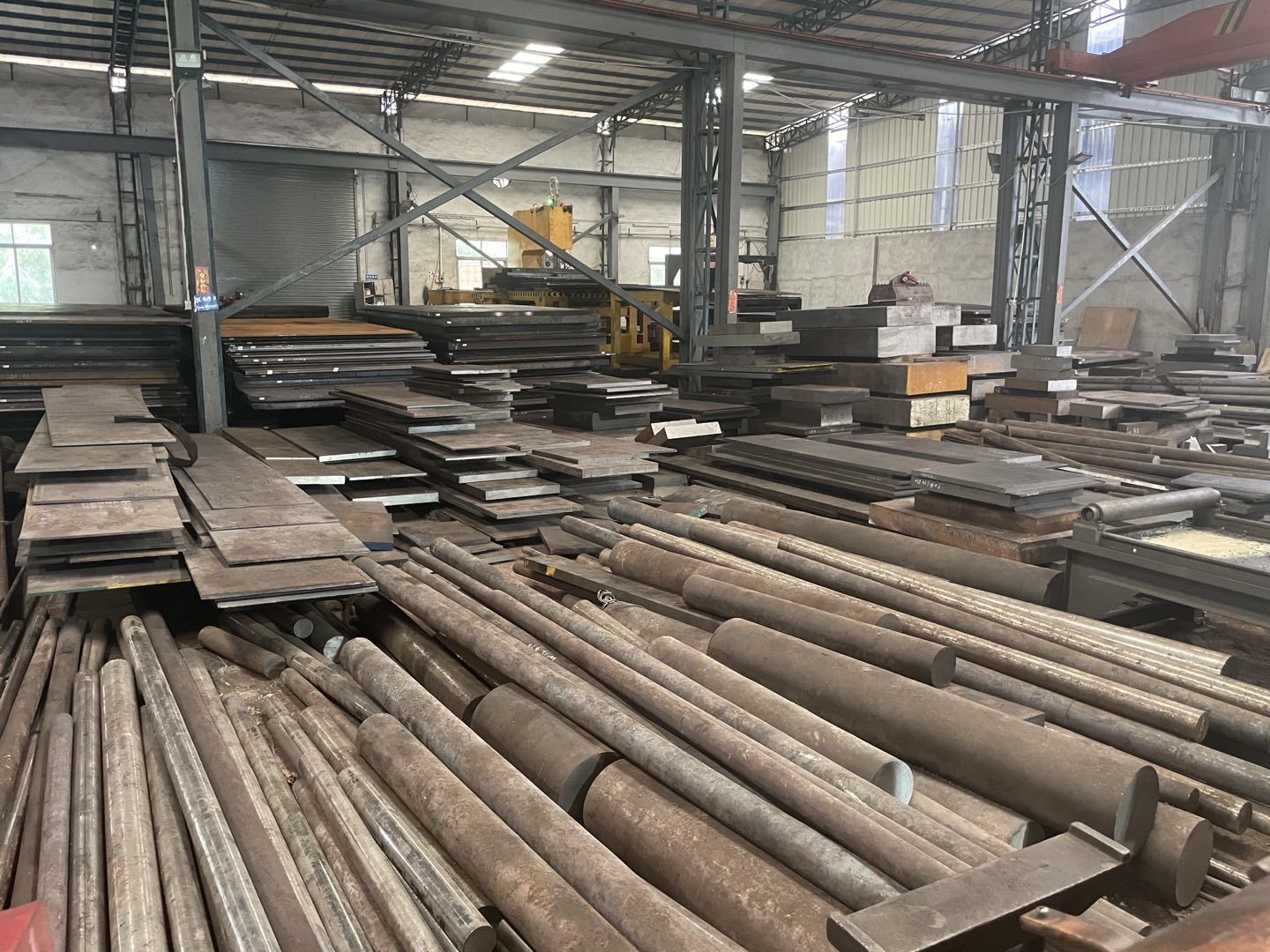
🏗️ 10,000+ tons of 4140 and alloy stock, always available
-
📏 Thickness range from 6mm to 300mm, cut-to-size
-
🔥 In-house normalizing, Q+T, and nitriding services
-
🧪 Includes full testing: UT, composition, hardness
-
📦 Export packaging in rust-proof bundles or wooden crates
-
✅ Trusted by Thyssenkrupp, Borealis, Schlumberger
-
✈️ Fast delivery across Europe, Americas, Asia, Middle East
📧 Email: jack@otaisteel.com
📱 WhatsApp: +8676923190193
Want a fast quote or custom heat treatment suggestion? Just send us your specs or drawings—let’s get started!
💬 FAQs – Normalizing 4140 Steel
Q1: Does normalizing change the mechanical properties of 4140?
Yes—slightly higher hardness and yield strength compared to annealed, but not as much as Q+T.
Q2: Can I machine 4140 right after normalizing?
Yes! It’s one of the best states for machining—clean, stable, and not too hard.
Q3: What’s better: normalizing or annealing?
Depends on your goal. Annealing = maximum softness. Normalizing = strength + uniformity.
Q4: Can I get 4140 normalized and pre-cut?
Absolutely. We can cut to size and deliver normalized blanks ready for your machines.
Q5: How long does normalizing take?
Heating + soaking + cooling = typically 2–4 hours depending on size. We offer quick turnaround.