 Can You Weld 4140 Steel? Expert Tips to Get It Right
If you’ve ever asked yourself “can you weld 4140 steel?”, you’re not alone. This chromium-molybdenum alloy steel is well-known for its strength and hardenability—but that same toughness also makes welding a bit tricky. 😬
Each week, we get messages from machinists, welders, and mechanical engineers wondering:
-
Will 4140 crack after welding?
-
Do I need to preheat it?
-
What’s the best welding method for 4140 steel?
Let’s break it down with real-world advice, clear guidance, and some welding shop secrets. 🧰💡
🔍 Why Welding 4140 Is Challenging
4140 is a medium carbon low alloy steel (around 0.40% carbon), which gives it excellent strength—but also increased hardenability. That means during welding, the heat-affected zone (HAZ) can form brittle martensite, making it prone to cracking. ❌
This is why weldability of 4140 alloy steel isn’t as simple as with mild steel. Without proper preparation, your part could warp, crack, or lose critical mechanical properties.
📌 Key Factors to Know Before Welding 4140
Before striking that arc, consider:
| Factor | Recommendation |
|---|---|
| Carbon content | ~0.38–0.43% (requires controlled heat input) |
| Preheat required? | Yes, especially for thick sections |
| Post-weld heat treatment? | Strongly recommended |
| Best welding process? | TIG, MIG, or stick with proper filler metal |
| Cracking risk? | High without precautions |
Knowing these basics helps you avoid costly rework or part failure.
🔧 How to Weld 4140 Steel Properly
Let’s walk through the steps for how to weld 4140 steel properly:
🔥 Step 1: Preheat Before Welding
Does 4140 need preheat before welding? Absolutely.
-
Preheat to 300–600°F (150–315°C) depending on part size and thickness.
-
Use temperature crayons or thermocouples to monitor heat.
-
Preheating reduces cooling rate and prevents brittle microstructures.
✍️ Step 2: Choose the Right Welding Process
Can you TIG weld 4140 steel? Yes—and TIG welding 4140 is a great option for precision parts. But MIG and stick are also viable.
| Process | Notes |
|---|---|
| TIG (GTAW) | Best control, use ER80S-D2 filler |
| MIG (GMAW) | Faster, good for production, use ER80S-D2 or similar |
| Stick (SMAW) | Robust, use E8018-B2 electrode |
The best welding method for 4140 steel depends on your project’s precision, material thickness, and equipment.
🧪 What About Filler Material?
Don’t just grab any filler wire. Use low-hydrogen consumables that match the parent material’s strength and chemistry:
-
ER80S-D2 (TIG/MIG): Excellent match for 4140
-
E8018-B2 (Stick): Great for high-strength applications
-
Avoid hard, brittle welds—aim for ductility and strength balance.
♨️ Post-Weld Heat Treatment: Do You Need It?
Yes—heat treatment after welding 4140 is highly recommended. ⚠️
-
Stress relief: ~600°F–800°F (315–425°C) for ~1 hour per inch of thickness
-
Tempering: Optional, but restores ductility after quenching
-
Avoid rapid cooling—let the part cool slowly in air or an oven
This step prevents cracking and helps regain mechanical strength.
🧲 Welding 4140 to Mild Steel – Is It Possible?
Yes, but tricky. Welding 4140 to mild steel involves two different materials with different thermal expansion and hardness. To succeed:
-
Always preheat both materials
-
Use filler metal that bridges strength difference (like ER80S-D2)
-
Expect distortion—plan your fixturing carefully
🧠 Real-World Tip from the Shop Floor
One of our clients in Brazil welded 4140 steel brackets onto mild steel pipe supports. Their first batch cracked during hydro testing. After switching to TIG with preheat and post-weld tempering, their success rate hit 100%. ✅
🛠️ Summary Table – 4140 Steel Welding Best Practices
| Step | Recommendation |
|---|---|
| Preheat | 300–600°F depending on section |
| Filler Metal | ER80S-D2, E8018-B2 |
| Welding Process | TIG, MIG, or Stick |
| Post-Weld Heat Treat | Stress relieve or temper |
| Cooling | Slow, avoid water quenching |
📚 FAQs – Can You Weld 4140 Steel?
Q1: Can 4140 be welded successfully?
Yes—but only with the right prep, filler, and heat treatment. Otherwise, it may crack.
Q2: Can you weld 4140 steel with MIG?
Yes, use ER80S-D2 wire and ensure proper preheat.
Q3: Do I always need to post-heat 4140 after welding?
For critical parts—yes. At minimum, stress relief is strongly recommended.
Q4: What happens if I skip preheat?
You risk hard, brittle welds and possible cracking after cooling.
Q5: Is 4140 harder to weld than 1018 or 1045?
Yes, due to its higher carbon content and alloying elements.
🌎 Why Choose Otai Steel for 4140 Welding Projects?
At Otai Special Steel, we know the challenges of working with alloy steels like 4140—and we’re here to help.
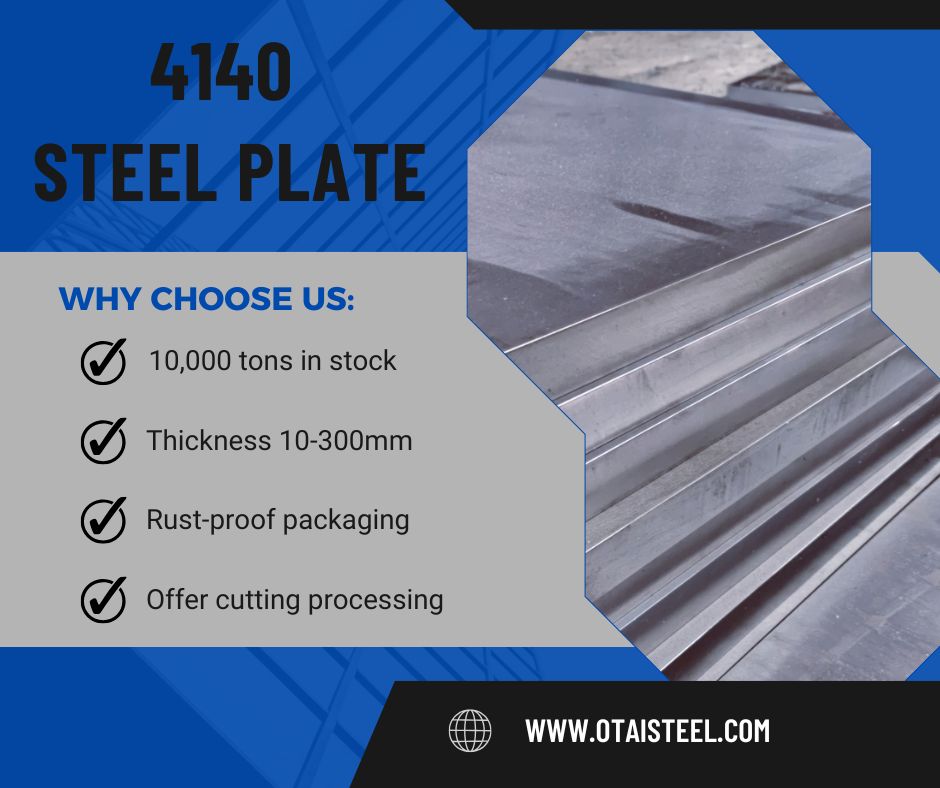
- 10,000+ tons of 4140 steel in stock
- Cut-to-size supply: 6mm–300mm thick
- Delivery in annealed, normalized, or Q&T condition
- Technical support on welding 4140 steel
- Optional heat treatment and machining
- Trusted by top clients: Thyssenkrupp, Borealis, Schlumberger
- SGS/BV inspection, fast global shipping
📧 jack@otaisteel.com
📱 WhatsApp: +8676923190193
Ready to weld 4140 like a pro? 💪 Contact us today—we’ll help you choose the best steel condition, filler material, and treatment process to match your project needs.