 Max Hardness of 4140 Steel – Everything Engineers Should Understand
4140 steel is one of the most versatile alloy steels used in engineering, thanks to its combination of toughness, wear resistance, and good machinability. But one of the most common technical questions engineers and buyers ask is: What is the max hardness of 4140 steel and how does it change with heat treatment?
Let’s explore the full picture of hardness values, heat treatment methods, and practical considerations for using 4140 steel in demanding applications.
🌟 What Does “Max Hardness” Mean for 4140 Steel?
Hardness in steel indicates resistance to indentation and wear, usually measured on the Rockwell C scale (HRC). For 4140, the max hardness of 4140 steel depends heavily on heat treatment conditions, since alloying elements like chromium and molybdenum improve hardenability.
In its natural, annealed state, 4140 is relatively soft for machining, but after quenching and tempering, the hardness can increase dramatically.
🔧 Typical Hardness Ranges of 4140 Steel
The following table shows the 4140 steel hardness after heat treatment under different conditions:
| Heat Treatment Condition | Hardness (HRC) | Notes |
|---|---|---|
| Annealed (as-supplied) | 18 – 22 HRC | hardness of annealed 4140 steel; soft, easy to machine |
| Normalized | 28 – 32 HRC | More strength, moderate machinability |
| Quenched + Tempered (low temper) | 50 – 55 HRC | quenched and tempered 4140 hardness at maximum level |
| Quenched + Tempered (high temper) | 28 – 45 HRC | Balanced hardness and toughness |
| Nitrided Surface | Up to 60 – 65 HRC | Very high surface hardness while core remains tough |
From this data, we can conclude: the 4140 steel maximum Rockwell hardness typically reaches about 55 HRC after quenching and low-temperature tempering. With nitriding, surface hardness can exceed 60 HRC.
⚡ How Hard Can 4140 Steel Get?
So, how hard can 4140 steel get?
-
In practical engineering use, the maximum core hardness achievable is around 55 HRC.
-
With advanced surface treatments (nitriding, induction hardening), the steel’s surface may exceed 60–65 HRC.
-
However, hardness must always be balanced with toughness. Very high hardness makes the material brittle, unsuitable for high-impact applications.
That’s why engineers often use 4140 steel heat treatment hardness range between 28–45 HRC to achieve a balance between wear resistance and durability.
🔬 Hardness vs. Strength in 4140 Steel
Hardness isn’t just about wear resistance—it directly correlates with tensile strength. The 4140 steel tensile strength vs hardness relationship is crucial for design:
| Hardness (HRC) | Approx. Tensile Strength (MPa) |
|---|---|
| 20 HRC | ~655 MPa |
| 30 HRC | ~965 MPa |
| 40 HRC | ~1240 MPa |
| 50 HRC | ~1600 MPa |
This shows that as hardness increases, tensile strength also rises. However, toughness usually decreases, so applications requiring shock resistance (like shafts and axles) cannot always use maximum hardness levels.
🛠️ Applications Based on Hardness
Choosing the right hardness depends on the application:
-
28–35 HRC → Gears, automotive components, and machinery requiring durability and shock absorption.
-
35–45 HRC → High-strength shafts, spindles, and tooling applications.
-
50–55 HRC → Wear parts, molds, and dies where wear resistance is critical.
-
60+ HRC (surface treated) → Nitrided gears, bearings, or parts requiring extreme surface hardness.
📈 Practical Tips for Engineers
-
Don’t always chase the max hardness of 4140 steel—balance toughness and wear resistance.
-
For machining, select material in the hardness of annealed 4140 steel range (18–22 HRC).
-
Use a 4140 steel hardness chart to quickly check achievable values under different conditions.
-
For extreme wear, consider surface treatments rather than pushing the core hardness too high.
💡 Company Advantages – Why Choose Otai Special Steel
At Otai Special Steel, we provide:
-
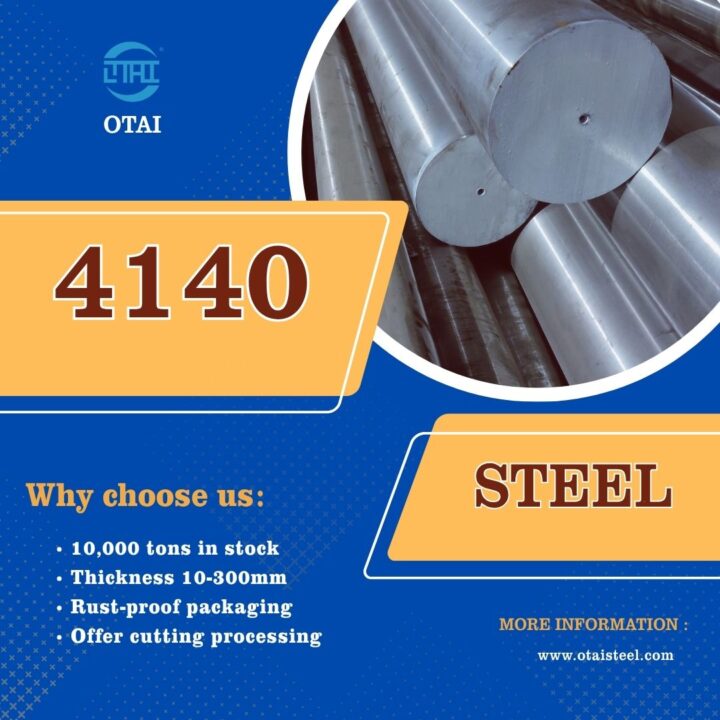
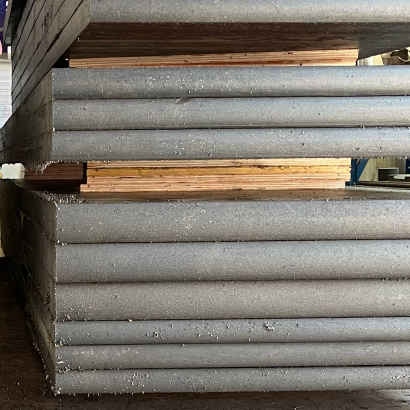
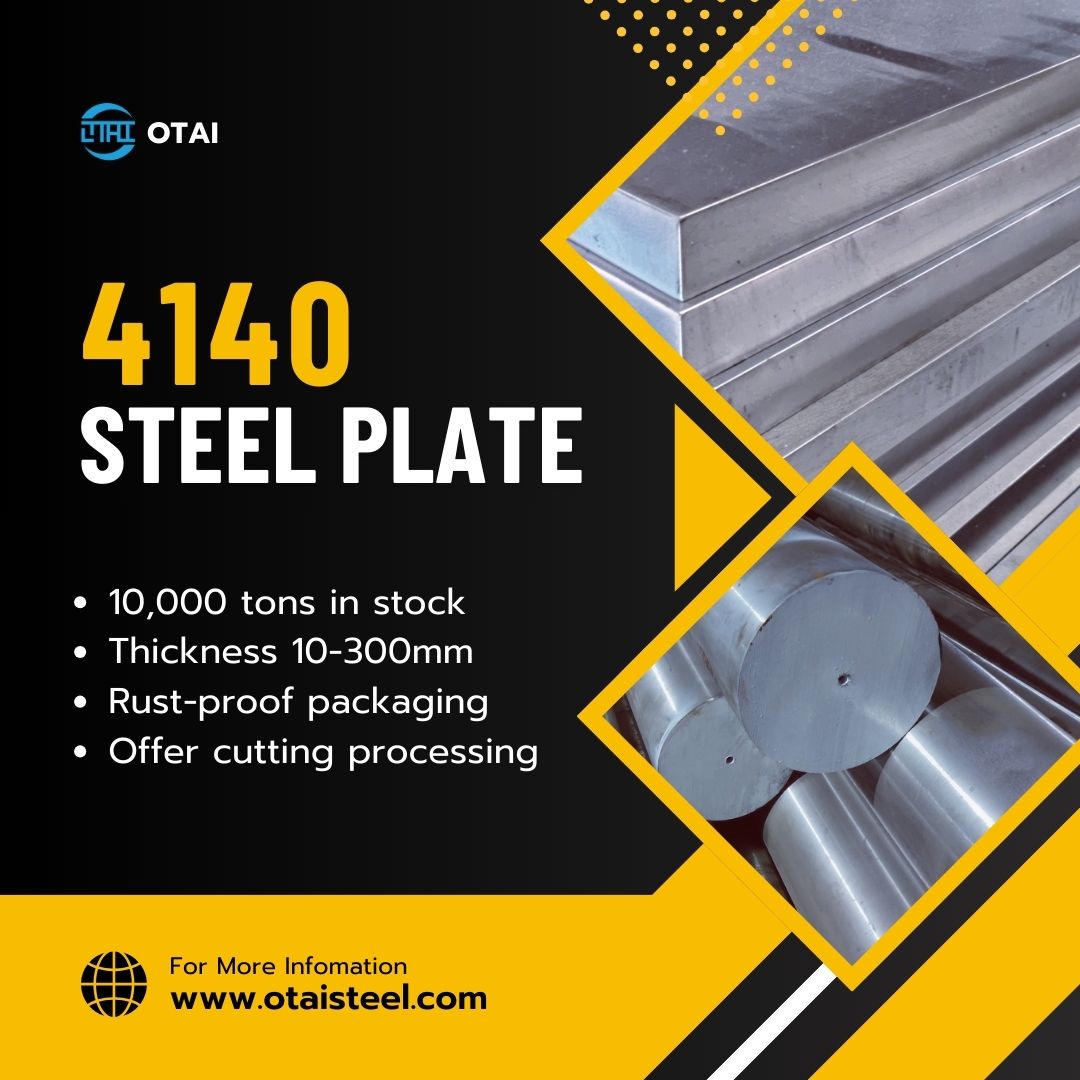
Large Inventory: Over 10,000 tons of 4140 steel plates, bars, and blocks, thickness from 6mm to 300mm.
-
Heat Treatment Services: Annealing, quenching, tempering, and nitriding to achieve the exact hardness range you need.
-
Quality Assurance: Ultrasonic testing (UT), chemical composition analysis, and SGS/third-party inspection.
-
Global Reputation: Supplying to clients such as Thyssenkrupp, Borealis, and Schlumberger.
-
Customized Processing: Precision cutting, machining, and packaging to save you time and cost.
If you’re sourcing 4140 steel hardness after heat treatment materials with reliable quality, Otai is your trusted partner.
❓ FAQ
Q1: What is the maximum hardness of 4140 steel in HRC?
The 4140 steel hardness in HRC can reach about 55 HRC after quenching and tempering. With nitriding, surface hardness may go beyond 60 HRC.
Q2: Can 4140 steel be hardened without quenching?
No, significant hardness improvement requires quenching followed by tempering. Nitriding or induction hardening can improve only the surface.
Q3: Is harder always better for 4140 steel?
Not always. While higher hardness improves wear resistance, it reduces toughness. Many engineering parts use 28–45 HRC for balance.
Q4: How do I check 4140 steel hardness during processing?
Hardness testing (Rockwell C) is the standard method. Many suppliers also provide a 4140 steel hardness chart for reference.
Q5: Does hardness affect machinability?
Yes, machining is easiest in the annealed state (18–22 HRC). Above 35 HRC, cutting tools require carbide inserts or advanced coatings.