4140 Steel Bar Stock: What Buyers Should Compare Before Purchasing
📑 Table of Contents
- 🔍 What Is 4140 Steel Bar Stock?
- 📏 Bar Diameters, Lengths and Tolerances
- ⚙️ Delivery Conditions and Hardness
- 🧪 Chemical Composition and Material Standards
- 💪 Mechanical Properties and Section Size
- 🔧 Surface Finish, Cutting and Machining
- 📄 MTC Certificates and Quality Inspection
- 🏭 Applications and Material Selection
- 🛒 How to Compare 4140 Bar Stock Suppliers
- 🏢 Why Consider Otai Special Steel?
- ❓ Frequently Asked Questions
🔍 What Is 4140 Steel Bar Stock?
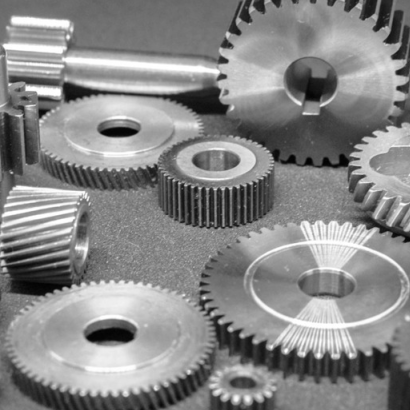
4140 steel bar stock is a chromium-molybdenum alloy steel supplied in bar form for machining, manufacturing and industrial component production. Commonly identified as SAE 4140 or AISI 4140, this medium-carbon alloy combines strength, hardenability and toughness. Manufacturers use it for shafts, pins, gears, couplings, spindles, hydraulic components and other parts that must withstand mechanical loads.
However, choosing the right 4140 bar stock involves more than confirming the grade. Two bars labeled 4140 can have different hardness levels, dimensional tolerances, surface conditions and mechanical properties because of their manufacturing routes and delivery conditions.
Why the purchasing specification matters
A buyer purchasing round bar for rough machining may prioritize diameter availability, material certification and cutting efficiency. A precision-machining workshop, by contrast, may need a tighter diameter tolerance and a smoother surface to reduce preparation work. A component manufacturer requiring high strength may also need a defined quenched-and-tempered condition.
Therefore, a useful purchase specification should identify:
- Grade: SAE/AISI 4140 or another explicitly approved designation.
- Product form: round bar, flat bar or another required shape.
- Diameter, length, quantity and dimensional tolerances.
- Delivery condition, such as hot rolled, annealed or quenched and tempered.
- Applicable product standard and required mechanical properties.
- Surface finish, cutting requirements and inspection documentation.
When these details appear in the initial inquiry, suppliers can quote comparable products rather than offering different material conditions under the same grade name. This makes it easier to evaluate price, delivery time and manufacturing suitability together.
📏 Bar Diameters, Lengths and Tolerances
Diameter is one of the first details to confirm when buying 4140 steel bar stock. It affects the available inventory, raw-material weight, machining allowance and achievable properties after heat treatment. The required length also determines how efficiently the material can be cut into finished components.
Otai lists 4140 round bar within a reference diameter range of 14–500 mm. This range should not be interpreted as a guarantee that every diameter and length is immediately available. Buyers should confirm the exact size, quantity, delivery condition and current stock before placing an order.
How to select the right diameter
Start with the finished component drawing. Then determine the raw diameter required to accommodate machining allowance, surface removal and any dimensional changes expected during processing. If the bar will receive heat treatment, the manufacturing team should also consider the potential for distortion and the final machining sequence.
Ordering an oversized bar can create unnecessary machining waste. On the other hand, a bar that is too close to the final dimension may not leave enough material to remove surface defects or achieve the required finished size.
| Purchasing factor | What to specify | Why it matters |
|---|---|---|
| Diameter | Nominal diameter and permitted deviation | Controls fit, machining allowance and material consumption |
| Length | Standard length or cut length | Affects cutting yield, transport and handling |
| Straightness | Applicable limit, if critical | Helps control setup and machining stability |
| Surface condition | As-rolled, peeled, turned or ground | Determines preparation work and final surface quality |
| Quantity | Total weight, number of bars or cut pieces | Influences availability, cutting yield and freight cost |
Dimensional tolerance is not the same as surface finish
A bar can meet its nominal diameter requirement while still needing additional surface preparation. Likewise, a ground surface does not automatically guarantee that every requested dimensional tolerance has been met. Buyers should define both requirements separately when the component needs precision machining or close dimensional control.
⚙️ Delivery Conditions and Hardness
4140 steel bar stock is available in several delivery conditions. Each condition affects machinability, hardness, strength and the amount of processing needed before the material can enter production. Consequently, buyers should choose the condition according to the manufacturing route rather than treating all 4140 bars as equivalent.
| Delivery condition | Typical purchasing purpose | What to confirm |
|---|---|---|
| Hot rolled | General machining, forging feedstock and further processing | Surface scale, dimensional tolerance and subsequent treatment plan |
| Annealed | Machining where a softer condition is beneficial | Hardness range and suitability for the machining process |
| Normalized | Applications requiring a normalized starting condition | Specified properties and the applicable product requirements |
| Quenched and tempered (Q&T) | Components requiring defined strength and hardness before final machining or service | Hardness, mechanical properties, section size and test requirements |
| Cold finished or ground | Applications requiring improved dimensional accuracy or surface quality | Actual tolerance, surface condition and any associated processing requirements |
Should you buy annealed or pre-hardened 4140?
Annealed 4140 may suit a machining route in which the component will receive heat treatment later. The softer condition can make material removal easier, although actual machinability depends on hardness, microstructure, tooling and cutting parameters.
Pre-hardened or quenched-and-tempered 4140 may be preferable when the component needs higher strength in its delivered condition. However, the required hardness must match the design and machining capability. A harder bar can increase tool wear and may leave less flexibility for subsequent processing.
Always specify the required hardness range and the measurement scale. Do not rely on a description such as “hard 4140” or assume that every Q&T bar has the same properties. If the application is critical, define the mechanical-property requirements and confirm the relevant test results before acceptance.
🧪 Chemical Composition and Material Standards
SAE/AISI 4140 is a medium-carbon chromium-molybdenum alloy steel. Carbon contributes to strength and hardening response, while chromium and molybdenum improve hardenability and influence the material’s response to heat treatment. Manganese and silicon also contribute to the steel’s processing and mechanical characteristics.
The table below presents commonly published reference ranges for 4140 chemistry. The exact contractual limits depend on the applicable specification and edition. Buyers should verify the governing requirements rather than treating a general reference table as a replacement for the purchase standard.
| Element | Common reference range or limit (% by mass) | Main contribution |
|---|---|---|
| Carbon (C) | 0.38–0.43 | Strength, hardness and response to heat treatment |
| Manganese (Mn) | 0.75–1.00 | Hardenability and strength |
| Silicon (Si) | 0.15–0.35 | Deoxidation and contribution to strength |
| Chromium (Cr) | 0.80–1.10 | Hardenability and wear-related performance |
| Molybdenum (Mo) | 0.15–0.25 | Hardenability and response to tempering |
| Phosphorus (P) | Common reference maximum: 0.035 | Controlled residual element |
| Sulfur (S) | Common reference maximum: 0.040 | Controlled for its effects on ductility and machinability |
SAE chemistry and ASTM product requirements
SAE J404 provides chemistry-related information for SAE alloy steel grades. For bar purchases, ASTM A29/A29M provides general requirements for certain carbon and alloy steel bars, while ASTM A322 and other product-specific standards may apply depending on the product and order. The buyer must confirm the correct specification for the bar being purchased.
Three types of chemistry information should remain distinct:
- Standard limits: the permitted chemical composition under the governing specification.
- Typical analysis: representative values published by a producer, not a universal guarantee for every heat.
- Actual heat analysis: the measured chemistry reported for the supplied heat or lot, usually documented on the material test certificate.
When comparing suppliers, check that the material certificate identifies the correct grade and provides traceable results. A matching grade name alone does not establish compliance with every contractual requirement.
💪 Mechanical Properties and Section Size
Mechanical properties determine how a 4140 bar performs under tension, bending, impact and repeated loading. The most relevant values may include tensile strength, yield strength, elongation, impact toughness and hardness. The required values depend on the application and the specified delivery condition.
There is no single mechanical-property table that applies to every 4140 bar. Annealed material and Q&T material can have substantially different properties, while bar diameter and heat-treatment practice can influence the properties achieved through the section.
| Property | Why buyers review it | Purchasing consideration |
|---|---|---|
| Tensile strength | Indicates the maximum tensile stress reached during testing | Confirm the required value for the specified condition |
| Yield strength | Helps assess resistance to permanent deformation | Check the design requirement and applicable test method |
| Hardness | Helps assess the delivered condition and resistance to indentation | Specify scale, range and test location where relevant |
| Elongation | Indicates ductility under the specified tensile test | Confirm the test specimen and acceptance criteria |
| Impact toughness | Evaluates impact behavior under defined test conditions | Specify temperature and test requirements when needed |
Why larger bars need careful evaluation
Heat treatment does not always produce uniform hardness and strength from the surface to the center of a large bar. The cooling rate, alloy hardenability and section diameter influence the final microstructure. As a result, a mechanical-property value achieved in a smaller section may not automatically apply to a much larger diameter.
For shafts, gears and other heavily loaded parts, confirm that the specified properties suit the actual section size. If the design requires a minimum core hardness or a defined through-section property, state that requirement explicitly and agree on an appropriate verification method.
Do not compare supplier offers using hardness alone. Two bars with similar hardness readings may differ in tensile properties, toughness, cleanliness or test documentation. Evaluate the full specification and the actual service requirements before selecting the material.
🔧 Surface Finish, Cutting and Machining
Surface finish and cutting services can influence the total cost of using 4140 bar stock. Hot-rolled bars typically have a different surface condition and dimensional tolerance from cold-finished, peeled, turned or ground bars. The right choice depends on whether the bar will undergo heavy machining or enter a more precise manufacturing process.
When is saw cutting worthwhile?
Buying long bars and cutting them in-house may work well for manufacturers with suitable cutting equipment and steady material consumption. Cut-to-length supply can be more convenient when the buyer needs individual blanks, limited workshop capacity or a more predictable preparation process.
Before requesting a cutting quotation, specify the finished cut length, permitted length tolerance, quantity per size and whether the cut ends need additional finishing. For precision components, also clarify the machining allowance that must remain after cutting.
When should you choose ground or precision-finished bar?
Ground or precision-finished bars may reduce the amount of material that must be removed to achieve the required diameter and surface quality. However, these finishes can add processing costs and may involve size limitations or minimum order quantities.
If the component will receive substantial turning or milling, a standard hot-rolled bar may be more economical. If the component requires close dimensional control, compare the additional processing cost against the time saved in your own workshop.
- Confirm whether the quoted diameter applies before or after finishing.
- Specify surface finish and dimensional tolerance separately.
- Check whether cutting is included in the price.
- Agree on the number of pieces, cut length and packaging method.
- Consider corrosion protection during storage and shipment.
A supplier that can coordinate stock, cutting and additional processing may simplify purchasing and reduce the number of separate service providers involved. Nevertheless, the quote should clearly identify each service and its acceptance criteria.
📄 MTC Certificates and Quality Inspection
A material test certificate, often called an MTC or mill test certificate, helps the buyer verify the supplied material against the purchase requirements. For traceable industrial applications, the certificate should match the grade and heat or lot identification on the delivered bars.
The exact documents depend on the order, product standard and application. Buyers should state the required certificate type and inspection requirements before the supplier confirms the quotation.
What should buyers check on the certificate?
- Material designation: confirm that the certificate identifies the specified 4140 grade.
- Heat or lot number: verify traceability between the document and the material markings or shipment records.
- Chemical analysis: compare the reported results with the limits in the governing specification.
- Mechanical test results: check the properties required by the order, if applicable.
- Delivery condition: confirm that the documented condition matches the requested material.
- Dimensions and quantity: compare the order, packing list and actual delivery.
When are additional inspections needed?
Some projects require ultrasonic testing, third-party inspection or other supplementary checks. These requirements should be defined according to the design, industry rules and risk level. Do not assume that every 4140 bar includes ultrasonic inspection or that every supplier uses the same acceptance criteria.
For critical parts, agree on the inspection standard, sampling frequency, acceptance limits and reporting format before production or shipment. This prevents disputes over tests that were never included in the original order.
Good documentation also improves purchasing efficiency. When the buyer defines the certificate, traceability and inspection requirements in advance, the supplier can evaluate compliance and cost more accurately.
🏭 Applications and Material Selection
4140 steel bar stock is commonly used for components that require a balance of strength, toughness and heat-treatment capability. The final choice should reflect the loads, operating environment, manufacturing process and required service life.
| Application | Typical material consideration | What to confirm |
|---|---|---|
| Shafts and axles | Strength, fatigue performance and toughness | Diameter, Q&T condition and mechanical requirements |
| Gears and couplings | Load capacity and wear-related performance | Hardness, heat treatment and final machining needs |
| Hydraulic components | Strength and dimensional consistency | Surface finish, tolerance and inspection requirements |
| Pins and industrial machinery parts | Durability under repeated or concentrated loads | Material condition, hardness and design requirements |
| General machined components | Machinability and raw-material cost | Annealed condition, stock size and cutting allowance |
Can 4140 replace another alloy steel?
Buyers may compare 4140 with 42CrMo4, SCM440 and other chromium-molybdenum steels. These grades are related and can serve similar applications, but they belong to different standards and may have different chemical limits or product requirements.
Before approving an alternative, compare the governing standard, chemistry, mechanical properties, delivery condition, hardenability and test documentation. For a safety-critical or tightly controlled component, obtain approval from the design or quality team before changing the specified grade.
Material selection should therefore consider the complete production route, not just the grade name. A slightly different delivery condition or diameter can affect machining cost, heat-treatment performance and the finished component’s acceptance.
🛒 How to Compare 4140 Bar Stock Suppliers
The lowest quoted price does not always represent the lowest total purchasing cost. Differences in size availability, cutting, documentation, inspection, packaging and delivery can affect the cost of bringing material into production.
Use the same specification for every quotation
Send each supplier the same grade, product form, diameter, length, quantity, delivery condition and tolerance requirements. If you need a particular standard or certificate type, state it in the initial request. This reduces the chance of comparing a standard hot-rolled bar with a precision-finished or heat-treated bar that costs more for valid reasons.
Compare total cost rather than price per kilogram alone
Ask whether the quotation includes cutting, special packaging, inspection and any required processing. Also confirm the minimum order quantity, stock status and estimated lead time. A bar that appears cheaper may create additional costs if it requires extra machining or arrives in a condition that does not suit your production route.
Before approving the supplier, use this checklist:
- Does the quoted product meet the specified grade and product standard?
- Are the exact diameter, length and quantity available?
- Does the delivery condition match the manufacturing process?
- Are the required MTC and inspection documents included?
- Are cutting, finishing and packaging requirements clearly priced?
- Has the supplier confirmed the lead time and shipping arrangements?
- Can the supplier trace the material from the certificate to the shipment?
Confirm stock before placing the order
Otai’s reference supply range for 4140 round bar is 14–500 mm in diameter. Buyers should provide the required diameter, length, quantity and delivery condition so the team can confirm the specific stock position. Availability of a diameter within the published range does not guarantee that every length or condition is ready for immediate dispatch.
Visit the official SAE 4140 round bar stock page to review the product information and submit an inquiry. When requesting a quotation, include the applicable standard, tolerances, material certificate and any additional inspection requirements.
A clear inquiry helps the supplier identify suitable material and allows the buyer to compare offers on a consistent technical and commercial basis.
🏢 Why Consider Otai Special Steel?
- 4140 round bar supply range: reference diameter range of 14–500 mm, subject to confirmation of specific stock sizes and conditions.
- Broad steel inventory: more than 10,000 tons of stock across the company’s product range.
- Cutting capacity: 20 saw-cutting machines to support preparation of material to requested lengths.
- Custom processing: CNC machining, grinding and customized dimensions or tolerances can be discussed according to the project requirements.
- Quality documentation: material certificates and coordination of agreed inspection requirements.
- Additional inspection support: ultrasonic testing and third-party inspection can be arranged when required by the order.
- Export experience: supplying international customers since 1999, with exports to more than 54 countries.
- Export packaging: options may include strapping, wooden cases and anti-rust protection according to the shipment requirements.
- One-stop service: coordination of steel supply, cutting and related processing to simplify industrial purchasing.
For a quotation, provide the 4140 bar diameter, length, quantity, delivery condition and applicable standard. If the component requires a defined hardness, special tolerance, ultrasonic testing or third-party inspection, include those requirements at the inquiry stage. This allows Otai to assess the requested specification and confirm the available supply options before the order is finalized.
❓ Frequently Asked Questions
1. What sizes are available for 4140 steel bar stock?
Otai’s reference diameter range for 4140 round bar is 14–500 mm. Exact availability depends on diameter, length, quantity and delivery condition. Confirm the current stock position before placing an order.
2. Is 4140 bar stock available in annealed and quenched-and-tempered conditions?
4140 bars can be supplied in different conditions, including annealed and quenched and tempered, depending on the supplier and stock position. State the required condition and hardness or mechanical properties in the inquiry rather than relying on the grade designation alone.
3. Which standards apply to 4140 steel bars?
SAE J404 provides chemistry-related information for SAE alloy steel grades. ASTM A29/A29M covers general requirements for certain carbon and alloy steel bars, while ASTM A322 and other product-specific specifications may apply to particular products. Confirm the governing standard and edition for your order.
4. What documents should I request when buying 4140 round bar?
Request the material test certificate and confirm that its grade, heat or lot identification, chemical analysis and any required mechanical test results match the purchase specification. If your project requires ultrasonic testing or third-party inspection, specify the method and acceptance criteria before shipment.
5. How can I reduce the total cost of buying 4140 bar stock?
Compare quotations using identical specifications, and evaluate stock availability, dimensional tolerances, delivery condition, cutting services, documentation, packaging and lead time. Choosing the right starting diameter and delivery condition can reduce machining waste and avoid unnecessary processing.