Machining 4140 Steel: What Affects Cutting Performance
Machining 4140 steel requires more than choosing a suitable cutting tool and setting a spindle speed. Its cutting performance changes significantly with material hardness, heat treatment, tool geometry, machine rigidity and the machining operation. A bar supplied in the annealed condition can behave very differently from the same grade supplied quenched and tempered.
AISI 4140 is a chromium-molybdenum alloy steel widely used for shafts, gears, hydraulic components, machinery parts and other applications that require a combination of strength and toughness. Manufacturers value its mechanical performance, but its alloying elements and heat-treated conditions also influence cutting forces, tool wear, chip formation and surface finish.
For CNC machining companies, component manufacturers and industrial buyers, understanding these factors helps improve production efficiency and control machining costs. It also helps buyers specify the correct 4140 steel condition before placing an order, rather than discovering that the supplied material is too hard or unsuitable for the planned machining process.
📑 Table of Contents
- 🔍 Why Is 4140 Steel Machinable?
- 🔥 How Heat Treatment and Hardness Affect Machining
- 🛠️ Choosing the Right Cutting Tools for 4140 Steel
- ⚙️ Cutting Speed, Feed Rate and Depth of Cut
- 💧 Coolant, Chip Control and Surface Finish
- 🏭 Machining 4140 Steel with CNC Equipment
- 📏 How Material Dimensions and Quality Affect Machining
- 📋 What Should Buyers Specify When Purchasing 4140 Steel?
- 🏢 OTAI Special Steel: 4140 Steel Supply and Processing
- ❓ Frequently Asked Questions
🔍 Why Is 4140 Steel Machinable?
Understanding the machinability of chromium-molybdenum steel
4140 steel belongs to the low-alloy chromium-molybdenum steel family. Its carbon content provides the potential for strength and hardness, while chromium and molybdenum improve hardenability and support the development of useful mechanical properties after heat treatment.
These characteristics make 4140 suitable for demanding mechanical components. However, they also influence its machining behavior. Compared with many low-carbon steels, 4140 can generate higher cutting forces and greater heat at the cutting edge, particularly when the material has undergone hardening.
In the annealed condition, machinists can generally turn, mill, drill and bore 4140 with conventional industrial equipment and suitable carbide or high-speed steel tooling. When the hardness increases, the cutting edge must withstand higher mechanical and thermal loads. Tool selection and cutting parameters therefore become more important.
What makes 4140 different from ordinary carbon steel?
The chromium and molybdenum in 4140 contribute to its hardenability. As a result, the steel can develop a stronger hardened structure through a larger cross-section than many plain carbon steels under comparable heat-treatment conditions.
For machining operations, this means that two pieces of 4140 with different delivery conditions may require substantially different cutting strategies. A machinist should not assume that every 4140 workpiece can use the same insert grade, cutting speed or feed rate.
| Material characteristic | Effect during machining |
|---|---|
| Carbon content | Influences hardness, strength and cutting resistance. |
| Chromium | Contributes to hardenability and can increase cutting-tool demands. |
| Molybdenum | Supports hardenability and high-strength performance. |
| Material hardness | Directly affects cutting forces, tool wear and achievable productivity. |
| Microstructure | Influences chip formation, consistency and surface quality. |
Is 4140 steel easy to machine?
4140 is generally considered machinable, particularly when supplied in an annealed condition. Nevertheless, it is not a free-machining steel. Its performance depends on the required operation, material hardness, tool specification and production setup.
For buyers, the practical question is not simply whether 4140 can be machined. Instead, they should determine whether the supplied condition supports the planned production process and whether the finished component can meet its dimensional and mechanical requirements.
🔥 How Heat Treatment and Hardness Affect Machining
Machining annealed 4140 steel
Annealed 4140 is commonly selected when manufacturers need to remove a relatively large amount of material before heat treatment. The annealing process reduces hardness and helps create a more machinable condition.
In this state, conventional carbide inserts and suitable high-speed steel tools can perform turning, milling, drilling and boring operations. Machinists can generally use more productive cutting conditions than they would with pre-hardened material, provided the machine and workholding remain sufficiently rigid.
Annealed material is particularly useful when a component requires substantial machining before the final heat-treatment stage. However, manufacturers must consider the dimensional changes that can occur during subsequent hardening and tempering.
Machining normalized 4140 steel
Normalized 4140 can have a higher hardness than annealed material, depending on the section size and cooling conditions. Consequently, machining may require adjustments to cutting speed and tool grade.
Manufacturers should check the actual hardness rather than assume that all normalized 4140 has identical machining characteristics. Differences in section dimensions, production routes and material specifications can affect the result.
Machining quenched and tempered 4140 steel
Quenched and tempered 4140, often called Q&T 4140, offers a combination of strength and toughness for demanding mechanical applications. However, its higher hardness can make machining more challenging.
Pre-hardened 4140 is frequently supplied in hardness ranges such as 28–32 HRC, although the actual requirement depends on the product specification. Compared with annealed material, this condition generally requires more wear-resistant cutting tools and lower cutting speeds.
Some manufacturers prefer to purchase pre-hardened material because it avoids a separate hardening operation after machining. This approach can reduce heat-treatment lead time and limit the dimensional changes associated with quenching. Nevertheless, the machining allowance, final tolerances and required surface finish must be planned carefully.
How hardness changes machining requirements
| 4140 condition | Machining characteristics | Typical production consideration |
|---|---|---|
| Annealed | Generally easier to machine | Suitable for substantial material removal before heat treatment |
| Normalized | Machining resistance depends on actual hardness | Check hardness and adjust cutting conditions |
| Pre-hardened / Q&T | Higher cutting forces and tool wear | Use suitable coated carbide and more conservative parameters |
| High-hardness condition | Conventional machining becomes more difficult | Evaluate hard turning, grinding or other suitable processes |
Important for procurement: Always state the required hardness or heat-treatment condition when requesting a quotation. The phrase “4140 steel” alone does not tell the supplier or machining workshop how the material should be processed.
🛠️ Choosing the Right Cutting Tools for 4140 Steel
Carbide inserts for general machining
Carbide tooling is a common choice for machining 4140 because it offers a useful combination of hardness, wear resistance and productivity. For annealed material, general-purpose carbide inserts with suitable coatings can support turning and milling operations.
Coatings such as TiAlN and other application-specific coating systems can help improve resistance to heat and wear. However, the best coating depends on the cutting speed, tool substrate, workpiece hardness, coolant strategy and machining operation.
For roughing, manufacturers generally need a tool grade and cutting-edge geometry that can withstand higher cutting loads. Finishing operations may benefit from a sharper edge and geometry designed to reduce cutting forces and improve surface quality.
High-speed steel tools for drilling and lower-speed operations
High-speed steel tools can be suitable for drilling, tapping and other operations in softer 4140 conditions. They may also provide a practical option for smaller workshops or applications where cutting speeds remain relatively low.
However, HSS tools generally cannot maintain the same cutting speeds as carbide tools. When machining harder 4140, tool wear and heat generation can become significant limitations. The machinist should therefore select the drill or tap according to the actual hardness and the tool manufacturer’s recommendations.
Tool selection by machining operation
| Operation | Common tool choice | Main consideration |
|---|---|---|
| Turning | Coated carbide inserts | Balance edge strength, wear resistance and surface finish |
| Milling | Carbide end mills or indexable cutters | Control vibration, chip evacuation and tool engagement |
| Drilling | HSS, cobalt or solid-carbide drills | Match drill material and geometry to hardness and hole depth |
| Boring | Carbide boring tools | Maintain rigidity and control tool overhang |
| Threading | Suitable taps or thread mills | Check hardness, thread depth and risk of tool breakage |
Why tool geometry matters
Tool geometry affects cutting forces, chip formation and the stability of the machining process. A suitable rake angle can reduce cutting resistance, while the correct nose radius can improve the surface finish and support the required feed rate.
However, an excessively sharp cutting edge may become vulnerable during heavy roughing or interrupted cuts. Conversely, a tool with excessive edge strength may increase cutting forces during finishing. Manufacturers should match the insert geometry to the operation instead of using one tool configuration for every machining stage.
⚙️ Cutting Speed, Feed Rate and Depth of Cut
Why cutting parameters must match the material condition
Cutting speed, feed rate and depth of cut determine how the cutting tool interacts with the workpiece. Incorrect settings can cause excessive heat, rapid tool wear, vibration, poor chip control and dimensional errors.
For 4140 steel, the material hardness is one of the first factors to check. A cutting speed suitable for annealed 4140 may be too aggressive for pre-hardened material. Similarly, a feed rate designed for light finishing should not be used automatically for heavy roughing.
Indicative starting cutting speeds
The following values provide conservative reference starting points for coated carbide tools. They are not universal machining specifications. Actual cutting data must come from the tool manufacturer’s recommendations for the exact insert or cutter, operation and material hardness.
| Operation | Annealed 4140, around 200 HB | Pre-hardened 4140, around 28–32 HRC |
|---|---|---|
| Carbide turning | About 137 m/min | About 107 m/min |
| Carbide milling | About 107 m/min | About 76 m/min |
| Carbide drilling | About 76 m/min | About 55 m/min |
Note: These are indicative starting values from a general-purpose cutting-data reference, not guaranteed production settings. Tool diameter, coating, machine rigidity, coolant delivery, workholding and the exact hardness can require substantial adjustments. Always prioritize the cutting-tool manufacturer’s data and conduct a controlled trial before full production. Reference cutting-data guidance. CIMCO cutting data.
How to calculate spindle speed
For turning and milling, spindle speed depends on the selected cutting speed and the workpiece or cutter diameter. In metric units, a commonly used formula is:
Spindle speed (RPM) = (Cutting speed × 1,000) ÷ (π × Diameter)
For example, if the selected cutting speed is 120 m/min and the workpiece diameter is 50 mm:
RPM = (120 × 1,000) ÷ (3.1416 × 50) ≈ 764 RPM
This calculation provides the theoretical spindle speed. The machinist must still consider the machine’s available speed range, tool limits, workholding and the actual cutting conditions.
Feed rate and depth of cut
Feed rate determines how quickly the tool advances through the material. In turning, machinists commonly specify feed in millimeters per revolution. In milling, feed per tooth is a key parameter because it relates chip thickness to the number of cutting edges and spindle speed.
For roughing 4140, the objective is to remove material efficiently while keeping cutting forces within the machine’s capacity. For finishing, a lower feed and an appropriate cutting-edge geometry can help achieve a better surface finish.
Depth of cut also influences tool load. Heavy cuts may be productive in a rigid setup, but they can cause chatter or edge damage when the workpiece is poorly supported. For long shafts, thin sections or components with interrupted surfaces, conservative engagement may improve process stability.
💧 Coolant, Chip Control and Surface Finish
Managing heat during machining
Cutting 4140 generates heat at the tool-workpiece interface. If the heat becomes excessive, it can accelerate tool wear, damage the cutting edge and affect the surface condition of the component.
Coolant can help control temperature, lubricate the cutting zone and remove chips. Flood coolant is commonly used in many turning, milling and drilling operations, provided the machine and tooling are designed for it.
However, coolant selection should depend on the operation and tool manufacturer’s recommendations. Some cutting tools and processes work better under dry or minimum-quantity lubrication conditions. An inconsistent coolant supply can also create thermal fluctuations that may damage certain cutting edges.
Controlling chips and preventing tool damage
Chip control is important when machining 4140 because long or poorly controlled chips can interfere with production. They may scratch the machined surface, damage the tool, obstruct coolant delivery or create safety hazards.
Suitable chip-breaker geometry and stable feed rates help produce manageable chips. In addition, machinists should avoid unnecessary dwell time and extremely light cuts that cause the cutting edge to rub instead of removing material effectively.
When the workpiece has a scaled or uneven outer surface, the first machining pass should remove the surface layer consistently. This approach can reduce inconsistent tool engagement and help prevent localized cutting-edge damage.
Achieving the required surface finish
Surface finish depends on more than feed rate. Tool nose radius, insert condition, machine vibration, workpiece rigidity, cutting speed and material hardness all influence the final result.
For precision components, manufacturers should establish the required roughness value before production. A general machining finish may be sufficient for some internal or non-contact surfaces, while bearing seats, sealing surfaces and sliding interfaces may require additional finishing operations.
When the design requires very tight tolerances or a fine surface finish, grinding may be necessary after heat treatment or rough machining. Buyers should specify which surfaces require grinding and identify the dimensional allowances needed for the final process.
🏭 Machining 4140 Steel with CNC Equipment
CNC turning of 4140 steel
CNC turning is widely used to manufacture shafts, axles, pins, bushings and cylindrical components from 4140 round bars. The process can produce accurate diameters and consistent surface finishes when the workpiece is properly supported and the cutting parameters match the material condition.
Long or slender shafts require particular attention to rigidity. Excessive tool overhang, insufficient tailstock support or unstable clamping can cause vibration and dimensional variation. For these components, the machinist may need to adjust cutting depth, feed rate and support arrangements.
CNC milling of 4140 steel
CNC milling is suitable for producing slots, keyways, pockets, flats and complex component features. The machinist should consider cutter engagement, tool diameter, chip evacuation and the rigidity of the workpiece fixture.
Climb milling is often preferred on rigid CNC machines because it can provide favorable cutting conditions and reduce rubbing. However, the best milling strategy depends on the machine, toolpath, surface condition and whether the cutter encounters interrupted or scaled surfaces.
Drilling, boring and threading
Drilling 4140 requires attention to drill geometry, hole depth and chip evacuation. Deep holes may need suitable coolant delivery or a peck-drilling strategy to prevent chips from accumulating inside the hole.
Boring operations require a rigid setup because tool deflection can affect hole diameter, roundness and surface finish. Threading also requires careful tool selection, particularly when machining pre-hardened material. For components that will undergo hardening after machining, manufacturers often evaluate whether drilling and threading should take place before the heat-treatment stage.
Plan the machining sequence before production
A typical manufacturing route for a 4140 component may include cutting, rough machining, heat treatment, semi-finishing and final finishing. The exact sequence depends on the drawing, required hardness and dimensional tolerances.
For example, a shaft requiring high strength may be rough-machined in an annealed condition, heat-treated, and then finish-machined or ground. Alternatively, a component supplied in a pre-hardened condition may go directly to machining if its hardness and dimensional requirements allow it.
Manufacturers should also consider distortion after heat treatment. If the final dimensions are critical, they should leave appropriate machining allowance and plan the finishing process around the expected dimensional changes.
📏 How Material Dimensions and Quality Affect Machining
Why section size matters
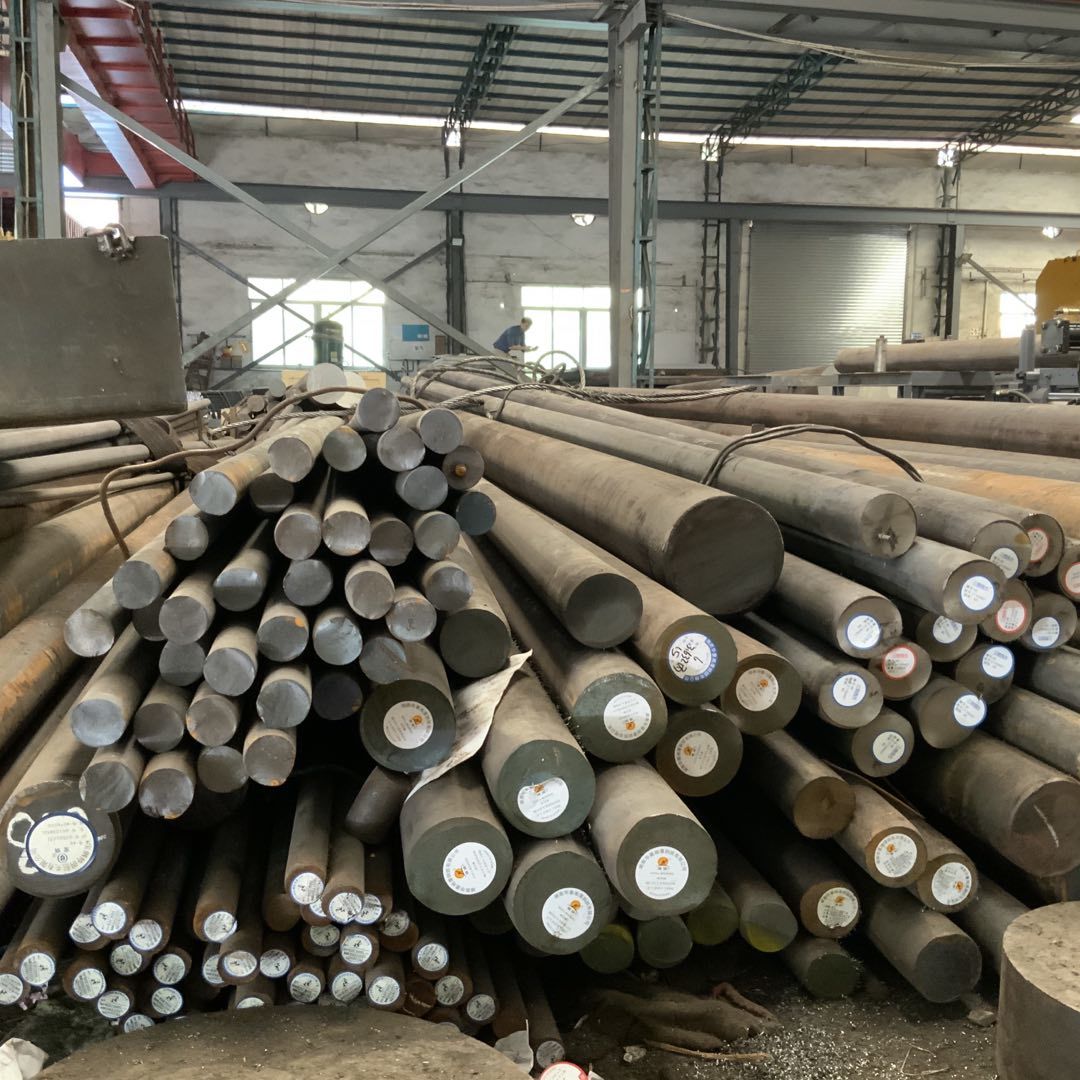
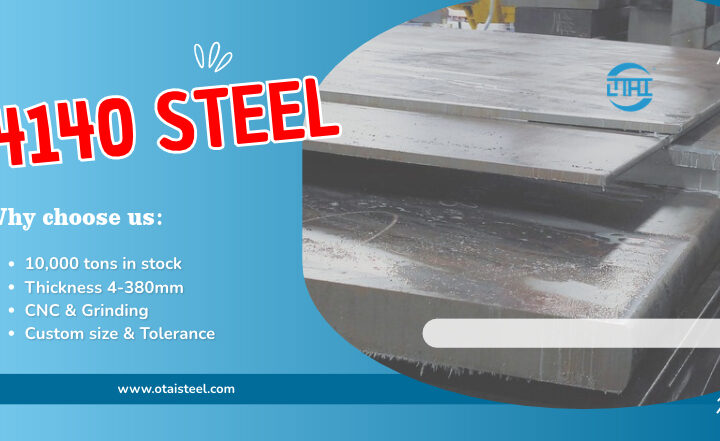
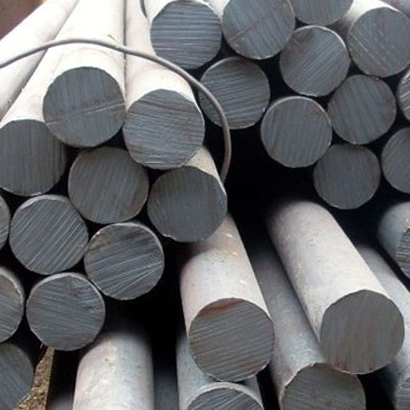
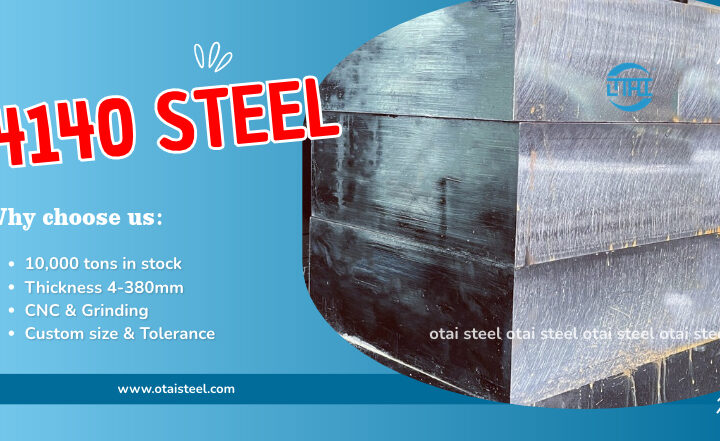
4140 steel is available in different product forms and dimensions, including plates and round bars. The dimensions of the raw material influence the machining allowance, workholding method, material removal time and final component yield.
For example, machining a large shaft from an oversized round bar may involve significant material removal. If the raw material diameter is much larger than necessary, the workshop may spend more time cutting and generate more scrap. Selecting a suitable starting dimension can therefore improve material utilization and reduce production costs.
For plate components, thickness and flatness can influence clamping, milling strategy and dimensional control. Buyers should communicate the finished dimensions and machining allowance when requesting quotations.
Hardness consistency and material traceability
Material consistency is another important factor. If different batches have noticeably different hardness or microstructures, the workshop may experience variations in cutting force, tool life and machining time.
For repeat production, buyers should request appropriate material documentation and maintain traceability between the supplied steel and finished components. The mill test certificate should identify the grade, heat number and actual chemical analysis. Mechanical properties and hardness results should also be available when the purchase specification requires them.
Inspection requirements for machined components
Raw-material inspection and finished-part inspection serve different purposes. Ultrasonic testing can help identify certain internal discontinuities in steel products when the applicable inspection standard and acceptance level are specified. Dimensional inspection checks whether the machined component meets the drawing requirements.
For critical components, the purchase specification may also require hardness testing, tensile testing, impact testing or third-party inspection. Buyers should define these requirements before production instead of adding them after the material has been processed.
| Material or inspection factor | Why it matters to machining |
|---|---|
| Thickness or diameter | Determines machining allowance and workholding requirements. |
| Hardness | Affects cutting forces, tool selection and machining time. |
| Dimensional tolerance | Influences the amount of additional cutting or grinding required. |
| Chemical analysis | Confirms that the supplied grade meets the specified composition requirements. |
| Ultrasonic inspection | Provides additional information about internal material quality when required. |
📋 What Should Buyers Specify When Purchasing 4140 Steel?
Choose the correct delivery condition
For machining projects, the delivery condition can be as important as the steel grade itself. Buyers should decide whether the workshop needs annealed, normalized or quenched-and-tempered 4140 before requesting a quotation.
If the component requires extensive material removal before hardening, annealed material may be a practical starting point. If the design requires a specified hardness and the workshop wants to avoid a separate hardening operation, pre-hardened 4140 may be more suitable.
However, the decision should account for the finished component’s mechanical properties, dimensional tolerances and production route. A lower purchase price does not necessarily mean a lower total manufacturing cost.
Provide complete dimensional and processing information
A detailed inquiry helps the supplier identify suitable stock and processing options. Instead of requesting only “4140 steel,” provide the following information:
- Grade and standard: AISI 4140 or the specific standard required by the drawing.
- Product form: Plate, round bar or another required form.
- Dimensions: Thickness or diameter, width, length and quantity.
- Delivery condition: Annealed, normalized or quenched and tempered.
- Hardness requirement: Specify the required range and test method where applicable.
- Processing: Saw cutting, precision cutting, CNC machining or grinding.
- Inspection: MTC, hardness testing, ultrasonic testing or third-party inspection as required.
- Packaging: Anti-rust protection, bundles or wooden cases for export transportation.
Check the product specification and MTC
The MTC provides important information about the supplied material. Buyers should check that the grade and applicable standard match the purchase order. They should also review the actual chemical analysis and any mechanical or hardness results required by the contract.
Do not rely on a generic datasheet when the project requires specific properties. Standard limits, typical mill analysis and actual heat analysis are different types of information. The actual MTC results should be used to verify the supplied heat against the purchase specification.
Compare suppliers on more than material price
When evaluating 4140 steel suppliers, buyers should consider stock availability, dimensional accuracy, processing capability, quality documentation and export experience. A supplier that can provide cutting and machining support may help reduce handling steps and simplify procurement.
For projects with repeated production requirements, consistent material supply is particularly important. Confirm whether the supplier can support the required dimensions and quantities across future orders, not just the initial purchase.
For product details and supply information, visit OTAI’s official 4140 alloy steel and 4140 steel plate page. Buyers can provide their drawings, dimensions and delivery requirements to help clarify the suitable material condition and processing route.
🏢 OTAI Special Steel: 4140 Steel Supply and Processing
OTAI Special Steel supplies alloy steel and tool steel to industrial customers and international buyers. Since 1999, the company has exported steel products to more than 54 countries and developed supply and processing services for different manufacturing requirements.
- 4140 steel plate stock: Thickness range of 4–380 mm.
- 4140 QT plate stock: Thickness range of 13–200 mm.
- 4140 round bar stock: Diameter range of 14–500 mm.
- Inventory capacity: More than 10,000 tons of steel stock across different grades.
- Cutting capability: 20 saw cutting machines for material cutting and customized dimensions.
- Machining services: CNC machining and grinding according to customer requirements.
- Customized processing: Cutting, precision cutting, machining and heat-treatment support.
- Quality control: Material testing, ultrasonic testing and support for third-party inspection when required.
- Export packaging: Anti-rust protection, strapping, bundling and wooden cases according to shipping requirements.
- International experience: Supply experience serving customers in more than 54 countries since 1999.
For manufacturers machining 4140 steel, selecting the correct stock dimensions and delivery condition can help reduce unnecessary material removal and improve production planning. OTAI can support buyers with 4140 plate and round bar supply, cutting services and processing arrangements based on the project specification.
When requesting a quotation, provide the required dimensions, quantity, hardness condition and any machining or inspection requirements. This information helps the supply team evaluate stock availability and prepare a quotation that better matches the intended application.
❓ Frequently Asked Questions
1. Is 4140 steel easy to machine?
4140 is generally machinable, especially in the annealed condition. However, its cutting performance depends on hardness, heat treatment, tooling and machine rigidity. Pre-hardened 4140 usually requires more wear-resistant tools and adjusted cutting parameters.
2. Can you machine 4140 steel after heat treatment?
Yes. Pre-hardened 4140 can be machined with suitable carbide tooling and appropriate cutting conditions. At higher hardness levels, manufacturers may need to consider specialized hard-turning tools, grinding or other finishing methods.
3. What cutting speed should be used for 4140 steel?
There is no single cutting speed for all 4140 steel. Annealed material generally allows higher cutting speeds than pre-hardened material. The correct value depends on the operation, tool grade, coating, workpiece hardness and machine setup. Always start with the cutting-tool manufacturer’s recommendations.
4. Is carbide or HSS better for machining 4140?
Carbide is commonly preferred for productive turning and milling because it offers good wear resistance and supports higher cutting speeds. HSS can still be suitable for drilling, tapping and lower-speed operations, particularly when the material is relatively soft.
5. Should I buy annealed or pre-hardened 4140 for CNC machining?
Choose annealed 4140 when substantial machining is required before heat treatment. Pre-hardened 4140 may be more convenient when the finished component needs a specified hardness and the machining process can accommodate the higher cutting resistance. The best option depends on the drawing, final properties and production sequence.