4140 Steel Rust Resistance: Does 4140 Steel Rust Easily?
📑 Table of Contents
- 🔍 Does 4140 Steel Rust Easily?
- 🧪 Chemical Composition: Why Is 4140 Not Stainless Steel?
- 🌧️ What Causes Rust on 4140 Steel?
- ⚙️ How Does Heat Treatment Affect 4140 Steel Corrosion?
- 🛡️ Which Surface Treatments Improve 4140 Steel Rust Resistance?
- 🏭 How Should Manufacturers Store and Handle 4140 Steel?
- 🚢 How Can Buyers Prevent Rust During Transportation?
- 🛒 What Should Buyers Check When Purchasing 4140 Steel?
- 🏢 Why Source 4140 Steel from OTAI?
- ❓ Frequently Asked Questions
🔍 Does 4140 Steel Rust Easily?
Yes. AISI 4140 steel can rust when it comes into contact with moisture and oxygen. Although manufacturers use chromium and molybdenum to improve its hardenability and mechanical performance, these alloying elements do not make 4140 stainless or corrosion-proof. Without suitable protection, exposed 4140 surfaces can develop rust during storage, machining, transportation, and service.
4140 is a medium-carbon chromium-molybdenum alloy steel. Manufacturers commonly select it for shafts, gears, axles, couplings, and other mechanical components that require strength, toughness, and heat-treatment capability. Its main advantages relate to mechanical performance rather than resistance to atmospheric corrosion.
The important distinction is that 4140 is an alloy steel, not a stainless steel. Its chromium content is generally around 0.80–1.10%, much lower than the minimum chromium content normally required for stainless steel classification. Consequently, it cannot form the same protective passive film that gives stainless steels their characteristic corrosion resistance.
| Material | Typical Chromium Content | Rust Resistance | Common Application |
|---|---|---|---|
| AISI 4140 | 0.80–1.10% | Requires corrosion protection in exposed environments | Shafts, gears, and machine components |
| AISI 304 Stainless Steel | Approximately 18–20% | Good resistance in many atmospheric and mildly corrosive environments | Food equipment, tanks, and general corrosion-resistant components |
| AISI 316 Stainless Steel | Approximately 16–18% | Improved resistance to chloride-related corrosion compared with 304 in many applications | Marine equipment and chemical-processing components |
Can 4140 be used outdoors?
Yes, but manufacturers should apply suitable protection when the component faces rain, humidity, condensation, or other corrosive conditions. A properly coated or regularly maintained 4140 component can serve in outdoor machinery. However, an untreated surface may rust, especially when moisture remains trapped around joints, recesses, and machined areas.
Is 4140 suitable for marine environments?
Untreated 4140 is generally not a suitable choice when the component faces continuous seawater exposure or severe salt spray. Chlorides can accelerate corrosion and create localized attack. If the application requires 4140’s mechanical properties, the design should include an appropriate protective system and a maintenance plan. For components where corrosion resistance is the primary requirement, engineers should also evaluate stainless steel or other corrosion-resistant materials.
For buyers, the correct decision depends on the operating environment. A component used inside a protected machine may need only temporary corrosion protection during storage and shipment. A component exposed to outdoor moisture throughout its service life requires a more durable surface-protection strategy.
🧪 Chemical Composition: Why Is 4140 Not Stainless Steel?
The chemical composition of 4140 explains its excellent mechanical properties, but it also explains why the material needs corrosion protection. Carbon, chromium, and molybdenum play important roles in strength, hardenability, and heat-treatment response. However, their presence does not provide the same corrosion protection as the chromium-rich passive surface of stainless steel.
Typical chemical composition of 4140 steel
The following table shows commonly referenced composition ranges for AISI 4140. Exact requirements depend on the applicable material specification and edition. Buyers should verify the actual heat analysis on the mill test certificate (MTC).
| Element | Typical Range (%) | Main Function |
|---|---|---|
| Carbon (C) | 0.38–0.43 | Improves hardness and strength after heat treatment |
| Chromium (Cr) | 0.80–1.10 | Improves hardenability, strength, and wear resistance |
| Molybdenum (Mo) | 0.15–0.25 | Improves hardenability and tempering response |
| Manganese (Mn) | 0.75–1.00 | Contributes to strength and hardenability |
| Silicon (Si) | 0.15–0.35 | Supports strength and deoxidation during steelmaking |
Note: These are commonly referenced composition ranges, not a substitute for the purchase specification. The actual MTC and governing standard determine whether a supplied heat meets the order requirements.
Why does chromium not make 4140 stainless?
Chromium improves the performance of many alloy steels. In 4140, it contributes to hardenability and helps the steel develop useful strength after quenching and tempering. However, its concentration is not high enough to provide the continuous, chromium-rich passive film associated with stainless steel.
Stainless steel generally requires at least approximately 10.5% chromium by mass. Grades such as 304 and 316 contain substantially more chromium than 4140. Their surface can form a thin passive oxide film that helps slow further corrosion when the material encounters oxygen.
By comparison, 4140 behaves like a conventional low-alloy steel in many corrosive environments. Its surface can react with oxygen and moisture, producing iron oxides and hydrated corrosion products commonly recognized as rust.
Does molybdenum improve rust resistance?
Molybdenum can improve resistance to certain forms of localized corrosion in suitable alloy systems, particularly when combined with sufficient chromium and other alloying elements. However, the relatively small molybdenum addition in 4140 does not transform it into a corrosion-resistant stainless steel.
Therefore, buyers should not select 4140 because its alloying elements suggest that it will resist rust. Choose it for its mechanical properties, then specify an appropriate corrosion-protection method for the actual working environment.
🌧️ What Causes Rust on 4140 Steel?
Rust develops when iron in the steel reacts with oxygen and moisture. The process can occur during manufacturing, storage, transportation, or actual service. Even a newly machined 4140 surface can begin to oxidize when it remains exposed to humid air without protective treatment.
Humidity and condensation
High humidity increases the amount of moisture available on a steel surface. Condensation can form when the temperature of the steel falls below the dew point of the surrounding air. This situation frequently occurs in warehouses, shipping containers, and facilities where temperatures change between day and night.
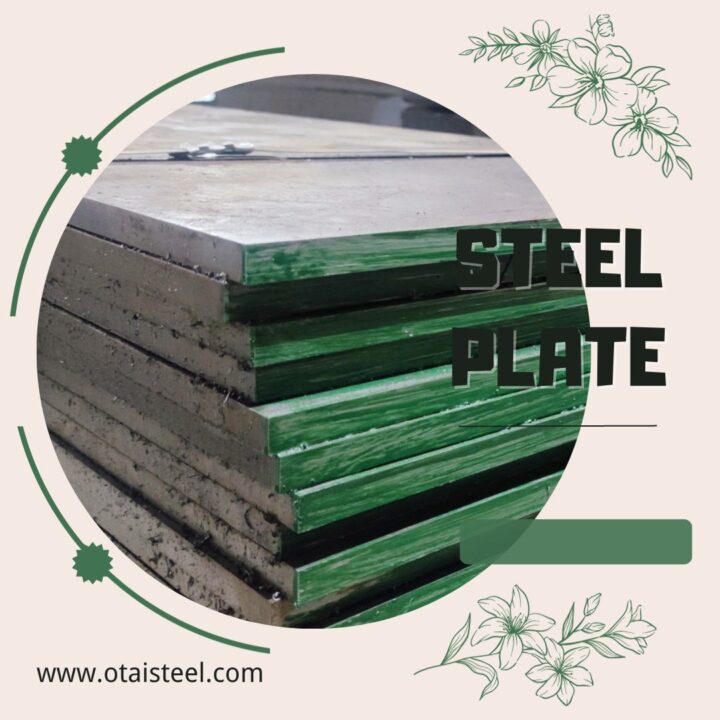
Flat steel plates may retain moisture between stacked surfaces, while round bars can collect condensation along their contact points. If the material remains wet for extended periods, surface discoloration and rust may develop.
Salt and chloride exposure
Salt accelerates corrosion because chloride ions can make the surface environment more aggressive. Coastal warehouses, marine transportation, and facilities that use de-icing salts may expose 4140 components to chloride contamination.
Salt deposits can also retain moisture. Therefore, even when a component does not experience direct seawater contact, salt-contaminated surfaces may corrode more quickly than clean surfaces in ordinary indoor conditions.
Cutting fluids and machining residues
Machining operations introduce another potential source of corrosion. Some water-based cutting fluids provide corrosion protection while the workpiece remains covered. However, diluted, contaminated, or incorrectly maintained fluids may offer inadequate protection.
After machining, coolant residues, fingerprints, and workshop contaminants can remain on the steel. If operators leave the component wet or fail to apply a suitable protective product, rust may develop during temporary storage.
Common causes and prevention methods
| Cause | Typical Risk | Recommended Prevention |
|---|---|---|
| High humidity | Surface oxidation during storage | Apply rust-preventive oil and control warehouse humidity |
| Condensation | Water accumulation on plates and bars | Keep steel dry and avoid sudden temperature changes |
| Salt contamination | Accelerated localized corrosion | Clean contaminated surfaces and use suitable protective coatings |
| Machining residues | Rust after cutting or machining | Remove residues, dry the surface, and apply temporary protection |
| Damaged protective coating | Corrosion at exposed areas | Inspect the coating and repair damaged sections |
| Poor packaging | Moisture entering during transportation | Use suitable wrapping, moisture control, and export packing |
Can fingerprints cause rust?
Yes. Fingerprints may leave moisture, salts, and organic residues on an unprotected steel surface. These contaminants can create small areas where corrosion begins, particularly in humid conditions. For precision-machined components, operators should use clean gloves and avoid touching finished surfaces unnecessarily.
In practice, rust prevention starts with controlling moisture and contamination. A consistent cleaning, drying, and protection procedure is often more effective than waiting until visible rust appears and then removing it.
⚙️ How Does Heat Treatment Affect 4140 Steel Corrosion?
Heat treatment changes the microstructure, hardness, and mechanical properties of 4140. It can also change the surface condition, especially when the process involves heating in an atmosphere that allows oxidation. However, conventional heat treatment does not make 4140 inherently rust-resistant.
Annealed and normalized 4140
Annealing and normalizing prepare 4140 for different manufacturing requirements. Annealing generally produces a softer condition that supports machining and forming, while normalizing refines the microstructure and adjusts mechanical properties.
Neither process creates stainless-like corrosion resistance. If the steel remains exposed to moisture after treatment, its surface can still rust. In addition, scale and surface discoloration from heating may require cleaning before the manufacturer applies a protective coating.
Quenched-and-tempered 4140
Quenching and tempering increase the strength and hardness of 4140. These processes change the microstructure, but they do not provide a durable corrosion barrier. A quenched-and-tempered plate or bar can still rust when exposed to humid air, water, or salt contamination.
Buyers should therefore separate mechanical requirements from corrosion-protection requirements. A request for 4140 QT material defines a mechanical supply condition; it does not automatically include a special anti-rust surface treatment.
Does surface hardening prevent rust?
Surface hardening methods such as induction hardening increase the hardness of selected areas. They do not necessarily provide meaningful protection against atmospheric corrosion. The hardened surface remains a steel surface that can oxidize when moisture and oxygen are present.
Manufacturers should select a separate corrosion-protection method if the component will face moisture or corrosive contaminants. They must also confirm that the coating or treatment is compatible with the required hardness, dimensions, fatigue performance, and operating conditions.
What about black oxide after heat treatment?
Black oxide can provide a dark finish and limited corrosion protection when combined with suitable oil or wax. However, the process does not turn 4140 into stainless steel. The protective effect depends on the process quality, supplementary sealing, maintenance, and exposure conditions.
For buyers, the key question is whether the final component needs temporary protection during storage or long-term corrosion control during operation. These requirements may call for different treatments and inspection criteria.
🛡️ Which Surface Treatments Improve 4140 Steel Rust Resistance?
Several surface treatments can reduce corrosion on 4140 steel. The best choice depends on the working environment, expected service life, dimensional tolerances, appearance, and maintenance requirements. Some methods provide temporary protection for storage and shipping, while others create a more durable barrier for finished components.
1. Rust-preventive oil
Rust-preventive oil is a practical choice for protecting steel plates, bars, and machined components during storage and transportation. It creates a barrier that reduces direct contact between the steel and moisture. Depending on the product, the oil may form a thin removable film or a more persistent protective layer.
This method is especially useful when the customer will machine or coat the steel later. However, oil protection needs inspection and maintenance. It may not be sufficient for prolonged outdoor exposure or direct contact with seawater.
2. Black oxide coating
Black oxide produces a dark conversion layer on the steel surface. Manufacturers often use it for machine components where appearance and light corrosion protection are important. The process is commonly combined with oil or wax sealing to improve protection.
Black oxide should not be treated as a heavy-duty barrier coating. In wet, saline, or chemically aggressive environments, the component may need a more protective finish.
3. Phosphate coating
Phosphate coatings create a conversion layer that can improve paint adhesion and provide a base for additional protective treatments. Manufacturers often use phosphate processes on steel components that will receive oil, paint, or another finishing system.
The actual corrosion performance depends on the phosphate process, coating weight, supplementary protection, and operating environment. Buyers should specify the required finish rather than simply requesting that the steel be phosphated.
4. Electroplating
Electroplating deposits a metal layer on the steel surface. Zinc plating, for example, can provide sacrificial corrosion protection in suitable environments. Other plating systems may offer different combinations of appearance, wear resistance, and corrosion performance.
However, plating requires process control. The manufacturer must consider coating thickness, surface preparation, dimensional changes, adhesion, and the risk of hydrogen embrittlement in high-strength components. For hardened 4140 parts, the plating process and any required hydrogen-relief treatment need careful technical evaluation.
5. Paint and protective coatings
Paint systems and industrial protective coatings create a barrier between steel and the environment. They may be suitable for machine frames, exposed structures, and components that do not require precise uncoated contact surfaces.
Surface preparation is critical. Oil, rust, scale, and other contaminants can reduce coating adhesion. A suitable coating system should specify surface preparation, primer, topcoat, film thickness, curing conditions, and inspection requirements.
| Protection Method | Main Purpose | Typical Use | Important Limitation |
|---|---|---|---|
| Rust-preventive oil | Temporary moisture barrier | Steel stock, machined parts, export packing | Requires inspection and may need reapplication |
| Black oxide | Dark finish and limited corrosion protection | Machine components and precision parts | Usually needs oil or wax sealing |
| Phosphate coating | Surface preparation and coating base | Components receiving paint or oil | Often requires supplementary protection |
| Zinc plating | Sacrificial corrosion protection | Selected finished mechanical components | Requires control of coating and hydrogen-related risks |
| Paint or industrial coating | Protective barrier against the environment | Machine structures and exposed components | Needs proper surface preparation and coating maintenance |
How should you select a protection method?
For raw 4140 steel supplied to a machining factory, rust-preventive oil and suitable export packaging may be sufficient during the delivery period. For a finished component used in a humid factory, black oxide with supplementary sealing or a suitable coating may be more appropriate. For equipment exposed to outdoor weather, a properly specified industrial coating system may offer better long-term protection.
Always check whether the selected treatment affects critical dimensions, surface finish, fatigue performance, friction, or later machining operations. The best corrosion solution must protect the component without compromising its engineering function.
🏭 How Should Manufacturers Store and Handle 4140 Steel?
Correct storage and handling can significantly reduce rust risk before 4140 steel enters production. Even when a supplier applies temporary corrosion protection, poor warehouse conditions can damage the material. Manufacturers should therefore establish clear procedures for receiving, storing, cutting, machining, and transferring steel between production stages.
Keep steel away from standing water
Store 4140 plates and bars in a dry, well-ventilated area. Use suitable racks or supports to keep the material away from floors where water may collect. Avoid placing steel directly against wet concrete or storing it in locations where rainwater can enter.
When stacking plates, consider the possibility of moisture becoming trapped between contact surfaces. Provide adequate spacing or use an appropriate storage arrangement to reduce condensation and allow inspection.
Apply protection after cutting and machining
Cutting exposes fresh steel surfaces that may not have the same protection as the original stock. Operators should remove coolant residues, chips, fingerprints, and contaminants after processing. Once the surface is clean and dry, apply a suitable rust-preventive product if the component will not receive its next operation immediately.
Machined surfaces deserve particular attention because corrosion can affect dimensional accuracy and surface finish. For precision components, even light oxidation may require additional cleaning or rework before assembly.
Control warehouse conditions
Humidity control helps reduce the risk of condensation. Warehouses should monitor temperature and relative humidity, especially during seasonal changes. When necessary, use dehumidification, suitable ventilation, and moisture-control materials in enclosed storage areas.
Use a consistent inspection procedure
- Inspect incoming steel for visible rust, water stains, damaged packaging, and contamination.
- Check whether the protective oil or coating remains intact.
- Record storage conditions and inspection dates for long-term inventory.
- Remove moisture and contaminants promptly after cutting or machining.
- Reapply protective products when the original film becomes damaged or insufficient.
- Separate components with different coating or cleaning requirements to avoid cross-contamination.
These procedures are particularly important for distributors and manufacturers that hold large quantities of alloy steel. Good stock management helps preserve surface quality and reduces unnecessary cleaning, grinding, and material rejection.
🚢 How Can Buyers Prevent Rust During Transportation?
Transportation can expose 4140 steel to moisture, condensation, salt contamination, and changes in temperature. These risks become more significant during long-distance export shipments, especially when steel travels through several handling and storage stages. Buyers should therefore include corrosion-protection requirements in their purchase orders rather than relying only on the supplier’s standard packaging.
Use suitable anti-rust protection before packing
Before shipment, the steel surface should be clean and dry. The supplier can apply rust-preventive oil or another agreed temporary protection product. The selected product should match the material form, shipment duration, expected environment, and customer’s subsequent processing requirements.
For example, a customer who plans to machine 4140 plate immediately after delivery may prefer a removable protective oil. A buyer storing stock for several months may need a more persistent protection system and additional moisture-control measures.
Choose appropriate export packaging
Packaging should protect the steel from water entry and physical damage during loading, unloading, and transportation. Depending on the product and destination, suitable measures may include moisture-resistant wrapping, protective film, desiccants, strapping, and wooden cases.
For sea freight, buyers should pay particular attention to container condition. A leaking container, wet floor, or significant temperature fluctuation can create condensation and damage unprotected steel surfaces. Packaging should therefore account for the actual shipping route and expected storage conditions.
Specify inspection and documentation requirements
Buyers can request photographs of the material and packaging before shipment. For high-value or critical orders, they may also arrange third-party inspection to verify dimensions, surface condition, quantity, and agreed packaging requirements.
| Shipment Stage | Potential Corrosion Risk | Buyer or Supplier Action |
|---|---|---|
| Before loading | Wet or contaminated steel surfaces | Clean, dry, and apply agreed anti-rust protection |
| Packaging | Moisture entering through damaged wrapping | Use suitable moisture-resistant materials and secure packing |
| Container loading | Water leakage and condensation | Inspect container condition and keep cargo away from wet surfaces |
| Sea transportation | Humidity and temperature changes | Use suitable wrapping and moisture-control measures |
| Arrival and unloading | Exposure to rain and humid air | Inspect promptly and transfer steel to dry storage |
What should the purchase order say?
A clear purchase order should identify the required anti-rust treatment, packaging method, and inspection criteria. If the buyer needs oil-free surfaces, removable protection, or special export packaging, these requirements should be agreed before production and shipment.
Also, clarify whether the supplier must provide photographs, inspection records, or packaging details before dispatch. This helps prevent misunderstandings and gives both parties a consistent standard for checking the shipment.
🛒 What Should Buyers Check When Purchasing 4140 Steel?
When purchasing 4140 steel, buyers should separate material quality from surface-protection requirements. A steel product can meet the chemical and mechanical specifications while still needing additional protection against rust. Conversely, a clean and shiny surface does not prove that the material meets the required grade or mechanical properties.
Confirm the grade and chemical composition
Start by specifying AISI 4140 and the governing material standard. If the project uses a particular national or international equivalent, identify the exact specification rather than relying on a similar grade name.
Request the MTC and check the heat number, chemical analysis, and relevant mechanical test results. For critical components, verify that the material condition and test requirements match the engineering drawing or purchase specification.
Check the supply condition and dimensions
4140 is available in different supply conditions, including annealed and quenched-and-tempered products. The selected condition affects machining, final heat treatment, and production cost. Buyers should state the required thickness, width, length, diameter, dimensional tolerances, and surface condition.
For plate products, also consider whether the material needs cutting, machining, or grinding before use. Accurate dimensions and suitable machining allowances help reduce waste and improve production efficiency.
Define the corrosion-protection requirements
Do not simply write “anti-rust” on the purchase order. Instead, explain the expected storage and transportation conditions. A buyer who needs temporary protection for a short shipment may require a different solution from one who plans to store steel for several months in a humid warehouse.
Specify the protective product or agreed protection level, packaging method, and whether the surface must remain suitable for subsequent machining, painting, or coating. If the component will operate in a corrosive environment, define its final protective coating separately from temporary shipping protection.
Evaluate the supplier’s processing and inspection capabilities
A reliable supplier should understand both the material specification and the buyer’s processing requirements. Cutting, machining, dimensional inspection, ultrasonic testing, and third-party inspection support can help reduce additional handling and quality risks.
For export purchases, packaging experience also matters. Ask how the supplier protects the steel against moisture, how it secures the load, and whether it can provide photographs before dispatch.
Purchasing checklist for 4140 steel
- Confirm the grade, applicable standard, and chemical composition requirements.
- Specify the delivery condition, such as annealed or quenched and tempered.
- Provide exact dimensions, tolerances, and quantity.
- Define the required MTC and any additional inspection documents.
- State whether cutting, machining, grinding, or other processing is required.
- Specify the anti-rust treatment and whether it must be removable.
- Confirm packaging requirements for storage and export transportation.
- Agree on the surface-condition acceptance criteria before shipment.
By confirming these points before ordering, buyers can reduce the risk of corrosion-related claims, avoid unnecessary rework, and ensure that the material arrives in a condition suitable for the next production stage.
🏢 Why Source 4140 Steel from OTAI?
When sourcing 4140 alloy steel for international manufacturing projects, buyers need reliable stock, accurate cutting, suitable documentation, and packaging that protects the material during transportation. OTAI Special Steel supplies alloy steel and tool steel to customers in international markets, with services designed to support different industrial purchasing requirements.
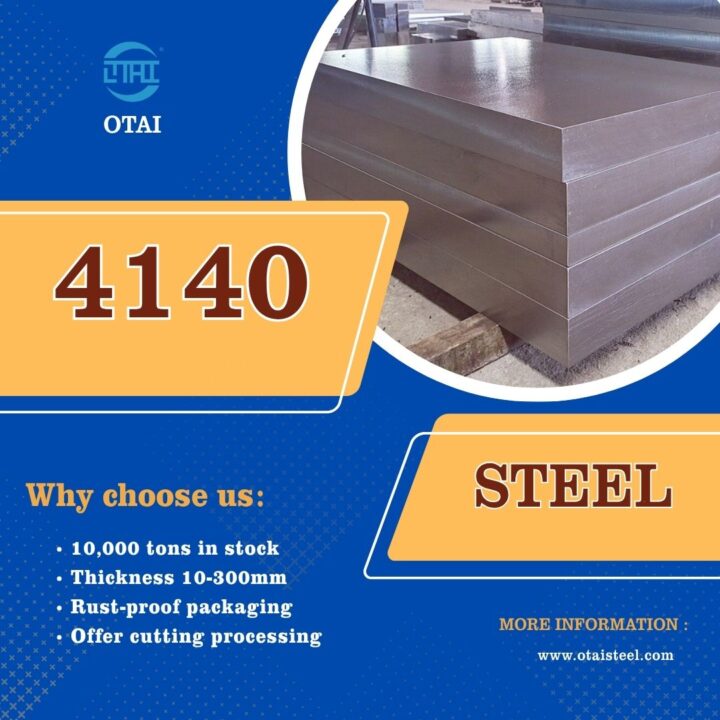
- Extensive inventory: More than 10,000 tons of steel stock supports a wide range of industrial purchasing needs.
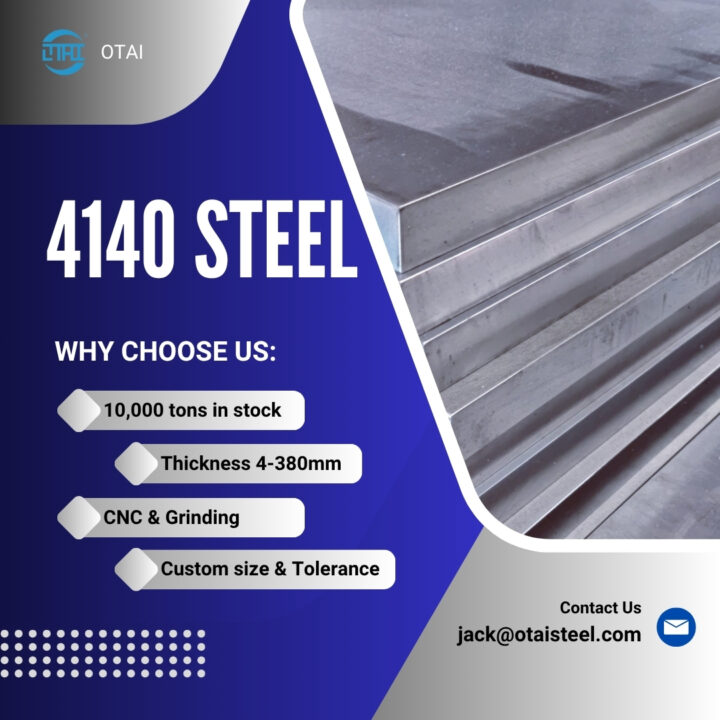
- 4140 steel plate: Available thickness range of 4–380 mm.
- 4140 QT plate: Available thickness range of 13–200 mm.
- Cutting capacity: 20 saw-cutting machines support customized dimensions and cutting requirements.
- Machining and grinding: CNC machining and grinding services help meet specific dimensional and tolerance requirements.
- Quality support: Material testing, ultrasonic testing, and third-party inspection support can be arranged according to project requirements.
- Export experience: Supplying international customers since 1999, with exports to more than 54 countries.
- Anti-rust packaging: Protective oil, suitable wrapping, strapping, bundling, and wooden-case packaging options can support export transportation requirements.
- One-stop service: Cutting, machining, inspection coordination, and packaging help simplify the purchasing process.
For product specifications and supply information, visit our official 4140 alloy steel plate product page.
If your project requires 4140 steel with specific dimensions, delivery conditions, or anti-rust packaging, send us your grade, size, quantity, and technical requirements. Our team can help check suitable stock options and discuss cutting, inspection, and export protection before shipment.
❓ Frequently Asked Questions
1. Does 4140 steel rust easily?
4140 can rust when exposed to moisture and oxygen. It is a chromium-molybdenum alloy steel, not stainless steel. Without suitable protection, its surface may develop rust during storage, machining, transportation, or outdoor service.
2. Is 4140 steel rust-resistant?
4140 has limited natural corrosion resistance compared with stainless steel. Its chromium content improves hardenability and mechanical performance but does not provide the protective passive film associated with stainless grades such as 304 or 316. For humid or corrosive environments, use suitable surface protection.
3. Does heat-treated 4140 steel rust?
Yes. Annealing, normalizing, quenching, and tempering change the mechanical properties and microstructure of 4140, but they do not make the steel corrosion-proof. Heat-treated components still need suitable protection when exposed to moisture or corrosive contaminants.
4. What is the best way to prevent rust on 4140 steel?
The best method depends on the application. Rust-preventive oil works well for temporary storage and transportation. Black oxide with oil sealing, phosphate treatments, plating, and industrial coatings may suit different finished-component requirements. Consider exposure conditions, dimensions, and maintenance needs before selecting a treatment.
5. Can 4140 steel be used in marine environments?
Untreated 4140 is generally unsuitable for continuous seawater exposure or severe salt-spray conditions. If the application requires 4140’s mechanical properties, engineers should specify a suitable corrosion-protection system and maintenance plan. For applications where corrosion resistance is essential, evaluate stainless steel or other corrosion-resistant materials.