4140 Steel Stock: What Sizes Can Buyers Get from a Supplier?
📑 Table of Contents
- 🔍 What Does 4140 Steel Stock Mean for Buyers?
- 📏 What 4140 Steel Plate Thicknesses Are Available?
- ⚙️ What 4140 Round Bar Diameters Can Buyers Source?
- 📊 How Do 4140 Stock Sizes Match Different Applications?
- 🔥 How Does Delivery Condition Affect 4140 Steel Stock Selection?
- ✂️ Can Suppliers Cut 4140 Steel Stock to Custom Sizes?
- 📋 What Should Buyers Check Before Confirming Stock?
- 🚢 How Do Stock Availability and Processing Affect Delivery Time?
- 🏭 Why Source 4140 Steel Stock from OTAI?
- ❓ Frequently Asked Questions
When purchasing 4140 steel, buyers often start with a simple question: what sizes can a supplier deliver from stock? However, choosing the right material involves more than checking a thickness or diameter range. Product form, delivery condition, cutting allowance, dimensional tolerance, inspection requirements, and available quantity can all affect whether a particular stock item suits a manufacturing project.
4140 is a chromium-molybdenum alloy steel commonly used for shafts, gears, machine components, tooling parts, and other applications that require a combination of strength, toughness, and heat-treatment capability. Buyers can source it in different dimensions and conditions, but not every supplier carries every size in every condition.
This article explains the 4140 steel stock dimensions available from OTAI, how buyers can match stock sizes to their components, and what procurement teams should confirm before placing an order.
🔍 What Does 4140 Steel Stock Mean for Buyers?
Stock availability is more than a grade name
4140 steel stock refers to material that a supplier holds or can allocate for customer orders. Buyers may find it in plate or round bar form, with different thicknesses, diameters, lengths, and delivery conditions. The actual selection depends on the supplier’s inventory and the production requirements of the order.
For procurement teams, available stock can reduce the time needed to source raw material. Instead of waiting for a new production run, buyers may purchase existing material and arrange cutting or machining to their required dimensions. This approach can be particularly useful for maintenance orders, prototype production, and projects with short delivery schedules.
Three details determine whether stock is suitable
- Product form: Plate and round bar suit different component geometries and machining routes.
- Dimensions: Thickness, diameter, length, and machining allowance must match the finished-part drawing.
- Delivery condition: Annealed, normalized, quenched and tempered, or another specified condition can affect processing and final performance.
A supplier’s published size range is a useful starting point, but it does not guarantee that every dimension is immediately available in the required quantity. Buyers should request confirmation of actual stock, material condition, and inspection documents before making a purchasing decision.
Stock material versus newly produced material
Stock material usually offers a faster sourcing route when the required grade, dimensions, and condition are already available. New production may be more appropriate when a project needs unusual dimensions, a large quantity, or specific technical requirements that existing inventory cannot satisfy.
Therefore, buyers should compare the total procurement schedule rather than considering material price alone. Cutting, machining, heat treatment, inspection, and export preparation can all influence the final delivery date.
📏 What 4140 Steel Plate Thicknesses Are Available?
Available plate thickness range
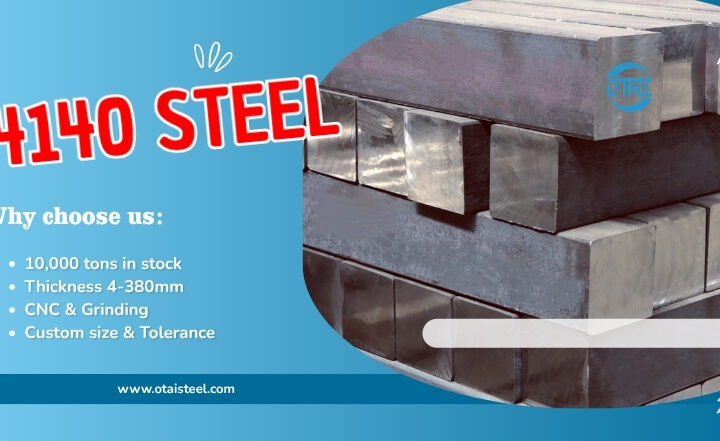
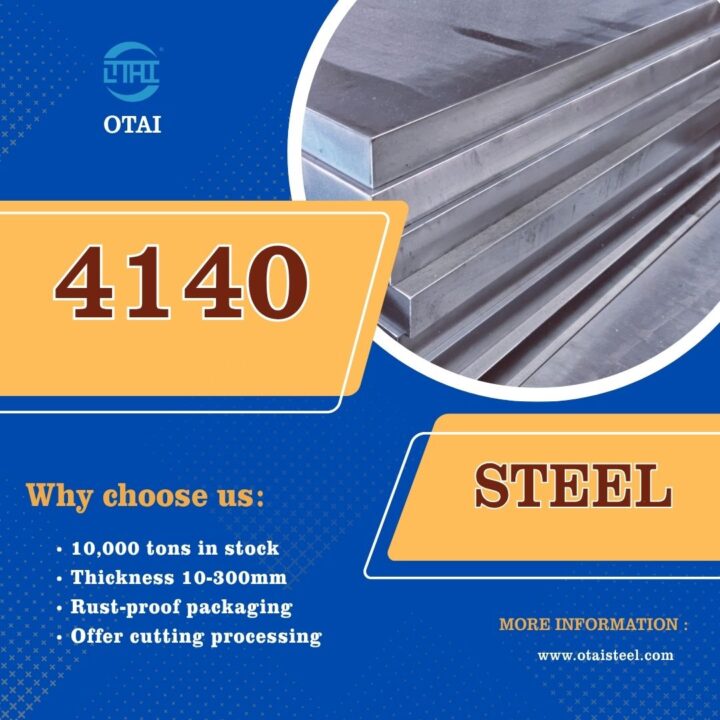
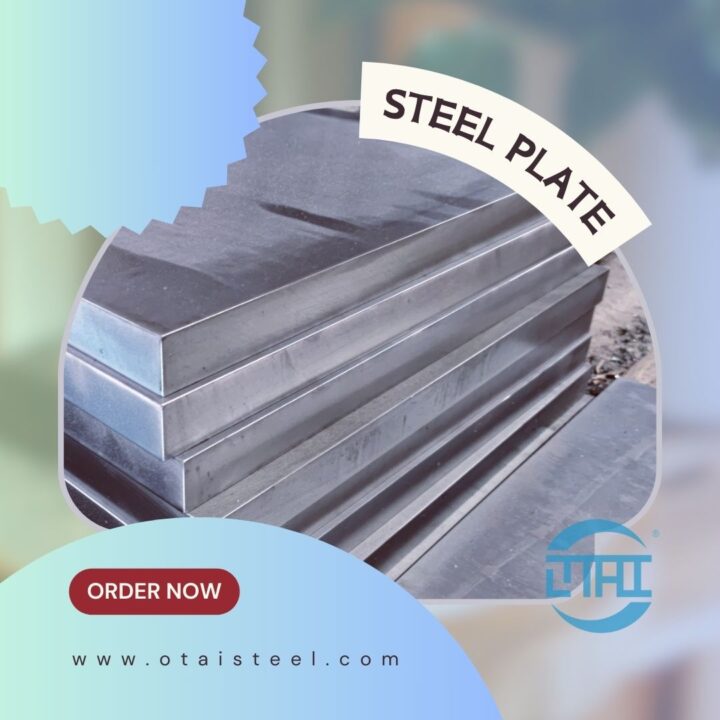
Plate thickness is one of the first dimensions buyers need to confirm. OTAI’s current 4140 stock range includes standard 4140 steel plate from 4 mm to 380 mm. For buyers who require quenched and tempered material, the current 4140 QT plate range is 13 mm to 200 mm.
These ranges give procurement teams options for different component sizes and machining requirements. However, the two product categories should not be treated as interchangeable. Standard 4140 plate and 4140 QT plate may have different delivery conditions and mechanical properties.
| 4140 Plate Type | Current Stock Thickness | Buyer Considerations |
|---|---|---|
| 4140 steel plate | 4–380 mm | Confirm delivery condition, width, length, and machining allowance. |
| 4140 QT plate | 13–200 mm | Check hardness, mechanical requirements, and test documentation. |
How should buyers choose plate thickness?
Start with the finished component drawing. Then calculate the raw material dimensions needed to cover machining allowance, surface removal, and any additional processing. A plate that matches the finished thickness exactly may not provide enough material for machining or surface correction.
For example, a buyer producing a machined machine base should consider the final thickness, flatness requirements, and material removal on both faces. A manufacturer producing a thick tooling component may also need to evaluate section size, internal quality, and the required heat-treatment condition.
Why width and length matter as much as thickness
Thickness alone does not determine whether a plate is suitable. Width and length influence cutting yield, material waste, handling, and shipping dimensions. Buyers should provide the complete required size rather than asking only whether a supplier carries a particular thickness.
For larger components, confirm whether the supplier can provide the requested dimensions directly or whether additional cutting is necessary. This can help avoid unnecessary material waste and reduce processing time after delivery.
⚙️ What 4140 Round Bar Diameters Can Buyers Source?
Round bar stock range
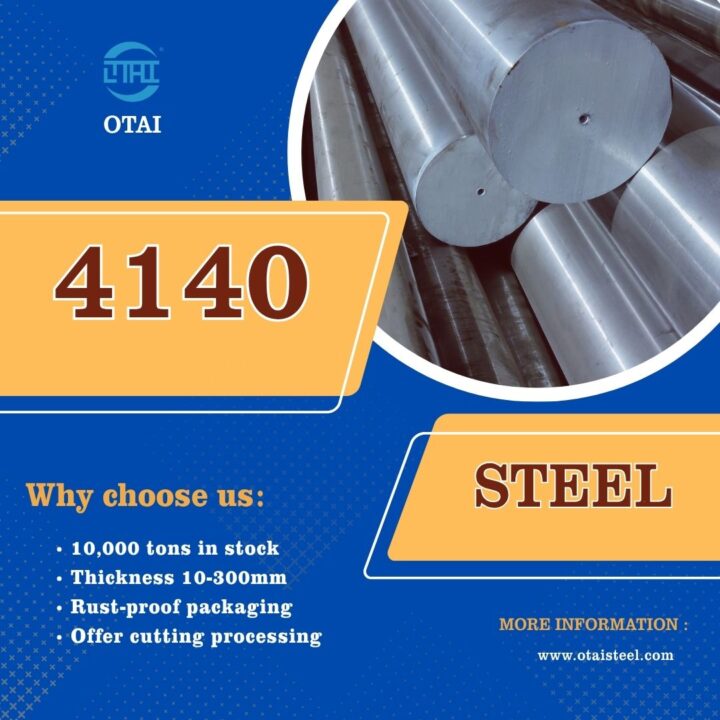
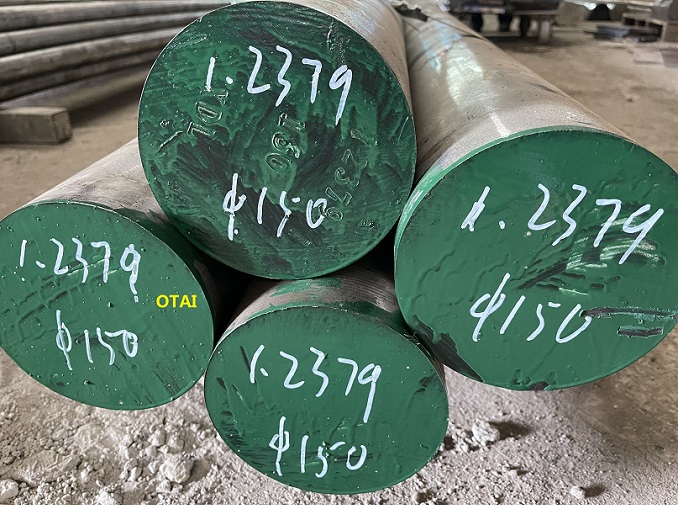
4140 round bar is widely used for cylindrical components that require turning, milling, drilling, or other machining operations. OTAI’s current 4140 round bar stock range covers diameters from 14 mm to 500 mm.
This range supports a variety of manufacturing requirements, from relatively small machined parts to larger shafts and heavy-duty mechanical components. Nevertheless, the required diameter should be selected according to the finished drawing and the machining allowance.
| Product Form | Current Stock Range | Typical Processing |
|---|---|---|
| 4140 round bar | 14–500 mm diameter | Turning, drilling, milling, grinding, and other machining operations. |
How to select the right bar diameter
Buyers should consider the maximum finished diameter, machining allowance, and any surface-removal requirements. If a shaft drawing specifies a finished diameter of 80 mm, for example, the raw bar may need to be larger to allow for turning and finishing. The exact allowance depends on the machining process, dimensional tolerance, and material condition.
For larger bars, section size also deserves attention. A thick component may not respond to heat treatment in exactly the same way throughout its cross-section. If the finished part requires specific strength or hardness, buyers should confirm the relevant mechanical properties and testing conditions rather than relying on the grade designation alone.
Length and cutting requirements
Diameter is only one part of a round bar specification. Buyers should also state the required length, length tolerance, end condition, and whether the material needs to be supplied in full bars or cut pieces.
For repeat production, supplying a cutting list can help the supplier calculate material utilization and prepare a more accurate quotation. It also reduces the risk of receiving stock that requires additional cutting before machining can begin.
📊 How Do 4140 Stock Sizes Match Different Applications?
Match the product form to component geometry
Different components require different starting shapes. Plate stock is often convenient for blocks, support components, tooling bases, and machined parts with flat surfaces. Round bar is more suitable for shafts, pins, rollers, and other components with cylindrical geometry.
Choosing the correct form can reduce machining time and material waste. For example, producing a cylindrical shaft from round bar generally requires less rough machining than cutting the same component from a large rectangular block.
| Component or Application | Potential Stock Form | Important Selection Factors |
|---|---|---|
| Shafts and axles | Round bar | Diameter, length, strength, toughness, and heat-treatment condition. |
| Pins and rollers | Round bar | Finished diameter, surface quality, and machining allowance. |
| Machine blocks | Plate | Thickness, width, length, flatness, and internal quality. |
| Tooling components | Plate or round bar | Geometry, hardness requirements, dimensional stability, and processing route. |
| Heavy-duty mechanical parts | Plate or round bar | Section size, loading conditions, heat treatment, and inspection requirements. |
Consider machining yield before purchasing
The cheapest raw material is not necessarily the most economical choice. A stock size that is much larger than the finished component can create unnecessary material waste and machining costs. On the other hand, a size that is too close to the finished dimensions may leave insufficient allowance for machining or correction.
Buyers should compare several factors when evaluating available sizes:
- How much material must be removed during rough and finish machining?
- Does the stock form suit the component geometry?
- Will the selected dimensions meet the required final tolerance?
- Can the supplier cut the material into practical transport and production sizes?
- Does the selected section size meet the component’s mechanical requirements?
For complex components, procurement teams should share the drawing or a detailed cutting list with the supplier. This allows the supplier to recommend a suitable starting size instead of quoting solely by nominal dimensions.
🔥 How Does Delivery Condition Affect 4140 Steel Stock Selection?
Different conditions serve different processing needs
4140 is a heat-treatable chromium-molybdenum alloy steel. Its delivery condition affects hardness, machinability, strength, and the additional processing required before the component enters service. Therefore, buyers should confirm the material condition alongside the dimensions.
Common conditions encountered in 4140 procurement include annealed, normalized, and quenched and tempered material. Availability depends on the supplier and the specific product form.
| Delivery Condition | General Characteristics | Buyer Considerations |
|---|---|---|
| Annealed | Generally softer and more suitable for machining before final hardening. | Confirm hardness and the planned heat-treatment route. |
| Normalized | Processed to refine and make the microstructure more uniform. | Check the specified mechanical properties and intended application. |
| Quenched and tempered | Heat-treated to achieve a specified combination of strength and toughness. | Verify hardness, tensile properties, section size, and test documentation. |
When should buyers consider 4140 QT plate?
4140 QT plate may suit applications that require material supplied in a quenched and tempered condition. This can reduce the need for the buyer to perform the initial bulk heat-treatment process. However, the buyer must still check whether the supplied hardness and mechanical properties meet the component specification.
OTAI currently stocks 4140 QT plate in thicknesses from 13 mm to 200 mm. Buyers should provide the required hardness range, mechanical property targets, and applicable standard when requesting a quotation.
Do not assume all 4140 material has the same properties
The designation 4140 identifies a steel grade, not one universal mechanical property value. Actual results depend on product size, heat-treatment practice, sampling location, test direction, and the governing specification. A buyer should therefore evaluate the material test certificate and the agreed technical requirements for the specific batch.
When a component requires additional hardening, induction hardening, or another surface treatment, the buyer should also confirm compatibility with the existing delivery condition and the intended processing sequence.
✂️ Can Suppliers Cut 4140 Steel Stock to Custom Sizes?
Cutting can reduce work after delivery
Many buyers do not need full-length bars or full-size plates. They need material prepared to fit a production line, machining center, or specific component drawing. A supplier with cutting equipment can provide stock in more practical dimensions and help reduce handling and preparation work at the buyer’s facility.
For plate orders, buyers may request rectangular pieces based on thickness, width, and length. For round bar orders, they may specify diameter and cut length. The supplier can then assess the cutting method and dimensional tolerance required.
Information to include in a cutting request
- Steel grade and product form.
- Original stock dimensions or required finished blank dimensions.
- Quantity of pieces and cutting list.
- Required length, width, thickness, or diameter tolerances.
- Whether the cut surface needs additional machining.
- Any special packaging or identification requirements.
Cutting tolerance and machining allowance
Buyers should distinguish between saw-cut dimensions and final machined dimensions. Saw cutting prepares the material blank, but it does not automatically provide the surface finish or dimensional accuracy required for a finished component.
For example, a buyer ordering round bar blanks for precision shafts should specify whether the cut length is a rough blank dimension or a final machined length. Similarly, plate buyers should state whether the cut edges require further milling or grinding.
Providing clear tolerances helps the supplier select an appropriate cutting process and quote accurately. It also reduces misunderstandings about which dimensions are guaranteed at delivery.
Custom processing beyond cutting
Depending on the order, buyers may also request machining, grinding, or other agreed processing services. These operations should be defined separately in the quotation because they affect cost, lead time, inspection scope, and packaging requirements.
For international orders, pre-cut material can also simplify container loading and reduce unnecessary handling at the destination. However, buyers should confirm the final piece dimensions and packing method before shipment.
📋 What Should Buyers Check Before Confirming Stock?
Confirm the complete material specification
A stock quotation should identify more than the grade and nominal size. Buyers should provide the governing standard, product form, delivery condition, and any required mechanical or inspection criteria. This gives the supplier enough information to check whether the available material matches the purchase specification.
For example, an RFQ that only states “4140 plate, 50 mm” leaves several questions unanswered. The supplier still needs to know the required width, length, condition, tolerance, quantity, and documentation requirements.
Use a practical purchasing checklist
| Item to Confirm | Information Buyers Should Provide or Request |
|---|---|
| Grade and standard | 4140 designation and applicable material specification. |
| Product form | Plate or round bar. |
| Dimensions | Thickness, width, length, diameter, and tolerances. |
| Delivery condition | Annealed, normalized, QT, or another agreed condition. |
| Quantity | Total weight, number of pieces, or required lengths. |
| Quality documents | MTC, chemical analysis, mechanical test results, and agreed inspection records. |
| Additional inspection | Ultrasonic testing or third-party inspection, where required. |
| Delivery and packing | Cutting requirements, rust protection, packaging, destination, and shipping terms. |
Check the material test certificate
The material test certificate (MTC) helps buyers verify the supplied batch. It should identify the material grade and relevant heat or batch information, together with the test results required by the agreed specification.
Buyers should compare the certificate with the purchase order rather than checking only the grade name. Chemical composition, mechanical properties, hardness, and test details should match the agreed requirements. If the project requires ultrasonic testing or independent inspection, confirm the applicable acceptance criteria and inspection arrangements before production or shipment.
Verify actual stock before placing the order
Published stock ranges show the supplier’s general supply capability. They do not confirm the available quantity of every size on a particular day. Before issuing a purchase order, ask the supplier to confirm the current stock, material identification, available quantity, and expected dispatch date.
🚢 How Do Stock Availability and Processing Affect Delivery Time?
Stock can shorten the sourcing cycle
When a supplier already holds the required 4140 dimensions and condition, the buyer may avoid waiting for a new production schedule. This can shorten the material sourcing stage, especially for standard sizes or urgent replacement components.
However, stock availability does not mean every order can ship immediately. The supplier may still need to complete cutting, machining, inspection, marking, packing, and export documentation. Each activity contributes to the actual delivery schedule.
What can extend the lead time?
- Unusual dimensions: Special sizes may require additional sourcing or processing.
- Large quantities: The supplier must confirm whether the full order can be allocated from available stock.
- Custom cutting: Multiple cut sizes or tight tolerances may require more preparation.
- Inspection requirements: Additional testing or third-party inspection can add time.
- Packaging: Rust prevention, bundling, and wooden cases require preparation.
- Export logistics: Transport arrangements, customs documentation, and destination requirements affect the overall schedule.
How buyers can improve delivery planning
Send a complete RFQ rather than asking only for a unit price. Include the grade, product form, dimensions, quantity, delivery condition, inspection requirements, and destination. If the project has a fixed deadline, state the required delivery date and ask the supplier to confirm a realistic schedule.
For repeat orders, buyers can also discuss planned purchasing schedules with the supplier. Early communication helps both sides assess stock requirements, cutting capacity, and shipment arrangements before the material is urgently needed.
Compare total landed cost, not only material price
A lower material price may not produce the lowest overall purchasing cost if it involves excessive machining, additional inspection, delayed delivery, or complicated packaging. Buyers should compare the complete quotation, including processing, packing, freight, and agreed delivery terms.
This approach helps procurement teams evaluate suppliers based on the value of the complete service rather than a single price per kilogram.
🏭 Why Source 4140 Steel Stock from OTAI?
Stock range and processing support
OTAI supplies alloy steel and tool steel to international industrial buyers. For 4140 procurement, buyers can discuss plate and round bar requirements, available dimensions, cutting needs, and the documentation required for their projects.
OTAI’s current 4140 stock dimensions include standard plate from 4 mm to 380 mm, QT plate from 13 mm to 200 mm, and round bar with diameters from 14 mm to 500 mm. Actual availability and quantities should be confirmed when requesting a quotation.
Learn more about the product on the OTAI 4140 alloy steel product page.
Company Advantages
- 4140 steel plate stock: Thickness range of 4–380 mm.
- 4140 QT plate stock: Thickness range of 13–200 mm.
- 4140 round bar stock: Diameter range of 14–500 mm.
- 10,000+ tons of total steel inventory: Supporting a broad range of alloy steel and tool steel supply requirements.
- 20 saw cutting machines: Supporting material cutting and preparation for customer orders.
- Machining services: CNC machining and grinding options for agreed requirements.
- Quality support: Material testing, ultrasonic testing, and third-party inspection arrangements where specified.
- Export experience: Supplying customers in more than 54 countries since 1999.
- One-stop service: Support for cutting, processing, packaging, and export coordination.
- Export packaging: Anti-rust protection, strapping, bundling, and wooden cases according to shipment requirements.
Request a quotation with complete dimensions
To receive an accurate 4140 steel quotation, buyers should provide the product form, thickness or diameter, width and length where applicable, quantity, delivery condition, required standard, and destination. Drawings or cutting lists can help OTAI evaluate the most suitable stock dimensions and processing route.
For projects with special mechanical properties or inspection requirements, include those details in the RFQ. This helps the supplier check material suitability before confirming the order and delivery schedule.
❓ Frequently Asked Questions
1. What 4140 steel plate thicknesses does OTAI currently stock?
OTAI’s current standard 4140 steel plate stock range is 4–380 mm thick. For 4140 quenched and tempered plate, the current thickness range is 13–200 mm. Buyers should confirm the exact dimensions and available quantity before ordering.
2. What is the available diameter range for 4140 round bar?
OTAI’s current 4140 round bar stock range covers diameters from 14 mm to 500 mm. Buyers should also specify the required bar length, quantity, dimensional tolerance, and delivery condition.
3. Is 4140 QT plate available from stock?
Yes. OTAI’s current 4140 QT plate stock range is 13–200 mm in thickness. Buyers should provide their required hardness or mechanical property specifications so the supplier can check whether the available material meets the project requirements.
4. Can I order 4140 steel cut to custom dimensions?
Buyers can discuss custom cutting requirements with OTAI. Provide the required dimensions, cutting tolerances, number of pieces, and any additional machining needs. The supplier can then assess the suitable processing route and quotation.
5. What information should I include when requesting a 4140 steel quotation?
Include the steel grade, applicable standard, product form, dimensions, quantity, delivery condition, required inspection documents, packaging requirements, and destination. A technical drawing or cutting list is also useful when the order involves custom-sized blanks.