Skip to Content

About: aotai

Recent Posts by aotai

What Kind of alloy Steel is 4140?

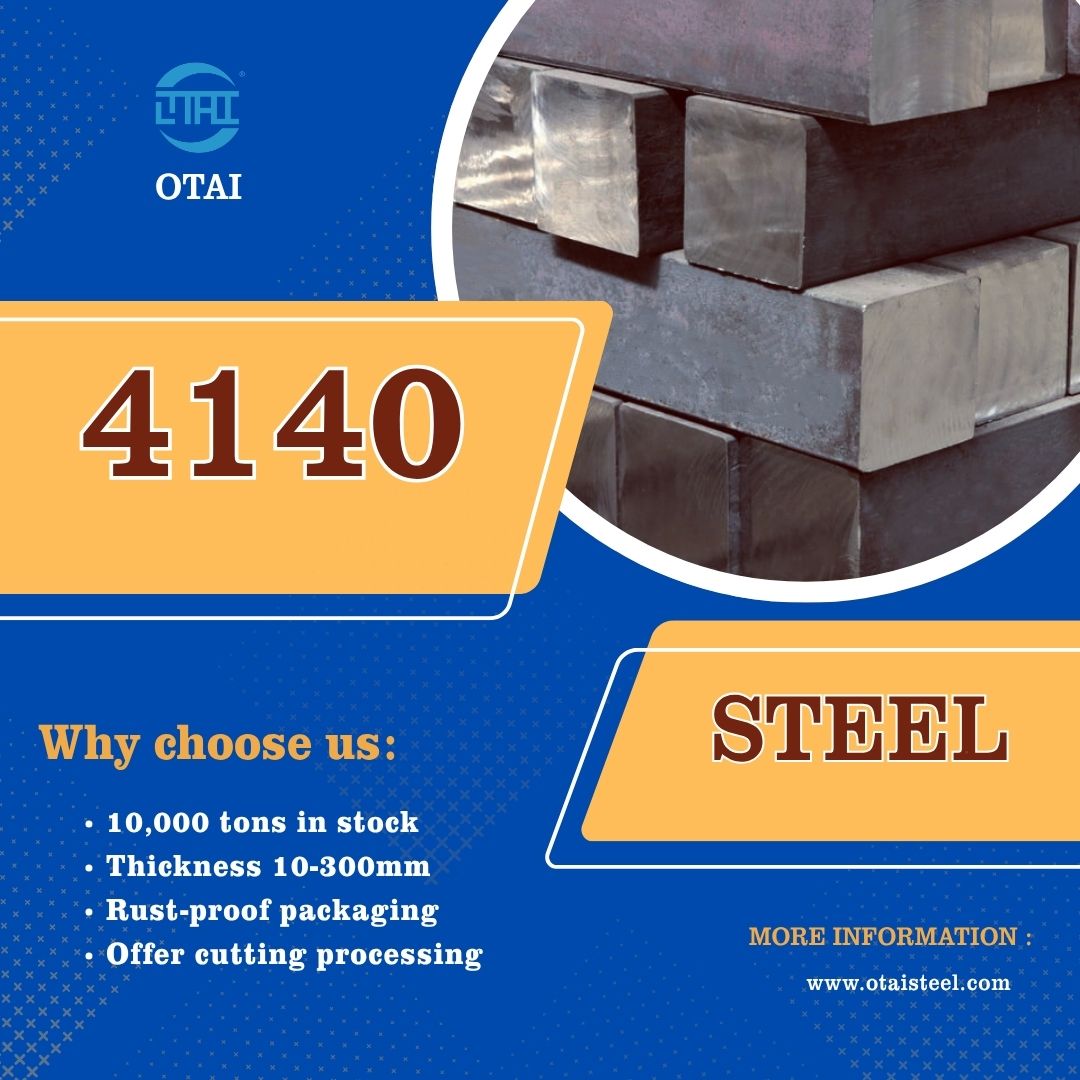
What Kind of alloy Steel is 4140?4140 steel is one of the most commonly used alloy steels, renowned for its strength, toughness, and versatility. Often found in critical applications across various industries, this steel stands out for its ability to withstand high stresses, wear, and fatigue. But what exactly makes 4140 alloy a preferred choice for engineers and manufacturers? Let’s take a closer look at what kind of steel 4140 is, its properties, and its most common uses.


🌟 What is 4140 Steel?

4140 steel is an alloy steel composed primarily of carbon (0.38-0.43%), chromium (0.80-1.10%), and molybdenum (0.15-0.25%). It is part of the chromium-molybdenum steel family, often referred to as chromoly steel. This steel’s blend of elements gives it outstanding characteristics that make it ideal for high-stress and high-wear applications.

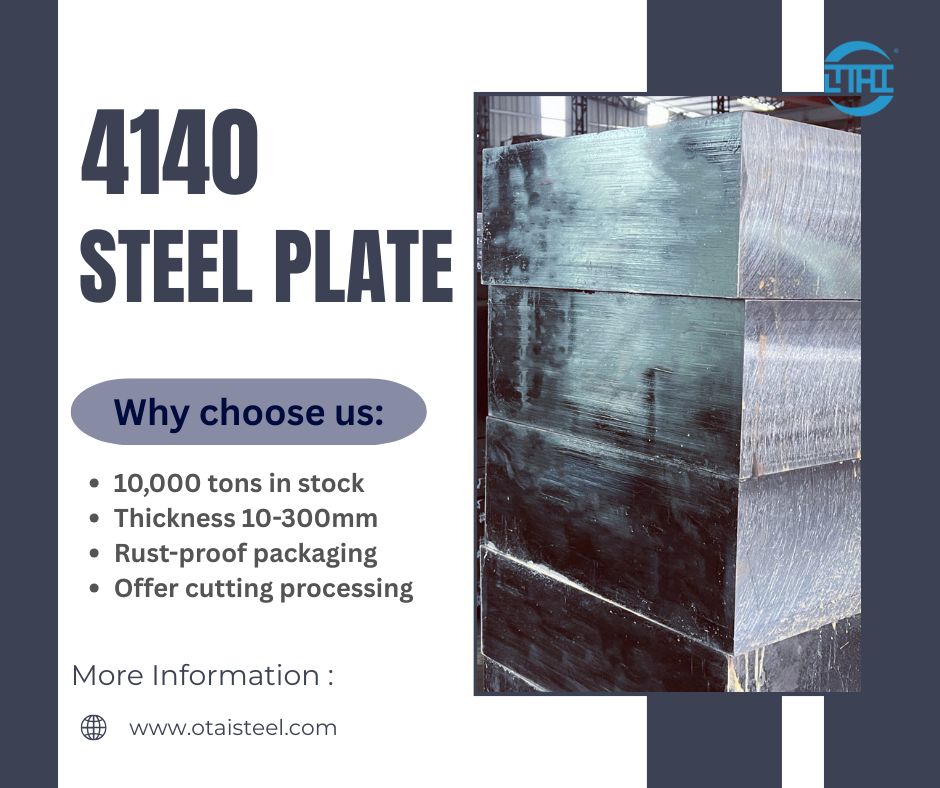
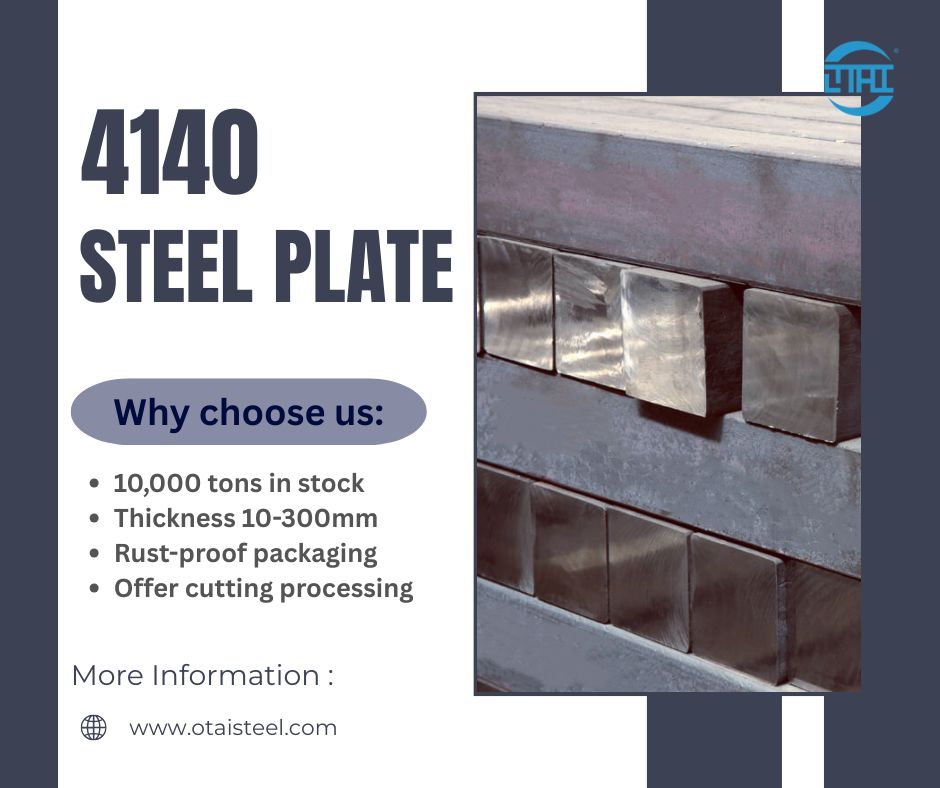
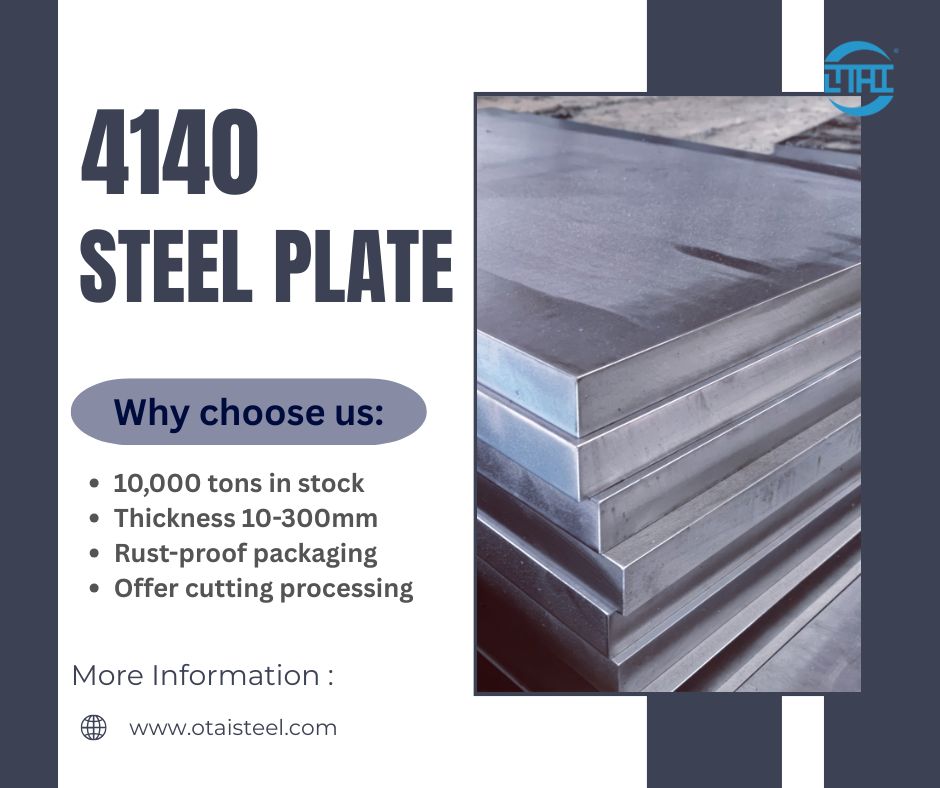
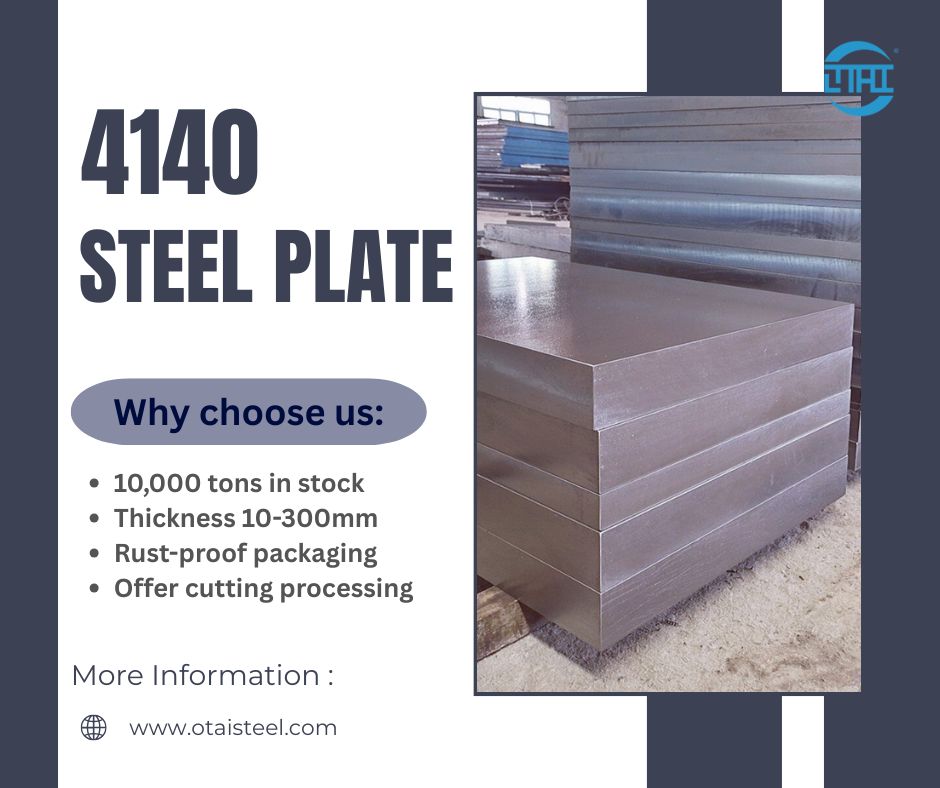
It is commonly found in annealed, quenched and tempered, or pre-hardened conditions, and it is versatile enough to be used in a variety of shapes, including bars, plates, tubes, and rods.


🔑 What Makes 4140 Steel Unique?

💪 High Strength and Toughness

One of the primary reasons engineers prefer 4140 steel is its high tensile strength (ranging from 95,000 to 120,000 psi) and its toughness. These properties make it suitable for applications that require both strength and resistance to impact or fatigue. Whether you’re designing parts for machinery or automotive components, it can handle demanding conditions.

🔧 Good Wear Resistance

4140 steel offers excellent wear resistance, which makes it ideal for parts that undergo high levels of friction and abrasion. It can withstand the harshest conditions without quickly degrading, ensuring the longevity of the components it forms. This property is especially beneficial in industries like mining, oil & gas, and heavy machinery.

🔥 Heat Treatability

Another significant feature of 4140 steel is its heat treatability. When heat-treated, it can achieve different hardness levels, making it suitable for applications where materials need to be tough but not brittle. After processes like quenching and tempering, the steel can reach hardness levels up to 45 HRC.


🛠️ Common Applications of 4140 Steel

🚗 Automotive Industry

The automotive industry relies heavily on 4140 steel due to its combination of strength, toughness, and machinability. Common uses include:

  • Axles

  • Crankshafts

  • Transmission gears

  • Chassis components

These parts need to withstand constant motion, pressure, and heat, and 4140 steel provides the necessary durability.

⛽ Oil & Gas Industry

In the oil and gas industry, 4140 steel finds its place in equipment that must endure high pressures and corrosive environments. Examples of applications include:

  • Drill collars

  • Tool joints

  • Pressure vessels

  • Wellhead components

The ability of 4140 steel to resist fatigue and wear makes it perfect for use in drilling operations and other oilfield applications.

⚙️ Toolmaking and Heavy Machinery

4140 alloy is often used in the toolmaking industry for producing molds, dies, and other high-performance tools. Its strength and resistance to wear make it ideal for high-precision tools that are exposed to high stresses. It is used in:

  • Cutting tools

  • Press dies

  • Molds

  • Heavy-duty machinery components

⚙️ Aerospace and Military Applications

4140 steel also finds use in aerospace and military applications. Aircraft landing gear, high-strength bolts, and other critical components benefit from the material’s superior strength-to-weight ratio and resilience.


🌍 Why Choose 4140 Steel for Your Applications?

  1. Versatility
    4140 steel is incredibly versatile. Whether you need a material that resists fatigue, wear, or high stresses, 4140 steel can meet those needs. It is used in everything from automotive parts to industrial machinery and military-grade components.

  2. Toughness and Durability
    The steel’s ability to maintain its toughness, even at elevated temperatures, makes it perfect for critical, high-performance parts that require durability.

  3. Cost-Effectiveness
    Compared to other high-alloy steels, 4140 steel provides excellent performance at a reasonable cost, making it an ideal choice for manufacturers who need high strength without the high price tag.

  4. Customizable Hardness
    You can easily adjust the hardness of 4140 material through heat treatment to match the requirements of different applications. Whether you need a softer steel for forming or a harder one for wear resistance, 4140 steel can be tailored to your needs.


💡 Company Advantages – Why Choose Otai Special Steel?

At Otai Special Steel, we provide top-quality 4140 steel for a variety of industries. Our expertise and commitment to quality ensure you get the best products and services, including:

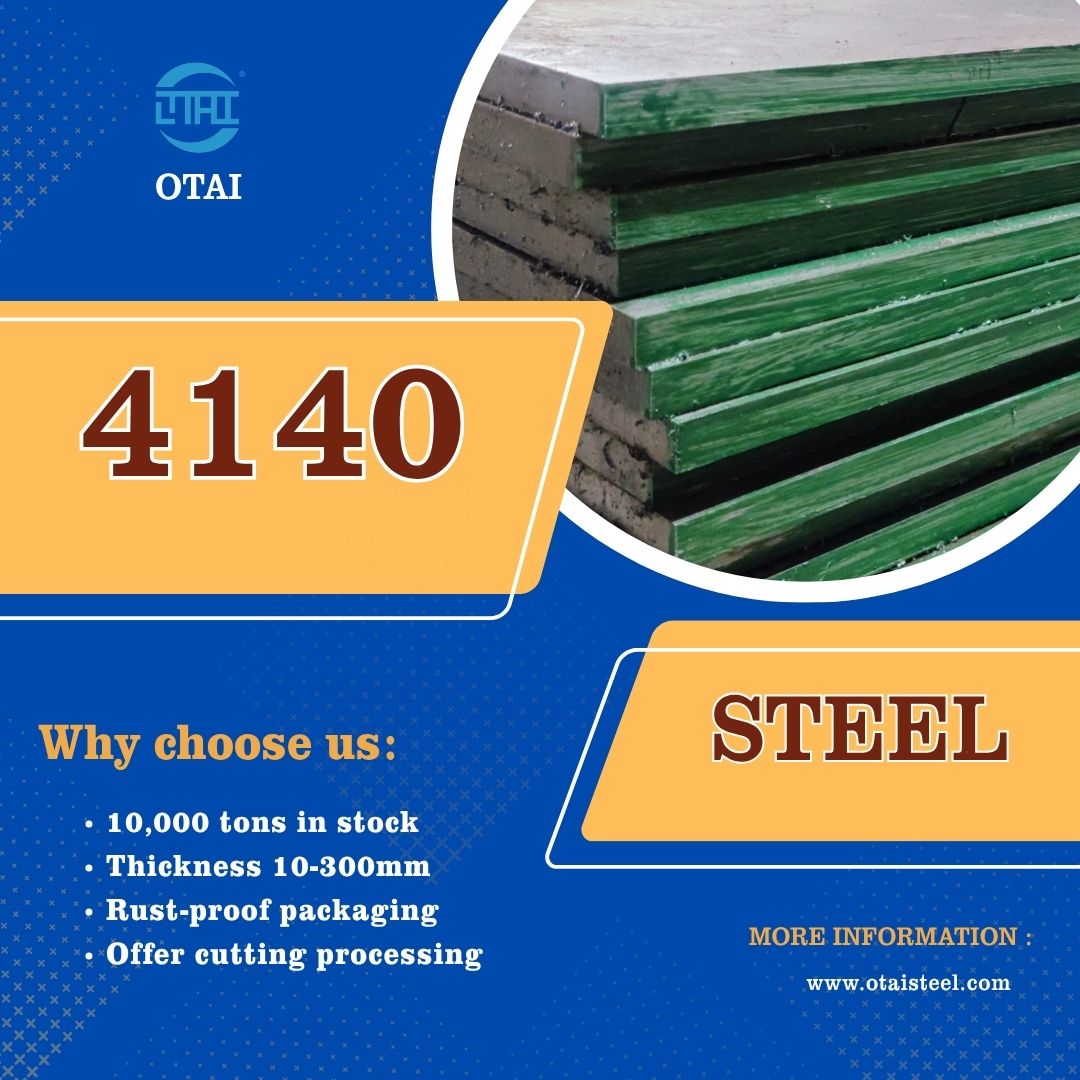
  • 🏭 Large Inventory – Over 10,000 tons of 4140 material in stock, available in a variety of forms and sizes.

  • 📐 Customization Services – We offer cutting, heat treatment, and other customizations to meet your precise requirements.

  • 🔍 Quality Assurance – Our steel passes rigorous quality control checks, including ultrasonic testing (UT), chemical composition testing, and hardness verification.

  • 🌍 Global Reach – We deliver to over 50 countries, ensuring fast and reliable service worldwide.

  • 💰 Competitive Pricing – We offer high-quality 4140 steel at affordable prices without compromising on quality.


❓ FAQ

Q1: What is 4140 steel used for?
A: 4140 steel is used in a variety of applications including automotive parts, toolmaking, oil and gas equipment, and military-grade components. It is ideal for parts requiring high strength, wear resistance, and toughness.
Q2: Can I weld 4140 steel?
A: Yes, 4140 steel can be welded, but it requires preheating and post-weld heat treatment to prevent cracking and distortion.

Q3: How do I heat treat 4140 alloy?
A: 4140 steel is commonly heat-treated through quenching and tempering, which increases its hardness and improves its mechanical properties.

Q4: What is the hardness of 4140 steel?
A: The hardness of 4140 steel can reach up to 45 HRC after heat treatment, depending on the cooling and tempering process.

Q5: What makes 4140 steel different from other alloy steels?
A: 4140 offers a unique combination of strength, toughness, and wear resistance, making it an excellent choice for heavy-duty applications. It is also more cost-effective than many other high-alloy steels.

0 0 Continue Reading →

Cast 4140 Steel Properties: A Comprehensive Overview

Cast 4140 Steel Properties: A Comprehensive OverviewCast 4140 Steel Properties: A Comprehensive Overview

Cast 4140 steel is a variant of 4140 alloy steel, created using casting methods instead of traditional forging. This steel combines the excellent mechanical properties of 4140 steel, like strength, toughness, and wear resistance, with the flexibility of casting, allowing manufacturers to produce complex and large components. In this article, we’ll explore the properties of cast 4140 steel, including its mechanical characteristics, benefits, and common applications.


🌟 What Is Cast 4140 Steel?

Cast 4140 steel is an alloy containing carbon (C), chromium (Cr), molybdenum (Mo), and manganese (Mn). These alloying elements give it exceptional strength, toughness, and wear resistance. In the casting process, manufacturers pour molten metal into molds, allowing it to cool and solidify into specific shapes. This process makes it possible to produce complex, large, or irregularly shaped parts efficiently.

While the mechanical properties of cast 4140 steel are similar to those of forged 4140 steel, the casting process may slightly affect the internal structure and overall mechanical properties of the material.


🔧 Chemical Composition of Cast 4140 Steel

The chemical composition of cast 4140 steel plays a vital role in determining its mechanical properties. Here is the typical chemical composition:

Element Min % Max %
Carbon (C) 0.38 0.43
Chromium (Cr) 0.80 1.10
Molybdenum (Mo) 0.15 0.25
Manganese (Mn) 0.60 0.90
Silicon (Si) 0.20 0.35
Sulfur (S) 0.04 0.05
Phosphorus (P) 0.04 0.05

These elements provide cast 4140 steel with the strength, wear resistance, and toughness needed for high-performance applications.


🏗️ Mechanical Properties of Cast 4140 Steel

Cast 4140 steel offers impressive mechanical properties, even though the casting process can influence its internal structure. Below are the typical mechanical properties:

Property Value
Tensile Strength 850–1000 MPa
Yield Strength 600–900 MPa
Elongation 20%–30% (depends on heat treatment)
Hardness 28–35 HRC
Impact Toughness High resistance to impact and fatigue
Fatigue Strength Excellent fatigue resistance

1. Tensile Strength

Cast 4140 steel typically has a tensile strength between 850 MPa and 1000 MPa. This allows the steel to withstand significant tensile loads without breaking, making it suitable for heavy-duty applications.

2. Yield Strength

With a yield strength ranging from 600 MPa to 900 MPa, cast 4140 steel resists permanent deformation, maintaining its shape under heavy loads.

3. Elongation

The elongation of cast 4140 steel ranges from 20% to 30%, providing the material with flexibility before it fractures, which helps it resist cracking under stress.

4. Hardness

The hardness of cast 4140 steel falls between 28 and 35 HRC, offering wear resistance while maintaining toughness.

5. Toughness and Fatigue Resistance

One of the standout features of cast 4140 steel is its toughness and fatigue resistance, making it ideal for high-stress environments where cyclic loads are common.


🌍 Advantages of Cast 4140 Steel

The casting process offers distinct advantages, particularly when producing large or complex components. These include:

Advantage Description
Complex Shapes Casting allows for the production of intricate, large parts that would be difficult or expensive to forge.
Cost-Effective For large parts, casting is often more economical than forging or machining, particularly in mass production.
Consistency Casting ensures consistent material properties, especially with controlled cooling rates.
Design Flexibility Casting offers more flexibility for creating custom parts with unique shapes.

🏗️ Applications of Cast 4140 Steel

Due to its excellent mechanical properties, cast 4140 steel finds application in a variety of industries, including:

Industry Applications Why Cast 4140 Steel?
Automotive Engine blocks, crankshafts, gears The casting process is ideal for large, complex components that require strength.
Aerospace Structural components, landing gear parts High toughness and wear resistance for critical aerospace components.
Heavy Machinery Hydraulic components, machine frames Strength and fatigue resistance under heavy loads.
Oil and Gas Drill rods, downhole tools, valves Ability to withstand high pressures and abrasive conditions.

1. Automotive Industry

In the automotive industry, cast 4140 steel is used for engine blocks and crankshafts. The ability to cast large, complex shapes makes it ideal for producing these high-strength components, which are essential in engine performance.

2. Aerospace Industry

Cast 4140 steel is used in aerospace for landing gear parts and structural components. These parts require high strength and toughness to withstand the extreme conditions during flight and landing.

3. Heavy Machinery

For heavy machinery, cast 4140 steel is ideal for hydraulic components and machine frames. Its high fatigue resistance and strength make it suitable for use in demanding environments where durability is key.

4. Oil and Gas

In the oil and gas industry, cast 4140 steel is used for drill rods, downhole tools, and valves. The material’s ability to resist high pressure and wear makes it perfect for equipment that operates in harsh, high-pressure environments.


🏆 Why Choose Otai Special Steel for Cast 4140 Steel?

Otai Special Steel offers cast 4140 steel with several key benefits:

  • Large Inventory: We maintain over 10,000 tons of steel in stock, ensuring prompt delivery to meet your needs.

  • Customization: We offer cutting, heat treatment, and surface finishing services to tailor the material to your specifications.

  • Quality Assurance: Each batch of cast 4140 steel undergoes rigorous quality control to ensure that it meets your exact standards.

  • Global Expertise: With years of experience in supplying high-performance steel, we provide reliable materials to clients worldwide.


FAQ: Common Questions About Cast 4140 Steel

Q1: How does cast 4140 steel compare to forged 4140 steel?
A1: Both cast 4140 steel and forged 4140 steel offer similar mechanical properties. However, cast 4140 steel is ideal for producing large and complex parts at a lower cost, whereas forged 4140 steel provides higher toughness for parts requiring maximum strength.

Q2: Can cast 4140 steel be heat-treated?
A2: Yes, cast 4140 steel can undergo heat treatment processes like tempering and quenching to improve its hardness and wear resistance. Heat treatment enhances its performance in high-stress and high-wear applications.

Q3: Is cast 4140 steel suitable for high-temperature applications?
A3: Yes, cast 4140 steel can handle high temperatures, but it’s essential to consider heat treatment and proper design to maintain its strength and durability in extreme conditions.

0 0 Continue Reading →

4140 Steel Elongation: What You Need to Know About Ductility and Performance

4140 Steel Elongation: What You Need to Know About Ductility and Performance

When it comes to materials like 4140 steel, one of the critical properties that engineers and manufacturers consider is elongation. Elongation refers to the ability of a material to stretch or elongate before it breaks. For 4140 steel, this property plays a significant role in determining its performance in various applications. In this article, we will explore what 4140 steel elongation is, how it affects the material’s overall properties, and why it is important in industrial applications.


🌟 What is Elongation in Steel?

Elongation is a measure of a material’s ability to undergo plastic deformation (stretching) before failure under tensile stress. It is expressed as a percentage and calculated based on the increase in length divided by the original length of the material before it breaks. The higher the elongation, the more ductile (stretchable) the material is, meaning it can absorb more strain before fracturing.

For steel like 4140 steel, elongation is an essential indicator of how the material behaves under stress and how well it can resist cracking or breaking during use.


🔧 Mechanical Properties of 4140 Steel

4140 steel is an alloy steel that contains chromium, molybdenum, and carbon, making it strong, tough, and highly resistant to wear. While the material is known for its toughness, elongation is another important factor that affects its performance.

Key mechanical properties of 4140 steel include:

Property Value
Yield Strength 600–900 MPa
Tensile Strength 850–1000 MPa
Elongation 20%–30% (depending on heat treatment)
Hardness (HRC) 28–35 HRC
Impact Toughness High resistance to impact and fatigue
Fatigue Strength Excellent fatigue resistance

1. Yield Strength and Elongation

Yield strength is the point at which 4140 steel begins to deform permanently under stress. Elongation comes into play because it helps 4140 steel absorb stress and undergo plastic deformation before it fractures. This means that, while 4140 steel is strong, it can also tolerate a degree of stretching without breaking, offering more flexibility in high-stress applications.

2. Tensile Strength and Elongation

The tensile strength of 4140 steel refers to the maximum stress the material can endure without breaking. As the material is stretched during testing, it elongates before reaching this point. The higher the elongation, the more the material can stretch under load, making it useful for applications that experience fluctuating forces or impacts.

3. Toughness and Elongation

Elongation also impacts the toughness of 4140 steel. Toughness refers to the ability of a material to absorb energy before fracturing. The higher the elongation, the more energy the material can absorb before it fails, making 4140 steel suitable for high-impact and high-stress environments.


🏗️ Applications of 4140 Steel

The elongation of 4140 steel plays a crucial role in how it performs in different applications, especially where flexibility and impact resistance are required. Here are some key applications where 4140 steel‘s elongation contributes to its effectiveness:

Industry Applications Role of Elongation
Automotive Axles, gears, suspension components Elongation helps absorb shock and stress in moving parts.
Aerospace Landing gear, structural components Elongation enhances resistance to fatigue and impact during flight.
Oil and Gas Drill rods, downhole tools Elongation ensures tools can handle high-pressure environments.
Heavy Machinery Machine parts, industrial components Elongation contributes to toughness in heavy-load operations.

1. Automotive Industry

In the automotive industry, 4140 steel is often used in axles, gears, and suspension components. These parts experience continuous loading and unloading. The elongation of 4140 steel allows these components to absorb shocks and stresses without cracking, ensuring they last longer and perform better under pressure.

2. Aerospace Industry

For the aerospace industry, 4140 steel is commonly used in landing gear and structural components. These parts must withstand the rigors of flight, including extreme forces and impacts. The elongation of 4140 steel ensures that it can absorb the stresses encountered during takeoff, landing, and flight without failing.

3. Oil and Gas Industry

In the oil and gas industry, 4140 steel is used for drill rods and downhole tools that face extreme pressure and abrasive conditions. Elongation helps these tools maintain their integrity under fluctuating pressures and forces, reducing the risk of failure in high-stress environments.

4. Heavy Machinery

For heavy machinery, 4140 steel is used in machine parts and industrial components that are subject to heavy loads. The elongation of 4140 steel ensures that these components can handle constant, fluctuating forces without cracking or breaking, improving their durability in demanding applications.


🏆 Why Choose Otai Special Steel for 4140 Steel?

Otai Special Steel offers high-quality 4140 steel with several advantages:

  • Large Inventory: With over 10,000 tons of steel in stock, we ensure fast delivery for your specific needs.

  • Customization: We provide cutting, heat treatment, and packaging services to meet your exact requirements.

  • Quality Assurance: Each batch of 4140 steel undergoes stringent quality control, including chemical composition analysis, hardness testing, and ultrasonic testing to ensure top performance.

  • Global Expertise: With years of experience in the steel industry, we provide reliable and durable materials to clients worldwide.


FAQ

Q1: How does the elongation of 4140 steel compare to other steels?
A1: 4140 steel has a relatively moderate elongation of 20% to 30%, depending on the heat treatment. This allows it to absorb considerable stress and strain before breaking, which is crucial for high-load applications. In comparison, steels with higher carbon content may have lower elongation, making them more brittle.

Q2: How does heat treatment affect the elongation of 4140 steel?
A2: Heat treatment, such as quenching and tempering, can impact the elongation of 4140 steel. Typically, heat-treated 4140 steel will have a slightly reduced elongation due to increased hardness, but it will also experience improved strength and wear resistance. The balance between hardness and elongation is crucial for different applications.

Q3: Is 4140 steel suitable for applications requiring high elongation?
A3: Yes, 4140 steel is suitable for applications that require moderate to high elongation, such as automotive parts, aerospace components, and machinery parts. It strikes a good balance between strength, elongation, and toughness, making it versatile for many demanding environments.

0 0 Continue Reading →

4140 Steel Yield Stress: Understanding Its Significance in Industry


4140 Steel Yield Stress: Understanding Its Significance in IndustryWhen selecting materials for high-stress applications, 4140 steel often emerges as the top choice. Known for its excellent mechanical properties, including its yield stress, 4140 steel finds widespread use in industries that demand strength, toughness, and wear resistance. In this article, we’ll dive into the meaning of yield stress for 4140 steel, how it compares to other steels, and why it’s so crucial for industrial applications.


🌟 What is Yield Stress?

Yield stress refers to the amount of stress a material can endure before it begins to deform permanently. Simply put, it’s the point where the material transitions from elastic deformation (where it can return to its original shape) to plastic deformation (where the material undergoes permanent change). Yield stress is a crucial indicator of a material’s ability to resist deformation under load without failing.

For 4140 steel, the yield stress is one of its most defining properties. It ensures that 4140 steel can perform effectively in high-load applications, such as shafts, gears, and crankshafts, which are subjected to substantial mechanical forces.


🔧 4140 Steel Yield Stress: The Numbers

Below is the typical range for 4140 steel yield stress:

Property Value
Yield Strength 600 MPa to 900 MPa
Heat Treatment Impact Heat treatment increases yield strength
Common Heat Treatment Quenching and tempering

What Does This Mean for 4140 Steel?

  • 600 MPa to 900 MPa: This range reflects the yield strength of 4140 steel under standard conditions. Proper heat treatment can push 4140 steel to the higher end of this range, increasing its resistance to deformation.

  • Heat Treatment: 4140 steel can undergo quenching and tempering to enhance its yield stress, making it suitable for even more demanding applications.

The high yield stress makes 4140 steel resistant to permanent deformation under mechanical stress, which is crucial in environments where components face continuous high loads.


🏗️ Applications of 4140 Steel

The yield stress of 4140 steel directly influences its suitability for a wide range of industrial applications. Below are some industries and components where 4140 steel is commonly used, thanks to its impressive yield stress:

Industry Applications Reason for Use
Automotive Gears, axles, suspension components High yield stress ensures durability under stress
Aerospace Aircraft landing gear, structural components Ability to withstand extreme stress and fatigue
Oil and Gas Drill rods, downhole tools High yield strength to resist high-pressure forces
Heavy Machinery Machine parts, industrial frames Resistance to deformation under heavy loads

1. Automotive Industry

In the automotive industry, 4140 steel is widely used for high-performance components like gears, axles, and suspension parts. These components undergo significant mechanical stress. Thanks to its high yield stress, 4140 steel can resist permanent deformation, ensuring that the components maintain their shape and integrity under heavy loads.

2. Aerospace Industry

The aerospace industry requires materials that can withstand extreme stresses, including both static and dynamic loads. 4140 steel excels in components such as aircraft landing gear and structural elements. Its high yield stress allows it to endure the intense mechanical forces encountered during takeoff, landing, and flight.

3. Oil and Gas Industry

In the oil and gas industry, 4140 steel is essential for components like drill rods, downhole tools, and valves. These parts face high pressures and abrasive conditions. The yield stress of 4140 steel ensures that it can withstand these conditions without deforming, making it reliable in deep drilling operations.

4. Heavy Machinery

In heavy machinery, 4140 steel is used in gearboxes, machine frames, and shafts. These parts must endure heavy mechanical loads. Thanks to its high yield stress, 4140 steel resists permanent deformation under these demanding conditions, ensuring long-lasting durability in heavy-duty applications.


🏆 Why Choose Otai Special Steel for 4140 Steel?

Otai Special Steel provides high-quality 4140 steel with several advantages:

  • Large Inventory: With over 10,000 tons of steel in stock, we offer fast and reliable delivery to meet your specific needs.

  • Customization: We provide cutting, heat treatment, and packaging services to tailor 4140 steel to your exact specifications.

  • Quality Assurance: Every batch of 4140 steel undergoes strict testing, including chemical composition analysis, hardness testing, and ultrasonic testing to meet industry standards.

  • Global Expertise: With years of experience, Otai Special Steel delivers top-quality products and services to clients worldwide.


FAQ

Q1: How does the yield stress of 4140 steel compare to other steels?
A1: 4140 steel has a higher yield stress than many other medium-carbon steels. The addition of chromium and molybdenum boosts its strength and resistance to deformation. This makes it ideal for high-performance applications where strength is critical.

Q2: How does heat treatment affect the yield stress of 4140 steel?
A2: Heat treatment, particularly quenching and tempering, significantly increases the yield stress of 4140 steel. By adjusting the heat treatment process, manufacturers can tailor the steel’s properties to meet specific strength requirements for different applications.

Q3: Is 4140 steel suitable for components that face fluctuating stress?
A3: Yes, 4140 steel is highly suitable for applications that experience fluctuating stress. Its high yield stress and excellent fatigue resistance allow it to withstand repeated loading and unloading cycles without permanent deformation.

0 0 Continue Reading →

Knowing the 4140 steel equivalent grades

Knowing the 4140 steel equivalent gradesKnowing the 4140 steel equivalent grades

When engineers or buyers look for 4140 steel equivalent material, it’s usually because they are sourcing from different regions or working on international projects. Since steel standards vary by country, understanding the equivalents of 4140 steel helps avoid confusion and ensures you choose the right grade for your application. Let’s dive into the details, comparing its global equivalents, mechanical properties, and real-world uses.


🌍 Why Equivalent Materials Matter in Steel Procurement

Steel is a global business. A designer in the U.S. might specify AISI 4140 steel, but a supplier in Europe will reference 42CrMo4, while a customer in China may request 42CrMo. These materials are essentially the same in composition and performance, but the naming convention differs by standard. Knowing the 4140 steel equivalent grades ensures smooth communication between buyers, suppliers, and manufacturers.


🧪 Chemical Composition of 4140 Steel

The foundation of equivalency lies in chemical composition. Let’s look at what makes 4140 unique:

Element Content (%)
Carbon (C) 0.38 – 0.43
Chromium (Cr) 0.80 – 1.10
Molybdenum (Mo) 0.15 – 0.25
Manganese (Mn) 0.75 – 1.00
Silicon (Si) 0.15 – 0.35
Sulfur (S) ≤ 0.04
Phosphorus (P) ≤ 0.035

This balanced combination of carbon, chromium, and molybdenum gives 4140 its excellent toughness, wear resistance, and heat treatment response.


🔑 Global Equivalent Standards of 4140 Steel

Here’s how 4140 steel equivalent material appears in different international standards:

Country/Standard Equivalent Grade Notes
USA (AISI/SAE) 4140 Widely used in North America
Germany (DIN/EN) 42CrMo4 Common in Europe, high strength
China (GB) 42CrMo Closely matches 4140 properties
Japan (JIS) SCM440 Used in automotive and machinery
UK (BS) 708M40 Similar applications to AISI 4140
France (AFNOR) 42CD4 Strong alloy steel grade
Russia (GOST) 38Ch2MFA Local standard equivalent

This chart shows that no matter where you source your steel, there’s usually a direct 4140 steel equivalent material available.


⚙️ Mechanical Properties Comparison

While names differ, the mechanical performance of 4140 steel equivalents remains consistent:

Property Value (Typical)
Tensile Strength 655 – 1080 MPa (depending on heat treatment)
Yield Strength 415 – 830 MPa
Hardness (Rockwell C) 28 – 55 HRC (after quenching & tempering)
Elongation ~25%
Impact Toughness High

Thanks to its versatile properties, 4140 and its equivalents are favored for critical applications where strength, toughness, and fatigue resistance are required.


🛠️ Common Applications of 4140 Steel Equivalent Material

Because of its wide availability, 4140 and its equivalents are used globally in industries such as:

  • Automotive: gears, shafts, crankshafts, axles

  • Oil & Gas: drill collars, couplings, downhole tools

  • Heavy Machinery: forged parts, bolts, hydraulic shafts

  • Aerospace: landing gear components, tooling

  • Tooling Industry: dies, molds, fixtures

For example, a European buyer might request 42CrMo4 round bar for gear production, while a U.S. manufacturer would specify 4140 alloy steel bar—but the result is the same high-strength product.


📌 Key Advantages of Choosing 4140 Steel Equivalents

  1. Global Sourcing Flexibility – Buyers can procure the same material across multiple regions.

  2. Reliable Performance – Equivalent grades meet similar mechanical property ranges.

  3. Heat Treatability – Quenching and tempering improve hardness and strength regardless of standard.

  4. Versatility – Works well in forging, machining, and welding.

  5. Cost Efficiency – Local equivalents often lower procurement costs without compromising quality.


🏭 Company Advantage – Why Choose Otai Special Steel

At Otai Special Steel, we maintain an extensive inventory of 4140 alloy steel and its equivalents like 42CrMo4, SCM440, and 42CrMo.

  • ✅ Over 10,000 tons of stock in plates, round bars, and blocks.

  • ✅ Cutting, heat treatment, and ultrasonic testing services.

  • ✅ Proven track record supplying to Thyssenkrupp, Schlumberger, Borealis, and other global leaders.

  • ✅ Expert guidance on choosing the right 4140 steel equivalent material for your region and application.


❓ FAQ – 4140 Steel Equivalent Material

Q1: Is 42CrMo4 the same as AISI 4140?
Yes, 42CrMo4 is the European equivalent of AISI 4140 steel, with nearly identical chemistry and properties.

Q2: Can I substitute SCM440 for 4140 steel?
Yes, SCM440 is the Japanese equivalent, and it performs the same in heat treatment and mechanical properties.

Q3: Why do different countries have different names for the same steel?
Because steel standards are governed by regional organizations (AISI, DIN, JIS, GB, etc.), each assigns its own designation.

Q4: Do equivalent grades always perform the same?
While small variations in composition exist, reputable suppliers ensure that equivalents meet international mechanical property requirements.

Q5: Where can I buy 4140 steel equivalents?
Otai Special Steel supplies a wide range of equivalents globally, with custom services like machining and testing.

0 0 Continue Reading →

What is 4140 alloy Steel Rockwell Hardness?

What is 4140 alloy Steel Rockwell Hardness?What is 4140 alloy Steel Rockwell Hardness?

4140 steel is a go-to material for a wide range of industrial applications, but one property stands out among engineers and manufacturers: Rockwell hardness. If you’re working on components that require a balance between toughness and wear resistance, understanding the 4140 steel Rockwell hardness is essential. Let’s explore what this value really means, how it’s affected by heat treatment, and how it compares with other steels.


🔧 What Is Rockwell Hardness and Why Is It Important?

Rockwell hardness (measured on the C scale for hardened steels) determines a material’s resistance to permanent deformation. For 4140 steel, this property is especially relevant because it directly influences tool life, machinability, and resistance to wear.

4140 steel is a chromium-molybdenum alloy steel known for its excellent hardness-to-toughness ratio, making it suitable for everything from automotive gears to heavy-duty shafts. But hardness is not a fixed value—it changes depending on how the steel is treated.


🧪 Rockwell Hardness of 4140 Steel in Different Conditions

Below is a comparison table showing typical Rockwell hardness values for 4140 steel under various heat treatment conditions:

Condition Hardness (HRC) Description
Annealed 15–22 HRC Soft for machining; not suitable for wear parts
Normalized 30–35 HRC Good balance of machinability and strength
Quenched and Tempered (Q&T) 28–45 HRC Most commonly used condition in industrial parts
Fully Hardened 50–55 HRC High hardness, lower toughness
Surface Nitrided 60–65 HRC (surface) Extremely hard surface with tough core

As you can see, the Rockwell hardness of 4140 alloy steel can vary widely depending on the processing method. This flexibility is part of what makes the material so popular.


🔩 Applications Based on Hardness Levels

Different hardness levels are suitable for different use cases. Let’s break them down:

  • 15–22 HRC (Annealed): Best for rough machining or when subsequent heat treatment is planned. Common in forgings or large stock preparation.

  • 30–35 HRC (Normalized): Ideal for machine components that require a mix of strength and machinability.

  • 38–42 HRC (Q&T): Often used in crankshafts, gears, or spindles—where strength and fatigue resistance matter.

  • 50–55 HRC (Fully Hardened): Suitable for dies or molds, where wear resistance is critical.

  • 60–65 HRC (Nitrided surface): Great for valves, rods, and piston parts with demanding surface wear requirements.

In each of these categories, the heat treatment of 4140 steel plays a defining role.


⚙️ How Does 4140 Steel Hardness Compare with Other Materials?

Here’s a quick comparison of Rockwell hardness ranges among popular engineering steels:

Steel Type Rockwell Hardness (HRC) Notes
4140 Steel 15–55 (core), up to 65 (surface) Excellent versatility
1045 Carbon Steel 10–30 Low hardenability
D2 Tool Steel 55–62 Very high wear resistance
AISI 4340 28–45 Comparable but higher toughness
8620 Alloy Steel 20–32 (core) Often used for case hardening

While D2 tool steel may outperform in surface hardness, 4140 strikes an excellent balance between core toughness and surface hardness, especially after quenching and tempering or nitriding.


🔍 Common Questions: Is Higher Hardness Always Better?

Not necessarily. While higher hardness improves wear resistance, it often reduces toughness and increases brittleness. That’s why engineers often choose medium Rockwell hardness for 4140 steel (around 35–45 HRC) for high-performance mechanical parts.

For example:

  • A drivetrain shaft must be hard enough to resist wear but not so hard that it breaks under stress.

  • A hydraulic piston rod might use nitrided 4140 steel to combine a hard shell with a ductile core.


📦 Choosing the Right 4140 Steel Grade and Hardness Level

If you’re buying or specifying this material, always match the hardness level with your application needs. You might look for:

  • Pre-hardened 4140 plates at ~28–32 HRC

  • Q&T 4140 steel round bars at ~38–44 HRC

  • Nitrided 4140 shafts for ultra-high surface hardness

Whether you’re searching for 4140 steel for machining, for toolmaking, or for fatigue-resistant parts, knowing the hardness range is essential to making the right call.


🏭 Why Choose Otai Special Steel

At Otai Special Steel, we provide a massive inventory of 4140 steel in various forms, including pre-hardened plates, Q&T bars, and custom-cut blanks. Our advantages include:

  • Over 10,000 tons of stock all year round

  • ✅ Customized cutting and heat treatment

  • ✅ UT-tested quality with third-party inspection options (SGS, etc.)

  • ✅ Competitive prices and fast global shipping

  • ✅ Technical support for material selection and machinability consultation

We’re proud to serve global giants like Thyssenkrupp, Borealis, and Schlumberger, providing stable, high-quality supply for every project.


❓FAQ: 4140 Steel Rockwell Hardness

Q1: What’s the typical Rockwell hardness of 4140 steel in Q&T condition?
A1: Usually between 28–45 HRC, depending on tempering temperature.

Q2: Can I surface harden 4140 steel?
A2: Yes, via nitriding or carburizing, reaching up to 60–65 HRC on the surface.

Q3: How do I test Rockwell hardness?
A3: Using a Rockwell hardness tester with a C-scale indenter (typically a diamond cone).

0 0 Continue Reading →

What annealing does to 4140 alloy steel?

What annealing does to 4140 alloy steel?If you work with alloy steels in machining, fabrication, or heat treatment, you’ve probably come across annealing 4140 steel. This process is one of the most effective ways to soften the steel, improve machinability, and prepare it for further forming or heat treatment. But to get it right, you need to understand the temperatures, cooling rates, and metallurgical changes that happen during annealing.

In this guide, we’ll break down what annealing does to 4140 steel, why it’s essential for certain projects, and how to perform it step by step—backed with technical data and practical shop tips.


🌟 What Is Annealing 4140 Steel?

4140 steel is a chromium-molybdenum alloy steel known for its high strength, wear resistance, and toughness. In its hardened state, it can be difficult to machine or bend. Annealing is a heat treatment process that reduces hardness, increases ductility, and relieves internal stresses.
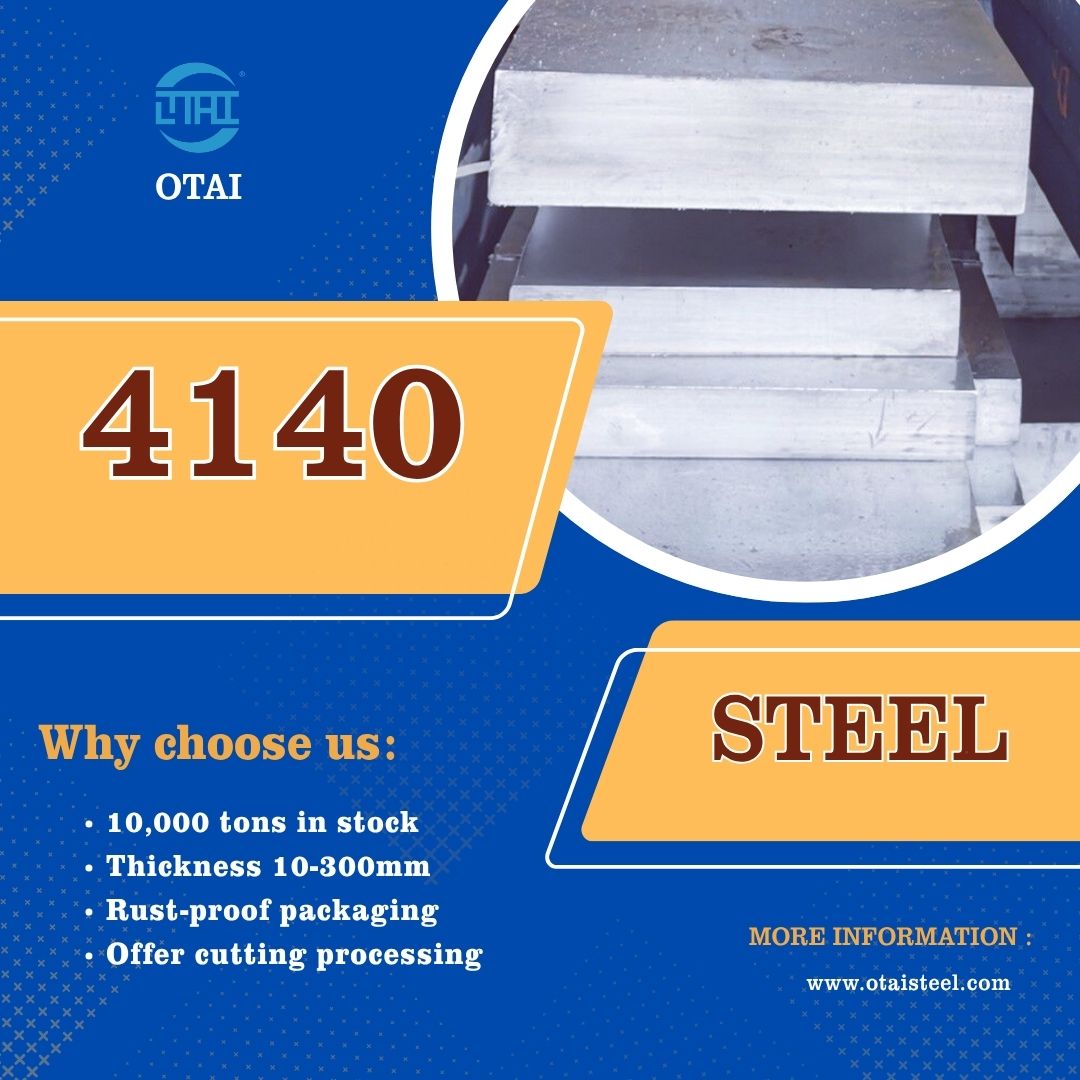
When you perform annealing 4140 steel, you heat the material to a specific range (above its critical temperature), hold it to allow transformation, and then cool it slowly—typically in a furnace or insulating medium. This allows the microstructure to convert into a softer, more machinable form called ferrite-pearlite.


🔍 Chemical Composition of 4140 Steel

Before diving into the process, here’s the typical chemical makeup of 4140 alloy steel:

Element Percentage (%)
Carbon (C) 0.38–0.43
Chromium (Cr) 0.80–1.10
Molybdenum (Mo) 0.15–0.25
Manganese (Mn) 0.75–1.00
Silicon (Si) 0.15–0.35
Phosphorus (P) ≤ 0.035
Sulfur (S) ≤ 0.04

This alloy combination gives 4140 pre-annealed steel its balance of strength and hardenability.


🔥 Annealing Process for 4140 Steel – Step by Step

Here’s the typical cycle used by heat treatment shops when annealing 4140 steel:

Step Temperature (°C / °F) Time Cooling Method Purpose
Preheat 400–500°C / 750–930°F Furnace Reduce thermal shock
Full Heat 815–845°C / 1500–1550°F 1 hour per inch thickness Furnace Transform microstructure
Hold Same as full heat As required Furnace Uniform temperature throughout
Controlled Cooling ≤ 28°C/hour to 540°C (≤ 50°F/hour to 1000°F) Furnace or sand bed Prevent hardening during cooling
Final Cool Room temperature Air Complete cycle

📈 Effects of Annealing on Mechanical Properties

Annealing 4140 steel has a significant effect on hardness, tensile strength, and elongation:

Property Before Annealing (Q&T) After Annealing
Hardness (HRC) 28–32 18–22
Tensile Strength (MPa) 850–1100 620–700
Yield Strength (MPa) 650–950 415–500
Elongation (%) 12–18 20–25
Machinability (%) 60 80

💡 The increase in ductility and machinability is why many machinists prefer machining annealed 4140 steel over hardened stock.


🧪 Microstructural Changes During Annealing

When annealing 4140 alloy steel, the structure changes from tempered martensite or bainite to ferrite-pearlite. This transformation:

  • Relieves residual stresses from forging or machining

  • Improves toughness by eliminating brittleness

  • Prepares steel for carburizing or nitriding if needed later

  • Enhances cold forming capability such as bending or rolling


🛠️ When to Anneal 4140 Steel

You should consider annealing 4140 steel in situations like:

  • Before extensive cold forming 4140 steel

  • When high machinability is needed for precision components

  • To remove stresses after heavy welding or forging

  • Before applying surface hardening treatments like nitriding or carburizing


⚠️ Common Mistakes to Avoid

  • Overheating above 870°C (1600°F) – causes grain growth and reduces toughness

  • Cooling too quickly – may result in partial hardening

  • Skipping preheat – can cause thermal shock and cracking in large sections

  • Not holding long enough – results in incomplete transformation


🔍 Annealed 4140 Steel vs Normalized 4140 Steel

Feature Annealed 4140 Normalized 4140
Hardness Lower (softer) Slightly higher
Machinability Higher Lower
Grain Structure Ferrite-pearlite Finer pearlite
Stress Relief Excellent Good
Common Use Machining, cold forming General structural parts

🧠 Pro Tips from the Heat Treatment Floor

  • Always measure core temperature, not just surface, before holding time starts.

  • Use furnace charts to track exact cooling rates.

  • If annealing thick 4140 steel plate, allow extra soak time to avoid uneven properties.

  • Combine annealing with a later quench and temper cycle for optimal strength.


🏭 Company Advantages – Why Choose Otai Special Steel for Annealed 4140

At Otai Special Steel, we specialize in supplying 4140 steel in all heat treatment conditions, including fully annealed stock ready for machining or forming.

Our Advantages:

  • ✅ 10,000+ tons of 4140 steel in stock (6mm–300mm thick)
  • ✅ Available in annealed, normalized, Q&T, and nitrided states
  • ✅ Precision cutting service for your exact sizes
  • ✅ Heat treatment and technical support included
  • ✅ SGS/BV inspection and full material certificates
  • ✅ Global export with on-time delivery
  • ✅ Long-term supply partnerships with Thyssenkrupp, Borealis, Schlumberger

❓ FAQ – Annealing 4140 alloy Steel

Q1: Can I anneal 4140 steel at home?
Yes, small parts can be annealed with a controlled furnace, but precision industrial annealing ensures better results.

Q2: Does annealing reduce strength?
Yes, but it increases ductility and machinability. Strength can be restored with later heat treatments.

Q3: How long should I hold at annealing temperature?
A general rule is 1 hour per inch of thickness after reaching target temperature.

Q4: Can I machine 4140 steel right after annealing?
Yes, in fact, annealed 4140 is much easier to machine.

Q5: What’s the difference between full annealing and subcritical annealing?
Full annealing transforms the entire microstructure; subcritical annealing focuses on stress relief without full softening.

0 0 Continue Reading →

How good is the 4140 steel fatigue strength?

How good is the 4140 steel fatigue strength?How good is the 4140 steel fatigue strength?

When it comes to parts subjected to cyclic loading—think axles, crankshafts, gears, or machine tool spindles—fatigue strength is the unsung hero of material selection. And 4140 steel, a versatile chromium-molybdenum alloy, is often chosen precisely because of its excellent performance under repeated stress. But how good is the 4140 steel fatigue strength, and how does it hold up in real-world conditions?

Let’s dive deep into the fatigue resistance of 4140 steel, compare it with other materials, and explore its use in fatigue-sensitive applications. Whether you’re an engineer designing a high-stress part or a buyer looking to select the right steel, this guide has the answers. 💡


🔍 What Is Fatigue Strength?

Fatigue strength refers to the maximum stress a material can endure for a specific number of cycles without failure. It’s typically tested at a million or more cycles and is expressed as a percentage of the tensile strength.

For 4140 alloy steel, the fatigue strength varies depending on heat treatment, surface condition, and loading type.


📊 Fatigue Strength Data for 4140 Steel

Property Condition Value
Ultimate Tensile Strength (UTS) Quenched and Tempered 950–1100 MPa
Yield Strength Quenched and Tempered 655–850 MPa
Fatigue Strength (Rotating Bending) Polished surface (Q&T at 200 HB) ~485 MPa (approx. 50% of UTS)
Fatigue Ratio 0.5–0.6
Cycles Tested 1 million

🧪 Note: Fatigue strength values increase with surface treatments like shot peening or nitriding.


🛠️ What Affects the Fatigue Strength of 4140 Steel?

Several factors can enhance—or reduce—the 4140 steel fatigue strength:

  • Heat Treatment: Normalizing, quenching, and tempering greatly improve fatigue resistance. 4140 Q&T steel shows superior endurance over annealed grades.

  • Surface Finish: A rough machined surface will initiate cracks faster than a polished one. Grinding or polishing can enhance fatigue life.

  • Stress Concentrations: Notches, threads, or sudden changes in section drastically reduce fatigue resistance.

  • Environmental Conditions: Corrosive environments (like salt spray) reduce fatigue performance unless protected by coatings or treatments.


⚙️ Where Is Fatigue Strength of 4140 Steel Critical?

4140 is used in many cyclic load-bearing applications due to its reliable fatigue performance. Here are some real-world use cases:

Application Why 4140 Is Used
Automotive crankshafts Excellent toughness and fatigue strength
Power transmission shafts Withstands repeated torque
Gears and sprockets High wear and stress resistance
Tool holders and spindles Combines strength and endurance
Aerospace landing gear parts Reliable under fluctuating loads

These applications also benefit from 4140 steel’s good machinability and its ability to respond well to nitriding heat treatment.


🔩 Comparison: 4140 Steel vs Other Materials

Material Fatigue Strength (MPa) Heat Treatment
4140 Steel ~485 MPa Q&T (200–300 HB)
1045 Carbon Steel ~300 MPa Normalized
4340 Alloy Steel ~590 MPa Q&T (300–350 HB)
AISI 52100 Bearing Steel ~700 MPa Hardened (60 HRC)

While 4140 isn’t the highest, its cost-to-performance ratio makes it an ideal choice for many industrial uses.


🧠 Design Tip

When designing with 4140 for fatigue applications, consider:

  • Adding fillets at transitions to reduce stress concentrations.

  • Surface treatments like carburizing or shot peening to improve endurance.

  • Use finite element analysis (FEA) to predict and optimize stress distributions.


💼 Otai Special Steel: Why Choose Us?

At Otai Special Steel, we supply 4140 steel with tested fatigue strength, perfect for demanding applications. Here’s what sets us apart:

  • 📦 Massive stock: Over 10,000 tons in stock, including 4140 round bar, 4140 plates, and Q&T material.

  • 🔍 Third-party testing: Fatigue, hardness, UT, and chemical analysis all available.

  • 🔧 Value-added services: Cutting, heat treatment, machining, and more.

  • 🌐 Global expertise: Trusted by clients in aerospace, automotive, and oil & gas sectors worldwide.

  • 💬 Quick response: Quotes and technical support within 24 hours.


❓FAQ: 4140 Steel Fatigue Strength

Q1: Can 4140 steel be used for high-cycle fatigue applications?
Yes, when properly heat treated and surface finished, it performs well for over 1 million cycles.

Q2: How can I improve the fatigue life of 4140 parts?
Use shot peening, nitriding, and avoid sharp transitions in geometry.

Q3: Is there a difference in fatigue strength between annealed and quenched & tempered 4140?
Absolutely. Q&T 4140 offers much higher fatigue strength than annealed grades.

Q4: Does surface finish matter for fatigue?
Yes! A smoother finish can significantly delay crack initiation, thus improving fatigue life.

Q5: Can I request specific fatigue data from Otai?
Of course! Contact us and we’ll provide test reports and certifications as needed.

0 0 Continue Reading →

How good is the 4140 steel fatigue strength?

How good is the 4140 steel fatigue strength?How good is the 4140 steel fatigue strength?

When it comes to parts subjected to cyclic loading—think axles, crankshafts, gears, or machine tool spindles—fatigue strength is the unsung hero of material selection. And 4140 steel, a versatile chromium-molybdenum alloy, is often chosen precisely because of its excellent performance under repeated stress. But how good is the 4140 steel fatigue strength, and how does it hold up in real-world conditions?

Let’s dive deep into the fatigue resistance of 4140 steel, compare it with other materials, and explore its use in fatigue-sensitive applications. Whether you’re an engineer designing a high-stress part or a buyer looking to select the right steel, this guide has the answers. 💡


🔍 What Is Fatigue Strength?

Fatigue strength refers to the maximum stress a material can endure for a specific number of cycles without failure. It’s typically tested at a million or more cycles and is expressed as a percentage of the tensile strength.

For 4140 alloy steel, the fatigue strength varies depending on heat treatment, surface condition, and loading type.


📊 Fatigue Strength Data for 4140 Steel

Property Condition Value
Ultimate Tensile Strength (UTS) Quenched and Tempered 950–1100 MPa
Yield Strength Quenched and Tempered 655–850 MPa
Fatigue Strength (Rotating Bending) Polished surface (Q&T at 200 HB) ~485 MPa (approx. 50% of UTS)
Fatigue Ratio 0.5–0.6
Cycles Tested 1 million

🧪 Note: Fatigue strength values increase with surface treatments like shot peening or nitriding.


🛠️ What Affects the Fatigue Strength of 4140 Steel?

Several factors can enhance—or reduce—the 4140 steel fatigue strength:

  • Heat Treatment: Normalizing, quenching, and tempering greatly improve fatigue resistance. 4140 Q&T steel shows superior endurance over annealed grades.

  • Surface Finish: A rough machined surface will initiate cracks faster than a polished one. Grinding or polishing can enhance fatigue life.

  • Stress Concentrations: Notches, threads, or sudden changes in section drastically reduce fatigue resistance.

  • Environmental Conditions: Corrosive environments (like salt spray) reduce fatigue performance unless protected by coatings or treatments.


⚙️ Where Is Fatigue Strength of 4140 Steel Critical?

4140 is used in many cyclic load-bearing applications due to its reliable fatigue performance. Here are some real-world use cases:

Application Why 4140 Is Used
Automotive crankshafts Excellent toughness and fatigue strength
Power transmission shafts Withstands repeated torque
Gears and sprockets High wear and stress resistance
Tool holders and spindles Combines strength and endurance
Aerospace landing gear parts Reliable under fluctuating loads

These applications also benefit from 4140 steel’s good machinability and its ability to respond well to nitriding heat treatment.


🔩 Comparison: 4140 Steel vs Other Materials

Material Fatigue Strength (MPa) Heat Treatment
4140 Steel ~485 MPa Q&T (200–300 HB)
1045 Carbon Steel ~300 MPa Normalized
4340 Alloy Steel ~590 MPa Q&T (300–350 HB)
AISI 52100 Bearing Steel ~700 MPa Hardened (60 HRC)

While 4140 isn’t the highest, its cost-to-performance ratio makes it an ideal choice for many industrial uses.


🧠 Design Tip

When designing with 4140 for fatigue applications, consider:

  • Adding fillets at transitions to reduce stress concentrations.

  • Surface treatments like carburizing or shot peening to improve endurance.

  • Use finite element analysis (FEA) to predict and optimize stress distributions.


💼 Otai Special Steel: Why Choose Us?

At Otai Special Steel, we supply 4140 steel with tested fatigue strength, perfect for demanding applications. Here’s what sets us apart:

  • 📦 Massive stock: Over 10,000 tons in stock, including 4140 round bar, 4140 plates, and Q&T material.

  • 🔍 Third-party testing: Fatigue, hardness, UT, and chemical analysis all available.

  • 🔧 Value-added services: Cutting, heat treatment, machining, and more.

  • 🌐 Global expertise: Trusted by clients in aerospace, automotive, and oil & gas sectors worldwide.

  • 💬 Quick response: Quotes and technical support within 24 hours.


❓FAQ: 4140 Steel Fatigue Strength

Q1: Can 4140 steel be used for high-cycle fatigue applications?
Yes, when properly heat treated and surface finished, it performs well for over 1 million cycles.

Q2: How can I improve the fatigue life of 4140 parts?
Use shot peening, nitriding, and avoid sharp transitions in geometry.

Q3: Is there a difference in fatigue strength between annealed and quenched & tempered 4140?
Absolutely. Q&T 4140 offers much higher fatigue strength than annealed grades.

Q4: Does surface finish matter for fatigue?
Yes! A smoother finish can significantly delay crack initiation, thus improving fatigue life.

Q5: Can I request specific fatigue data from Otai?
Of course! Contact us and we’ll provide test reports and certifications as needed.

0 0 Continue Reading →

Weight of 4140 Steel: How to Calculate on Your Projects

Weight of 4140 Steel: How to Calculate on Your Projects

When working with steel, especially in industries like manufacturing, automotive, or aerospace, understanding the weight of 4140 steel is crucial for designing components, estimating costs, and ensuring the overall efficiency of the project. Whether you’re dealing with steel plates, bars, or pipes, knowing how to calculate the weight of 4140 steel can make a significant difference in your planning process.

This article explores how to calculate the weight of 4140 steel, factors affecting its weight, and why it matters in practical applications.


🌟 What is 4140 Steel and Why Does Its Weight Matter?

4140 steel is a high-strength, low-alloy steel that contains chromium, molybdenum, and carbon. It’s widely used for components that need excellent strength, toughness, and wear resistance, such as gears, crankshafts, and heavy machinery parts.

The weight of 4140 steel matters for several reasons:

  • Shipping Costs: The heavier the steel, the higher the transportation cost.

  • Structural Integrity: In large constructions, knowing the weight is essential to ensure that the structure can handle the load.

  • Manufacturing Efficiency: Accurate weight calculations help optimize material usage and avoid waste.

  • Machining and Fabrication: Weight affects how steel is handled during machining, welding, and forming processes.

Now, let’s dive into how to calculate the weight of 4140 steel.


🧮 How to Calculate the Weight of 4140 Steel

To calculate the weight of 4140 steel, you need to know its density and the dimensions of the steel piece. The density of 4140 steel is approximately 7.85 g/cm³ (or 7850 kg/m³), which is typical for alloy steels. Here’s the formula to calculate the weight:

Weight (kg)=Volume (m³)×Density (kg/m³)\text{Weight (kg)} = \text{Volume (m³)} \times \text{Density (kg/m³)}

For a more practical approach, the volume can be calculated based on the dimensions of the steel, such as the length, width, and thickness for a plate, or the radius and length for a rod.

For Steel Plates:

Weight (kg)=Length (m)×Width (m)×Thickness (m)×7850\text{Weight (kg)} = \text{Length (m)} \times \text{Width (m)} \times \text{Thickness (m)} \times 7850

For Steel Bars:

Weight (kg)=π×(Radius2)×Length (m)×7850\text{Weight (kg)} = \pi \times (\text{Radius}^2) \times \text{Length (m)} \times 7850

For Steel Pipes:

Weight (kg)=π×(Outer Radius2−Inner Radius2)×Length (m)×7850\text{Weight (kg)} = \pi \times \left( \text{Outer Radius}^2 – \text{Inner Radius}^2 \right) \times \text{Length (m)} \times 7850


🔢 Weight Calculation Examples

1. Weight of a 4140 Steel Plate

Let’s say you have a 4140 steel plate that is 2 meters long, 1 meter wide, and 0.05 meters thick. The calculation would look like this:

Weight (kg)=2×1×0.05×7850=785 kg\text{Weight (kg)} = 2 \times 1 \times 0.05 \times 7850 = 785 \, \text{kg}

So, this 4140 steel plate would weigh 785 kg.

2. Weight of a 4140 Steel Bar

For a 4140 steel bar with a diameter of 0.1 meters (10 cm) and a length of 3 meters, the weight would be calculated as:

Weight (kg)=π×(0.052)×3×7850≈184.8 kg\text{Weight (kg)} = \pi \times (0.05^2) \times 3 \times 7850 \approx 184.8 \, \text{kg}

So, the 4140 steel bar would weigh approximately 184.8 kg.


⚖️ Factors Affecting the Weight of 4140 Steel

While the density of 4140 steel is constant, several factors can influence the weight of a specific piece:

  1. Dimensions: Larger or thicker sections will naturally weigh more.

  2. Shape: Complex shapes, such as pipes or custom profiles, require more detailed calculations (like the ones mentioned above for pipes or bars).

  3. Alloy Variations: Minor variations in the alloy composition can slightly alter the density, though this has a negligible effect on weight in most cases.


📊 Comparison of Weight for Different 4140 Steel Forms

Here’s a table comparing the weight of 4140 steel for different common forms based on typical dimensions:

Form Dimensions (L × W × T) Weight (per meter) Approximate Weight for 5 meters
Steel Plate 2m × 1m × 0.05m 785 kg 3,925 kg
Steel Bar Ø 0.1m, L 3m 184.8 kg 924 kg
Steel Pipe Ø 0.2m (outer), Ø 0.15m (inner), L 4m 550.5 kg 2,202 kg

This table helps illustrate how the weight can vary significantly depending on the form and size of the steel piece.


💡 Why Knowing the Weight of 4140 Steel is Important

  • Cost Efficiency: Accurate weight calculations allow for better cost estimation for material procurement and transportation.

  • Structural Design: In construction or machinery, knowing the weight of components helps ensure proper support and load-bearing capacity.

  • Manufacturing Planning: Understanding the weight can help optimize the use of raw materials, reducing waste and improving efficiency.


🏆 Why Choose Otai Special Steel for Your 4140 Steel Needs?

At Otai Special Steel, we offer high-quality 4140 steel in various forms, including plates, bars, and custom sizes, to meet the specific requirements of your project. Here’s why you should choose us:

  • Extensive Inventory: Over 10,000 tons of 4140 steel available year-round, in various conditions.

  • Customization: We offer cutting, heat treatment, and packaging to suit your exact dimensions and weight requirements.

  • Quality Assurance: With rigorous testing procedures, including ultrasonic and chemical composition testing, we ensure that every piece meets the highest standards.

  • Global Reach: Serving international clients like Thyssenkrupp, Borealis, and Schlumberger, we guarantee reliable and timely delivery.


FAQ

Q1: How do I calculate the weight of a 4140 steel rod with a non-circular cross-section?
A1: For non-circular cross-sections, you need to break down the shape into simpler components (e.g., rectangles or circles) and calculate the weight of each part separately, then add them together.

Q2: Does the weight of 4140 steel vary by alloy type?
A2: The density of 4140 steel is consistent across different alloy types within the same category. However, slight variations can exist based on the exact composition.

Q3: How do I calculate the weight of a 4140 steel pipe?
A3: To calculate the weight of a pipe, use the formula π×(Outer Radius2−Inner Radius2)×Length×7850\pi \times (\text{Outer Radius}^2 – \text{Inner Radius}^2) \times \text{Length} \times 7850, which accounts for the hollow center of the pipe.

0 0 Continue Reading →

TIG Welding 4140 Steel: A Complete Guide

TIG Welding 4140 Steel: A Complete GuideTIG Welding 4140 Steel: A Complete Guide

TIG welding (Tungsten Inert Gas welding) is a popular welding process known for its precision and ability to produce high-quality, clean welds. When it comes to welding 4140 steel, a high-strength, low-alloy steel, TIG welding offers several advantages, including control over heat input and minimal contamination. However, welding 4140 steel requires specific techniques to achieve optimal results. This article will explore how to successfully TIG weld 4140 steel, the best practices to follow, and the common challenges faced during the process.


🔥 What is 4140 Steel?

4140 steel is a versatile alloy steel commonly used in demanding applications like automotive, aerospace, and heavy machinery. It is made up of chromium and molybdenum, which give it excellent strength, toughness, and wear resistance.

This steel is often used for parts like gears, shafts, axles, and tooling. When it comes to welding, 4140 steel presents a few challenges due to its high carbon content, which can lead to hardening and brittleness if not treated properly.


🔩 Why Use TIG Welding for 4140 Steel?

TIG welding is often preferred when working with 4140 steel for several reasons:

  • Precision and Control: TIG welding allows for excellent control over the heat input, which is essential when welding 4140 steel. This reduces the risk of distortion and ensures that the material does not overheat.

  • Clean Welds: The process produces clean, smooth welds with minimal spatter and no slag. This is particularly useful when working with the high-quality surface finish often required for 4140 steel parts.

  • Versatility: TIG welding can be used to weld a wide variety of thicknesses, which is common in 4140 steel applications.

  • Low Heat Affected Zone (HAZ): Since TIG welding is a low-heat process, it results in a smaller Heat-Affected Zone (HAZ). This is crucial in minimizing the impact on the material’s properties, especially since 4140 steel can be susceptible to distortion and hardening.


🔧 Preparing 4140 Steel for TIG Welding

Proper preparation is key to achieving a successful weld when working with 4140 steel. Follow these steps to ensure the material is ready for TIG welding:

1. Clean the Steel Surface

Before welding, clean the 4140 steel thoroughly to remove any contaminants like oil, rust, dirt, or grease. Use a wire brush or grinder to clean the surface, especially along the edges that will be welded. Contaminants can cause welding defects like porosity.

2. Preheat the Material

Preheating is essential for welding 4140 steel, especially when it’s thick or has a high carbon content. Preheating helps to reduce the risk of cracking during welding by reducing thermal shock. Typical preheating temperatures for 4140 steel range from 300°F to 500°F (150°C to 260°C), depending on the thickness of the material.

3. Choose the Right Filler Rod

For TIG welding 4140 steel, choose a filler rod that matches the material composition. Common choices for filler rods include:

  • ER70S-6: A general-purpose filler for mild steel and low-alloy steels like 4140.

  • ER80S-D2: This filler is designed for alloy steels and offers higher strength and toughness, making it suitable for 4140 steel applications.

The filler rod should have a composition similar to the base metal to ensure strong, consistent welds.


⚙️ TIG Welding Process for 4140 Steel

Once you’ve prepared the steel and gathered the right equipment, follow these steps for welding:

1. Set Up the TIG Welder

For TIG welding 4140 steel, use a DC (Direct Current) electrode negative (DCEN) setting. This setting ensures that the heat is concentrated on the workpiece, which helps prevent overheating and distortion.

The tungsten electrode should be sharp to create a focused arc. A 2% thoriated tungsten electrode (e.g., WP-2) is commonly used for welding 4140 steel.

2. Adjust the Heat Settings

The heat settings will depend on the thickness of the material. For 4140 steel, the typical amperage range is between 90 and 200 amps. For thinner materials, use lower amperage, and for thicker materials, increase the amperage.

Make sure to maintain the right arc length and welding speed to ensure smooth and consistent welds.

3. Begin Welding

Start the weld by striking the arc on the base material and gradually adding filler rod as you move along the joint. Maintain a steady hand and consistent speed to avoid overheating and distortion. Move along the joint at a moderate pace to ensure uniform heat distribution.

4. Post-Weld Heat Treatment

After welding, 4140 steel often requires post-weld heat treatment (PWHT) to relieve residual stresses and prevent cracking. This may involve tempering the steel at a specific temperature to restore toughness and reduce hardness in the welded area.


🛠️ Common Challenges and Solutions

TIG welding 4140 steel can present some challenges, especially when dealing with thicker sections or complex welds. Here are some common issues and how to address them:

1. Cracking

Cracking is a common issue when welding 4140 steel, especially if the material has not been preheated properly or the post-weld heat treatment is insufficient. To prevent cracking:

  • Preheat the material to the recommended temperature.

  • Use the correct filler material and avoid cold cracking.

  • Apply post-weld heat treatment to relieve stresses.

2. Overheating and Distortion

If the heat input is too high, the material can overheat, leading to distortion or warping. To avoid this, control the heat input and use proper welding speed and amperage settings. Also, avoid excessive pass overlap.

3. Porosity

Porosity occurs when gas becomes trapped in the weld, creating holes or bubbles. To avoid this:

  • Ensure the steel surface is clean.

  • Maintain an appropriate shield gas flow (typically argon or argon-based mixtures) to prevent contamination from the atmosphere.

  • Check the torch and filler rod for moisture.


🌍 Applications of TIG Welded 4140 Steel

TIG welding 4140 steel is common in industries where strength, precision, and durability are essential. Some common applications include:

  • Automotive: Axles, crankshafts, gears, and suspension components.

  • Aerospace: Engine parts, landing gear components, and structural components.

  • Tooling: Press molds, machine parts, and tooling components.

  • Heavy Machinery: Shafters, gears, and machine frames.


🌟 Why Choose Otai Special Steel for Your 4140 Steel?

At Otai Special Steel, we offer high-quality 4140 steel suitable for TIG welding and other fabrication processes. Our advantages include:

  • 🏭 Large Inventory: We offer a variety of 4140 steel in different forms and sizes.

  • 📐 Custom Heat Treatment: We provide tailored preheating and post-weld heat treatment services to meet your specific needs.

  • 🔍 Quality Testing: Our 4140 steel undergoes rigorous testing to ensure excellent weldability and performance.

  • 🌍 Global Shipping: We provide fast, reliable shipping worldwide.

  • 💰 Competitive Pricing: Get the best prices without compromising on quality.


❓ FAQ

Q1: Can 4140 steel be welded using TIG welding?
A: Yes, 4140 steel is well-suited for TIG welding, though it requires proper preheating and post-weld heat treatment to prevent cracking and distortion.

Q2: What filler rod should I use for TIG welding 4140 steel?
A: ER70S-6 and ER80S-D2 are common filler rods for 4140 steel, depending on the specific application and strength requirements.

Q3: Do I need to preheat 4140 steel before TIG welding?
A: Yes, 4140 steel should be preheated to reduce the risk of cracking. The typical preheat temperature is between 300°F and 500°F (150°C to 260°C).

Q4: How do I prevent porosity when TIG welding 4140 steel?
A: To prevent porosity, ensure the material is clean, maintain proper gas flow, and avoid moisture in the welding area.

0 0 Continue Reading →

Normalizing Temperature of 4140 Steel: Key Considerations for Heat Treatment

Normalizing Temperature of 4140 Steel: Key Considerations for Heat TreatmentNormalizing Temperature of 4140 Steel: Key Considerations for Heat Treatment

When engineers work with high-strength materials, normalizing plays a crucial role in ensuring uniform grain structure, improved toughness, and optimized mechanical properties. For 4140 steel, a low-alloy steel, normalizing is essential to refine the material and prepare it for subsequent processes like quenching and tempering. In this article, we will explore the normalizing temperature of 4140 steel, the normalizing process, and its impact on the steel’s performance.


🌡️ What is Normalizing?

Normalizing involves heating steel to a specific temperature, then allowing it to cool in air. This process refines the grain structure, relieving internal stresses and improving uniformity. By subjecting 4140 steel to this treatment, engineers can enhance the material’s strength, toughness, and ductility, setting the stage for additional heat treatments.


🔥 Normalizing Temperature of 4140 Steel

The normalizing temperature for 4140 steel typically ranges between 850°C and 900°C (1,560°F to 1,650°F). At this temperature, the steel becomes more uniform in composition, which leads to improved properties after cooling. The normalizing temperature allows 4140 steel to undergo austenitization, where the steel’s structure transitions into austenite, optimizing its microstructure.

Why This Temperature Range?

Heating 4140 steel to 850°C – 900°C (1,560°F – 1,650°F) ensures that it reaches the ideal temperature for austenitization. This promotes the formation of a fine pearlite and ferrite microstructure, enhancing the material’s strength and toughness. The process results in better hardness and wear resistance while minimizing internal stresses and imperfections.


🛠️ Importance of Normalizing for 4140 Steel

1. Improved Grain Structure

By normalizing 4140 steel, we refine its grain structure. A finer and more uniform grain structure improves the material’s strength and toughness, making it more resistant to wear and impact.

2. Relieves Internal Stresses

Normalizing helps relieve internal stresses built up during manufacturing processes like casting or welding. This prevents warping or cracking during later heat treatments, making 4140 steel more stable and reliable in high-stress applications.

3. Enhanced Homogeneity

The process ensures that the steel’s properties are uniform throughout the material. A homogeneous structure improves consistency in hardness and tensile strength, leading to better overall performance in demanding applications.

4. Preparation for Further Heat Treatment

Normalizing enhances the material’s ability to withstand subsequent heat treatment processes like quenching and tempering. After normalizing, 4140 steel is better prepared to achieve the desired balance between strength, hardness, and toughness.


🌍 Applications of 4140 Steel After Normalizing

After the normalizing process, 4140 steel is ready for a variety of high-strength applications. Some common uses include:

  • Automotive Parts: Axles, gears, crankshafts, and suspension components

  • Heavy Machinery: Tool holders, machine shafts, pinions, and dies

  • Oil and Gas: Drill collars, wellhead components, pressure vessels

  • Tooling: Cutting tools, press molds, and dies

  • Aerospace: Landing gears, engine components, and structural parts

Normalizing ensures that these components maintain their required properties, such as high strength, toughness, and resistance to fatigue.


🔍 How to Normalize 4140 Steel

Normalizing 4140 steel involves the following steps:

  1. Heating: Heat the steel to a temperature between 850°C and 900°C (1,560°F and 1,650°F) in a furnace.

  2. Holding: Maintain the temperature for 1 to 2 hours, depending on the thickness of the material, to ensure uniform heating and grain refinement.

  3. Cooling: After heating, remove the steel from the furnace and allow it to cool naturally in air at room temperature. The air cooling process results in a fine, uniform grain structure.

  4. Post-Normalizing Inspection: After normalizing, inspect the material for defects and measure its mechanical properties, such as hardness and tensile strength, to ensure it meets the required standards.


🌟 Why Choose Otai Special Steel for 4140 Steel?

At Otai Special Steel, we supply high-quality 4140 steel that has undergone rigorous heat treatment, including normalizing. We offer:

  • 🏭 Large Inventory: We maintain over 10,000 tons of 4140 steel in stock, available in various sizes and forms.

  • 📐 Custom Cutting and Heat Treatment: We provide customized services, including cutting to size and normalizing, to meet your specific needs.

  • 🔍 Quality Assurance: We rigorously test our 4140 steel for hardness, tensile strength, and other mechanical properties.

  • 🌍 Global Shipping: We deliver 4140 steel to over 50 countries worldwide.

  • 💰 Competitive Pricing: We offer high-performance 4140 steel at competitive prices.


❓ FAQ

Q1: What is the normalizing temperature for 4140 steel?
A: The normalizing temperature for 4140 steel is between 850°C and 900°C (1,560°F and 1,650°F).

Q2: Why should I normalize 4140 steel?
A: Normalizing refines the grain structure, relieves internal stresses, and ensures uniformity, enhancing the material’s strength, toughness, and machinability.

Q3: How does normalizing affect the hardness of 4140 steel?
A: Normalizing can increase the hardness of 4140 steel slightly, but additional heat treatments like quenching and tempering are required to achieve high hardness.

Q4: Is normalizing necessary for all 4140 steel applications?
A: While not always required, normalizing improves the material’s properties and prepares it for further processing, making it essential for many high-performance applications.

Q5: How long does the normalizing process take for 4140 steel?
A: The normalizing process typically lasts 1-2 hours, depending on the steel’s thickness, followed by air cooling to room temperature.

0 0 Continue Reading →


Recent Comments by aotai

    No comments by aotai