Skip to Content

About: aotai

Recent Posts by aotai

Gear 4140 Steel: Why It’s the Go-To Material for High-Performance Gears

Gear 4140 Steel: Why It’s the Go-To Material for High-Performance GearsGear 4140 Steel: Why It’s the Go-To Material for High-Performance Gears

When it comes to producing gears that must handle heavy loads, high torque, and continuous wear, few materials can compete with gear 4140 steel. Known for its excellent balance between strength, toughness, and machinability, 4140 steel has become the benchmark material for industrial gears, automotive transmissions, and heavy machinery applications.

In this guide, we break down why 4140 steel enjoys such broad use for gears, detail its key material properties, stack it up against competing steels, and highlight what engineers must weigh before specifying it for gear manufacturing.


⚙️ Why 4140 Steel is Popular for Gears

Gears are among the most critical machine components. They must transmit motion efficiently without failing under stress. The properties of 4140 steel for gears make it stand out:

  • High strength-to-weight ratio – Gears made from 4140 can sustain high torque loads without being overly heavy.

  • Excellent hardenability – Through heat treatment of 4140 gear steel, manufacturers can achieve surface hardness up to 55 HRC, perfect for wear resistance.

  • Good fatigue resistance – Essential for gears that endure millions of load cycles.

  • Versatility – Can be used in spur gears, helical gears, bevel gears, and even worm gears.

This unique combination drives automotive, aerospace, oil & gas drilling, and mining sectors to trust 4140 alloy steel gears.


🔬 Mechanical Properties of 4140 Gear Steel

To understand why 4140 steel is ideal for gear production, let’s look at its typical mechanical properties after quenching and tempering:

Property Value (Approx.)
Yield Strength 655–850 MPa
Tensile Strength 950–1100 MPa
Elongation 20–25%
Impact Toughness (Charpy V-notch) > 50 J
Hardness (quenched & tempered) 28–32 HRC (core), up to 55 HRC (surface)

These values highlight that 4140 steel gears can combine a tough core with a hardened surface – the perfect match for high-wear applications.


🔧 Heat Treatment for Gear Applications

Most gears made from 4140 steel undergo special heat treatments to optimize performance:

  1. Carburizing or Nitriding – Improves surface hardness for longer life without making the core brittle.

  2. Quenching & Tempering – Achieves the balance between hardness and toughness.

  3. Induction Hardening – Provides localized hardening on gear teeth surfaces.

By applying these processes, 4140 gear steel properties can be tailored for applications ranging from precision automotive gears to heavy-duty industrial gearboxes.


🔄 Gear 4140 Steel vs Other Gear Materials

Not all gears use 4140 steel. Let’s see how it compares:

Material Advantages Disadvantages
4140 Steel High strength, good wear resistance, economical Requires heat treatment
8620 Steel Excellent carburizing response, great fatigue resistance Lower core strength than 4140
Cast Iron Cheap, good damping capacity Brittle, not for high-stress gears
Stainless Steel (17-4PH) Corrosion resistance, good toughness Expensive, harder to machine

👉 Engineers often choose 4140 gear steel when they need a balance between performance and cost.


🛠️ Machinability of 4140 Steel for Gears

One advantage of 4140 steel is that it offers good machinability in the annealed condition. Gear cutting methods such as hobbing, shaping, and broaching can be performed effectively before heat treatment.

After hardening, grinding 4140 steel gears ensures precision and surface finish, making them suitable for high-speed applications like automotive gearboxes.


🚗 Real-World Applications of Gear 4140 Steel

4140 steel gears are used across industries:

  • Automotive transmissions – gears that must endure continuous torque changes.

  • Aerospace components – where weight and fatigue strength are critical.

  • Oilfield drilling gears – subject to shock loading and harsh environments.

  • Industrial gearboxes – for mining, cement plants, and steel mills.

The versatility of gears made from 4140 steel makes them a universal choice for industries demanding durability and reliability.


🏭 Company Advantages – Why Choose OTAI Special Steel

At OTAI Special Steel, we specialize in supplying 4140 steel plates, bars, and pre-machined gear blanks. Our advantages:

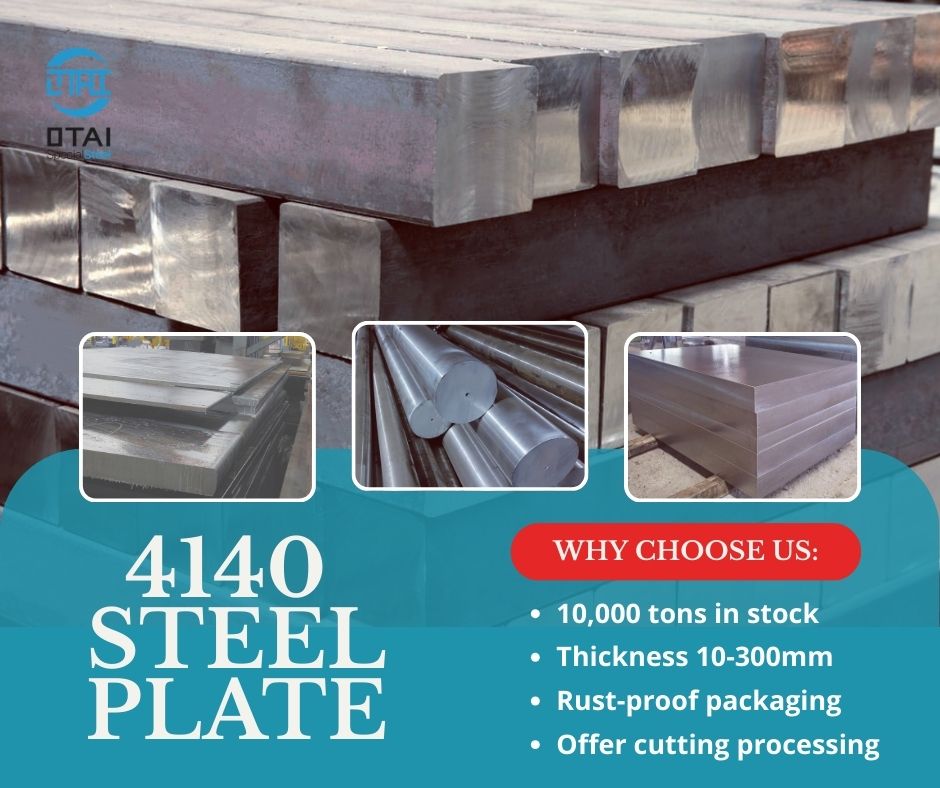
  • ✅ Large inventory: over 10,000 tons of 4140 steel in stock (6mm–300mm thickness).

  • ✅ Value-added services: cutting, heat treatment, forging, and machining for gear production.

  • ✅ Strict quality control: UT testing, chemical analysis, and SGS third-party inspection.

  • ✅ Global reputation: trusted supplier for Thyssenkrupp, Borealis, Schlumberger and other top corporations.

Whether you need 4140 gear steel round bars or finished gear blanks, we deliver cost-effective and reliable solutions.


❓ FAQ – Gear 4140 Steel

Q1: Can we weld 4140 steel gears if the need arises?
Yes—preheat to 150–300 °C, weld, then post-weld stress-relieve to prevent cracking.
Q2: How does 4140 stack up against 8620 for gears?
4140 delivers a higher-strength core; 8620 excels in carburized case-hardened designs. Let the application dictate the pick.
Q3: How hard can we run the gear-tooth surfaces?
Induction hardening or carburizing pushes surface hardness to a Rockwell 55 HRC.

Q4: Are 4140 steel gears good for high-speed applications?
Yes, after grinding and surface hardening, they perform well in high-RPM transmissions.

Q5: Does 4140 steel resist wear in dirty or abrasive environments?
Yes, when properly heat treated and hardened, it shows excellent wear resistance, making it suitable for mining and heavy machinery gears.


📌 Conclusion:
Gear 4140 steel remains one of the most reliable materials for gear manufacturing thanks to its combination of strength, toughness, and machinability. With proper heat treatment, it can outperform many alternatives while remaining cost-effective.
0 0 Continue Reading →

Hardness of 4140 Steel: Complete Guide for Engineers and Buyers

Hardness of 4140 Steel: Complete Guide for Engineers and BuyersWhen choosing steel for engineering or manufacturing projects, hardness is one of the most important factors to consider. The hardness of 4140 steel directly affects its wear resistance, machinability, and ability to withstand stress. Known as a versatile chromium-molybdenum alloy steel, 4140 is widely used in automotive, aerospace, and oil & gas industries thanks to its balance of toughness, strength, and hardness.
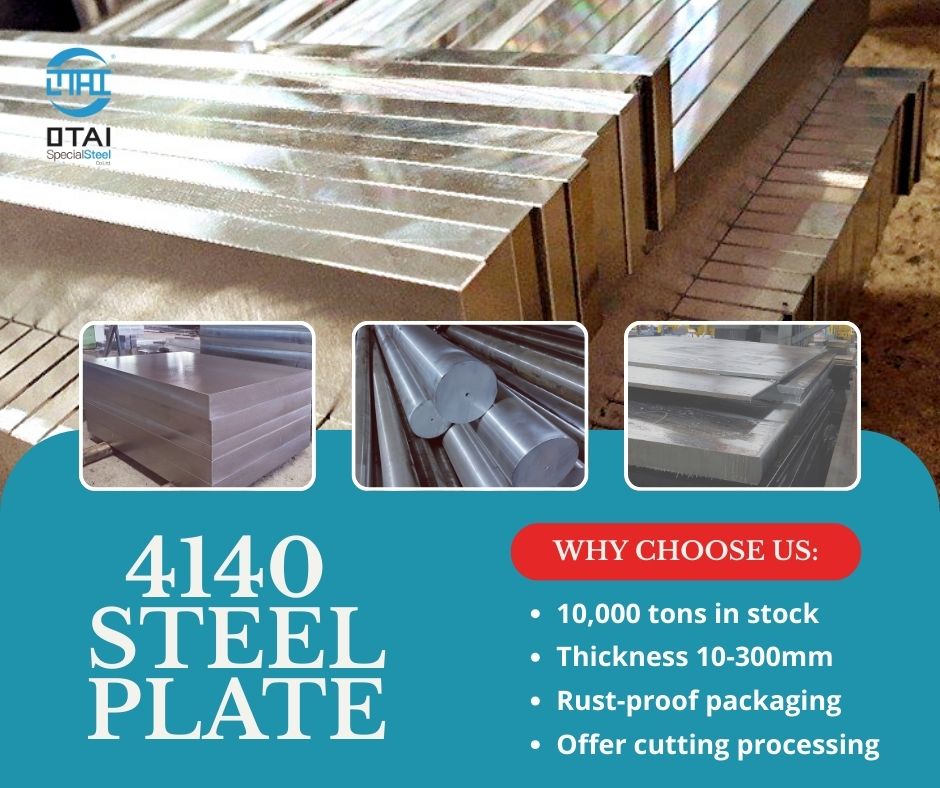
In this guide, we’ll explore the hardness levels of 4140 in different heat treatment conditions, compare it with other steels, and provide practical insights for real-world applications.


🔎 What Does Hardness Mean in Steel?

Hardness is the ability of a material to resist deformation, indentation, or scratching. In steels, it is usually measured using:

  • Rockwell Hardness (HRC): common for hardened steels.

  • Brinell Hardness (HB): often used for annealed steels.

  • Vickers Hardness (HV): precise micro-hardness measurement.

For 4140 alloy steel hardness, the value changes dramatically depending on whether the steel is annealed, normalized, quenched, or tempered.


⚙️ Typical Hardness of 4140 Steel

The hardness range of 4140 steel depends on its treatment condition.

Condition Hardness (HB) Hardness (HRC) Notes
Annealed (soft) 197 – 235 HB ~ 20 – 22 HRC Best machinability
Normalized 200 – 250 HB ~ 22 – 25 HRC Better strength
Quenched & Tempered (QT) 248 – 302 HB 28 – 32 HRC Most common condition
Hardened (oil/water quench) 55 – 60 HRC Maximum hardness, brittle
Nitrided surface up to 65 HRC Extreme wear resistance

This shows that quenched 4140 hardness strikes the best balance for industrial use, while annealed 4140 is softer and easier to machine.


🛠 Factors Affecting the Hardness of 4140 Steel

  1. Heat Treatment – The most important factor. Quenching increases hardness, tempering adjusts toughness.

  2. Cooling Rate – Faster cooling (oil/water quench) produces higher hardness but increases brittleness.

  3. Alloying Elements – Chromium and molybdenum improve hardenability and toughness.

  4. Surface Treatments – Nitriding or carburizing can dramatically increase 4140 steel surface hardness.


📊 Comparison of 4140 Hardness with Other Steels

Steel Grade Hardness (HRC) Key Characteristics
Mild Steel (1018) 10 – 15 Soft, easy machining
4140 Steel (QT) 28 – 32 Strong, tough, good wear resistance
4340 Steel 30 – 40 Higher toughness, harder to machine
Tool Steel D2 55 – 62 Extremely hard, less machinable
Stainless 304 ~ 15 – 20 Corrosion resistant, low hardness

This comparison shows why 4140 hardness vs 4340 is often discussed. While 4340 is harder, 4140 is easier to machine and still provides excellent toughness.


🚀 Applications Requiring Specific Hardness Levels

The hardness of quenched and tempered 4140 steel makes it ideal for parts that need wear resistance but must avoid brittleness. Common applications include:

  • Automotive: crankshafts, gears, axles.

  • Aerospace: landing gear, engine components.

  • Oil & Gas: drill collars, tool joints, downhole tools.

  • Industrial Machinery: spindles, couplings, press tools.

For applications where surface wear is critical, nitrided 4140 steel hardness (up to 65 HRC) is preferred.


✅ Tips for Engineers and Buyers

  • Select annealed 4140 hardness if machining is your priority.

  • Choose quenched & tempered 4140 hardness for balanced performance.

  • Apply nitriding treatment when high surface wear resistance is needed.

  • Always confirm hardness through Rockwell or Brinell hardness tests before final machining.

  • Partner with a supplier who can provide steel in the hardness condition you require.


💎 Company Advantage – Why Choose Otai Special Steel?

At Otai Special Steel, we ensure consistent 4140 hardness quality through strict heat treatment and testing. Our advantages:

  • ✅ Large stock: 10,000+ tons in annealed, normalized, QT, and pre-hardened conditions.

  • Hardness guaranteed with UT testing, chemical analysis, and hardness test reports.

  • ✅ Size range: plates and bars from 6mm to 300mm thickness.

  • Customized services: cutting, heat treatment, and surface processing.

  • ✅ Trusted by global clients: Thyssenkrupp, Borealis, Schlumberger.

We help you save machining time, reduce risk, and get the exact hardness condition you need.


❓ FAQ

1. What is the hardness of annealed 4140 steel?
Around 197 – 235 HB (~20 – 22 HRC).

2. Quenched 4140 steel’s hardness?
Typically 28 – 32 HRC, depending on tempering.

3. Can 4140 steel reach 60 HRC?
Yes, after oil or water quenching, but it becomes brittle.

4. How to increase surface hardness of 4140 steel?
Nitriding can increase surface hardness up to 65 HRC.

5. Why is 4140 hardness important in industrial use?
It determines wear resistance, load capacity, and machinability balance.

0 0 Continue Reading →

Machinability of 4140 Steel: What You Need to Know

Machinability of 4140 Steel: What You Need to KnowMachinability of 4140 Steel: What You Need to Know
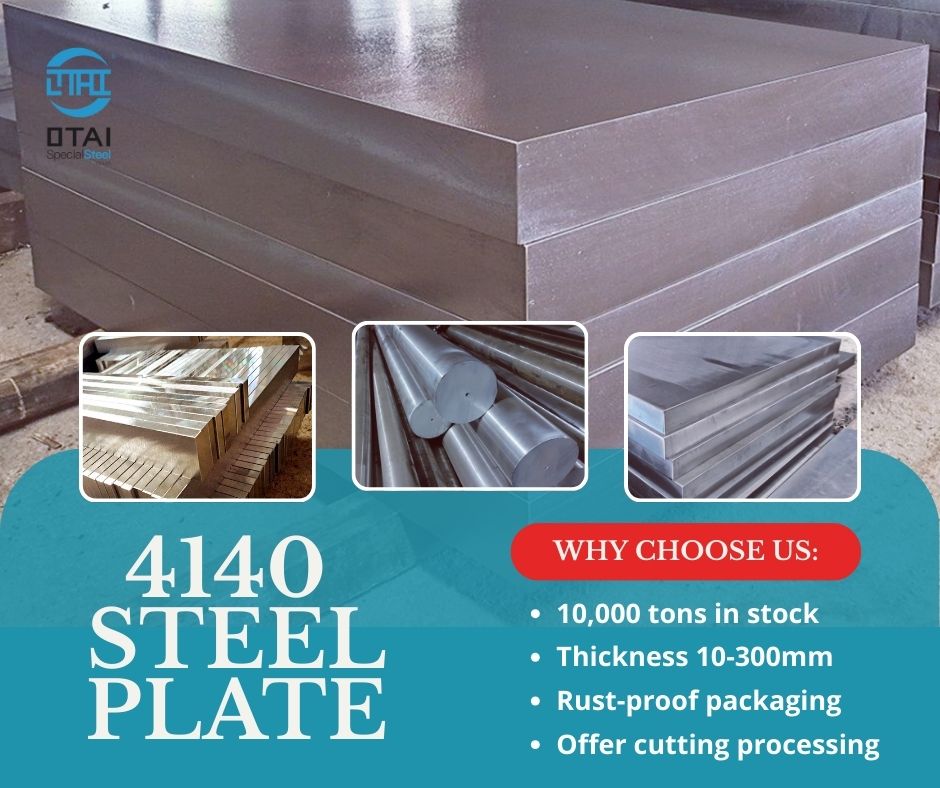
When engineers or manufacturers choose a steel grade, one of the first questions they ask is: “How easy is it to machine?” The machinability of 4140 steel is a critical factor in industries like automotive, oil & gas, tooling, and aerospace. Known for its excellent balance of strength, toughness, and workability, 4140 alloy steel is widely used for components that must be strong yet still machinable.

In this guide, we’ll break down what affects machinability, how 4140 compares to other steels, recommended machining practices, and what you can do to ensure the best results when working with this versatile alloy.


🔎 What Defines the Machinability of 4140 Steel?

The machinability of a steel grade refers to how easily it can be cut, shaped, or drilled without excessive tool wear or production delays. For 4140 alloy steel, machinability depends on:

  • Condition of the steel – whether it’s annealed, normalized, or quenched & tempered.

  • Hardness level – higher hardness makes machining more difficult.

  • Tooling selection – carbide tools perform better for hardened 4140.

  • Cutting speed and feed rates – optimized settings extend tool life.

  • Coolant usage – helps reduce heat and prevents tool damage.


⚙️ Machinability Ratings of 4140 Steel

Machinability is usually expressed as a percentage relative to AISI 1112 steel, which is rated at 100%.

Steel Grade Condition Machinability Rating (%)
4140 Annealed ~20 – 25% Good machinability for alloy steel
4140 Quenched & Tempered ~50 – 60% Tougher, requires carbide tooling
4140 Pre-Hardened (28-32 HRC) ~55% Acceptable machinability with proper tools

This means that 4140 annealed steel machining is significantly easier than machining hardened 4140, which requires slower speeds and stronger tools.


🛠 Recommended Machining Practices for 4140 Steel

  1. Cutting Tools

    • For annealed 4140: HSS (high-speed steel) tools are sufficient.

    • For hardened 4140: carbide or ceramic tools are recommended.

  2. Cutting Speeds

    • Annealed: 150 – 200 SFM (surface feet per minute).

    • Hardened: 60 – 100 SFM.

  3. Coolants

    • Always use cutting fluids or coolants to reduce heat buildup.

  4. Drilling and Milling

    • Drill with cobalt or carbide drills for longer tool life.

    • Use rigid setups to minimize vibration.

  5. Turning

    • Use negative rake carbide inserts for hardened 4140.

    • Optimize depth of cut to balance tool wear and surface finish.


📊 Machinability Comparison: 4140 vs Other Steels

Steel Grade Machinability (%) Comments
1112 Steel 100 Standard reference material
1018 Steel 70 – 80 Easier to machine than 4140
4140 Steel (annealed) 20 – 25 Harder, tougher, slower machining
4340 Steel 15 – 20 Even harder, lower machinability
Tool Steels (D2, O1) 10 – 20 Very difficult, requires advanced tooling

This shows why many industries prefer 4140 machinability over 4340 steel, since it offers a balance of toughness and workability.


🚀 Applications Requiring Machinability of 4140 Steel

Industries choose 4140 steel when they need both strength and workable machinability:

  • Automotive: gears, shafts, crankshafts.

  • Oil & Gas: drill collars, tool joints.

  • Aerospace: landing gear, engine mounts.

  • Heavy Machinery: spindles, dies, press tools.

For these applications, machinability of quenched 4140 steel becomes a decisive factor for cost and production efficiency.


✅ Tips to Improve Machinability of 4140 Steel

  • Use pre-hardened 4140 steel for better tool life in moderate machining.

  • Perform stress relief annealing before final machining to reduce distortion.

  • Apply coated carbide inserts to withstand high temperatures.

  • Consider CNC machining of 4140 steel for precision and efficiency.

  • Always balance cutting speed, feed rate, and tool life.


💎 Company Advantage – Why Otai Special Steel?

At Otai Special Steel, we supply high-quality 4140 steel with guaranteed machinability. Our advantages include:

  • ✅ Over 10,000 tons in stock covering annealed, pre-hardened, and quenched & tempered conditions.

  • Custom cutting services to reduce machining costs for clients.

  • ✅ Full range: plates, round bars, flat bars, from 6mm to 300mm thickness.

  • Quality assurance: UT test, chemical composition test, third-party inspection.

  • ✅ Long-term partners include Thyssenkrupp, Borealis, and Schlumberger.

We help customers minimize waste, reduce machining challenges, and ensure stable supply.


❓ FAQ

1. Is 4140 steel easy to machine?
In annealed condition, yes; in hardened condition, it requires carbide tooling.

2. What is the machinability rating of 4140 steel?
20–25% in annealed state, ~55% when pre-hardened.

3. Can I machine 4140 with HSS tools?
Yes, but only in annealed condition. For hardened steel, carbide tools are better.

4. Is 4140 steel machinability better than 4340?
Yes, 4140 offers better machinability while still being strong.

5. Does Otai offer pre-cut 4140 steel to save machining time?
Yes, we provide cutting services tailored to customer needs.

0 0 Continue Reading →

4140 Steel Quality: What Defines Its Performance?


4140 Steel Quality: What Defines Its Performance?When it comes to high-performance alloy steels, 4140 steel quality is a benchmark across industries like automotive, aerospace, oil & gas, and heavy machinery. Known for its exceptional combination of strength, toughness, and machinability, 4140 alloy steel is trusted worldwide for critical engineering components. But what exactly defines the “quality” of 4140 steel, and how do manufacturers and buyers ensure consistency in supply? Let’s break it down with detailed insights into composition, mechanical performance, testing standards, and applications.
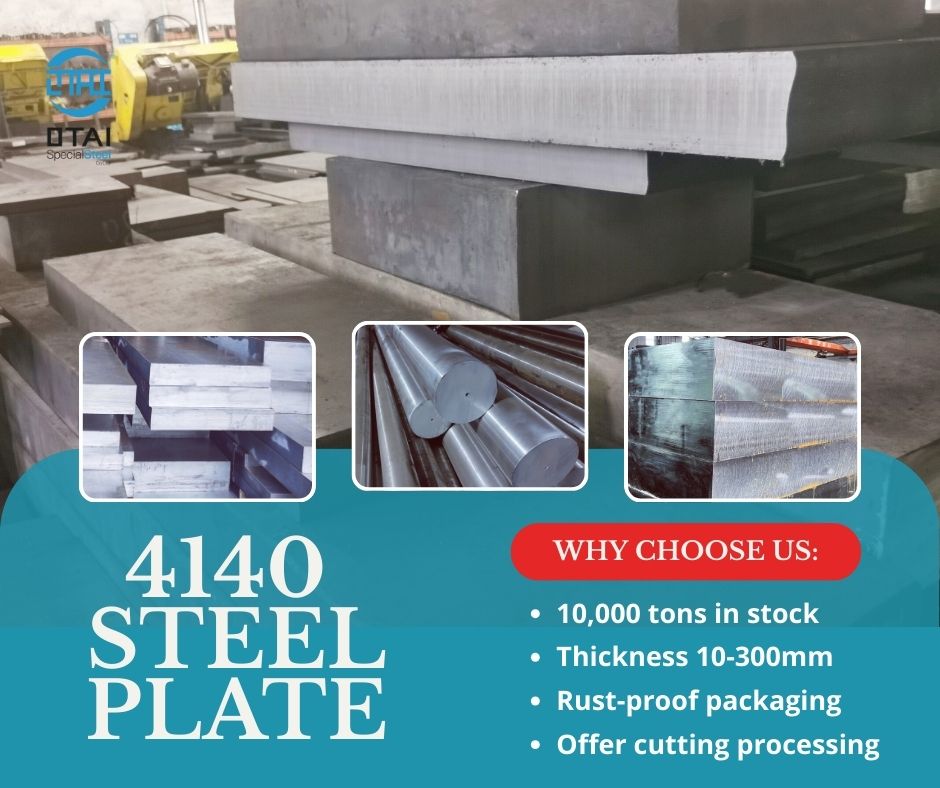

🌟 What Makes 4140 Steel High Quality?

The quality of 4140 steel depends on several factors, including chemical composition accuracy, heat treatment uniformity, and dimensional precision. True high-quality 4140 must meet international standards like ASTM A29, AISI specifications, or equivalent DIN/EN norms.

Key quality factors:

  • Consistent chemical composition within standard ranges.

  • Tight hardness control after heat treatment.

  • Excellent machinability even after quenching and tempering.

  • Low impurity content (phosphorus and sulfur kept to minimum).

  • Quality certifications such as mill test reports (MTRs) or third-party inspection.


🔬 Chemical Composition of High-Quality 4140 Steel

Element Typical Content (%) Function
Carbon (C) 0.38 – 0.43 Provides strength & hardness
Chromium (Cr) 0.80 – 1.10 Improves hardenability & wear resistance
Molybdenum (Mo) 0.15 – 0.25 Enhances toughness & high-temperature strength
Manganese (Mn) 0.75 – 1.00 Boosts strength and machinability
Silicon (Si) 0.15 – 0.35 Improves elasticity & toughness
Phosphorus (P) ≤0.035 Must be minimized for ductility
Sulfur (S) ≤0.040 Controlled to improve machinability

Maintaining this balance ensures consistent 4140 material quality for demanding applications.


⚙️ Mechanical Properties of Premium 4140 Steel

Property Typical Range
Tensile Strength (MPa) 950 – 1100
Yield Strength (MPa) 655 – 850
Hardness (HRC, quenched & tempered) 28 – 36
Elongation (%) 12 – 16
Impact Toughness (J) 40 – 50
Young’s Modulus (GPa) ~205

These values can vary based on 4140 alloy heat treatment quality, making it essential to verify each batch with proper testing.


📋 Testing and Certification for 4140 alloy Quality

To guarantee quality, suppliers perform:

  • Ultrasonic Testing (UT): detects internal flaws or cracks.

  • Hardness Testing: ensures uniformity after quenching and tempering.

  • Chemical Analysis: confirms alloy composition.

  • Mechanical Testing: tensile, yield, and impact strength validation.

  • Third-party inspections (SGS, BV, TUV): ensure global compliance.

Customers who demand high quality 4140 steel plates or bars often request MTRs and UT certificates to avoid risk in critical projects.


🏭 Applications That Rely on 4140 Steel Quality

Because of its dependable performance, industries demand 4140 steel with guaranteed quality for:

  • Automotive: crankshafts, gears, connecting rods.

  • Oil & Gas: drill collars, tool joints, wellhead equipment.

  • Aerospace: landing gear components, engine parts.

  • Industrial Machinery: shafts, dies, spindles, heavy-duty fasteners.

High-quality 4140 ensures parts withstand extreme stress, reducing maintenance costs and downtime.


🛠 How to Ensure You’re Buying High-Quality 4140 material

  1. Check Supplier Credentials – look for ISO-certified mills.

  2. Request Material Certificates – especially composition and UT test results.

  3. Verify Heat Treatment Quality – ensure hardness range fits your project needs.

  4. Confirm Dimensional Accuracy – avoid oversized tolerances that add machining costs.

  5. Ask About Inventory & Lead Times – reliable suppliers stock a wide range of sizes.


💎 Company Advantage – Why Choose Otai Special Steel?

At Otai Special Steel, we supply only premium-quality 4140 alloy steel with strict quality control. Our advantages include:

  • ✅ Over 10,000 tons of 4140 and other alloy steels in stock.

  • ✅ Full range: plates, bars, blocks, from 6mm to 300mm thickness.

  • Custom services: cutting, heat treatment, packaging.

  • Quality assurance: UT testing, chemical composition checks, and third-party inspections.

  • ✅ Trusted by Thyssenkrupp, Borealis, Schlumberger, and many global leaders.

We focus on solving customer pain points—stable supply, guaranteed quality, and fast delivery.


❓ FAQ

1. What makes 4140 steel high quality?
Consistent composition, proper heat treatment, and certified testing.

2. How does poor quality 4140 steel affect performance?
It can lead to premature failure, cracking, or poor machinability.

3. Can 4140 steel quality vary between suppliers?
Yes, depending on mill practices and heat treatment accuracy.

4. Is certified 4140 steel worth the higher cost?
Absolutely—high-quality steel reduces failures and saves long-term costs.

5. Does Otai provide testing reports for 4140 steel?
Yes, we provide MTRs, UT reports, and third-party certificates on request.

0 0 Continue Reading →

Quenched 4140 Steel Properties: Strength, Toughness & Industrial Applications

Quenched 4140 Steel Properties: Strength, Toughness & Industrial ApplicationsQuenched 4140 Steel Properties: Strength, Toughness & Industrial Applications
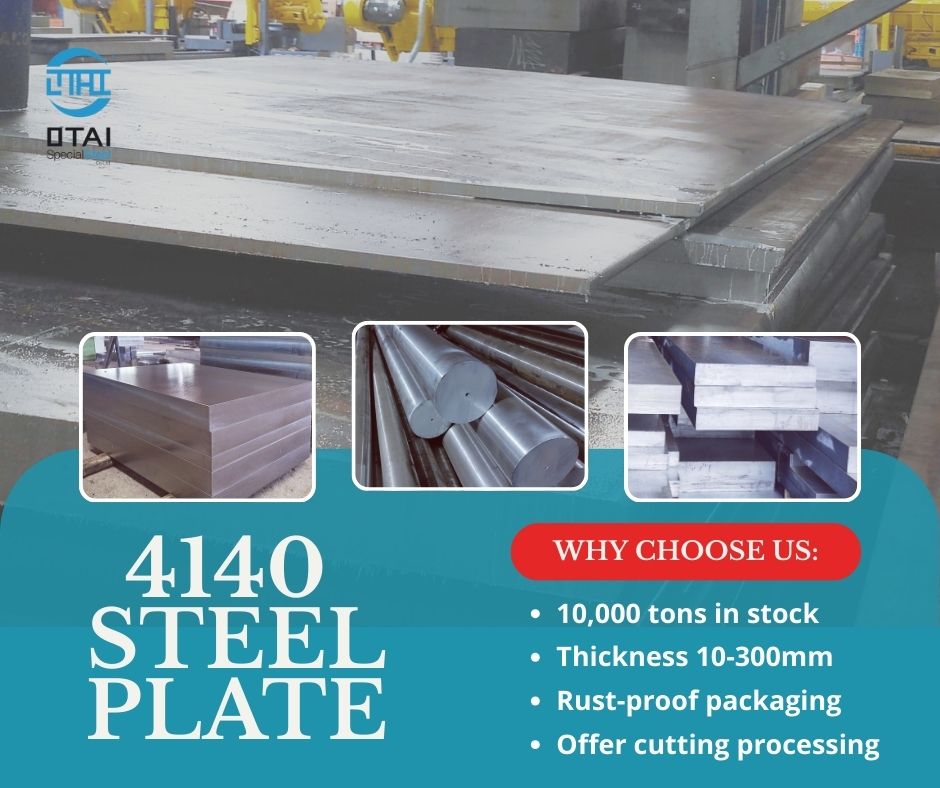
When it comes to engineering materials that balance strength, toughness, and versatility, quenched 4140 steel has earned a strong reputation across industries. Quenching is one of the most common heat treatment processes for this alloy steel, and it significantly changes its mechanical properties, making it ideal for demanding applications like gears, shafts, bolts, and high-stress machine components.

In this article, we’ll break down the mechanical properties of quenched 4140 steel, its chemical composition, advantages, and key uses. We’ll also compare its performance to other conditions like annealed and tempered states, so you can choose the right form for your project.


🌟 What Is Quenched 4140 Steel?

4140 steel leverages chromium and molybdenum to deliver high strength, hardenability, and fatigue resistance. Heat it to 850–900 °C (1560–1650 °F), then quench—oil or water flashes the microstructure into martensite, driving up hardness and yield strength. Quenching also embrittles the steel, so a follow-up tempering step re-balances toughness for peak performance.


🧪 Chemical Composition of 4140 Steel

Element Percentage (%)
Carbon (C) 0.38 – 0.43
Chromium (Cr) 0.80 – 1.10
Manganese (Mn) 0.75 – 1.00
Molybdenum (Mo) 0.15 – 0.25
Silicon (Si) 0.15 – 0.35
Sulfur (S) ≤ 0.040
Phosphorus (P) ≤ 0.035

⚙️ Quenched 4140 Steel Mechanical Properties

The mechanical properties of quenched 4140 steel depend on the quenching medium, heating temperature, and subsequent tempering process. Here’s an overview of typical values:

Property Quenched (Un-Tempered) Quenched & Tempered
Hardness (HRC) 50–55 28–45
Tensile Strength (MPa) 1250–1450 850–1100
Yield Strength (MPa) 1050–1200 650–900
Elongation (%) 8–12 14–20
Impact Toughness (J) Low (Brittle) Moderate to High

Key takeaway: Quenching alone makes 4140 steel extremely hard but brittle. Adding tempering restores toughness while keeping high strength.


🔍 Benefits of Quenched 4140 Steel

  1. High Wear Resistance – Ideal for tools, dies, and wear parts.

  2. Excellent Hardenability – Uniform hardness even in thicker sections.

  3. Superior Strength-to-Weight Ratio – Strong yet relatively lightweight compared to some other steels.

  4. Versatility in Post-Treatment – Can be tempered or surface-hardened for specific applications.

  5. Dimensional Stability – Less distortion compared to some carbon steels after heat treatment.


🏭 Applications of Quenched 4140 Steel

Quenched 4140 steel is widely used in industries like oil & gas, automotive, aerospace, and heavy machinery. Common applications include:

  • High-stress gears and shafts

  • Crankshafts in automotive engines

  • Hydraulic cylinder rods

  • Drill collars and downhole tools

  • Bolts and studs requiring high tensile strength

  • Tooling components like dies and punches


🆚 Quenched vs. Annealed vs. Tempered 4140 Steel

Condition Strength Hardness Ductility Applications
Annealed Low Low High Easy machining, forming
Quenched Very High Very High Low Wear parts, high-strength components
Quenched & Tempered High Medium-High Moderate-High Gears, shafts, bolts

Pro Tip: If your application requires both strength and toughness, quenched & tempered 4140 steel is often the best choice.


📏 Heat Treatment Parameters for Quenching 4140 Steel

  • Austenitizing Temperature: 850–900°C (1560–1650°F)

  • Quenching Medium: Oil (preferred for reducing cracking risk) or water (for maximum hardness)

  • Tempering Range: 200–650°C (390–1200°F), depending on desired hardness and toughness


🛠 Machinability and Weldability

  • Machinability: Quenched 4140 steel is difficult to machine due to its hardness. Pre-machining in the annealed state is recommended.

  • Weldability: Welding quenched 4140 steel is challenging and requires preheating, low-hydrogen electrodes, and post-weld heat treatment to avoid cracking.


🏆 Company Advantages – Otai Special Steel

  • Massive Stock – Over 10,000 tons of 4140 alloy steel in various sizes and conditions.

  • Custom Processing – Cutting, heat treatment, and precision machining available.

  • Quality Control – UT testing, chemical composition analysis, and third-party inspections (SGS, BV).

  • Global Supply – Serving leading corporations worldwide with stable supply and competitive pricing.

  • Expert Support – Technical guidance for material selection, machining, and heat treatment.


❓ FAQ

Q1: Is quenched 4140 steel brittle?
Yes, quenched 4140 steel is brittle without tempering. Adding a tempering step improves toughness.

Q2: Can quenched 4140 steel be welded?
Yes—preheat to ward off hydrogen cracking, then post-weld heat-treat to relax residual stresses and restore toughness.

Q3: What is the typical hardness of quenched 4140 steel?
Typically HRC 50–55 before tempering.

Q4: Which industries use quenched 4140 steel the most?
Oil & gas, aerospace, automotive, and heavy machinery industries.

0 0 Continue Reading →

4140 Cold Rolled Steel: Properties, Applications & Processing Tips

4140 Cold Rolled Steel: Properties, Applications & Processing Tips4140 Cold Rolled Steel: Properties, Applications & Processing Tips
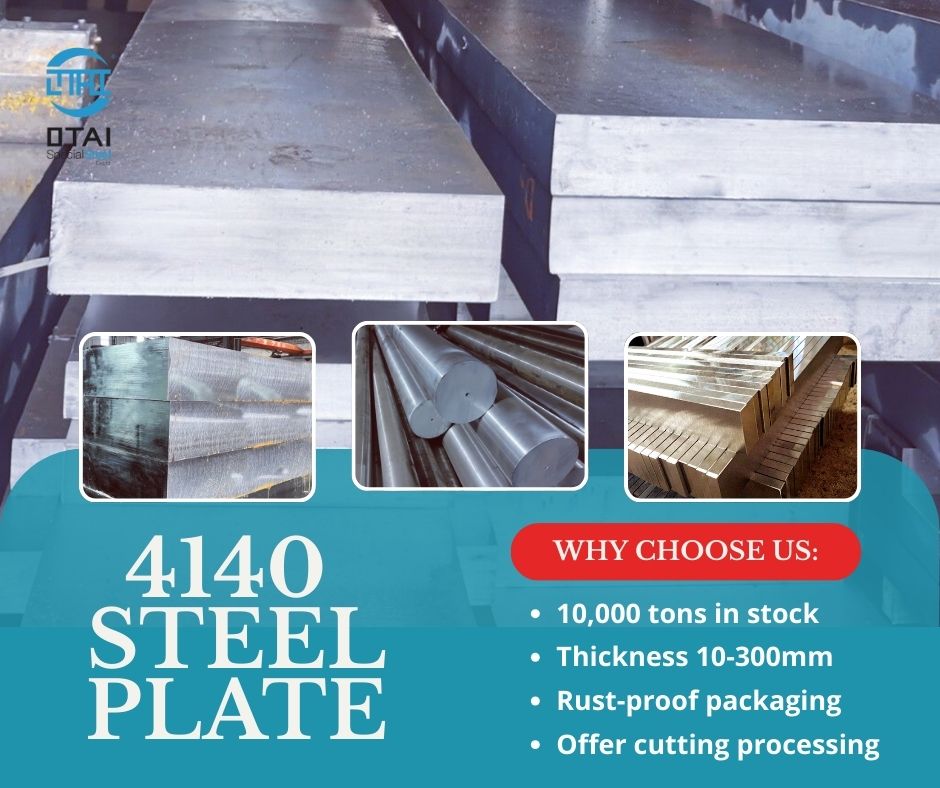
When it comes to medium-carbon alloy steels, 4140 steel is one of the most widely used grades in demanding engineering and manufacturing applications. Known for its excellent strength, toughness, and wear resistance, it offers enhanced mechanical properties over hot rolled steel thanks to the cold rolling process. This makes it ideal for critical parts that require precision and superior surface finish.

In this guide, we’ll dive into composition, mechanical properties, advantages, applications, and processing considerations for 4140 cold rolled steel—plus share practical insights for engineers, machinists, and buyers.


🌟 What is 4140 Cold Rolled Steel?

4140 steel is a chromium-molybdenum (chromoly) medium-carbon alloy steel with about 0.38–0.43% carbon, 0.8–1.1% chromium, and 0.15–0.25% molybdenum. These alloying elements give it a perfect balance of hardness, strength, and toughness.

The term “cold rolled” refers to a secondary finishing process in which the steel is rolled at room temperature after hot rolling. This process:

  • Improves dimensional accuracy

  • Increases strength through strain hardening

  • Produces a smooth, uniform surface finish

  • Enhances straightness and flatness


📏 4140 Cold Rolled Steel Chemical Composition

Element Percentage (%)
Carbon (C) 0.38 – 0.43
Chromium (Cr) 0.80 – 1.10
Molybdenum (Mo) 0.15 – 0.25
Manganese (Mn) 0.75 – 1.00
Silicon (Si) 0.15 – 0.30
Phosphorus (P) ≤ 0.035
Sulfur (S) ≤ 0.040

⚙️ Mechanical Properties of 4140 Cold Rolled Steel

Property Value (Typical)
Tensile Strength 850 – 1000 MPa
Yield Strength 700 – 800 MPa
Elongation 18 – 25%
Rockwell Hardness (B) 95 – 100 HRB
Impact Toughness Excellent
Modulus of Elasticity ~205 GPa

Values can vary depending on exact cold rolling and heat treatment conditions.


🔍 Benefits of Using Cold Rolled 4140 Steel

Compared to its hot rolled counterpart, 4140 cold rolled steel offers:

  1. Higher Dimensional Accuracy – Ideal for parts requiring tight tolerances without extensive machining.

  2. Improved Strength – Cold work increases yield and tensile strength.

  3. Better Surface Finish – Smooth, uniform finish reduces post-processing.

  4. Enhanced Flatness & Straightness – Important for precision components.

  5. Reduced Machining Time – Less stock removal needed before final sizing.


🛠 Applications of 4140 Steel

Its combination of high strength, toughness, and machinability makes it perfect for:

  • Gears and shafts in heavy machinery

  • Automotive components such as axles and crankshafts

  • Tooling parts like dies and molds

  • Hydraulic components including cylinder rods

  • High-strength fasteners

  • Military and defense applications requiring impact resistance


🏭 Processing Considerations

Although cold rolled 4140 steel has excellent machinability, it’s still a tough alloy. Here are some key points to consider:

🔧 Machining

  • Use carbide or coated HSS tools for optimal tool life.

  • Apply cutting fluid to manage heat and extend tool wear.

  • Preheat to 150–200°C before heavy machining to reduce risk of cracking in hardened states.

🔥 Heat Treatment

4140 cold rolled steel can be quenched and tempered to achieve a wide range of hardness levels (up to ~50 HRC). Common heat treatment steps:

  1. Annealing – 800–850°C followed by slow cooling to soften and improve machinability.

  2. Quenching – Oil quench from 840–870°C.

  3. Tempering – 200–600°C depending on required hardness/toughness balance.

➰ Forming & Bending

  • Best performed in the annealed condition.

  • Cold bending is possible but requires adequate tooling and allowances for springback.


📌 Comparison: 4140 Cold Rolled vs Hot Rolled

Feature Cold Rolled 4140 Hot Rolled 4140
Dimensional Tolerance High Moderate
Surface Finish Smooth & clean Rough & scaly
Strength Higher Lower
Cost Higher Lower
Machining Prep Minimal Often requires cleaning & facing

💡 Expert Tips for Buyers

  • When ordering 4140 cold rolled steel, always specify size, tolerance, and desired hardness.

  • For critical components, request UT testing (Ultrasonic Testing) to ensure internal soundness.

  • Partner with a reliable steel distributor who stocks a wide range of sizes to reduce lead time.


🏆 Company Advantages – Otai Special Steel

  • Massive Stock – Over 10,000 tons of 4140 alloy steel in various sizes and conditions.

  • Custom Processing – Cutting, heat treatment, and precision machining available.

  • Quality Control – UT testing, chemical composition analysis, and third-party inspections (SGS, BV).

  • Global Supply – Serving leading corporations worldwide with stable supply and competitive pricing.

  • Expert Support – Technical guidance for material selection, machining, and heat treatment.


❓ FAQ

Q1: Is 4140 cold rolled steel more expensive than hot rolled?
Yes, but the added benefits in precision, strength, and surface quality often offset the cost.

Q2: Can cold rolled 4140 be welded?
Yes, but preheating (150–300°C) and post-weld stress relief are recommended to avoid cracking.

Q3: What is the maximum hardness after heat treatment?
Proper quenching and tempering can achieve up to ~50–55 HRC.

Q4: Which industries use it the most?
Automotive, aerospace, oil & gas, defense, and general engineering.

0 0 Continue Reading →

4140 Steel Specs: Detailed Guide

4140 Steel Specs: Detailed Guide4140 Steel Specs: Detailed Guide
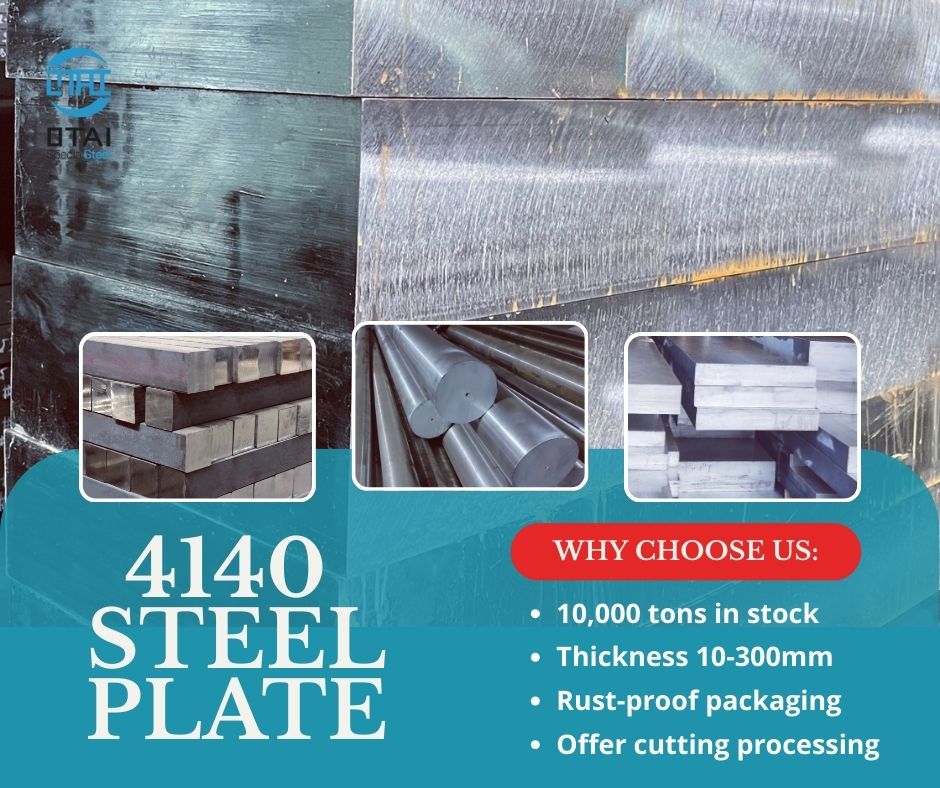
When it comes to selecting materials for engineering, manufacturing, or industrial applications, 4140 steel stands out for its balanced combination of strength, toughness, and versatility. But to fully understand how it can fit into your project, you need to know the exact 4140 steel specs — covering its chemical composition, mechanical properties, heat treatment potential, and dimensional standards. This guide will break down the details so you can make informed sourcing and processing decisions.


🔍 What Does “Specs” Mean for 4140 Steel?

When engineers or buyers talk about 4140 steel specifications, they are referring to a combination of chemical, mechanical, and dimensional data. These specifications ensure the steel meets certain performance criteria for manufacturing gears, shafts, bolts, molds, and other high-stress components.

Specifications can come from different organizations, such as:

  • ASTM (American Society for Testing and Materials)

  • SAE (Society of Automotive Engineers)

  • AISI (American Iron and Steel Institute)

  • DIN (German Standards)

  • JIS (Japanese Standards)

Knowing these standards helps you find equivalent grades across countries and ensures that your supplier’s product matches your technical needs.


🧪 Chemical Composition of 4140 Steel

The chemical makeup of 4140 alloy steel determines its mechanical behavior, heat treatability, and corrosion resistance. The typical composition is:

Element Percentage (%)
Carbon (C) 0.38 – 0.43
Manganese (Mn) 0.75 – 1.00
Chromium (Cr) 0.80 – 1.10
Molybdenum (Mo) 0.15 – 0.25
Silicon (Si) 0.15 – 0.35
Sulfur (S) ≤ 0.040
Phosphorus (P) ≤ 0.035

These alloying elements give 4140 steel its signature high strength, wear resistance, and good machinability after heat treatment.


⚙️ Mechanical Properties of 4140 Steel

Mechanical properties depend on the steel’s heat treatment condition, but typical 4140 steel specs in normalized or quenched and tempered states are:

Property Value Range
Tensile Strength (MPa) 850 – 1000
Yield Strength (MPa) 655 – 850
Elongation (%) 20 – 25
Reduction of Area (%) 50 – 60
Brinell Hardness (HB) 197 – 235
Impact Energy (J) 40 – 55

These figures make 4140 suitable for heavy-duty parts that face both static and dynamic loads.


🔥 Heat Treatment Specifications

Heat treatment plays a critical role in optimizing 4140 steel mechanical specs. Common processes include:

  1. Annealing
    Heated to 800–850°C, then cooled slowly to refine grain structure and improve machinability.

  2. Normalizing
    Heated to 870–900°C, air-cooled to improve toughness.

  3. Quenching & Tempering (Q&T)
    Quenched in oil or water from ~840°C, then tempered between 540–680°C to achieve desired hardness and toughness.

  4. Nitriding
    Improves surface wear resistance without changing the core properties.


📏 Dimensional & Form Availability

4140 steel is available in multiple forms:

  • Hot rolled plates: 6mm to 300mm thickness

  • Round bars: 10mm to 500mm diameter

  • Flat bars, blocks, and custom cut shapes

Dimensional tolerances follow standards like ASTM A29 or EN 10083, ensuring uniformity across batches.


🌍 International Equivalents

When sourcing globally, it’s helpful to know alternative designations for 4140 steel:

Country/Standard Equivalent Grade
ASTM / AISI 4140
SAE 4140
DIN 42CrMo4
JIS SCM440
GB (China) 42CrMo

This helps avoid mismatches in properties when importing or exporting.


🛠 Typical Applications Based on Specs

Because of its balanced properties, 4140 steel is commonly used in:

  • Automotive crankshafts, axles, and gears

  • Oil and gas drilling tools

  • Industrial machinery shafts

  • Heavy-duty bolts and fasteners

  • Tooling components like dies and molds


🧩 Why Understanding 4140 Steel Specs Matters

Knowing the 4140 steel specifications ensures:

  • You select the right heat treatment for your load requirements

  • You match dimensional tolerances for precise fitting

  • You verify international equivalents to avoid substitution errors

  • You reduce risk of premature failure in high-stress environments

In short, detailed knowledge of 4140 specs saves money, improves safety, and ensures better product performance.


💼 Company Advantages

At Otai Special Steel, we supply 4140 alloy steel in a wide range of dimensions and meet multiple international standards (ASTM, DIN, JIS, GB).
Our advantages include:

  • Over 10,000 tons in stock year-round

  • Cutting, heat treatment, and machining services

  • 100% ultrasonic testing for internal quality

  • Competitive pricing and fast delivery worldwide

  • Experience serving top brands like Thyssenkrupp and Schlumberger


❓ FAQ

Q1: Is 4140 steel weldable?
Yes, but preheating and post-weld heat treatment are recommended to avoid cracking.

Q2: Can 4140 steel be surface-hardened?
Yes, processes like nitriding or induction hardening are commonly applied.

Q3: What’s the difference between 4140 and 4340 steel specs?
4340 contains higher nickel content, offering better toughness, especially at low temperatures.

0 0 Continue Reading →

Types of 4140 Steel: Understanding Grades, Treatments, and Applications

Types of 4140 Steel: Understanding Grades, Treatments, and ApplicationsTypes of 4140 Steel: Understanding Grades, Treatments, and Applications
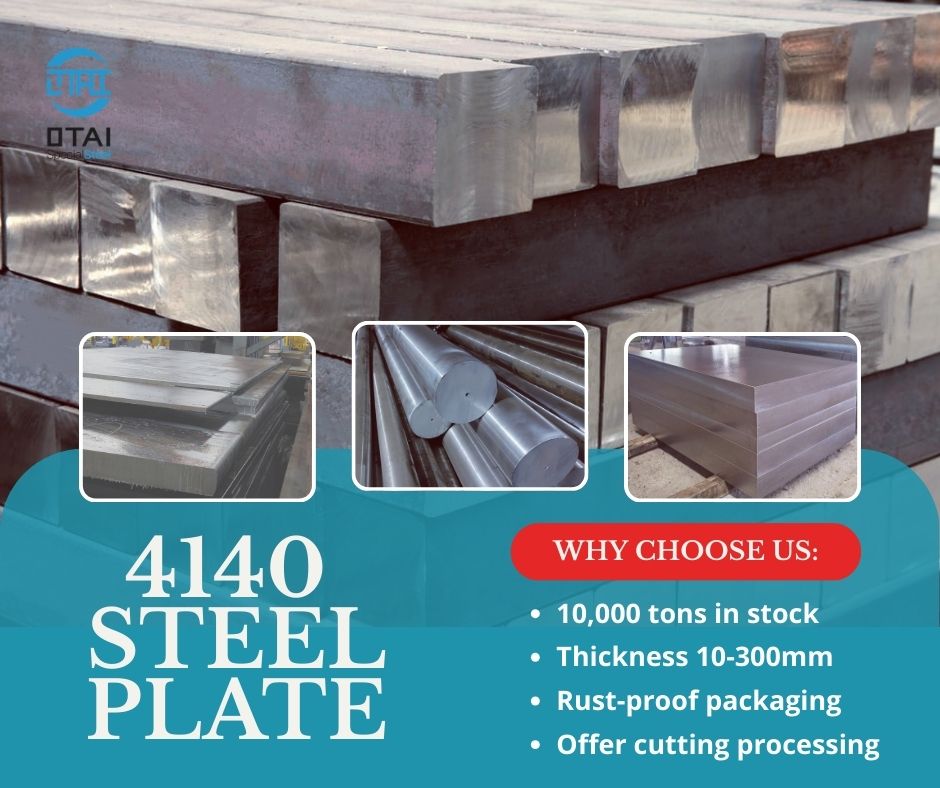
When it comes to high-performance alloy steels, 4140 steel stands out for its remarkable strength, toughness, and versatility. However, many buyers and engineers don’t realize that there are multiple types of 4140 steel, each designed to meet specific performance requirements in different industries. From pre-hardened grades to annealed and quenched & tempered varieties, understanding these variations is essential for selecting the right material for your project.

In this article, we’ll explore the main types of 4140 steel, their mechanical properties, heat treatment conditions, and best-use scenarios, so you can make a well-informed decision.


🌟 What is 4140 Steel?

4140 steel is a chromium-molybdenum alloy steel known for its balance of strength, wear resistance, and good machinability. It typically contains 0.38–0.43% carbon, 0.75–1.0% chromium, and 0.15–0.25% molybdenum, along with manganese and silicon for added strength and toughness. These elements make it a great choice for high-stress mechanical components such as shafts, gears, and fasteners.


🛠 Main Types of 4140 Steel

Although the chemical composition of 4140 steel is generally consistent, the types are defined by their heat treatment state and mechanical performance.

1️⃣ 4140 Annealed Steel

  • Description: In the annealed condition, 4140 steel is softened to improve machinability.

  • Hardness: Typically around 197–217 HB (Brinell hardness).

  • Applications: Ideal for machining into complex shapes before final heat treatment.

  • Advantages:

    • Easier to machine

    • Better dimensional stability during processing

    • Can be later hardened to higher strength levels

Example use: Large, intricate parts requiring extensive machining, such as mold bases and custom tooling.


2️⃣ 4140 Pre-Hardened Steel

  • Description: Supplied in a hardened but not fully heat-treated state, usually at 28–32 HRC.

  • Advantages:

    • Eliminates the need for post-machining heat treatment

    • Reduces production time

  • Applications: Components where moderate hardness is sufficient, such as machine frames and fixtures.


3️⃣ 4140 Quenched and Tempered (Q&T) Steel

  • Description: Heat treated through quenching and tempering to achieve a balance of hardness and toughness.

  • Hardness Range: 28–60 HRC depending on tempering temperature.

  • Strength: High tensile strength and fatigue resistance.

  • Applications: Heavy-duty components such as drill collars, drive shafts, and gears.

  • Note: This type is popular for oil and gas equipment due to its superior durability.


4️⃣ 4140 Normalized Steel

  • Description: Heated to above critical temperature and air-cooled to refine grain structure.

  • Advantages:

    • Improves toughness

    • Provides uniform mechanical properties

  • Applications: Forged products, agricultural machinery parts, and heavy-duty axles.


5️⃣ 4140 Nitrided Steel

  • Description: Subjected to nitriding treatment, forming a hard wear-resistant surface while maintaining a tough core.

  • Hardness (surface): 55–65 HRC

  • Applications: Components requiring both surface hardness and core strength, such as piston rods and hydraulic shafts.


📊 Comparison Table of 4140 Steel Types

Type Hardness (HRC/HB) Machinability Wear Resistance Typical Applications
Annealed 197–217 HB High Low Mold bases, tooling
Pre-Hardened 28–32 HRC Moderate Medium Fixtures, frames
Quenched & Tempered 28–60 HRC Moderate High Gears, shafts
Normalized ~200 HB High Medium Axles, machinery
Nitrided 55–65 HRC (surface) Moderate Very High Piston rods, shafts

⚙ How to Choose the Right Type of 4140 Steel

When deciding among the different types of 4140 steel, consider:

  1. End-use application – Does it require extreme wear resistance, high fatigue strength, or easy machinability?

  2. Production process – Will you machine before or after heat treatment?

  3. Service environment – Exposure to impact, corrosion, or high temperatures may dictate the best condition.

  4. Budget and lead time – Pre-hardened grades may reduce processing steps and save costs.


💡 Practical Tips for Working with 4140 Steel

  • For machining: Use sharp carbide tools and proper coolant to reduce work hardening.

  • For welding: Preheat to around 200–300°C and post-weld stress-relieve to avoid cracking.

  • For heat treatment: Control tempering temperatures to achieve desired mechanical properties.

  • For surface enhancement: Consider nitriding or induction hardening for improved wear resistance.


🏆 Company Advantages

At Otai Special Steel, we maintain a large inventory of all types of 4140 steel, including annealed, pre-hardened, quenched and tempered, and nitrided grades.

  • Extensive Stock: Thickness range from 6 mm to 300 mm, over 10,000 tons in stock.

  • Value-Added Services: Precision cutting, heat treatment, nitriding, and packaging.

  • Quality Control: Ultrasonic testing (UT), chemical analysis, and third-party inspection (SGS).

  • Global Supply Experience: Trusted by top companies such as Thyssenkrupp and Schlumberger.


❓ FAQ

Q1: Can I machine 4140 steel in the hardened state?
A1: Yes, but it requires high-quality carbide tooling and slower speeds.

Q2: Which type of 4140 steel is best for gears?
A2: Quenched and tempered 4140 is commonly used due to its high strength and wear resistance.

Q3: Is nitrided 4140 steel corrosion-resistant?
A3: Nitriding improves surface hardness and wear resistance, but for corrosion resistance, additional coatings or treatments are needed.

Q4: Can annealed 4140 steel be hardened later?
A4: Absolutely—annealed 4140 is often hardened after machining to achieve desired strength.

Q5: What’s the difference between normalized and annealed 4140?
A5: Normalizing improves grain structure and toughness, while annealing maximizes machinability.

0 0 Continue Reading →

4140 Steel vs 4340 Steel: Key Differences You Need to Know

4140 Steel vs 4340 Steel: Key Differences You Need to Know4140 Steel vs 4340 Steel: Key Differences You Need to Know
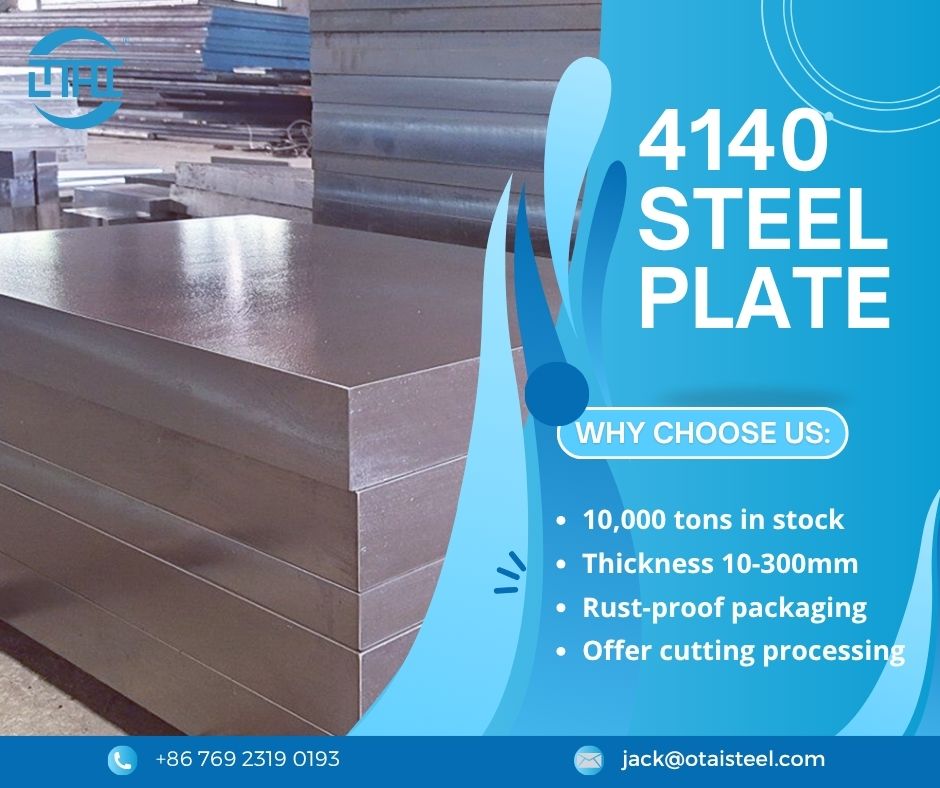
When it comes to selecting high-strength alloy steels for demanding engineering applications, 4140 steel and 4340 steel are two of the most discussed options. Both belong to the same family of chromium-molybdenum steels, but they have distinct differences in chemical composition, mechanical properties, and performance under extreme conditions.

If you’re designing critical components like shafts, gears, aerospace parts, or heavy-duty machinery, understanding the differences between these steels will help you make an informed choice. Let’s break it down step by step.


🧪 1. Chemical Composition – The Core Difference

The key variation between 4140 and 4340 steels lies in the addition of nickel in 4340, which dramatically changes its toughness and hardenability.

Element 4140 Steel (wt%) 4340 Steel (wt%)
Carbon (C) 0.38 – 0.43 0.38 – 0.43
Chromium (Cr) 0.80 – 1.10 0.70 – 0.90
Molybdenum (Mo) 0.15 – 0.25 0.20 – 0.30
Manganese (Mn) 0.75 – 1.00 0.60 – 0.80
Nickel (Ni) 1.65 – 2.00
Silicon (Si) 0.15 – 0.35 0.15 – 0.35

Key takeaway:
The nickel content in 4340 gives it superior toughness and impact resistance, especially at low temperatures, making it ideal for aerospace and defense applications.


⚙ 2. Mechanical Properties – Strength vs. Toughness

Both steels can be heat-treated to achieve excellent mechanical properties, but their strengths differ depending on the application.

Property 4140 Steel 4340 Steel
Tensile Strength (quenched & tempered) 850 – 1000 MPa 930 – 1080 MPa
Yield Strength 655 – 830 MPa 745 – 980 MPa
Rockwell Hardness (HRC) 28 – 32 (typical) 30 – 36 (typical)
Elongation at Break (%) 20 – 25 18 – 22
Charpy Impact Toughness Good Excellent (especially in low temperatures)

Key takeaway:

  • 4140 steel offers excellent strength and wear resistance, making it ideal for general machinery and tooling.

  • 4340 steel excels in impact resistance and fatigue strength, making it more suitable for high-stress aerospace and military parts.


🔥 3. Heat Treatment Response

Both steels respond well to annealing, quenching, and tempering, but 4340 has better deep hardenability due to its nickel content.

  • 4140 Steel: Best hardness after quenching is around HRC 50–55, with good dimensional stability.

  • 4340 Steel: Can reach HRC 55–60 while retaining better toughness, even in thicker sections.

This means 4340 is more reliable for large cross-section parts that need through-hardening.


🛠 4. Machinability

  • 4140 Steel: Machinability rating of about 65% compared to 1212 free-cutting steel. Easy to machine in annealed condition.

  • 4340 Steel: Slightly harder to machine (55–60% machinability) due to higher hardness potential, but still workable with proper tooling and cooling.

If you need complex machining, 4140 may be more economical due to faster cutting speeds and less tool wear.


🧲 5. Applications – Where Each Steel Shines

4140 Steel Common Uses:

  • Gears and sprockets

  • Shafts and axles

  • Machine tool spindles

  • Hydraulic cylinders

  • Forged crankshafts

4340 Steel Common Uses:

  • Aircraft landing gear

  • Heavy-duty drive shafts

  • Military vehicles

  • Oilfield drilling equipment

  • High-performance automotive racing parts


💰 6. Cost Considerations

Generally, 4340 steel is more expensive due to:

  • Higher alloy content (especially nickel)

  • Enhanced mechanical performance

  • Wider use in critical aerospace and defense industries

For general-purpose applications where extreme toughness is not necessary, 4140 steel is the more cost-effective choice.


📊 7. Quick Comparison Table

Feature 4140 Steel 4340 Steel
Main Alloying Elements Cr, Mo Cr, Mo, Ni
Strength High Very High
Toughness Good Excellent
Hardenability Good Superior
Fatigue Resistance High Very High
Machinability Better Slightly Lower
Cost Lower Higher

🧠 8. 4140 steel vs 4340 steel: Choosing the Right Steel

Your choice between 4140 and 4340 should depend on:

  • Required toughness: If extreme impact resistance is needed, 4340 is the clear winner.

  • Part size: For thicker parts requiring through-hardening, 4340 is preferable.

  • Budget constraints: If cost is a factor and extreme toughness isn’t required, 4140 is more economical.

  • Service environment: 4340 performs better in low-temperature and high-impact environments.


🌟 Company Advantages – Why Choose Otai Special Steel

At Otai Special Steel, we stock over 10,000 tons of alloy steels, including both 4140 and 4340 grades, available in a wide range of sizes from 6mm to 300mm thickness.
Our services include:

  • Customized cutting to precise dimensions

  • Heat treatment to achieve your desired hardness

  • Ultrasonic testing (UT) for internal defect inspection

  • Chemical composition analysis

  • Third-party inspections (SGS, BV)

  • Fast delivery worldwide

We have supplied top international companies such as Thyssenkrupp, Schlumberger, and Borealis, ensuring reliable quality and stable supply.


❓ FAQ

Q1: Which steel is stronger, 4140 or 4340?
4340 steel has higher tensile and yield strength than 4140, especially after heat treatment.

Q2: Is 4340 more expensive than 4140?
Yes, mainly due to its higher nickel content and superior performance in extreme conditions.

Q3: Can I replace 4340 with 4140?
Only if the application does not require extreme toughness or deep hardenability.

Q4: Which steel is easier to machine?
4140 is generally easier and more cost-effective to machine.

0 0 Continue Reading →

4140 Steel vs 8620 Steel: Which One is Right for Your Project?

4140 Steel vs 8620 Steel: Which One is Right for Your Project?4140 Steel vs 8620 Steel: Which One is Right for Your Project?
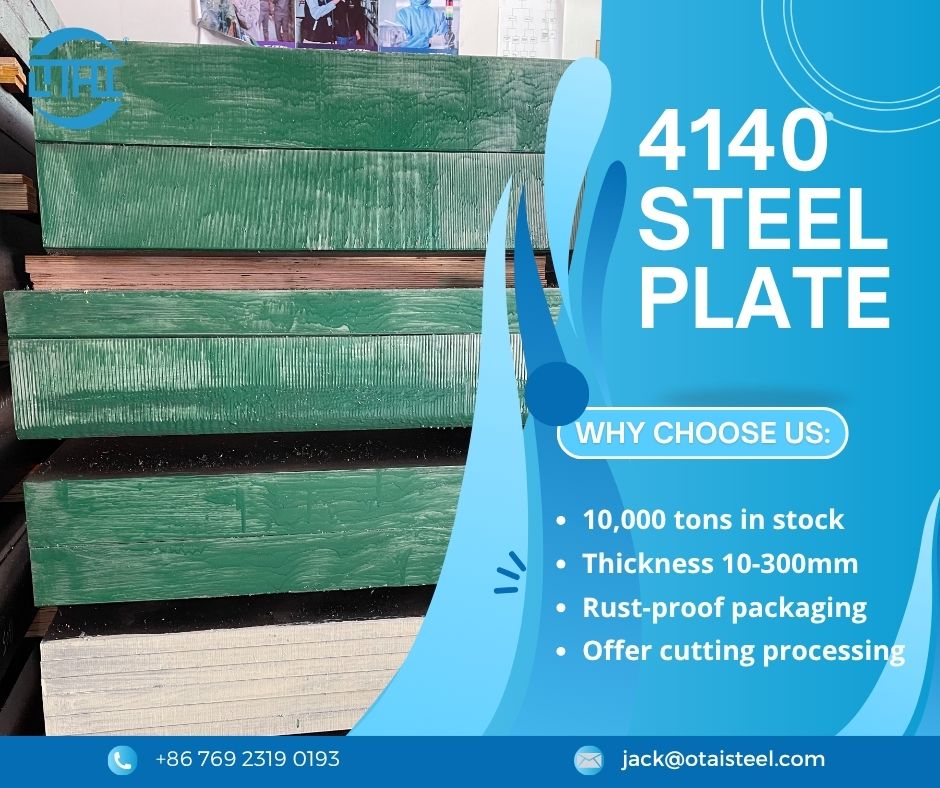
When it comes to alloy steels for demanding engineering applications, 4140 steel and 8620 steel are two heavy hitters. Both exhibit renowned strength, toughness, and versatility, yet their differing chemical compositions, heat-treatment responses, and wear-resistance levels can swing the balance toward one or the other, depending on what you need.

In this guide, we’ll dive deep into the differences between 4140 steel and 8620 steel, compare their mechanical properties, and help you choose the right one for your application.


🌟 Overview of 4140 and 8620 Steel

4140 steel is a chromium-molybdenum alloy steel with a medium carbon content, which gives it excellent strength, toughness, and wear resistance after heat treatment. It’s commonly used for shafts, gears, bolts, and structural components requiring high fatigue resistance.

8620 steel, on the other hand, is a low-carbon nickel-chromium-molybdenum alloy steel primarily known for its case hardening capabilities. The low carbon core maintains toughness, while the carburized outer layer achieves high surface hardness for wear resistance. This makes it a top choice for gears, camshafts, and other components subject to surface wear but needing a ductile core.


🧪 Chemical Composition Comparison

Element 4140 Steel (%) 8620 Steel (%)
Carbon (C) 0.38–0.43 0.18–0.23
Chromium (Cr) 0.80–1.10 0.40–0.60
Molybdenum (Mo) 0.15–0.25 0.15–0.25
Nickel (Ni) 0.40–0.70
Manganese (Mn) 0.75–1.00 0.70–0.90
Silicon (Si) 0.15–0.35 0.15–0.35

💡 The higher carbon content in 4140 steel allows for greater hardness and strength after heat treatment, while 8620’s lower carbon content makes it more suitable for carburizing processes.


⚙️ Mechanical Properties After Heat Treatment

Property 4140 Steel (Quenched & Tempered) 8620 Steel (Carburized)
Tensile Strength (MPa) 850–1000 Core: 550–700 / Case: 1000–1200
Yield Strength (MPa) 655–850 Core: 400–500 / Case: 850–1000
Rockwell Hardness (HRC) 28–40 Core: 20–30 / Case: 55–62
Elongation (%) 18–25 20–30
Impact Toughness (J) High Very High (core toughness)

🔍 Key Differences Between 4140 and 8620 Steel

  1. Carbon Content & Hardenability

    • 4140 has medium carbon content, making it through-hardenable.

    • 8620 has low carbon content, so it’s usually case hardened.

  2. Wear Resistance

    • 4140 provides good wear resistance throughout the section.

    • 8620 excels in surface wear resistance after carburizing but keeps a tough core.

  3. Applications

    • 4140 steel for heavy-duty shafts and high-stress parts requiring uniform hardness.

    • 8620 steel for gears and components where a hard outer shell and tough core are beneficial.

  4. Machinability

    • Both have good machinability in annealed condition, but 4140 steel machining requires more rigid setups when hardened.

  5. Heat Treatment Options

    • 4140 responds well to quenching and tempering.

    • 8620 is usually carburized and then quenched.


🏭 4140 Steel vs 8620 Steel: Typical Applications

4140 Steel Uses:

  • Power transmission shafts

  • Bolts and studs

  • Tool holders

  • Hydraulic components

8620 Steel Uses:

  • Automotive gears and shafts

  • Camshafts

  • Bushings and pins

  • Aerospace gear systems


📊 Selection Guide

Factor Choose 4140 Steel if… Choose 8620 Steel if…
Hardness Throughout You need consistent hardness in all areas. Only surface hardness is required.
Wear Resistance You need wear resistance in the whole part. Surface wear resistance is most important.
Toughness High toughness with strength is needed. A tough core with a hard surface is essential.
Heat Treatment Quenching & tempering is the main process. Carburizing is preferred for your application.

💡 Expert Tip

If your part will face impact loads and surface wear, 8620 might be better due to its tough core and hard case. But for uniform strength and load-bearing capacity, 4140 is often the safer choice.


🌏 Company Advantages – Why Choose Otai Special Steel?

  • Extensive Inventory: Over 10,000 tons of alloy steel in stock, including multiple sizes of 4140 and 8620.

  • Value-Added Services: Precision cutting, heat treatment, ultrasonic testing, and packaging solutions.

  • Quality Assurance: Chemical composition verification, UT testing, and third-party inspection (SGS).

  • Global Experience: Trusted supplier to top companies such as Thyssenkrupp, Borealis, and Schlumberger.

  • Competitive Pricing: Cost-effective solutions without compromising quality.


❓ FAQ

Q1: Can 8620 steel be used without carburizing?
A1: Yes, but without carburizing it won’t achieve its signature surface hardness, so it’s less wear-resistant.

Q2: Is 4140 steel more expensive than 8620?
A2: Typically yes, because of its higher alloy content and performance characteristics.

Q3: Which one is better for gears?
A3: 8620 is preferred for gears due to its hard surface and tough core after carburizing.

Q4: Does 4140 steel require preheating before welding?
A4: Yes, preheating is recommended to reduce the risk of cracking.

0 0 Continue Reading →

4140 Steel Welding Procedure:  Complete Guide for Strong and Reliable Welds

4140 Steel Welding Procedure:  Complete Guide for Strong and Reliable Welds4140 Steel Welding Procedure:  Complete Guide for Strong and Reliable Welds
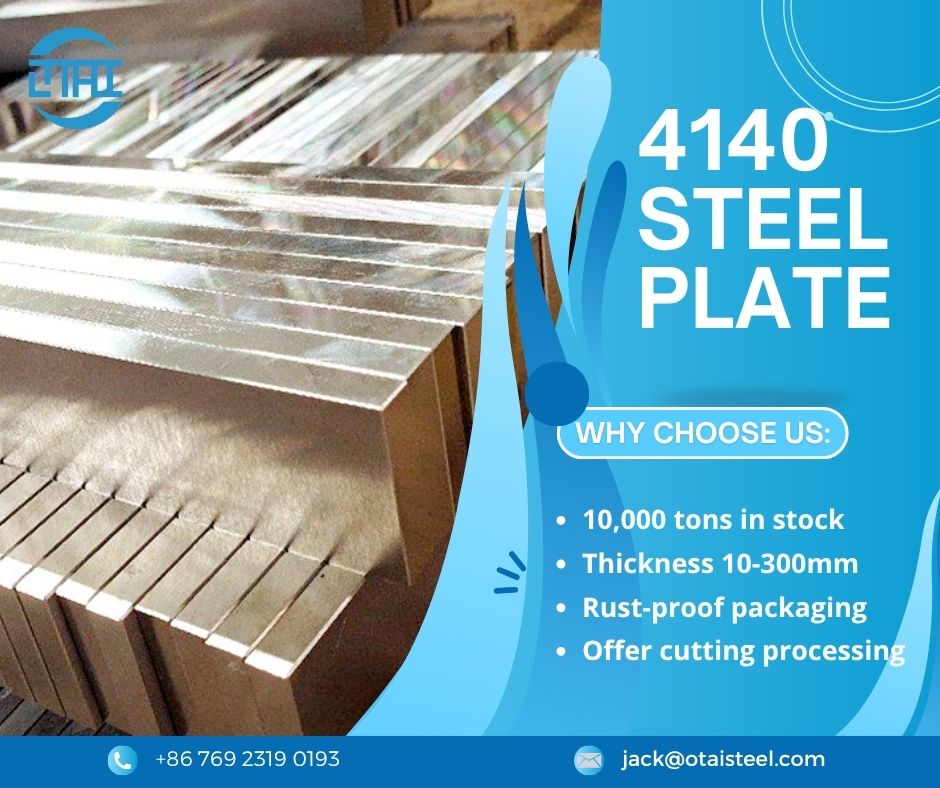
Welding 4140 alloy steel can be tricky if you want to achieve strong, crack-free joints. Because of its chromium-molybdenum composition and medium carbon content, this steel offers excellent strength and hardenability — but also a higher risk of cracking if welded without proper precautions.

In this guide, we’ll break down the 4140 steel welding procedure, from preheating to post-weld treatment, to help you get reliable results in both shop and field environments.


🔍 Understanding the Challenges of Welding 4140 Steel

4140 is a medium carbon, low alloy steel with approximately 0.38–0.43% carbon, 0.8–1.1% chromium, and 0.15–0.25% molybdenum. These elements make it strong and wear-resistant but also increase hardenability, meaning the weld area can form brittle martensite if cooled too quickly.

Common welding challenges include:

  • Cracking in the heat-affected zone (HAZ) due to high hardness.

  • Loss of toughness in the weld area without proper heat control.

  • Distortion in thin sections from excessive heat input.


🛠 Pre-Weld Preparation

The first step in a proper 4140 welding procedure is surface preparation.

  1. Cleaning: Remove rust, oil, grease, and mill scale from both sides of the joint.

  2. Edge Preparation: For thicker sections (>12 mm), bevel the edges to ensure full penetration.

  3. Fit-Up: Maintain tight and consistent gaps to control heat distribution.


🌡 Preheating – The Key to Avoiding Cracks

Preheating 4140 steel before welding is one of the most important steps to reduce cracking risk.

Recommended preheat temperatures:

Thickness (mm) Preheat Temperature (°C) Preheat Temperature (°F)
< 12 150–200 300–400
12–25 200–250 400–480
> 25 250–315 480–600

Preheating slows down the cooling rate, preventing martensite formation in the HAZ and reducing residual stresses.


⚙ Choosing the Right Filler Metal

For welding 4140 steel, filler selection depends on whether you want:

  • As-welded properties close to 4140 steel (for matching strength).

  • Ductile welds with reduced cracking risk (for dissimilar joints).

Common filler choices:

  • ER80S-D2 – Good match for strength, balanced ductility.

  • E10018-D2 – For higher strength requirements.

  • Low-hydrogen electrodes – Reduce hydrogen cracking risk.


🔥 Welding Technique

The welding process for 4140 alloy steel should be controlled to minimize heat concentration.

  • Use low-hydrogen welding processes (GTAW/TIG, GMAW/MIG, SMAW).

  • Keep interpass temperature around 200–300°C (390–570°F).

  • Avoid excessive weaving; use stringer beads for better control.

  • Allow short pauses between passes to avoid overheating.


🌬 Post-Weld Heat Treatment (PWHT)

PWHT is essential when following a 4140 steel welding procedure for critical applications. It helps:

  • Reduce residual stresses.

  • Improve toughness in the HAZ.

  • Refine microstructure.

Typical PWHT cycle:

  1. Heat to 595–675°C (1100–1250°F).

  2. Hold for 1 hour per inch of thickness.

  3. Cool slowly in still air or furnace.


📈 Mechanical Properties After Welding

With proper welding and PWHT, 4140 welded joints can retain a high percentage of their original mechanical properties:

Property As-Welded PWHT Condition
Tensile Strength (MPa) 750–850 850–950
Yield Strength (MPa) 600–700 700–800
Hardness (HB) 230–260 220–240

🏭 Industrial Applications of Welded 4140 Steel

Because of its high strength and wear resistance, welded 4140 components are widely used in:

  • Heavy machinery repair – Shafts, axles, and gear housings.

  • Oil & gas equipment – Drill collars and high-pressure pipework.

  • Construction – Crane booms and lifting arms.

  • Automotive – Roll cages, chassis reinforcements, and suspension arms.


💡 Practical Tips for Welding 4140 Steel

  • Always follow a low-hydrogen welding process to minimize cracking.

  • Use preheat and post-weld slow cooling for thick sections.

  • Match filler strength to application needs — overmatching can cause brittle welds.

  • For highly critical parts, consider full stress relief PWHT.

  • Use controlled welding parameters to avoid overheating the base material.


🌍 Company Advantages – Otai Special Steel

At Otai Special Steel, we not only supply premium 4140 alloy steel but also provide technical welding guidance to ensure your projects succeed. With over 10,000 tons of stock in thicknesses from 6 mm to 300 mm, we offer:

  • Custom cutting for your exact dimensions.

  • Heat treatment services including preheating and PWHT.

  • Welding filler material recommendations for 4140 steel.

  • Quality certifications like UT, chemical analysis, and third-party inspection.


❓ FAQ

1. Why is preheating so important for welding 4140 steel?
It slows down cooling, reducing the risk of cracking in the heat-affected zone.

2. Can 4140 steel be welded without PWHT?
Yes, for non-critical parts, but PWHT improves toughness and reduces stress.

3. Which welding process works best for 4140 steel?
Low-hydrogen processes like TIG, MIG, and SMAW are preferred for strong, clean welds.

0 0 Continue Reading →

Young’s Modulus of 4140 Steel: Complete Engineering Guide

Young's Modulus of 4140 Steel: Complete Engineering GuideYoung’s Modulus of 4140 Steel: Complete Engineering Guide

When engineers talk about material stiffness, the first property they often consider is Young’s modulus. For 4140 alloy steel, this parameter plays a critical role in determining how the steel will behave under load — especially in applications where elastic deformation limits must be precisely controlled.

In this article, we’ll explore the Young’s modulus of 4140 steel, how it compares to other steels, the role of heat treatment, and what engineers should keep in mind when using it for high-performance applications.


🌟 What is Young’s Modulus?

Young’s modulus, also called the modulus of elasticity, measures a material’s resistance to elastic deformation under stress. It is defined as the ratio of stress (force per unit area) to strain (relative deformation) in the elastic region of the material’s stress-strain curve.

In simple terms:

  • High modulus → material is stiff and resists deformation.

  • Low modulus → material is more flexible.

The modulus is typically expressed in gigapascals (GPa) or pounds per square inch (psi).


📊 Young’s Modulus of 4140 Steel

The Young’s modulus of 4140 steel is approximately:

Condition Young’s Modulus (GPa) Young’s Modulus (psi)
Annealed ~205 GPa ~29,700,000 psi
Quenched & Tempered ~205 GPa ~29,700,000 psi

Interestingly, unlike tensile strength or hardness, Young’s modulus is not significantly affected by heat treatment. Whether annealed or quenched & tempered, the stiffness of 4140 steel remains roughly the same.


🔍 Why Stiffness Matters for 4140 Steel

The modulus of elasticity of 4140 steel is critical in engineering designs for:

  • Shaft deflection control in rotating machinery.

  • Gear tooth deformation under heavy loads.

  • Precision machine parts where dimensional stability under stress is essential.

  • Structural applications where bending needs to be minimized.

For example, in 4140 steel shafts used in turbine rotors, the Young’s modulus ensures the shaft can transmit torque without excessive bending, even under high rotational speeds.


⚙ Relationship Between Young’s Modulus and Strength

While tensile strength of 4140 steel can be dramatically increased through heat treatment, Young’s modulus stays constant. This means that making the steel harder does not make it stiffer — it just increases the stress it can withstand before plastic deformation starts.

This is a key point for engineers:

Stiffness (elastic property) ≠ Strength (plastic property)


🏭 Applications Where Young’s Modulus is Critical

Because 4140 steel’s Young’s modulus is high (~205 GPa), it is ideal for components requiring high stiffness:

  • Industrial gear systems – minimizing tooth deflection under load.

  • Oilfield drill collars – maintaining dimensional accuracy under heavy compression.

  • Automotive axles – resisting bending during torque transmission.

  • High-pressure molds – avoiding elastic distortion during clamping.


🌡 Does Temperature Affect Young’s Modulus?

Yes, temperature has a noticeable effect. While room temperature modulus is about 205 GPa, elevated temperatures cause it to drop.

Temperature (°C) Young’s Modulus (GPa)
20 205
200 ~190
400 ~170
600 ~140

This reduction in stiffness at higher temperatures is why 4140 steel used in hot working tools must be carefully designed to avoid excessive deflection.


📈 Comparison with Other Steels

Material Young’s Modulus (GPa)
4140 Alloy Steel ~205
1045 Carbon Steel ~205
Stainless Steel 304 ~193
Aluminum Alloy 6061 ~69

As shown, 4140 steel’s stiffness is similar to most steels but far higher than aluminum alloys, making it better for high-rigidity applications.


💡 Design Tips for Using 4140 Steel’s Young’s Modulus

  • Use finite element analysis (FEA) to predict deflection under load.

  • In rotating machinery, consider both modulus and mass for vibration control.

  • Remember that heat treatment changes strength but not stiffness.

  • For high-temperature use, check modulus drop at operating conditions.

  • If weight reduction is important but stiffness must remain high, consider using 4140 hollow shafts instead of switching to a lighter but less stiff alloy.


🌍 Company Advantages – Otai Special Steel

At Otai Special Steel, we supply 4140 alloy steel in both annealed and quenched & tempered conditions. With over 10,000 tons in stock (6 mm to 300 mm thickness), we offer:

  • Cut-to-size service with tight tolerances.

  • Heat treatment tailored to your needs.

  • Mechanical testing, including modulus verification.

  • Export packaging suitable for international delivery.

Our expertise ensures your 4140 steel applications perform with the stiffness, strength, and reliability you expect.


❓ FAQ

1. Does heat treatment change the Young’s modulus of 4140 steel?
No, modulus remains essentially the same regardless of heat treatment.

2. How does 4140 steel compare to aluminum in stiffness?
4140 steel is about 3 times stiffer than aluminum alloys like 6061.

3. Why is Young’s modulus important in shaft design?
It determines how much the shaft will deflect under load, affecting performance and alignment.

0 0 Continue Reading →


Recent Comments by aotai

    No comments by aotai