Skip to Content

About: aotai

Recent Posts by aotai

4140 Alloy Steel Composition: Detailed Guide for Engineers and Buyers

4140 Alloy Steel Composition: Detailed Guide for Engineers and Buyers4140 Alloy Steel Composition: Detailed Guide for Engineers and Buyers

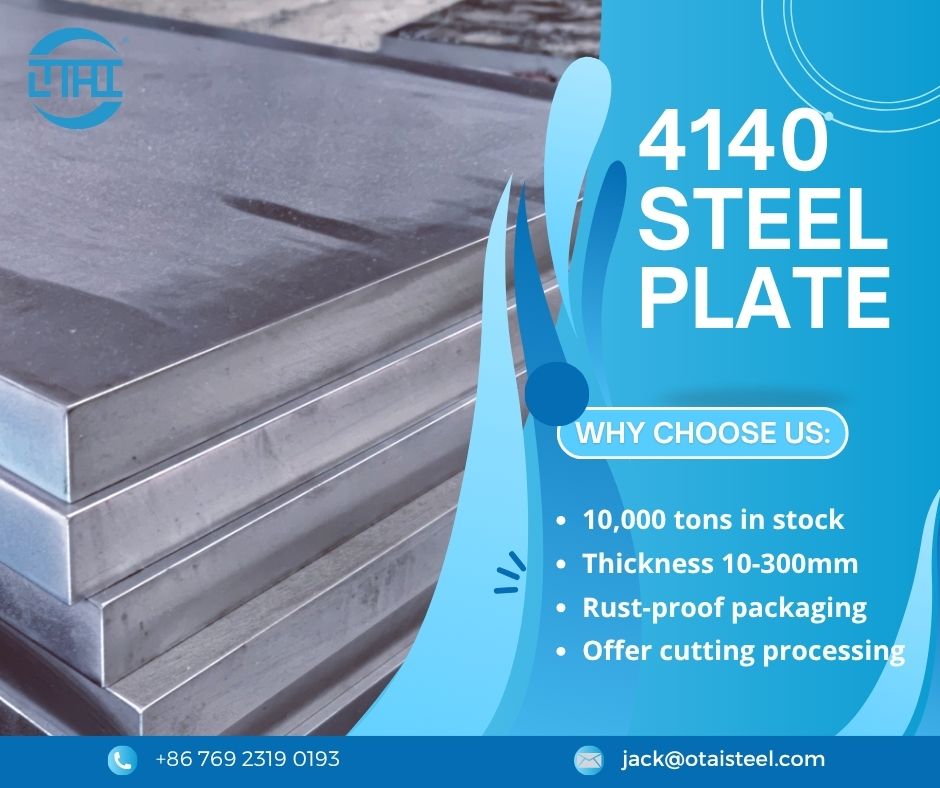
When discussing 4140 alloy steel composition, we are talking about more than just a chemical formula on paper. This chromium-molybdenum alloy steel is an engineering workhorse, prized for its balance of strength, toughness, and machinability. Its chemical makeup is the foundation that determines its performance in applications ranging from oilfield components to automotive parts.

In this guide, we’ll explore the complete chemical composition of 4140 alloy steel, why each element is there, how variations in content affect performance, and what engineers should keep in mind when selecting or processing this steel.


🌟 What is 4140 Alloy Steel?

4140 alloy steel is classified as a low-alloy, medium-carbon steel. It belongs to the AISI-SAE 41xx family, characterized by the addition of chromium and molybdenum. These alloying elements enhance hardenability, wear resistance, and tensile strength, making it a versatile material across multiple industries.

Its typical uses include gears, shafts, crankshafts, drill collars, and heavy-duty fasteners — all components that demand high strength and fatigue resistance.


📊 Chemical Composition of 4140 Alloy Steel

Here is the typical chemical composition according to AISI standards:

Element Content (%) Purpose in Alloy
Carbon (C) 0.38 – 0.43 Controls hardness, strength, and wear resistance
Manganese (Mn) 0.75 – 1.00 Improves strength and hardenability
Silicon (Si) 0.15 – 0.35 Enhances toughness and deoxidation
Chromium (Cr) 0.80 – 1.10 Increases hardness, wear resistance, and corrosion resistance
Molybdenum (Mo) 0.15 – 0.25 Improves hardenability and high-temperature strength
Phosphorus (P) ≤ 0.035 Controlled to reduce brittleness
Sulfur (S) ≤ 0.040 Controlled to maintain ductility

🔍 Role of Each Alloying Element

  1. Carbon (C) – The medium carbon content is the backbone of the steel’s strength. It allows 4140 alloy steel to reach high hardness after heat treatment while still maintaining reasonable toughness.

  2. Manganese (Mn) – Supports hardenability and strengthens the steel through solid solution strengthening.

  3. Silicon (Si) – Acts as a deoxidizer during steelmaking and contributes to toughness.

  4. Chromium (Cr) – Boosts wear resistance, surface hardness, and oxidation resistance.

  5. Molybdenum (Mo) – Enhances strength at elevated temperatures and prevents temper embrittlement.


🛠 How Composition Affects Performance

The composition of 4140 alloy steel directly determines its performance after processes like quenching, tempering, and machining:

  • High Carbon + Chromium → Greater hardness and wear resistance.

  • Chromium + Molybdenum → Improved toughness and fatigue strength.

  • Balanced Mn and Si → Maintains machinability and dimensional stability.

For example, if an application requires 4140 steel for oilfield drilling tools, the alloy’s chromium-molybdenum balance ensures high impact resistance without losing hardness.


🏭 Common Applications Linked to Composition

Because the 4140 alloy steel chemical composition offers both high strength and good machinability, it is chosen for:

  • Heavy-duty shafts in power transmission.

  • Downhole drilling tools for oil & gas.

  • Automotive crankshafts and connecting rods.

  • High-strength bolts and fasteners.

  • Industrial gears subjected to high torque.


🌡 Heat Treatment Compatibility

The chemical composition allows 4140 to respond well to:

  • Annealing – Softens the steel for machining.

  • Quenching and tempering – Maximizes strength and hardness while retaining toughness.

  • Induction hardening – Surface hardens gears and shafts without affecting core ductility.

For instance, 4140 steel quenched and tempered can achieve yield strengths above 1000 MPa, which would not be possible without its chromium-molybdenum-carbon balance.


📈 Standards and Equivalent Grades

Due to its composition, 4140 alloy steel has equivalent grades in other systems:

Standard Equivalent Grade
AISI 4140
ASTM A29 4140
DIN 42CrMo4
JIS SCM440
GB 42CrMo

These equivalents share the same core chemical composition but may have minor differences in allowable content ranges.


💡 Practical Tips for Buyers and Engineers

  • Always request a mill test certificate (MTC) to verify composition.

  • For critical applications, ensure tight control on P and S to avoid embrittlement.

  • Match the heat treatment process to the intended use — composition allows flexibility, but wrong treatment can reduce performance.

  • Choose suppliers that offer ultrasonic testing (UT) and chemical analysis reports to confirm compliance.


🌍 Company Advantages – Otai Special Steel

At Otai Special Steel, we stock over 10,000 tons of 4140 alloy steel with thicknesses from 6 mm to 300 mm. Our inventory covers both annealed and quenched & tempered conditions. We provide:

  • Precision cutting to customer dimensions.

  • Heat treatment services to achieve desired mechanical properties.

  • Ultrasonic testing (UT) and chemical composition verification.

  • Export-ready packaging for global delivery.

With decades of experience serving industries like oil & gas, automotive, and heavy machinery, we ensure every batch meets international standards.


❓ FAQ

1. Why is chromium and molybdenum added to 4140 steel?
They improve hardenability, wear resistance, and high-temperature performance.

2. Is 4140 alloy steel good for welding?
Yes, but preheating and post-weld heat treatment are recommended to avoid cracking.

3. Does composition vary by supplier?
Slight variations are possible within the allowable ranges of the standard. Always verify with an MTC.

0 0 Continue Reading →

4140 Steel Yield Strength: Understanding Its Performance in Engineering Applications

4140 Steel Yield Strength: Understanding Its Performance in Engineering Applications4140 Steel Yield Strength: Understanding Its Performance in Engineering Applications
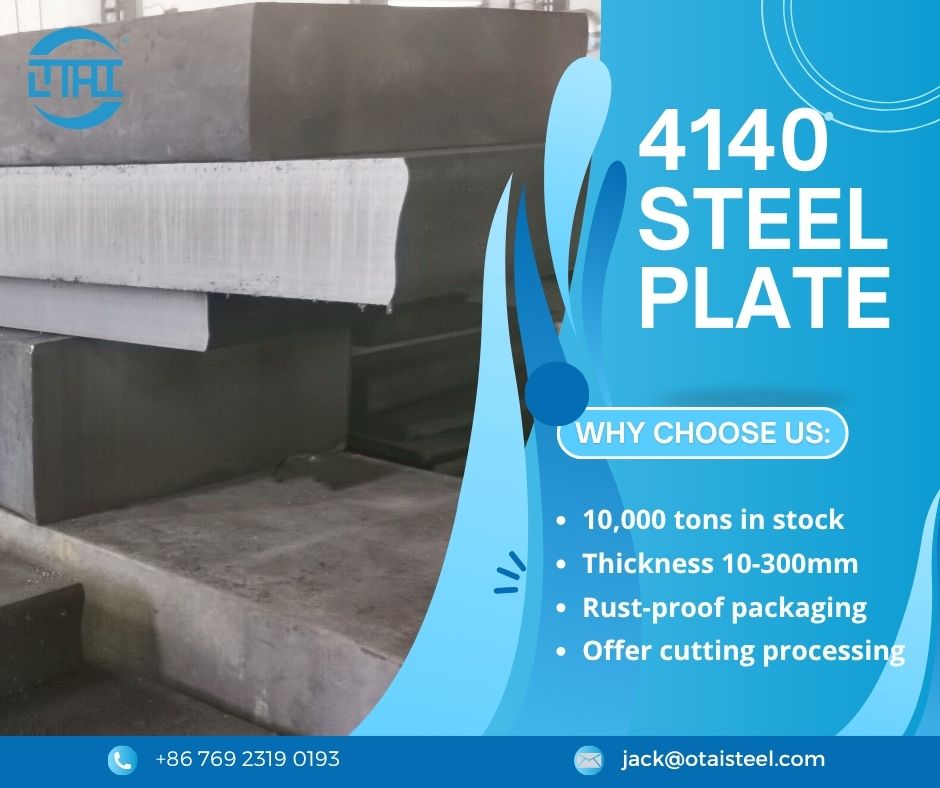
When selecting a steel grade for high-performance engineering projects, yield strength is one of the most critical properties to consider. For many engineers, 4140 steel is an excellent choice because it balances strength, toughness, and machinability. But what exactly is the yield strength of 4140 steel, and why does it matter so much for applications like shafts, gears, and heavy-duty components? Let’s break it down in detail.


🌟 What is Yield Strength?

Yield strength is the amount of stress a material can withstand before it begins to deform permanently. Once this point is exceeded, the material will not return to its original shape even after the load is removed. In structural and mechanical engineering, yield strength determines how much load a component can carry safely without permanent deformation.


🔍 Yield Strength of 4140 Steel in Different Conditions

The yield strength of 4140 steel depends heavily on its heat treatment condition:

Heat Treatment Condition Typical Yield Strength (MPa) Typical Yield Strength (ksi)
Annealed 415–655 MPa 60–95 ksi
Normalized 655–895 MPa 95–130 ksi
Quenched & Tempered (Q&T) 895–1080 MPa 130–156 ksi
Nitrided Similar to Q&T base, but with higher surface hardness

Key takeaway: The yield strength in quenched and tempered condition is significantly higher, making it the preferred state for high-stress industrial applications.


⚙ Factors Affecting 4140 Steel Yield Strength

Several factors influence how much yield strength you get from 4140 alloy:

  1. Heat Treatment Process

    • Quenching and tempering increase both yield and tensile strength.

    • Normalizing improves uniformity in microstructure, enhancing mechanical performance.

  2. Carbon and Alloy Content

    • With about 0.38–0.43% carbon, plus chromium and molybdenum, 4140 steel has a fine balance between strength and ductility.

  3. Grain Size Control

    • Finer grain sizes typically lead to higher yield strength and better impact resistance.

  4. Surface Condition

    • Machined, forged, or rolled surfaces may behave differently under stress.


🏗 Why Yield Strength Matters for 4140 Steel Applications

Here’s why yield strength is a deal-breaker in design:

  • Safety Factor in Engineering: High yield strength means components can handle greater loads without permanent deformation.

  • Performance Longevity: In gears, spindles, and shafts, high yield strength resists bending and fatigue over time.

  • Cost Efficiency: Choosing a steel with the right yield strength avoids over-engineering (which increases costs) or under-engineering (which leads to failures).


📌 Real-World Applications Where Yield Strength is Crucial

4140 steel is widely used in:

  • Heavy-duty shafts and axles that experience bending and torsional stresses.

  • Automotive suspension parts that require toughness and resilience.

  • Oil and gas drilling equipment, where yield strength ensures structural integrity under extreme loads.

  • Military hardware and defense equipment, where performance under impact is critical.


🛠 How to Optimize Yield Strength in 4140 Steel

If you want to maximize yield strength of 4140 steel, consider:

  1. Choosing the right heat treatment

    • Quenched and tempered at 540–675°C can give a great balance of strength and toughness.

  2. Surface Hardening

    • Nitriding can improve surface wear resistance without sacrificing core toughness.

  3. Proper Machining Practices

    • Maintain low cutting speeds and sufficient lubrication to prevent surface microcracks.

  4. Quality Testing

    • Conduct tensile testing and yield point verification for quality assurance.


📊 Comparing Yield Strength vs. Tensile Strength in 4140 Steel

It’s important not to confuse yield strength with tensile strength.

Property Description Typical Range (Q&T Condition)
Yield Strength Stress where permanent deformation starts 895–1080 MPa (130–156 ksi)
Tensile Strength Maximum stress before fracture 1080–1320 MPa (156–191 ksi)

Note: High tensile strength without high yield strength can lead to brittle failure. That’s why 4140’s balance is so valued.


💡 Design Considerations

When designing with 4140 steel, engineers must consider:

  • Load Type: Static vs. dynamic loads will influence heat treatment choice.

  • Operating Environment: Corrosive or high-temperature conditions may require additional surface treatments.

  • Safety Margins: Always design below yield strength to ensure a safety buffer.


🌏 Global Standards & Equivalent Grades

Different countries use different names for 4140 steel, but yield strength remains comparable if the chemical composition is similar:

Standard Grade Name
ASTM AISI 4140
DIN 42CrMo4
JIS SCM440
GB/T 42CrMo

💎 Company Advantages – Why Choose Otai Special Steel?

  • Massive Inventory: Over 10,000 tons in stock, thicknesses from 6mm to 300mm.

  • Quality Assurance: Ultrasonic testing, chemical composition testing, and third-party inspections.

  • Custom Processing: Cutting, heat treatment, machining, and packaging tailored to your needs.

  • Proven Track Record: Trusted by top global companies like Thyssenkrupp, Borealis, and Schlumberger.

  • Competitive Pricing: Direct mill supply with cost savings for clients.


❓ FAQ

Q1: What is the highest yield strength 4140 steel can achieve?
In quenched and tempered condition, it can reach around 1080 MPa (156 ksi).

Q2: Does higher yield strength make steel more brittle?
Not necessarily. With proper tempering, 4140 maintains toughness even at high yield strengths.

Q3: How does 4140 compare to 1045 steel in yield strength?
4140 has significantly higher yield strength due to its alloying elements and heat treatment flexibility.

0 0 Continue Reading →

Can 4140 Steel Be Hardened?

Can 4140 Steel Be Hardened?Can 4140 Steel Be Hardened?
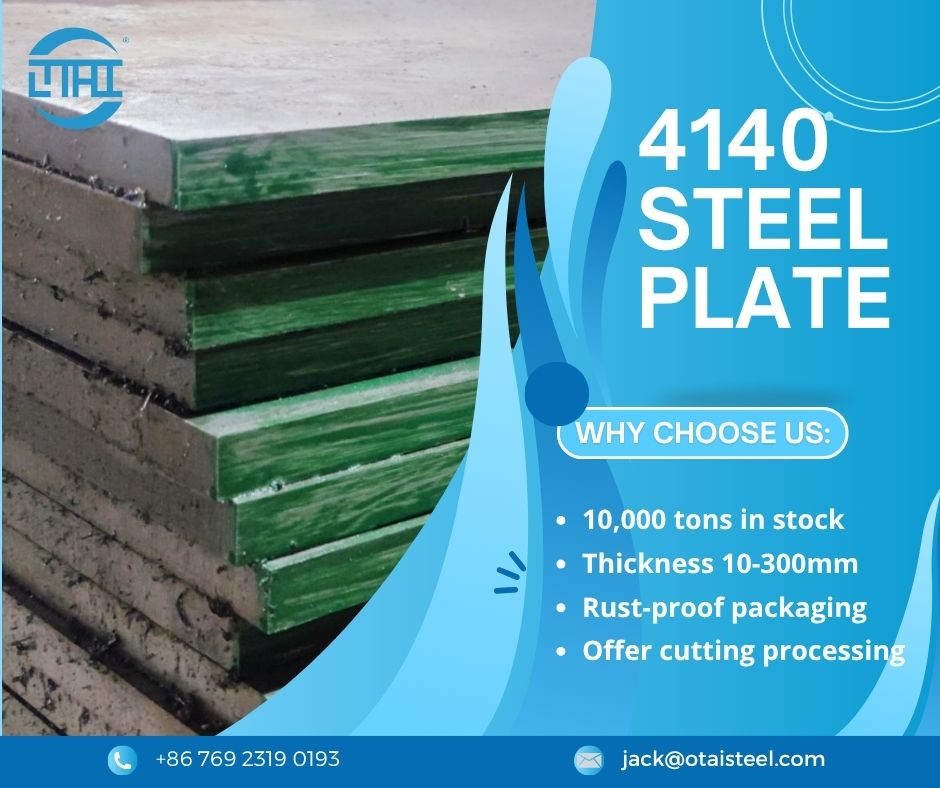
When it comes to versatile alloy steels, 4140 steel often tops the list. Known for its excellent balance of strength, toughness, and wear resistance, 4140 is widely used in industries ranging from automotive to heavy machinery. But one question that frequently comes up is: Can 4140 steel be hardened? The answer is a clear yes — and not only can it be hardened, but it also responds exceptionally well to different heat treatment processes.

In this detailed guide, we’ll explore the hardenability of 4140 steel, how the process works, the factors influencing hardness, and practical tips for achieving optimal results.


🛠️ What Is 4140 Steel?

4140 steel is a chromium-molybdenum alloy steel containing about 0.38–0.43% carbon, 0.75–1.00% chromium, and 0.15–0.25% molybdenum. This composition gives it:

  • Good tensile strength

  • Excellent fatigue resistance

  • High toughness

  • Ability to withstand moderate wear

4140 is supplied in various forms — as annealed, normalized, pre-hardened, or quenched and tempered — which directly affects how hard it is before additional processing.


🔍 Hardenability Explained

Hardenability refers to the steel’s ability to form martensite when quenched from its austenitizing temperature. This is not the same as hardness — rather, it’s about how deep into the material the hardness can be achieved.

4140 steel has high hardenability because of its alloying elements:

  • Chromium slows down the transformation from austenite to pearlite, allowing deeper hardening.

  • Molybdenum reduces the risk of temper embrittlement and improves toughness at high hardness levels.


🔥 How to Harden 4140 Steel

There are several methods to harden 4140 steel, but the most common process is quenching and tempering.

Step 1 – Austenitizing

  • Heat the steel to 830–880°C (1525–1615°F).

  • Hold at temperature until the core is fully heated.

  • Step 2 – Quenching
  • Cool rapidly in oil or water (oil is preferred to reduce distortion and cracking).

  • This transforms the microstructure into martensite, a very hard but brittle phase.

Step 3 – Tempering

  • Reheat to 200–650°C (390–1200°F) depending on desired properties.

  • Tempering reduces brittleness while retaining strength.


📊 Hardness Levels Achievable

Condition Rockwell Hardness (HRC)
Annealed ~ 18–22 HRC
Pre-hardened ~ 28–32 HRC
Quenched and tempered (low temp) 50–55 HRC
Quenched and tempered (high temp) 28–40 HRC

With proper heat treatment, 4140 can reach up to 55 HRC, making it suitable for high-wear applications.


⚙️ Factors That Affect Hardening Results

  1. Section Size – Larger cross-sections cool slower and may not achieve full hardness to the core.

  2. Quench Medium – Oil quenching is slower and safer for distortion; water quenching gives higher hardness but higher crack risk.

  3. Initial Condition – Annealed vs. pre-hardened stock changes the final result.

  4. Post-Heat Treatment Stress Relief – Reduces distortion after machining.


🧪 Applications That Benefit from Hardening

Hardened 4140 steel is widely used in:

  • Drive shafts

  • Gears

  • Crankshafts

  • Mold bases

  • Tooling components

  • High-strength bolts

These parts require both surface hardness for wear resistance and core toughness to absorb shock.


💡 Tips for Best Results

  • Always normalize before hardening large sections to reduce internal stresses.

  • Use controlled quenching to prevent warping.

  • For induction hardening, target surfaces can reach 58–60 HRC while keeping a tough core.

  • Perform nondestructive testing (like ultrasonic testing) after heat treatment for critical components.


📈 Why 4140 Steel Is a Heat Treater’s Favorite

Compared to plain carbon steels, 4140 offers better hardenability, meaning even thick sections can be hardened effectively. Its chromium and molybdenum content make it more resistant to soft spots and distortion during treatment.


🏭 Company Advantages – Otai Special Steel

At Otai Special Steel, we have over 20 years of experience supplying and processing 4140 steel for global clients.
Our advantages include:

  • Large inventory (over 10,000 tons in stock)

  • Customized cutting, heat treatment, and surface finishing

  • Ultrasonic testing and third-party inspection (SGS, etc.)

  • Fast delivery to international markets

  • Competitive pricing without compromising quality


❓ FAQ

Q1: Can 4140 steel be through-hardened?
Yes. With proper heat treatment, it can be hardened through the cross-section, especially in smaller sizes.

Q2: Is water quenching recommended for 4140?
It’s possible but not recommended for thick sections due to cracking risk; oil is safer.

Q3: Can 4140 be surface hardened only?
Yes. Processes like induction hardening can give a very hard outer layer with a tough core.

Q4: What’s the max hardness 4140 can achieve?
Around 55 HRC with standard quench and temper.

Q5: Does hardening affect machinability?
Yes. Hardened 4140 is more difficult to machine and often requires carbide tooling.

0 0 Continue Reading →

4140 Steel for Sale Near Me: How to Find the Best Supplier

4140 Steel for Sale Near Me: How to Find the Best Supplier4140 Steel for Sale Near Me: How to Find the Best Supplier
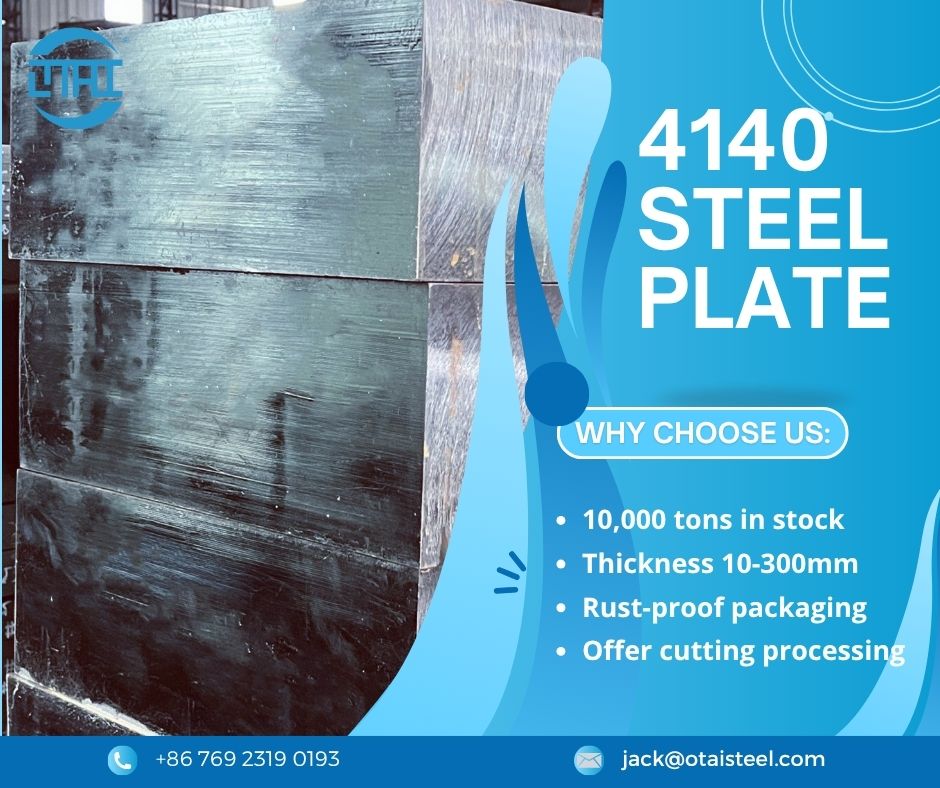
If you’re searching for 4140 steel for sale near me, you’re likely looking for a strong, versatile alloy steel that can handle demanding industrial applications. Known for its excellent combination of toughness, wear resistance, and high tensile strength, 4140 steel is a go-to choice in industries like automotive, oil & gas, aerospace, and manufacturing.

But finding a reliable local or regional supplier can be tricky. In this guide, we’ll explore the key properties of 4140 steel, common sizes and forms, and practical tips on how to source it effectively—while making sure you get the right quality at the right price.


✨ What is 4140 Steel?

4140 steel is a chromium-molybdenum alloy steel that offers a unique balance of strength, hardness, and ductility. It belongs to the AISI 41xx steel series and contains:

Element Typical Content (%)
Carbon (C) 0.38 – 0.43
Chromium (Cr) 0.80 – 1.10
Molybdenum (Mo) 0.15 – 0.25
Manganese (Mn) 0.75 – 1.00
Silicon (Si) 0.15 – 0.35

These elements give 4140 alloy steel exceptional fatigue resistance, good machinability (especially in annealed condition), and the ability to be heat-treated to achieve high hardness levels.


📏 Common Forms & Sizes You’ll Find Locally

When looking for 4140 steel near me, you’ll typically find it in these forms:

  • Round Bars – Common for shafts, axles, and heavy-duty components.

  • Plates & Sheets – Ideal for tooling, dies, and machinery bases.

  • Blocks – Used for forging, mold bases, and custom-machined parts.

  • Hollow Bars / Tubes – For high-pressure components and mechanical sleeves.

Typical stocked sizes range from 6mm up to 300mm in thickness or diameter, depending on the supplier’s inventory. Larger sizes are often available on order.


🏭 Industries Using 4140 Steel Locally

If you’re buying 4140 steel in your area, it’s probably for one of these applications:

  1. Automotive & Transportation – Crankshafts, gears, axles.

  2. Oil & Gas – Drilling collars, downhole tools.

  3. Mining – Crusher parts, shafts.

  4. Manufacturing – Dies, fixtures, machine bases.

  5. Aerospace – Landing gear components, support structures.


🔍 How to Identify a Good Local Supplier for 4140 Steel

When searching 4140 steel for sale near me, don’t just go for the closest option—look for these factors:

1. Stock Availability

A good supplier maintains a wide range of thicknesses and diameters in stock, reducing your lead times. Ask for their current inventory list.

2. Processing Capabilities

Look for suppliers who offer cutting, heat treatment, and machining services. This ensures you can get your steel ready for use without additional logistics.

3. Quality Certifications

Reliable sellers provide mill test certificates (MTC), ultrasonic testing results, and compliance with ASTM, AISI, or DIN standards.

4. Delivery Options

If you can’t pick it up, check if the supplier offers same-day or next-day delivery. For urgent jobs, proximity matters.

5. Competitive Pricing

Request multiple quotes from nearby suppliers and compare not only the price but also the included services.


🧪 Heat Treatment Services Near You

If you’re sourcing 4140 steel locally, you might also need it quenched and tempered or annealed before machining. Many local steel service centers offer:

  • Annealing – Improves machinability and reduces hardness.

  • Quenching & Tempering – Achieves a balance of hardness and toughness.

  • Stress Relieving – Reduces internal stresses after machining.


📍 Where to Search for 4140 Steel Near You

Here are the most effective ways to find 4140 steel for sale near me:

  1. Google Maps Search – Try searching for “4140 steel suppliers near me” or “alloy steel distributors” and filter by rating.

  2. Industrial Directories – Websites like ThomasNet, Yellow Pages, or Alibaba’s regional pages.

  3. Metal Supermarkets & Local Service Centers – Many have multiple branches and fast stock turnover.

  4. Trade Shows & Industry Networks – Great for meeting suppliers face-to-face.


⚙ Typical Mechanical Properties of 4140 Steel

Below is a quick reference table (in quenched and tempered condition):

Property Value (Typical)
Tensile Strength 850 – 1000 MPa
Yield Strength 655 – 850 MPa
Hardness (Rockwell C) 28 – 32 HRC
Elongation at Break 20 – 25 %
Density ~7.85 g/cm³

💡 Buying Tips for 4140 Steel Locally

  • Always confirm the grade – Ask for chemical composition test reports to ensure it’s genuine 4140.

  • Order slightly oversize – This allows for machining tolerances and final finishing.

  • Consider future needs – If you’ll need more soon, negotiate a blanket order for better pricing.

  • Check return policies – Good suppliers allow returns if the material does not meet specifications.


🏆 Company Advantages – Why Choose Otai Special Steel?

  • Massive Stock – Over 10,000 tons of 4140 steel in various sizes.

  • Precision Processing – Cutting, heat treatment, and machining services.

  • Global Supply Network – Supplying to top international brands like Thyssenkrupp and Schlumberger.

  • Strict Quality Control – UT testing, chemical analysis, and third-party inspection available.

  • Fast Delivery – Reliable shipping to both domestic and international customers.


❓ FAQ on Buying 4140 Steel Near You

Q1: Can I buy small quantities locally?
Yes, many local distributors sell as little as one piece or even cut-to-size orders.

Q2: Is local buying always cheaper than importing?
Not always—while you save on shipping, local prices can sometimes be higher. Compare before deciding.

Q3: Do local suppliers offer heat-treated 4140 steel?
Yes, many offer pre-hardened or quenched & tempered stock to save machining time.

Q4: Can I get a test certificate when buying locally?
Absolutely—request a mill test certificate (MTC) to verify the chemical and mechanical properties.

0 0 Continue Reading →

Heat Treating 4140 Steel: Complete Guide for Strength & Performance

Heat Treating 4140 Steel: Complete Guide for Strength & PerformanceHeat Treating 4140 Steel: Complete Guide for Strength & Performance
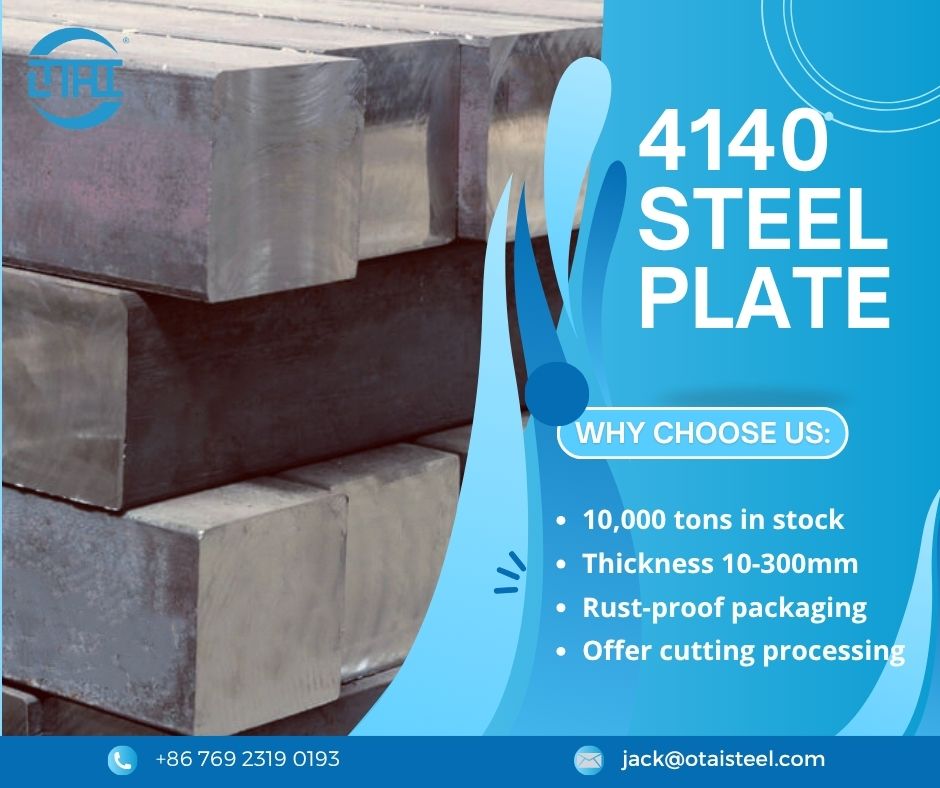
When it comes to engineering materials, 4140 steel is a favorite among machinists, engineers, and manufacturers worldwide. But the real magic happens when you heat treat 4140 steel — unlocking its maximum strength, toughness, and wear resistance. If you’re working on gears, shafts, axles, or high-stress components, understanding the best heat treatment for 4140 steel can make the difference between an average part and a high-performance one.

In this guide, we’ll break down heat treating 4140 steel, covering processes, temperatures, benefits, and practical tips.


🌟 What Makes 4140 Steel Special?

4140 steel is a chromium-molybdenum alloy steel with a balance of hardness and ductility. In its annealed condition, it’s machinable, but once heat treated, it becomes incredibly strong.

Chemical Composition of 4140 Steel (Typical %):

Element Percentage (%)
Carbon (C) 0.38 – 0.43
Chromium (Cr) 0.80 – 1.10
Molybdenum (Mo) 0.15 – 0.25
Manganese (Mn) 0.75 – 1.00
Silicon (Si) 0.15 – 0.35
Sulfur (S) ≤ 0.040
Phosphorus (P) ≤ 0.035

🔥 Why Heat Treat 4140 Steel?

Heat treating changes the steel’s internal microstructure, improving properties like:

  • Increased tensile strength

  • Higher fatigue resistance

  • Better wear resistance

  • Improved dimensional stability

For example, 4140 steel quenching and tempering can take hardness from ~20 HRC in the annealed state up to 50+ HRC, depending on the exact process.


⚙️ Main Heat Treatment Methods for 4140 Steel

1️⃣ Annealing (Softening for Machining)

Before hardening, some users anneal 4140 alloy steel to make it easier to machine.

  • Temperature: 800–850°C (1472–1562°F)

  • Slow furnace cooling to 480°C (896°F) then air cool.

  • Results in ~200 Brinell hardness.


2️⃣ Normalizing

Used to refine grain size and prepare for hardening.

  • Temperature: 870–900°C (1598–1652°F)

  • Air cooling.

  • Produces uniform microstructure for consistent hardening.


3️⃣ Quenching & Tempering (Q&T)

The most common heat treatment for 4140 steel when strength and wear resistance are required.

  • Quenching: Heat to 840–875°C (1544–1607°F), then oil quench.

  • Tempering: Reheat to 200–650°C (392–1202°F) depending on hardness requirements.

Tempering Temperature vs. Hardness for 4140 Steel:

Tempering Temp (°C) Approx. Hardness (HRC)
200 50–55
400 38–42
600 28–32

4️⃣ Nitriding (Surface Hardening)

If you need extreme surface wear resistance, nitriding is a great option.

  • Conducted at 500–550°C (932–1022°F) without quenching.

  • Produces a hard surface (~60–65 HRC) while maintaining a tough core.


🛠 Practical Tips for Heat Treating 4140 Steel

  1. Preheat before quenching — reduces thermal shock.

  2. Avoid overheating — grain growth reduces toughness.

  3. Choose oil quench over water quench — reduces risk of cracking.

  4. Always temper after hardening — untempered martensite is brittle.

  5. Consider part geometry — thick sections cool slower, affecting hardness.


📦 Applications That Rely on Heat Treated 4140 Steel

  • Heavy-duty crankshafts and camshafts

  • Gears for mining and construction equipment

  • Tool holders in CNC machining

  • Axles for heavy vehicles

  • Hydraulic cylinder shafts

These applications often require high-strength 4140 steel to handle repeated stress without failure.


🏆 Company Advantages – Why Choose Otai Special Steel?

  • Massive Inventory – Over 10,000 tons of 4140 steel in stock, thickness from 6mm to 300mm.

  • Custom Heat Treatment Services – Quenching, tempering, annealing, nitriding, tailored to your specs.

  • Quality Assurance – Ultrasonic testing, chemical composition analysis, third-party inspections (SGS).

  • Global Reputation – Trusted by industry leaders like Thyssenkrupp, Borealis, Schlumberger.

  • Fast Delivery – Stable supply chain and efficient logistics to meet urgent deadlines.


❓ FAQ

Q1: What’s the maximum hardness after heat treating 4140 steel?
A: With oil quenching and low-temperature tempering (~200°C), it can reach 50–55 HRC.

Q2: Can 4140 steel be water quenched?
A: Technically yes, but it’s risky — water quenching can cause cracking due to rapid cooling.

Q3: Is heat treated 4140 steel still machinable?
A: In high hardness states, machinability is poor; machining is best done in the annealed state before heat treating.

Q4: What’s the difference between 4140 and 42CrMo?
A: They are chemically similar; 42CrMo is the Chinese GB equivalent of 4140.

Q5: Can you weld heat treated 4140 steel?
A: Yes, but it requires preheating and post-weld heat treatment to avoid cracking.

0 0 Continue Reading →

Is 4140 Steel Weldable?

Is 4140 Steel Weldable?Is 4140 Steel Weldable?
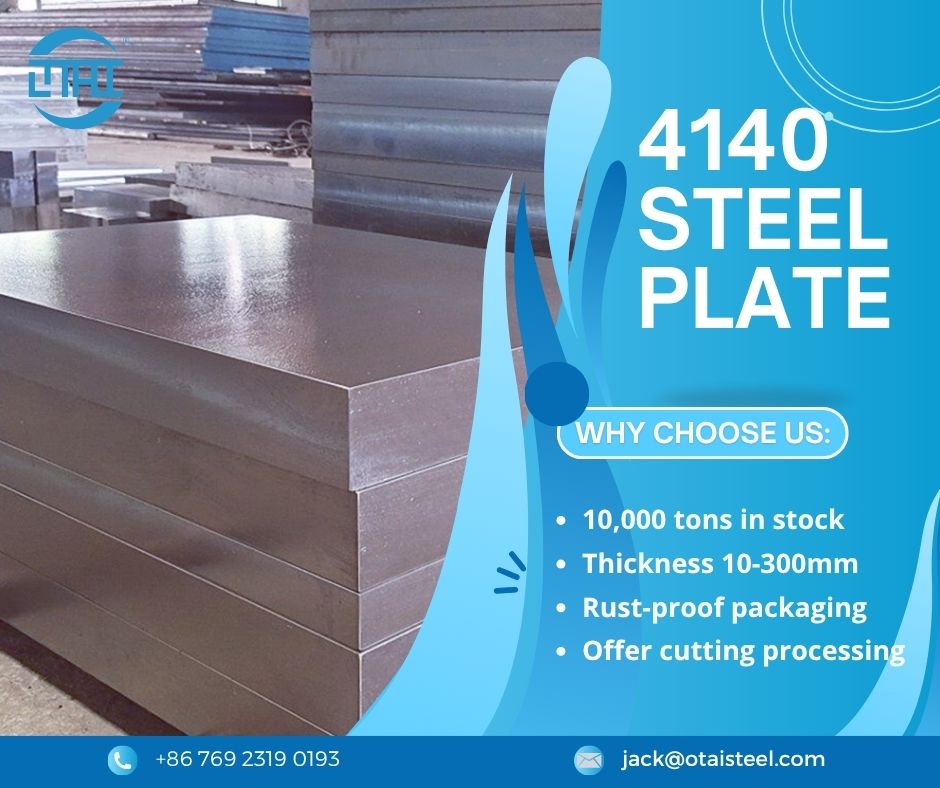
When working on projects involving 4140 steel, one of the most common questions engineers and procurement teams ask is: Is 4140 steel weldable? The short answer is yes—but with important precautions. 4140 steel is a chromium-molybdenum alloy steel known for its high tensile strength, excellent toughness, and wear resistance. However, its medium carbon content (around 0.40%) means welding must be handled carefully to avoid cracking, distortion, or loss of mechanical properties.

This comprehensive guide will explain everything you need to know about welding 4140 steel, from preheating requirements to post-weld heat treatment, so you can achieve strong, reliable joints.


💡 Understanding 4140 Steel Composition and Its Effect on Weldability

4140 steel contains approximately:

Element Percentage (%)
Carbon (C) 0.38 – 0.43
Chromium (Cr) 0.80 – 1.10
Molybdenum (Mo) 0.15 – 0.25
Manganese (Mn) 0.75 – 1.00
Silicon (Si) 0.15 – 0.35

The medium carbon content gives it high strength but also increases the risk of hardening in the heat-affected zone (HAZ) during welding. Chromium and molybdenum further enhance hardness and toughness but also make it more susceptible to hydrogen-induced cracking if not handled correctly.

Because of this, welding 4140 steel without preheating can lead to microcracks, especially in thick sections or highly stressed components.


🔧 Preheat Requirements for Welding 4140 Steel

One of the most important factors in determining how to weld 4140 steel is preheat temperature. Preheating helps reduce thermal shock and minimizes the risk of cracking.

Recommended preheat ranges:

  • Thin sections (< 12 mm): 200°C – 300°C

  • Medium sections (12–50 mm): 300°C – 400°C

  • Thick sections (> 50 mm): 400°C – 450°C

It’s also critical to maintain the interpass temperature (the temperature between weld passes) within similar ranges to ensure consistent metallurgical properties.


🛠 Choosing the Right Filler Material

For welding 4140 steel, filler selection depends on whether you want to match the base metal’s strength or prioritize ductility.

Common filler choices include:

  • ER80S-D2 (for matching strength and toughness)

  • E8018-B2 (low-hydrogen electrode, good for high-strength applications)

  • ER70S-2 (for improved ductility, often used when post-weld heat treatment is applied)

Using a low-hydrogen electrode is highly recommended to prevent hydrogen cracking.


🔥 Post-Weld Heat Treatment (PWHT) – Why It’s Essential

4140 steel often requires post-weld heat treatment to restore toughness and relieve stresses caused by welding.

Typical PWHT process:

  1. Slow cool to around 200°C after welding.

  2. Temper at 540–675°C depending on the desired mechanical properties.

  3. Avoid quenching directly after welding, as it can cause excessive hardness in the HAZ.

Skipping PWHT may lead to brittle welds, especially in applications with impact or fatigue loading.


⚠ Common Welding Problems with 4140 Steel and How to Avoid Them

  1. Cracking in the HAZ – Prevent by preheating and controlling cooling rates.

  2. Loss of toughness – Apply correct PWHT.

  3. Distortion – Use proper clamping and balanced welding sequences.

  4. Hydrogen embrittlement – Use low-hydrogen consumables and dry electrodes.


🏭 Industrial Applications Where Weldability Matters

4140 steel is widely used in industries like:

  • Oil & gas (drill collars, tool joints)

  • Automotive (axles, crankshafts)

  • Heavy machinery (gears, shafts, couplings)

In these sectors, welding must be flawless because components often operate under high stress and fatigue conditions.


🌟 Company Advantages – Why Choose Otai Special Steel?

  • Massive Inventory – Over 10,000 tons of alloy and tool steels, thickness from 6 mm to 300 mm.

  • Customized Processing – Cutting, heat treatment, and packaging tailored to your needs.

  • Strict Quality Control – Ultrasonic testing (UT), chemical analysis, and SGS inspection available.

  • Global Client Base – Trusted supplier to industry leaders like Thyssenkrupp, Borealis, Schlumberger.

  • Competitive Pricing & Fast Delivery – Reliable supply chain and efficient logistics.


❓ FAQ – Is 4140 Steel Weldable?

Q1: Can I weld 4140 steel without preheating?
No, preheating is strongly recommended to avoid cracking.

Q2: What is the best filler rod for 4140 steel?
ER80S-D2 or E8018-B2 for strength matching, ER70S-2 for more ductility.

Q3: Do I always need post-weld heat treatment?
For critical components, yes—it improves toughness and reduces residual stresses.

Q4: Can 4140 steel be welded to mild steel?
Yes, but filler selection and heat control are crucial.

Q5: What welding process is best for 4140 steel?
TIG and low-hydrogen stick welding are common for precision and quality.

0 0 Continue Reading →

4140 Steel Material Properties: Comprehensive Guide

4140 Steel Material Properties: Comprehensive Guide4140 Steel Material Properties: Comprehensive Guide
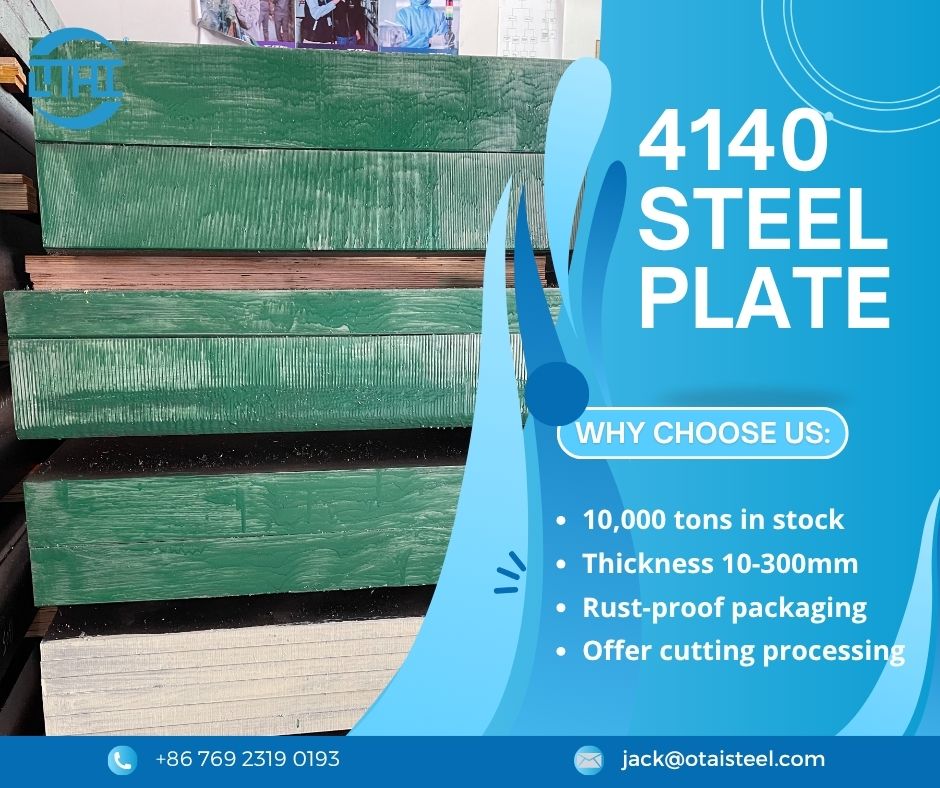
4140 steel is one of the most versatile and widely used alloy steels in the manufacturing world. Known for its balance of strength, toughness, and wear resistance, it has become a go-to choice for industries ranging from automotive to heavy machinery. In this article, we’ll take a deep dive into 4140 steel material properties, explore its chemical composition, mechanical performance, heat treatment response, and practical applications. Whether you’re a design engineer, procurement specialist, or end user, you’ll walk away with clear and actionable insights.


🌟 What Is 4140 Steel?

4140 steel is a chromium-molybdenum (Cr-Mo) alloy steel under the ASTM A29/A29M specification. It is often categorized as an alloy structural steel because its enhanced performance comes from alloying elements in addition to carbon.

This steel is also known under other designations, such as 42CrMo4 in EN standards and SCM440 in Japanese JIS standards. The presence of chromium increases hardenability and corrosion resistance, while molybdenum improves high-temperature strength and creep resistance.


🔍 Chemical Composition of 4140 Steel

The chemical composition plays a critical role in defining 4140 steel mechanical properties. Here’s the standard range:

Element Content (%)
Carbon (C) 0.38 – 0.43
Manganese (Mn) 0.75 – 1.00
Silicon (Si) 0.15 – 0.35
Chromium (Cr) 0.80 – 1.10
Molybdenum (Mo) 0.15 – 0.25
Sulfur (S) ≤ 0.040
Phosphorus (P) ≤ 0.035

Key Takeaway:

  • Carbon controls hardness and strength.

  • Chromium improves wear and corrosion resistance.

  • Molybdenum boosts toughness at high temperatures.


💪 Mechanical Properties of 4140 Steel

The most attractive aspect of 4140 steel material properties is the combination of tensile strength, yield strength, and impact toughness.

Condition Tensile Strength (MPa) Yield Strength (MPa) Elongation (%) Hardness (HB)
Annealed 655 – 885 415 – 655 25 – 30 197 – 241
Quenched & Tempered 850 – 1000 655 – 860 16 – 22 217 – 302
Nitrided 600 – 800 HV

Why it matters: The high tensile strength allows for smaller cross-sections in components without sacrificing performance, which means lighter parts and lower material costs.


🔥 Heat Treatment and Hardness

One of the biggest advantages of 4140 steel heat treatment properties is its flexibility to achieve different hardness levels for different applications.

Common Heat Treatment Steps:

  1. Annealing – Reduces hardness to improve machinability.

  2. Normalizing – Refines grain structure for uniform mechanical properties.

  3. Quenching & Tempering – Increases strength and toughness.

  4. Nitriding – Enhances surface hardness and wear resistance without affecting the core toughness.

Example:

  • Quenching in oil from 850°C, followed by tempering at 540°C, can produce hardness in the range of 28–32 HRC.

  • Nitriding can raise surface hardness up to 60–65 HRC, ideal for wear-intensive applications like gear teeth.


⚙️ Applications of 4140 Steel

The balance of mechanical and heat treatment properties makes 4140 steel uses extremely diverse.

Common Applications Include:

  • Gears & Shafts – Require high strength and wear resistance.

  • Crankshafts – Must withstand torsional stresses.

  • Connecting Rods – Balance between strength and weight.

  • Die Holders & Tooling – Need high toughness to avoid breakage.

  • Oilfield Drilling Components – Operate in harsh environments under high loads.

Example Case:
A heavy-duty excavator boom pin made from quenched and tempered 4140 steel can last 2–3 times longer than one made from mild steel, reducing downtime and maintenance costs.


📈 Advantages Over Other Steels

Compared to plain carbon steels, 4140 offers:

  • Higher strength-to-weight ratio

  • Better wear resistance

  • Superior high-temperature performance

  • Greater fatigue resistance

When compared with other alloy steels like 4340, 4140 offers better machinability while still delivering excellent performance, making it a preferred choice for many manufacturers.


🛠 Machinability and Welding

  • Machinability: In the annealed condition, 4140 steel machinability is about 65% relative to free-cutting steel. Using carbide tools and proper coolant helps extend tool life.

  • Weldability: Can be welded in the annealed condition, but preheating to 150–260°C and post-weld stress relief is recommended to avoid cracking.


📊 Summary Table of 4140 Steel Properties

Property Type Details
Category Alloy structural steel (Cr-Mo)
Hardness Range 197 – 302 HB (annealed to tempered)
Tensile Strength 655 – 1000 MPa depending on heat treatment
Density 7.85 g/cm³
Thermal Conductivity 42.6 W/m·K
Applications Gears, shafts, crankshafts, tool holders, oilfield components
Standards ASTM A29, EN 42CrMo4, JIS SCM440

💎 Company Advantages – Why Choose OTAI Special Steel?

  • Large Inventory – Over 10,000 tons of steel in stock for immediate delivery.

  • Diverse Thickness Range – From 6mm to 300mm to suit any project requirement.

  • Custom Processing – Cutting, heat treatment, and packaging tailored to your needs.

  • Quality Assurance – Ultrasonic testing (UT), chemical composition analysis, and SGS inspection available.

  • Global Client Base – Trusted supplier for industry leaders like Thyssenkrupp, Borealis, and Schlumberger.


❓ FAQ

Q1: What is the maximum hardness of 4140 steel?
A: Through nitriding, surface hardness can reach up to 65 HRC without compromising core toughness.

Q2: Is 4140 steel corrosion resistant?
A: While it has better corrosion resistance than plain carbon steel due to chromium, it’s not stainless steel, so surface protection is recommended in corrosive environments.

Q3: Can 4140 be welded easily?
A: Yes, but only in the annealed condition with proper preheating and post-weld heat treatment to avoid cracking.

Q4: What’s the main difference between 4140 and 4340 steel?
A: 4340 offers higher hardenability and toughness but at the cost of slightly reduced machinability compared to 4140.

0 0 Continue Reading →

4140 Steel Machining Properties: What Engineers Need to Know

4140 Steel Machining Properties: What Engineers Need to Know4140 Steel Machining Properties: What Engineers Need to Know
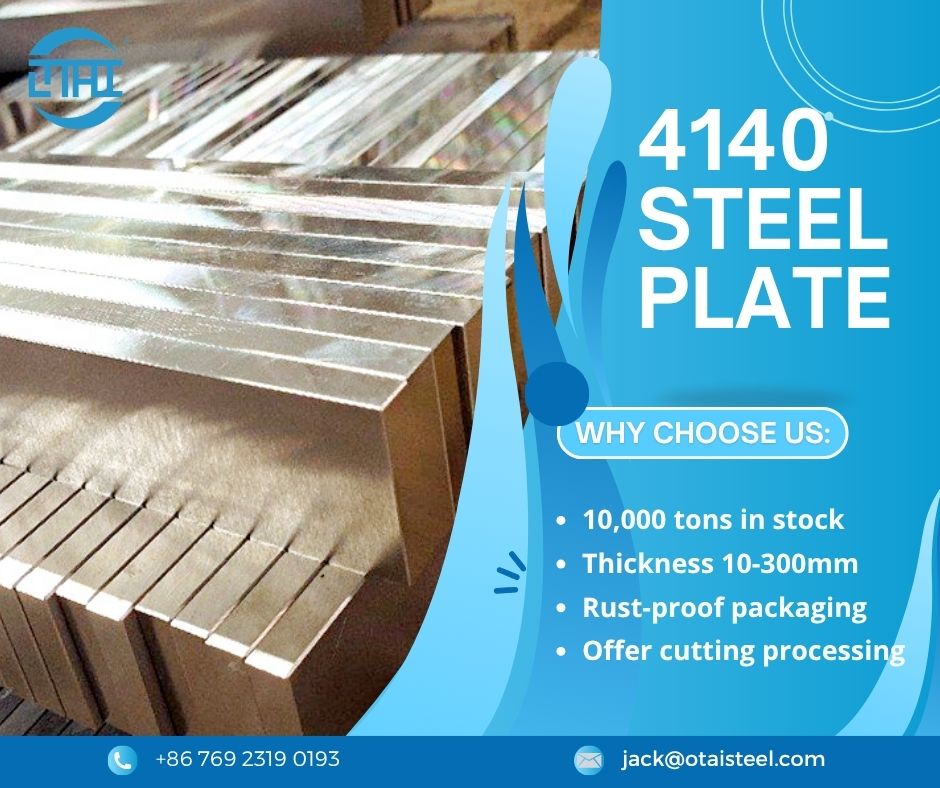
If you work in metal fabrication, automotive, or heavy machinery, you’ve probably encountered 4140 steel more than once. Known for its strength, toughness, and versatility, this alloy steel is a favorite for high-stress components like shafts, gears, and tooling parts. But when it comes to machining, 4140 can be both a friend and a foe. Its mechanical properties make it suitable for demanding applications, but those same properties can present challenges during cutting, drilling, or turning.

In this guide, we’ll dive deep into the machining properties of 4140 steel, covering everything from tool selection and cutting speeds to heat treatment effects and practical tips for achieving precise results.


🌟 Understanding 4140 Steel Composition and Grades

Before we talk about machining, it’s important to understand what makes 4140 unique. This steel is a chromium-molybdenum alloy with the following typical composition:

Element Content (%)
Carbon (C) 0.38 – 0.43
Chromium (Cr) 0.80 – 1.10
Molybdenum (Mo) 0.15 – 0.25
Manganese (Mn) 0.75 – 1.00
Silicon (Si) 0.15 – 0.30

These alloying elements contribute to high tensile strength, excellent toughness, and good wear resistance—key factors that influence its behavior during machining.


🛠 Machinability Rating of 4140 Steel

Machinability is often expressed as a percentage relative to a standard (B1112 free-machining steel = 100%). In its annealed state, 4140 steel machinability is typically rated at 65%. That means it’s harder to cut than mild steels but still manageable with the right tools and parameters.

The machining experience changes significantly depending on the steel’s condition:

Condition Brinell Hardness (HB) Machinability Notes
Annealed 197 – 217 HB Easier to cut, minimal tool wear
Pre-hardened (28-32 HRC) ~269 – 302 HB Requires slower speeds and harder tooling
Quenched & tempered 35-40+ HRC Demands carbide or coated tooling, aggressive cooling

⚙ Factors That Affect Machining 4140 Steel

Several factors impact how 4140 behaves under a cutting tool:

  1. Heat Treatment – The more hardened the steel, the greater the cutting resistance and tool wear.

  2. Tool Material – High-speed steel (HSS) works for softer states, while carbide inserts excel for hardened 4140.

  3. Cutting Speeds & Feeds – Higher hardness demands slower cutting speeds and smaller depths of cut.

  4. Coolant & Lubrication – Essential for dissipating heat and preventing tool chipping.

  5. Chip Control – 4140 produces continuous chips; proper chip breakers are necessary to avoid tangling.


📏 Recommended Machining Parameters for 4140 Steel

Here’s a quick reference table for cutting speeds and feeds for 4140 steel in different states:

Condition Tool Material Cutting Speed (m/min) Feed Rate (mm/rev)
Annealed HSS 20 – 30 0.10 – 0.30
Annealed Carbide 80 – 120 0.15 – 0.40
Hardened 30-35 HRC Carbide 50 – 80 0.10 – 0.30
Hardened 35-40 HRC Carbide 30 – 50 0.05 – 0.20

🌀 Drilling, Turning, and Milling Tips

Turning:

  • Use positive rake angles to reduce cutting force.

  • Minimize vibration with rigid setups and balanced tooling.

Drilling:

  • For drilling 4140 steel, cobalt HSS drills work well in annealed state.

  • In hardened conditions, solid carbide drills are necessary.

Milling:

  • Climb milling often yields better surface finishes.

  • Coated carbide end mills (TiAlN or TiCN) provide longer tool life.


🔥 The Effect of Heat Treatment on Machining

Annealed 4140 steel is the easiest to machine due to its lower hardness. However, many industrial applications require it in pre-hardened or quenched and tempered conditions, which makes machining more challenging.
If tight tolerances are required, many engineers prefer machining before heat treatment and then performing grinding or finishing afterward.


🛡 Tool Wear and Surface Finish Considerations

When machining high-strength 4140 steel, heat is the biggest enemy. Overheating leads to:

  • Loss of cutting edge sharpness

  • Poor surface finish

  • Increased tool chipping

To combat this:

  • Use generous coolant flow (preferably high-pressure coolant for deep holes).

  • Select wear-resistant coatings like TiAlN.

  • Avoid rubbing cuts—engage the tool fully.


🏭 Applications Where Machining 4140 Steel Shines

Because of its toughness and machinability balance, 4140 is used in:

  • Shaft manufacturing

  • Custom tooling

  • Hydraulic cylinder parts

  • Gear components

  • Mold bases

These parts often require both precision machining and high performance in service.


📌 Pro Tips for Machining 4140 Steel Efficiently

  1. Plan for Heat Treatment – Decide whether to machine in the soft state or after hardening.

  2. Invest in Tooling – High-quality carbide tools pay off in hardened states.

  3. Control Chips – Use chip breakers to avoid downtime.

  4. Surface Integrity Matters – Monitor for work hardening in hardened conditions.

  5. Keep Speeds Conservative – Especially for hardened 4140, slower is often better.


🌟 Company Advantages – Why Choose Otai Special Steel?

At Otai Special Steel, we stock a huge inventory of 4140 alloy steel plates in thicknesses from 6mm to 300mm. With over 10,000 tons available year-round, we ensure quick delivery for global customers. Our services include:

  • Custom cutting to exact sizes

  • Heat treatment options for your specific needs

  • Quality assurance through ultrasonic testing and composition analysis

  • Third-party inspection (SGS, etc.) upon request

Our experience with international clients like Thyssenkrupp and Schlumberger guarantees you receive both quality and reliability.


❓ FAQ – Machining 4140 Steel

Q1: Can 4140 steel be machined after hardening?
Yes, but it requires carbide tooling, slower speeds, and more coolant.

Q2: What’s the best tool for drilling hardened 4140?
Solid carbide drills with TiAlN coating are ideal.

Q3: Does heat treatment before machining save cost?
Usually no—most manufacturers machine first, then heat treat for dimensional control.

Q4: What surface finish can I expect?
With proper tooling and parameters, Ra 1.6–3.2 μm is achievable.

Q5: Is 4140 better than mild steel for machining?
It’s harder to machine than mild steel but offers far superior strength and durability.

0 0 Continue Reading →

Names for 4140 Steel: Why It Matters in Global Sourcing

Names for 4140 Steel: Why It Matters in Global SourcingNames for 4140 Steel: Why It Matters in Global Sourcing
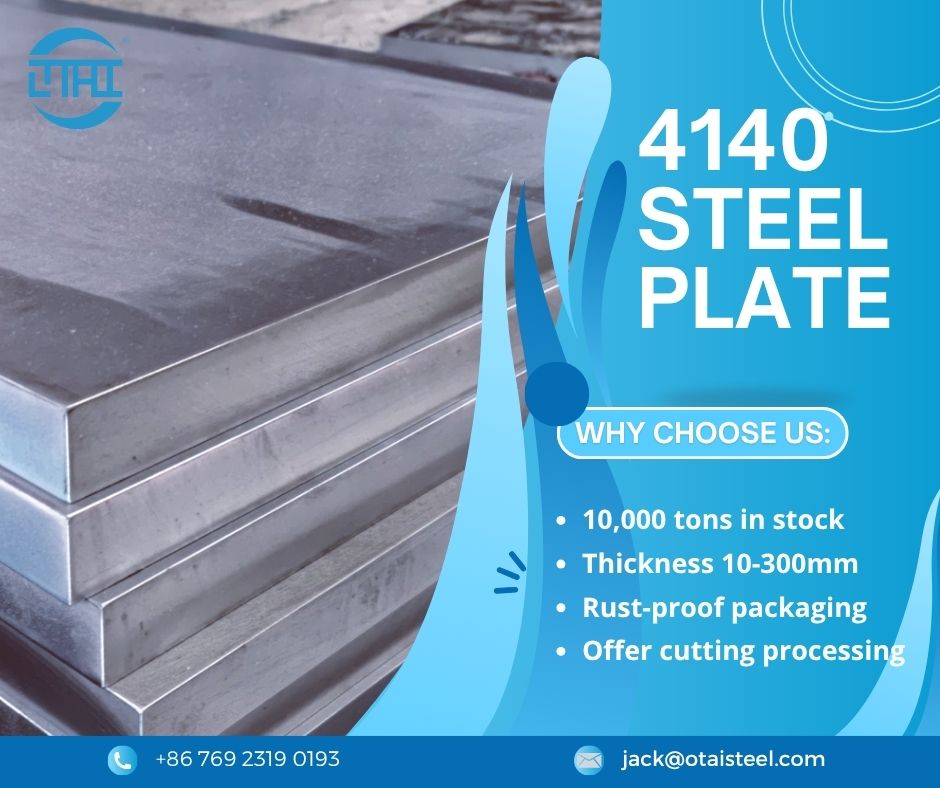
When it comes to buying or specifying 4140 steel, one thing often confuses buyers and engineers: it doesn’t always go by the same name. Depending on the country, standard, or industry, 4140 steel might have a completely different designation. If you don’t know these equivalents, you risk delays, wrong materials, or costly replacements. Let’s break down all the other names for 4140 steel and see why understanding them is key to global sourcing.


🌍 Why 4140 Steel Has So Many Names

The reason is simple—different countries and standards organizations have their own classification systems. Even though the chemical composition and mechanical properties are nearly identical, the naming format changes.

For example:

  • In the United States, the SAE/AISI system calls it AISI 4140.

  • In Europe, it might be listed under an EN number, such as 42CrMo4.

  • In Germany, you might see the Werkstoff number 1.7225.

If you’re sourcing materials internationally, knowing these names helps you match specs without relying solely on “4140” in a quotation.


📋 Common International Equivalents for 4140 Steel

Country/Standard Common Name Standard Reference Notes
USA (AISI/SAE) AISI 4140 SAE J404 Widely used in North America
Europe (EN) 42CrMo4 EN 10083-3 Common in EU markets
Germany (DIN/Werkstoff) 1.7225 DIN 17200 Popular in German engineering
Japan (JIS) SCM440 JIS G4105 Used in automotive and machinery
China (GB) 42CrMo GB/T 3077 Standard in Chinese market
UK (BS) 708M40 BS 970 Common in UK heavy industry
France (AFNOR) 42CD4 NF A35-552 French steel designation
Russia (GOST) 38KhM GOST 4543 Used in aerospace & defense

These names all refer to steels with similar chemical compositions—typically containing 0.38–0.43% carbon, 0.75–1.00% chromium, and 0.15–0.25% molybdenum—making them equivalent in most applications.


🛠️ Industries That Rely on 4140 Steel Equivalents

Understanding alternative names isn’t just for steel traders—it’s crucial for manufacturers and engineers in:

  • Oil & Gas (drill collars, tool joints, high-strength shafts)

  • Automotive (gears, crankshafts, axles)

  • Aerospace (landing gear components, structural fittings)

  • Heavy Equipment (mining machinery, construction tools)

If your supplier lists SCM440 but your blueprint says AISI 4140, knowing they’re equivalents saves you weeks of back-and-forth emails.


📌 How to Confirm You’re Getting the Right Steel

Even if the name matches, it’s best to verify the chemical composition and mechanical properties before purchase. The table below shows typical values for 4140 steel and its equivalents:

Property Typical Value (Quenched & Tempered)
Tensile Strength 850–1000 MPa
Yield Strength 655 MPa
Hardness 28–32 HRC
Elongation 17–21%
Impact Toughness (Charpy V-notch) ≥ 35 J

Cross-referencing these values with your supplier’s mill test certificate ensures no surprises after delivery.


💡 Pro Tips for Buyers and Engineers

  1. Always include equivalents in RFQs (Request for Quotation).

  2. Specify standards (AISI, EN, DIN, JIS, etc.) rather than just “4140.”

  3. Ask for MTC (Mill Test Certificate) to confirm properties.

  4. Verify heat treatment—mechanical performance can vary widely.

  5. Work with distributors experienced in international steel supply.


🏆 Why Choose Otai Special Steel

At Otai Special Steel, we’ve been supplying 4140 steel and its equivalents for over 20 years. With more than 10,000 tons in stock, we offer:

  • ✅ Complete range of grades: AISI 4140, 42CrMo4, SCM440, 1.7225, and more

  • ✅ Precision cutting services from 6mm to 300mm thickness

  • ✅ Heat treatment options: annealing, quenching, and tempering

  • ✅ Quality control with UT testing, chemical analysis, and third-party inspection (SGS)

  • ✅ Global shipping and competitive pricing

Whether you’re sourcing for oil rigs, aerospace, or heavy machinery, we make sure you get the exact grade you need—on time and to spec.


❓ FAQ

Q1: Are all these equivalent grades exactly the same?
Not exactly—minor differences in composition or mechanical properties may exist, but they are usually interchangeable for most engineering applications.

Q2: If I specify 42CrMo4, can my supplier send SCM440 instead?
Yes, in most cases, as long as mechanical properties meet your design requirements and it passes quality tests.

Q3: Is 4140 steel considered an alloy steel?
Yes, it’s a chromium-molybdenum alloy steel.

Q4: How do I ensure correct heat treatment?
Request heat-treatment certificates and verify hardness and strength after processing.

0 0 Continue Reading →

4140 Steel Quenched and Tempered: Strength, Toughness, and Performance

4140 Steel Quenched and Tempered: Strength, Toughness, and Performance4140 Steel Quenched and Tempered: Strength, Toughness, and Performance
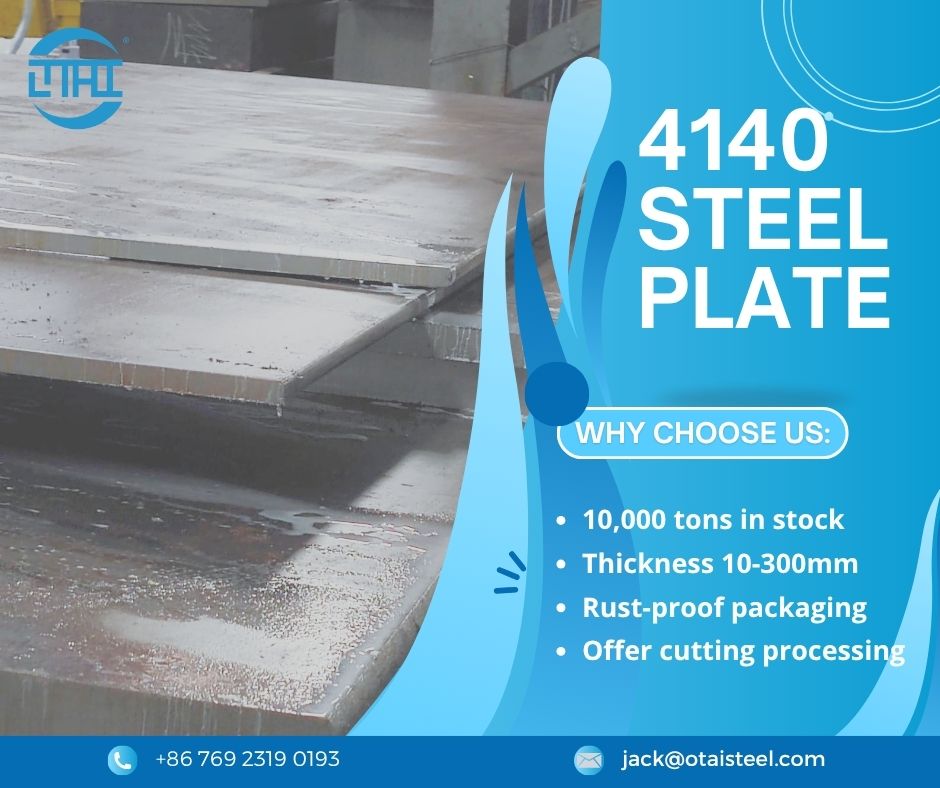
When it comes to balancing strength, toughness, and wear resistance, 4140 steel quenched and tempered is a go-to choice for engineers, machinists, and manufacturers. This versatile alloy steel undergoes a specific heat treatment process that significantly boosts its mechanical performance, making it ideal for high-stress applications such as gears, shafts, bolts, and hydraulic components.

In this guide, we’ll dive deep into what quenching and tempering 4140 steel actually means, how it changes the steel’s microstructure, and why it’s so popular across industries. We’ll also share practical machining tips, hardness ranges, and real-world examples to help you choose the right material for your project.


🌟 What Does “Quenched and Tempered” Mean for 4140 Steel?

Quenching is a heat treatment step where the steel is heated to a high temperature—usually around 850–870°C (1560–1600°F)—to transform its internal structure into austenite. Then, it’s rapidly cooled in oil or water to lock in a hard, martensitic structure.

While this gives the steel exceptional hardness, it also makes it brittle. That’s where tempering comes in. Tempering involves reheating the quenched steel to a lower temperature—typically 400–650°C (750–1200°F)—to relieve stresses and adjust the hardness-toughness balance.

This process results in a tough yet strong steel that resists wear, fatigue, and impact damage, all while maintaining good machinability.


📊 Typical Mechanical Properties of Quenched and Tempered 4140 Steel

Property Typical Range After Q&T
Ultimate Tensile Strength (UTS) 850–1100 MPa (123–160 ksi)
Yield Strength 655–950 MPa (95–138 ksi)
Rockwell Hardness (HRC) 28–38 HRC (depending on tempering temperature)
Elongation 15–25%
Impact Toughness (Charpy V-Notch) Good (varies by heat treatment)

These values can shift depending on the exact tempering temperature used. Higher tempering temperatures lower hardness but improve toughness—lower temperatures do the opposite.


🔍 Why Choose Quenched and Tempered 4140 Steel?

  1. Excellent strength-to-weight ratio – Ideal for parts that need high strength without excessive mass.

  2. Wear resistance – Great for sliding or rotating components under heavy loads.

  3. Impact toughness – Handles sudden shocks without fracturing.

  4. Good machinability – Easier to machine than ultra-hard tool steels.

  5. Versatile hardness control – You can tailor hardness via tempering temperature.

Industries love it for parts like drill collars, crankshafts, high-strength bolts, and connecting rods—all of which benefit from its unique property mix.


🛠️ Heat Treatment Steps for 4140 Steel Quenching and Tempering

1. Preheating
Before hardening, 4140 steel is preheated in two stages—first at 400–500°C (750–930°F), then at 600–650°C (1110–1200°F)—to prevent thermal shock.

2. Austenitizing
The steel is heated to the critical temperature range of 850–870°C (1560–1600°F) until fully austenitic.

3. Quenching
Rapid cooling is done in oil (most common) or polymer solutions. Water quenching is less common because it increases the risk of cracking.

4. Tempering
The quenched steel is reheated to 400–650°C (750–1200°F) for 1–2 hours per inch of thickness, then air cooled.


⚙️ Machining Tips for Quenched and Tempered 4140 Steel

Even though Q&T 4140 is strong, it still machines well compared to harder tool steels. Here are some tips:

  • Use carbide tooling for extended tool life.

  • Reduce cutting speeds slightly compared to annealed 4140.

  • Ensure good coolant flow to prevent workpiece overheating.

  • For threading or tapping, use sharp, coated tools to handle the hardness.


📦 Applications of Quenched and Tempered 4140 Steel

  • Gears and pinions – Wear-resistant under heavy load.

  • Hydraulic shafts – High strength with good fatigue resistance.

  • Crankshafts and camshafts – Withstand cyclic stress.

  • High-strength bolts and studs – Maintain preload without failure.

  • Mining equipment – Handles abrasive environments.


🧪 How Quenching & Tempering Affects Microstructure

The process transforms the microstructure into tempered martensite, which combines the high strength of martensite with the improved toughness of tempered steel. This is why 4140 quenched and tempered steel offers such a balanced performance profile.


🏭 Why Choose Otai Special Steel

At Otai Special Steel, we provide a massive inventory of 4140 steel in various forms, including pre-hardened plates, Q&T bars, and custom-cut blanks. Our advantages include:

  • Over 10,000 tons of stock all year round

  • ✅ Customized cutting and heat treatment

  • ✅ UT-tested quality with third-party inspection options (SGS, etc.)

  • ✅ Competitive prices and fast global shipping

  • ✅ Technical support for material selection and machinability consultation

We’re proud to serve global giants like Thyssenkrupp, Borealis, and Schlumberger, providing stable, high-quality supply for every project.


❓ FAQ

Q1: What hardness can I expect from quenched and tempered 4140 steel?
A1: Usually between 28–38 HRC, depending on the tempering temperature.

Q2: Can 4140 Q&T be welded?
A2: Yes, but preheating and post-weld heat treatment are recommended to avoid cracking.

Q3: Is oil quenching better than water quenching for 4140?
A3: Yes, oil quenching is safer and reduces the risk of distortion or cracking.

Q4: Can I machine it after Q&T?
A4: Yes, but expect higher tool wear compared to annealed 4140.

0 0 Continue Reading →

4140 Steel Rockwell Hardness: Why It Matters for Your Application

4140 Steel Rockwell Hardness: Why It Matters for Your Application4140 Steel Rockwell Hardness: Why It Matters for Your Application
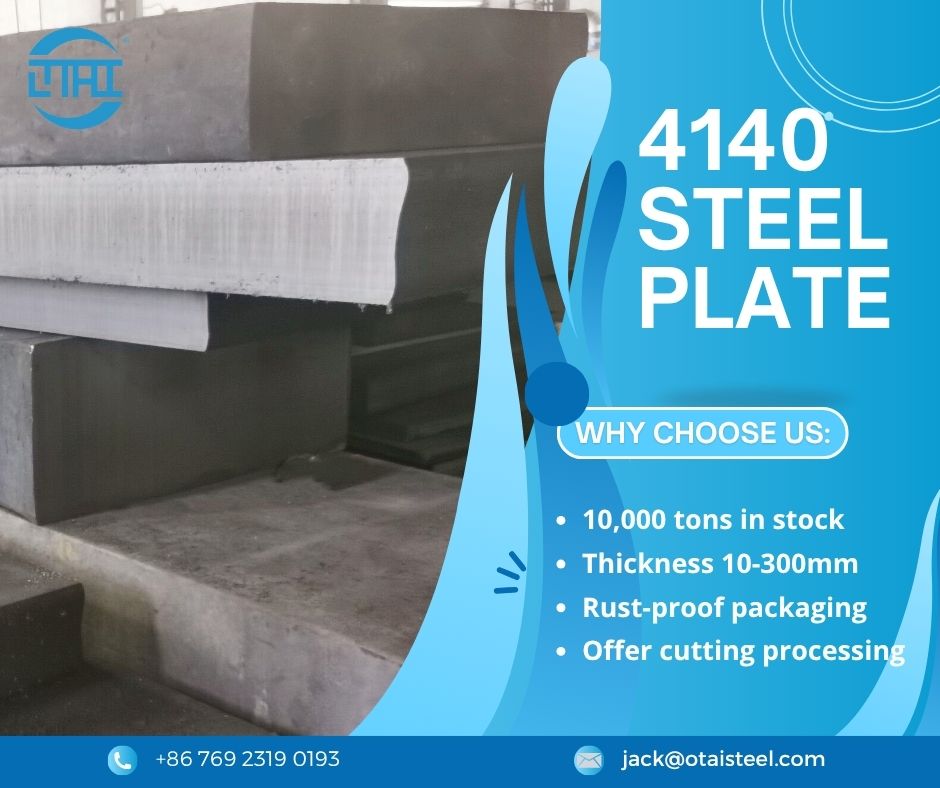
4140 steel is a go-to material for a wide range of industrial applications, but one property stands out among engineers and manufacturers: Rockwell hardness. If you’re working on components that require a balance between toughness and wear resistance, understanding the 4140 steel Rockwell hardness is essential. Let’s explore what this value really means, how it’s affected by heat treatment, and how it compares with other steels.


🔧 What Is Rockwell Hardness and Why Is It Important?

Rockwell hardness (measured on the C scale for hardened steels) determines a material’s resistance to permanent deformation. For 4140 steel, this property is especially relevant because it directly influences tool life, machinability, and resistance to wear.

4140 steel is a chromium-molybdenum alloy steel known for its excellent hardness-to-toughness ratio, making it suitable for everything from automotive gears to heavy-duty shafts. But hardness is not a fixed value—it changes depending on how the steel is treated.


🧪 Rockwell Hardness of 4140 Steel in Different Conditions

Below is a comparison table showing typical Rockwell hardness values for 4140 steel under various heat treatment conditions:

Condition Hardness (HRC) Description
Annealed 15–22 HRC Soft for machining; not suitable for wear parts
Normalized 30–35 HRC Good balance of machinability and strength
Quenched and Tempered (Q&T) 28–45 HRC Most commonly used condition in industrial parts
Fully Hardened 50–55 HRC High hardness, lower toughness
Surface Nitrided 60–65 HRC (surface) Extremely hard surface with tough core

As you can see, the Rockwell hardness of 4140 steel can vary widely depending on the processing method. This flexibility is part of what makes the material so popular.


🔩 Applications Based on Hardness Levels

Different hardness levels are suitable for different use cases. Let’s break them down:

  • 15–22 HRC (Annealed): Best for rough machining or when subsequent heat treatment is planned. Common in forgings or large stock preparation.

  • 30–35 HRC (Normalized): Ideal for machine components that require a mix of strength and machinability.

  • 38–42 HRC (Q&T): Often used in crankshafts, gears, or spindles—where strength and fatigue resistance matter.

  • 50–55 HRC (Fully Hardened): Suitable for dies or molds, where wear resistance is critical.

  • 60–65 HRC (Nitrided surface): Great for valves, rods, and piston parts with demanding surface wear requirements.

In each of these categories, the heat treatment of 4140 steel plays a defining role.


⚙️ How Does 4140 Steel Hardness Compare with Other Materials?

Here’s a quick comparison of Rockwell hardness ranges among popular engineering steels:

Steel Type Rockwell Hardness (HRC) Notes
4140 Steel 15–55 (core), up to 65 (surface) Excellent versatility
1045 Carbon Steel 10–30 Low hardenability
D2 Tool Steel 55–62 Very high wear resistance
AISI 4340 28–45 Comparable but higher toughness
8620 Alloy Steel 20–32 (core) Often used for case hardening

While D2 tool steel may outperform in surface hardness, 4140 strikes an excellent balance between core toughness and surface hardness, especially after quenching and tempering or nitriding.


🔍 Common Questions: Is Higher Hardness Always Better?

Not necessarily. While higher hardness improves wear resistance, it often reduces toughness and increases brittleness. That’s why engineers often choose medium Rockwell hardness for 4140 steel (around 35–45 HRC) for high-performance mechanical parts.

For example:

  • A drivetrain shaft must be hard enough to resist wear but not so hard that it breaks under stress.

  • A hydraulic piston rod might use nitrided 4140 steel to combine a hard shell with a ductile core.


📦 Choosing the Right 4140 Steel Grade and Hardness Level

If you’re buying or specifying this material, always match the hardness level with your application needs. You might look for:

  • Pre-hardened 4140 plates at ~28–32 HRC

  • Q&T 4140 steel round bars at ~38–44 HRC

  • Nitrided 4140 shafts for ultra-high surface hardness

Whether you’re searching for 4140 steel for machining, for toolmaking, or for fatigue-resistant parts, knowing the hardness range is essential to making the right call.


🏭 Why Choose Otai Special Steel

At Otai Special Steel, we provide a massive inventory of 4140 steel in various forms, including pre-hardened plates, Q&T bars, and custom-cut blanks. Our advantages include:

  • Over 10,000 tons of stock all year round

  • ✅ Customized cutting and heat treatment

  • ✅ UT-tested quality with third-party inspection options (SGS, etc.)

  • ✅ Competitive prices and fast global shipping

  • ✅ Technical support for material selection and machinability consultation

We’re proud to serve global giants like Thyssenkrupp, Borealis, and Schlumberger, providing stable, high-quality supply for every project.


❓FAQ: 4140 Steel Rockwell Hardness

Q1: What’s the typical Rockwell hardness of 4140 steel in Q&T condition?
A1: Usually between 28–45 HRC, depending on tempering temperature.

Q2: Can I surface harden 4140 steel?
A2: Yes, via nitriding or carburizing, reaching up to 60–65 HRC on the surface.

Q3: How do I test Rockwell hardness?
A3: Using a Rockwell hardness tester with a C-scale indenter (typically a diamond cone).

0 0 Continue Reading →

Threading 4140 Steel: Best Practices and Tips for Success

Threading 4140 Steel: Best Practices and Tips for SuccessThreading 4140 Steel: Best Practices and Tips for Success

If you’ve ever worked with threading 4140 steel, you already know it’s not your average machining project. This versatile alloy steel is known for its strength, wear resistance, and hardenability—great for critical parts, but tricky when you’re trying to get clean, precise threads.

In this article, we’ll dive into the best ways to successfully machine threads into 4140 steel. Whether you’re working with annealed, pre-hardened, or quenched and tempered material, this guide will walk you through everything you need to know to avoid broken taps, worn dies, or ruined parts.


🔧 What Makes Threading 4140 Steel Challenging?

4140 steel is a chromium-molybdenum alloy with excellent mechanical strength and toughness. But when it comes to threading, those same properties can become obstacles:

  • High strength = more resistance to tool cutting

  • Harder grades increase tool wear

  • Heat-treated surfaces can cause tap breakage if not handled correctly

Especially in cases like threading 4140 pre-hardened steel, tool selection, lubrication, and machining technique all play a major role in the final result.


🧪 4140 Steel Material Overview

Before you begin threading, it’s important to know what condition your 4140 steel is in. Below is a quick snapshot of its key properties across different heat treatment states:

Condition Hardness (HRC) Tensile Strength (MPa) Yield Strength (MPa)
Annealed 15-20 HRC 655-860 ~415
Pre-hardened (Q&T) 28-32 HRC 950–1100 ~850
Fully hardened & tempered 35-44 HRC 1200–1400 1000+

🔎 This matters because machining threads in 4140 alloy steel becomes progressively more difficult as hardness increases.


🛠️ Threading Method: Cutting vs. Forming

There are two main methods: cutting threads or forming threads.

  • Cutting threads uses taps or dies to remove material. Works well on all hardness levels, but tool wear is higher.

  • Forming threads (also called roll threading) is best suited for ductile materials under ~32 HRC. No chips, stronger thread roots.

In the case of 4140 steel, 4140 steel thread forming vs cutting depends on the hardness. For material above 32 HRC, thread cutting is usually the safer and more practical option.


🧰 Best Practices for Threading 4140 Steel

Here are expert-backed tips to help you get clean, accurate threads with minimal tool damage.

🟢 1. Use the Right Tools

Choose best tool for threading 4140 such as:

  • Spiral flute taps for blind holes

  • Spiral point taps for through holes

  • Coated carbide or HSS-E (cobalt) tools for harder materials

Also, use tap recommendations for 4140 steel based on hardness. For example:

Hardness Range Recommended Tap Material
≤ 28 HRC HSS-E (Cobalt)
28–35 HRC TiCN-coated HSS-E or carbide
> 35 HRC Solid carbide or thread milling

🟢 2. Proper Lubrication

4140 needs aggressive lubrication to reduce heat and friction. Use:

  • Chlorinated cutting oils

  • Molybdenum disulfide (MoS2) based lubricants

  • High-pressure oil-based coolants

Avoid dry tapping!

🟢 3. Reduce Cutting Speed

Lower cutting speed = longer tool life. Start with:

  • 6–10 m/min for HSS taps

  • 15–25 m/min for carbide tools

Adjust based on material hardness.


⚙️ Special Cases: Hardened and Internal Threads

Trying to do thread cutting on 4140 steel that’s already hardened? You’ll need advanced tooling and plenty of patience.

For internal threads, here are specific 4140 steel internal threading tips:

  • Always pre-drill with proper hole size (check tap drill charts)

  • Use rigid tool holders to avoid deflection

  • Use peck tapping cycles on CNC machines

If you’re wondering can you thread hardened 4140 steel — the answer is yes, but thread milling is usually preferred over tapping due to chip control and tool stability.


🧲 Is 4140 Steel Good for Threaded Parts?

Absolutely. In fact, is 4140 steel good for threaded parts is a common question from engineers working on:

  • Hydraulic components

  • Automotive rods and fasteners

  • Oilfield downhole tools

  • Tool holders and machine fixtures

The key is proper prep and machining discipline. Done right, threaded 4140 parts are both durable and reliable.


🏭 Why Choose Otai Special Steel?

At Otai Special Steel, we understand the complexities of working with 4140 steel. Here’s why global customers trust us:

  • 🔩 Over 10,000 tons of 4140 and other alloy steels in stock (6mm–300mm thickness)

  • 🛠️ Full service: Cutting, grinding, heat treatment, and ultrasonic testing (UT)

  • 📦 Export-ready packaging and mill certs for every shipment

  • 📞 Fast communication and expert technical support

  • 🌍 Trusted by clients like Thyssenkrupp, Borealis, and Schlumberger

Need pre-hardened 4140 or annealed 4140 steel bars/plates? We ship fast — with quality guaranteed.


❓FAQ | Frequently Asked Questions

Q1: What’s the best tap for threading 4140 steel?

A: For material up to 32 HRC, HSS-E with TiCN coating is great. For harder steels, use carbide or switch to thread milling.

Q2: Can I thread 4140 steel without lubrication?

A: It’s highly discouraged. Proper lubrication is crucial to prevent heat buildup and tool failure.

Q3: Is thread forming suitable for all 4140 steel?

A: No. Thread forming works well only on softer 4140 (<32 HRC). For harder material, thread cutting is preferred.

Q4: What thread pitch works best on 4140?

A: That depends on application, but coarser threads (like UNC) are generally more robust on tougher materials.

Q5: Can you thread 4140 steel by hand?

A: For softer or annealed 4140, yes — but it’s difficult and risky. Always use proper machines for pre-hardened or hardened grades.

0 0 Continue Reading →


Recent Comments by aotai

    No comments by aotai