Skip to Content

Category Archives: Blog

Finding the Right 4140 alloy Steel Distributors

Finding the Right 4140 alloy Steel DistributorsFinding the Right 4140 alloy Steel Distributors

🔍 What Makes 4140 Steel a Sought-After Material?

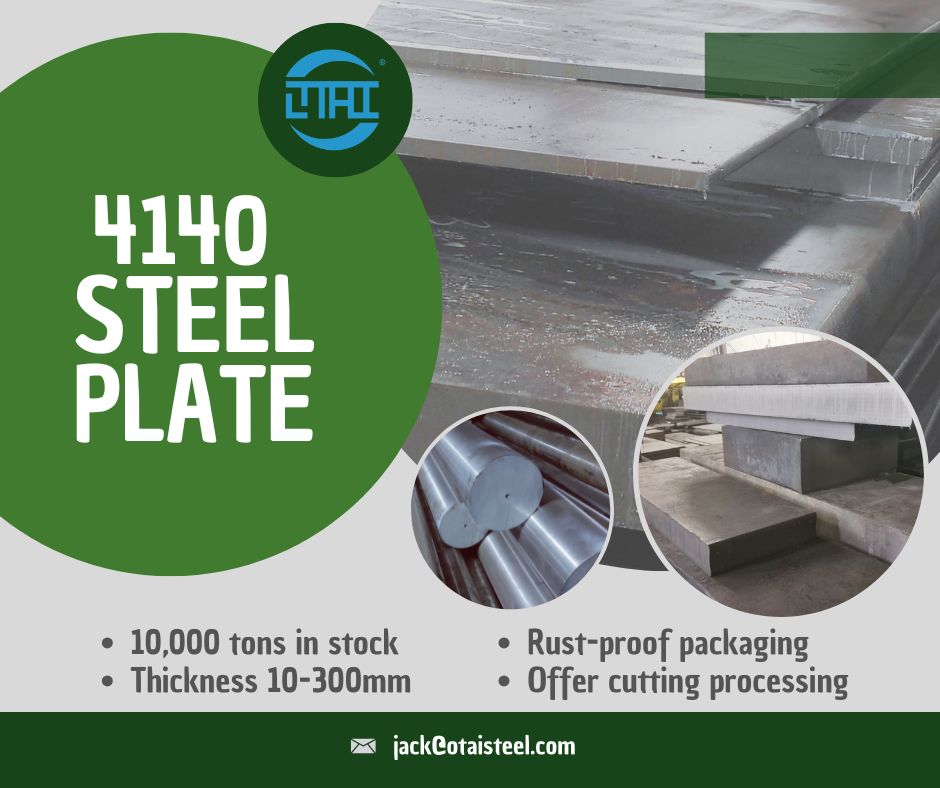
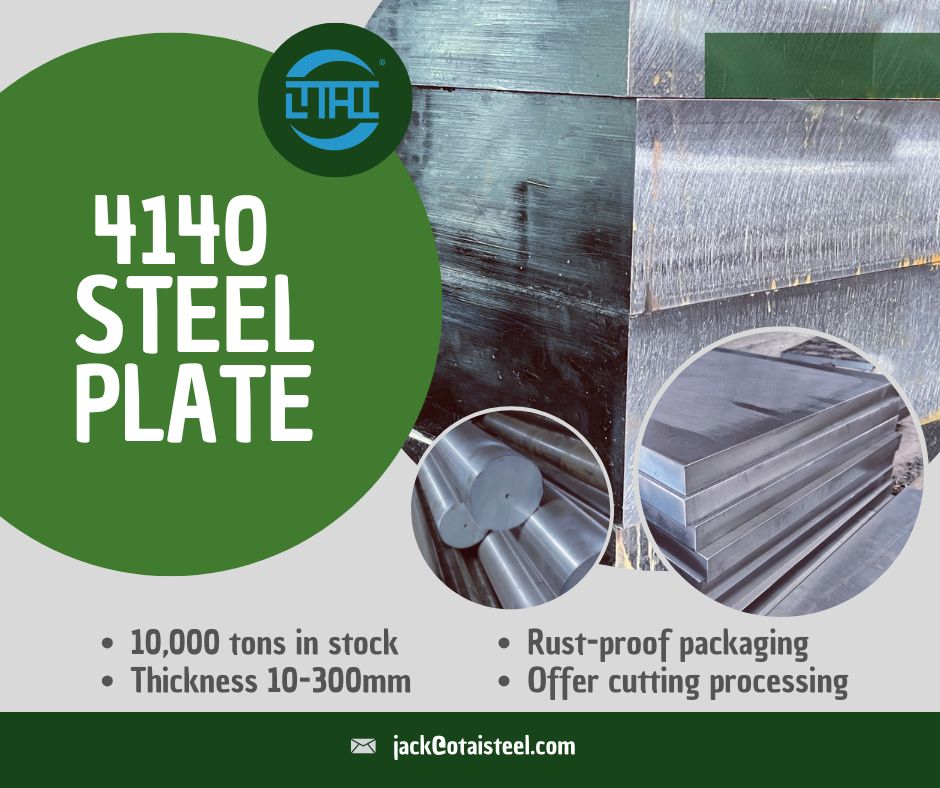
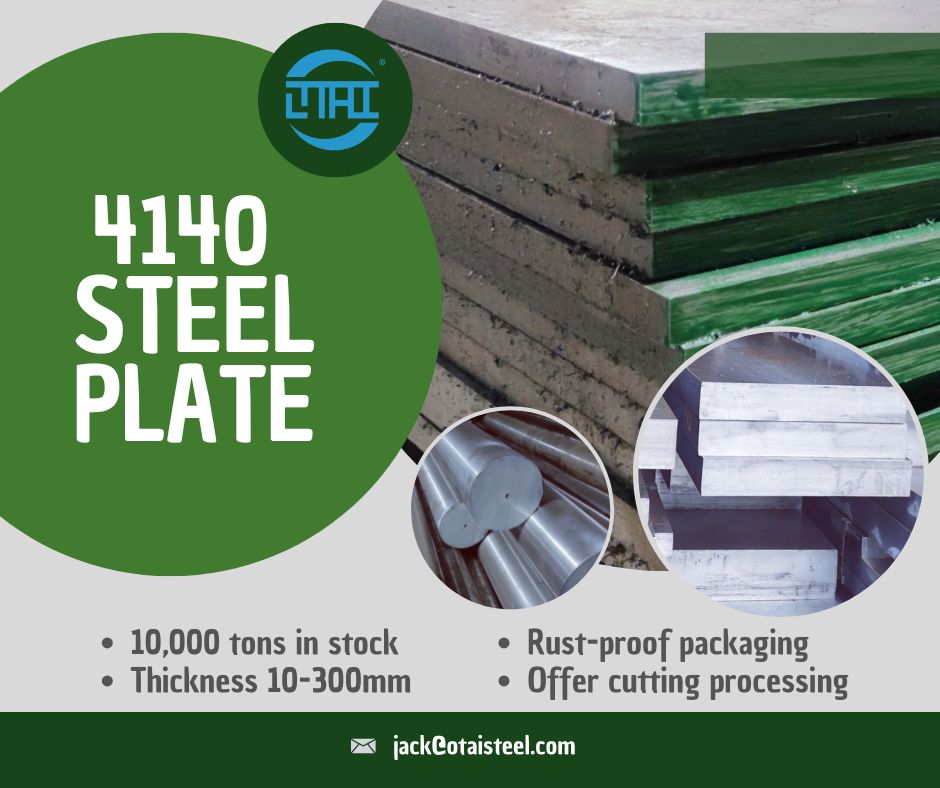
4140 steel is a chromium-molybdenum alloy steel known for its exceptional strength, toughness, and wear resistance. It’s widely used in high-stress industrial applications, from gears and crankshafts to dies and molds. But selecting the right 4140 steel distributors is just as crucial as selecting the material itself. Not all steel suppliers offer the same quality, service, or inventory variety.


🧱 Key Properties of 4140 Steel

Before choosing a supplier, you must understand what makes this alloy so versatile. Here’s a quick look at its properties:

Property Typical Value
Tensile Strength (MPa) 655 – 1080
Yield Strength (MPa) 415 – 930
Elongation (%) 20 – 25
Hardness (HB) 197 – 269 (annealed)
Heat Treatment Compatibility Annealing, Normalizing, Q&T, Nitriding
Machinability Good in annealed condition
Weldability Fair to Good (requires preheating)

🏭 Choosing Reliable 4140 Steel Distributors: What to Look For

The global market is full of companies claiming to be trusted 4140 steel distributors, but how do you identify the right one for your needs?

⭐ 1. Inventory Variety

Look for distributors who stock multiple 4140 steel bar sizes, 4140 steel flat bars, and 4140 steel round bar options in both hot rolled and cold finished conditions.

⭐ 2. Quality Assurance

Choose suppliers who provide ultrasonic testing for 4140 steel, third-party certification, and full traceability of mill certificates.

⭐ 3. Processing Capabilities

The best 4140 alloy steel stockists offer value-added services like:

  • Precision sawing and cutting

  • CNC machining for pre-shaped blanks

  • Heat treatment per client specs

⭐ 4. Export & Logistics Experience

If you’re an international buyer, your supplier should be familiar with exporting 4140 steel globally, including custom documentation and secure packaging.


🌍 Applications of 4140 Supplied by Top Distributors

Different industries rely on 4140 steel in various heat-treated states. Here’s how it’s used:

Industry Application Example Recommended Condition
Automotive Crankshafts, Axles Quenched & Tempered (Q&T)
Oil & Gas Drill Collars, Tool Joints Nitrided or Induction Hardened
Construction Structural Bolts, Tie Rods Normalized or As-rolled
Tool & Die Making Plastic Molds, Punches Pre-hardened or Annealed
Agriculture & Mining Rock Crusher Shafts, Wear Components Surface Hardened

💡 Why Local and Global 4140 Steel Distributors Matter

Both regional and international buyers should weigh their priorities. A local 4140 steel supplier can offer faster lead times and onsite consultations, while global distributors of 4140 alloy steel often carry a larger, more diverse inventory.

For large projects requiring consistent batches, bulk 4140 steel procurement through experienced exporters is often more cost-effective.


🏆 Company Advantage: Why Choose Otai Special Steel?

At Otai Special Steel, we’re one of China’s leading 4140 alloy steel distributors, trusted by global companies like Thyssenkrupp and Schlumberger. Here’s why buyers choose us:

  • 📦 Over 10,000 tons in stock, including 4140 steel bars, plates, and blocks.

  • 🔬 In-house ultrasonic testing, spectro analysis, and third-party inspections (SGS available).

  • 🛠️ Custom cutting and machining, including heat treatment to your exact specs.

  • 🌍 Export experience to over 35 countries, with all necessary documentation provided.

  • Fast turnaround time and competitive pricing.

📧 Contact us: jack@otaisteel.com
📱 WhatsApp: +8676923190193


❓FAQ About 4140 alloy Steel Distributors

Q1: What certifications should I expect from a 4140 steel distributor?

You should expect mill certificates (EN10204 3.1 or 3.2), ultrasonic testing reports, and sometimes third-party inspection documents.

Q2: Do all distributors offer heat-treated 4140 steel?

Not necessarily. Some only supply annealed 4140 steel, while others specialize in 4140 Q&T steel. Always check their service offerings.

Q3: Is it better to buy from a manufacturer or a stockist?

Manufacturers offer better pricing on large quantities, while stockists have quicker availability and more size options.

Q4: Can I request specific lengths or shapes?

Yes, reputable 4140 steel distributors provide custom cutting, sometimes even machining to near-net shapes.

Q5: What’s the lead time for international orders?

Typically 2–5 weeks depending on processing, quantity, and destination.
0 0 Continue Reading →

Is 4140 Steel Low Carbon?

Is 4140 Steel Low Carbon?Is 4140 Steel Low Carbon?
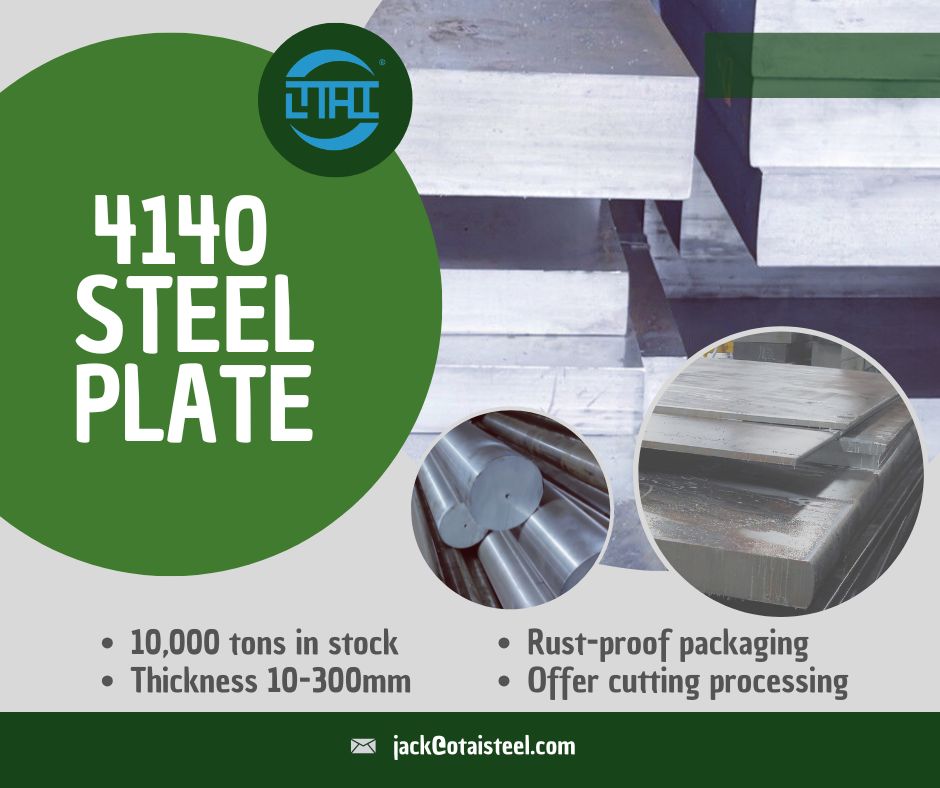
When selecting a steel grade for your next big engineering project, knowing its carbon content is a big deal. That brings us to the question: is 4140 steel low carbon? The short answer is no, but there’s much more to explore. From mechanical performance to machinability and heat treatment behavior, carbon plays a key role. Let’s take a deep dive into what 4140 steel really is and why its carbon content makes it so special.


🔬 What Is 4140 Steel?

4140 steel is a chromium-molybdenum alloy steel that falls under the AISI classification. It’s known for its excellent balance of toughness, wear resistance, and strength.

Property Category Details
AISI Designation 4140
Steel Type Alloy steel
Common Form Bar, Plate, Round Bar
Main Alloying Elements Chromium (Cr), Molybdenum (Mo)
Typical Applications Shafts, gears, dies, tooling

4140 alloy steel is often supplied in various forms such as annealed, normalized, or quenched and tempered. So, where does carbon content fit in all of this?


⚗️ So, Is 4140 Steel Low Carbon?

Let’s take a look at the chemical composition of 4140 steel to answer this clearly.

Element Content (%)
Carbon (C) 0.38 – 0.43
Manganese (Mn) 0.75 – 1.00
Chromium (Cr) 0.80 – 1.10
Molybdenum (Mo) 0.15 – 0.25
Silicon (Si) 0.15 – 0.35

With carbon content between 0.38% and 0.43%, 4140 steel is classified as a medium carbon steel, not a low carbon steel. In contrast, low carbon steels like 1018 or A36 contain less than 0.3% carbon.

This higher carbon level allows 4140 to undergo heat treatment effectively and reach high strength levels. So, to answer the core question—is 4140 steel low carbon? Absolutely not. It sits squarely in the medium carbon category, enabling excellent mechanical properties after quenching and tempering.


⚙️ Why the Carbon Level Matters

The carbon content of 4140 gives it a significant performance advantage:

Property Benefit of Medium Carbon in 4140
Hardness (after quench) Up to 50 HRC
Yield Strength ~655 MPa (annealed)
Tensile Strength Up to 1080 MPa (Q&T condition)
Wear Resistance Better than low carbon steels
Machinability Moderate (with proper tooling)

Thanks to this carbon range, 4140 performs far better than low carbon steel for tools and structural parts where hardness and toughness are crucial.


🔧 Typical Uses That Require Its Strength

4140’s strength makes it ideal for:

  • Heavy-duty shafts and axles

  • Die and mold tooling

  • Drill collars and oilfield equipment

  • Crankshafts, gears, and spindles

In these applications, low carbon steels would simply wear out too fast or deform under load. The medium carbon content of 4140 makes it suitable for oil quenching and tempering, enabling much better performance.


🧰 Comparison With Other Steels

Let’s compare 4140 with some common steels to put its carbon level into perspective.

Steel Grade Carbon Content (%) Classification
1018 0.15 – 0.20 Low Carbon
A36 0.25 (max) Low Carbon
4140 0.38 – 0.43 Medium Carbon
4340 0.38 – 0.43 Medium Carbon
1095 0.90 – 1.03 High Carbon

Clearly, 4140 is far beyond the low carbon range, giving it much greater potential for heat treatable strength and durability.


🔥 Can 4140 Be Welded or Machined?

Because of its carbon content, 4140 requires preheat before welding to prevent cracking. While machinable, it is more difficult than low-carbon steel. Using carbide tools and coolant helps improve the process.

This makes 4140 a great choice when you need strength, but you must plan for proper machining and welding procedures.


🏭 Is 4140 Steel Hot or Cold Rolled?

Both! 4140 steel is commonly available in hot rolled and cold drawn conditions. Cold drawing improves dimensional accuracy and surface finish, while hot rolling is more economical for large sections. The carbon level remains unchanged, but the processing affects the final properties.


🏆 Company Advantages

At Otai Special Steel, we specialize in providing high-quality 4140 steel plates and bars, stocked in thicknesses from 6mm to 300mm. Our value-added services include:

  • Precision cutting and custom dimensions

  • Quenching & tempering to your specifications

  • Ultrasonic testing and mill certification

  • Fast delivery with over 10,000 tons in stock

  • Export experience with Fortune 500 clients

Need a quote for your next project? 📩 Contact us now and get expert advice tailored to your application!

📧 Contact us: jack@otaisteel.com
📱 WhatsApp: +8676923190193


❓ FAQ: Is 4140 Steel Low Carbon?

Q1: Why is 4140 steel not considered low carbon?
Because it contains 0.38–0.43% carbon, which puts it in the medium carbon steel category.

Q2: What are the implications of medium carbon levels?
It means better hardenability, strength, and wear resistance—ideal for heavy-duty parts.

Q3: Can 4140 be used instead of low carbon steel?
Yes, but only where higher strength is needed. It is not suitable for deep drawing or welding without preheat.

Q4: Does the carbon level affect machinability?
Yes, it reduces machinability slightly compared to low-carbon steels, but with good tools and practices, it’s still very workable.

Q5: Is 4140 steel better than 1018 steel?
For high-stress applications—yes. 4140 outperforms low carbon steels like 1018 in strength, wear, and fatigue resistance.

0 0 Continue Reading →

4140 Steel Specification: Comprehensive guide to Buying

4140 Steel Specification: Comprehensive guide to Buying4140 Steel Specification: Comprehensive guide to Buying
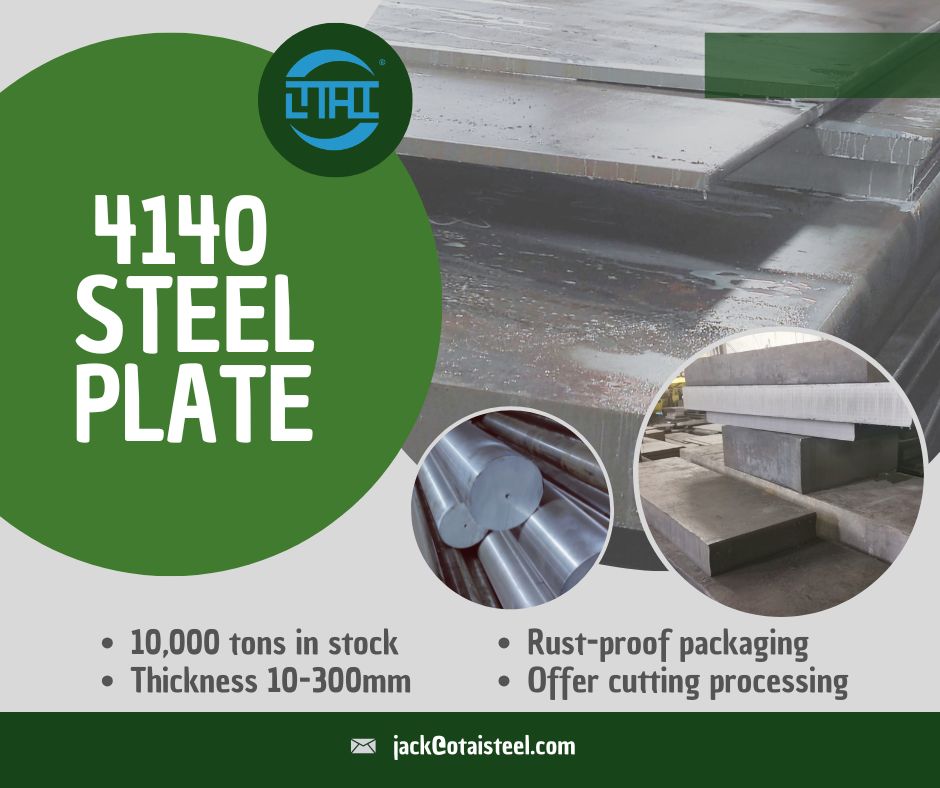
When it comes to high-performance alloy steels, 4140 steel specification often come up as the gold standard for toughness, wear resistance, and versatility. But what do those specifications really mean? And how do they help engineers, machinists, or buyers make better decisions? 🧐 Let’s break it all down in this comprehensive guide!


🧱 What Is 4140 Steel?

4140 steel is a chromium-molybdenum alloy steel (also known as Cr-Mo steel) widely used in automotive, aerospace, and manufacturing industries. It falls under AISI 4140 in the American standard and 42CrMo4 under DIN/EN standards.

This steel is famous for its excellent combination of strength, toughness, fatigue resistance, and heat treatability.


📐 Detailed 4140 Steel Specifications

Let’s take a closer look at the most important mechanical, chemical, and physical specifications of 4140 steel:

🔬 Chemical Composition (%)

Element Minimum (%) Maximum (%)
Carbon (C) 0.38 0.43
Manganese (Mn) 0.75 1.00
Chromium (Cr) 0.80 1.10
Molybdenum (Mo) 0.15 0.25
Silicon (Si) 0.15 0.35
Phosphorus (P) 0.035
Sulfur (S) 0.040

This carefully balanced composition gives it excellent hardenability and strength after heat treatment.


⚙️ Mechanical Properties (Typical, Q&T @ 30–32 HRC)

Property Value
Tensile Strength 850–1000 MPa
Yield Strength 650–700 MPa
Elongation 20–25%
Impact Toughness (Charpy V) ≥ 40 J
Hardness (Brinell) 197–235 HB

These numbers make it ideal for demanding applications like high-strength shafts, gears, and bolts.


🔥 Heat Treatment Parameters

Process Temperature (°C) Notes
Normalizing 870–900 Air cooling
Quenching 830–860 Oil quench for best results
Tempering 400–600 Depending on desired hardness
Annealing 800–850 Furnace cool slowly
Stress Relieving 540–680 After machining or welding

🛠️ Key Product Forms & Specifications in Use

When purchasing 4140 steel, you’ll encounter it in various forms and standards:

  • 4140 steel round bar – Common in shafts and spindles

  • 4140 steel plate – Used for dies, base plates

  • 4140 steel square bar – Ideal for precision components

  • 4140 tubing – Common in hydraulic cylinders

  • ASTM A29 / A322 – Governs 4140 bar stock specs

  • ASTM A829 – For 4140 plates

  • EN 10083-3 / DIN 42CrMo4 – European equivalent specs


🧩 How Do These Specs Translate in Real-World Applications?

The robust 4140 steel specifications make it one of the most adaptable materials in manufacturing. Here are some specific long-tail use cases where 4140 really shines:

  • 4140 steel for automotive shafts

  • 4140 steel used in mold bases for injection molding

  • 4140 steel for oil and gas downhole tools

  • 4140 round bar for machine tool spindles

  • 4140 Q&T steel in mining machinery components


⚖️ 4140 vs Other Alloy Steels – A Quick Comparison

Grade Strength Toughness Weldability Price Level
4140 High High Moderate Medium
1045 (Carbon) Moderate Moderate Good Low
4340 Very High Very High Fair High
8620 Moderate High Good Medium

4140 provides a sweet spot of strength, cost, and availability—making it a global favorite.


✅ Why Do Engineers Love 4140 So Much?

Besides its clear mechanical advantages, 4140 steel responds beautifully to:

  • Oil quenching without cracking risks

  • Machining, especially in annealed or normalized state

  • Surface hardening like nitriding, for added wear resistance

  • Welding, when preheat and post-weld stress relieving are applied

Its versatility across heat treatment and forming processes makes it ideal for both forged and machined components.


🏭 Otai Special Steel – Why We’re Your Ideal 4140 Supplier

At Otai, we don’t just stock 4140—we help you get the right spec for your real-world application. Here’s why our customers trust us:

  • 🔩 Inventory Power: Over 10,000 tons of 4140 plates, bars, and tubes ready year-round

  • 🔍 Quality Control: UT testing, MTC, chemical composition checks, and even SGS third-party inspection

  • ✂️ Value-Added Services: Saw cutting, rough machining, heat treatment, custom packaging

  • 🌍 Global Experience: We serve top brands like Schlumberger, Thyssenkrupp, and Borealis

Need a quote for your next project? 📩 Contact us now and get expert advice tailored to your application!


📌 FAQ: 4140 Steel Specification

Q1: Are 4140 steel specifications the same globally?
Not exactly. While AISI 4140 and DIN 42CrMo4 are very close, small differences in composition or tolerances exist depending on the standard (ASTM vs EN vs JIS).

Q2: Can I weld 4140 steel?
Yes, but it requires preheating (~200–400°C) and post-weld stress relief to prevent cracking.

Q3: How hard can 4140 steel get?
When quenched and tempered, it can reach up to 60 HRC, depending on the tempering temperature.

Q4: What is the typical lead time for 4140 steel?
From Otai, most stock items ship within 3–7 days; custom orders depend on processing requirements.

Q5: Is 4140 good for tooling or dies?
Absolutely—especially Q&T plates and blocks used in tooling bases, molds, or fixtures.

0 0 Continue Reading →

4140 Steel Suppliers – How to Find Reliable Sources for Your Business
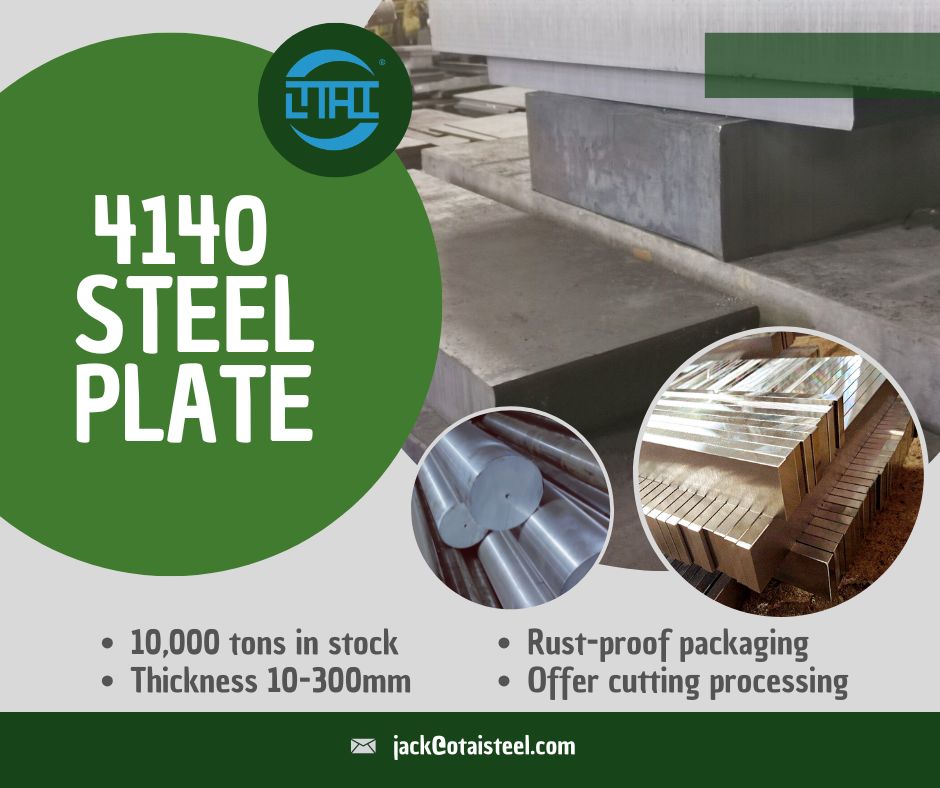
4140 Steel Suppliers – How to Find Reliable Sources for Your BusinessHow to Find Reliable Sources for Your Business

When engineers and buyers search for 4140 steel suppliers, they usually want a source that can provide consistent quality, competitive pricing, and reliable delivery. 4140 steel is one of the most widely used chromium-molybdenum alloy steels, found in shafts, gears, molds, and machine components. Choosing the right supplier ensures you avoid delays, rework, and costly downtime.


🔍 What to Look for in 4140 Steel Suppliers

Not all steel suppliers offer the same service level. Here are key factors to evaluate:

  • Inventory Size: Look for suppliers who carry a wide range of bar and plate thicknesses.
  • Processing Services: Cutting, heat treatment, and machining-ready blanks save you time.
  • Certifications: Request mill test certificates (MTCs) and ultrasonic test (UT) reports.
  • Lead Times: Suppliers with in-stock material can ship faster, avoiding production delays.
  • Global Shipping Capability: Especially important if you need international supply.
  • Technical Support: Good suppliers provide material property data and selection advice.

📦 Types of 4140 Steel Suppliers

Different suppliers focus on different forms of 4140 steel. Common categories include:

Supplier Type Best For
4140 Steel Bar Suppliers Shafts, axles, pins, studs
4140 Steel Plate Suppliers Base plates, dies, fixtures
4140 Steel Stockists Bulk availability, multiple grades
4140 Steel Distributors Regional distribution, fast delivery
Wholesale Suppliers Large volume orders at better pricing

If you search for 4140 steel suppliers near me, you’ll likely find local distributors or warehouses that can deliver within a day.


🌍 Global Supply and Regional Availability

For buyers outside the US, finding 4140 steel suppliers USA can be a good option for consistent quality and ASTM-certified material. However, you should:

  • Confirm international shipping terms (FOB, CIF, EXW)
  • Ask about export packing standards to avoid rust or damage
  • Request HS codes for customs clearance

Buyers in Europe often look for 42CrMo4 suppliers (the DIN equivalent of 4140 steel), while in Asia, JIS SCM440 suppliers are common. A good supplier will understand these equivalents and cross-reference them.


🏭 Quality Control Checklist for 4140 Steel Procurement

Before placing large orders, verify the following:

  • Chemical Composition: Meets ASTM A29 / AISI 4140 requirements.
  • Mechanical Properties: Tensile and yield strength match your design.
  • Surface Condition: Scaled, turned, or ground – choose based on machining needs.
  • Tolerances: Check diameter/flatness tolerances if ordering pre-machined bars.
  • Documentation: MTC, UT, and third-party inspection reports if required.

💡 Expert Tips for Choosing the Best 4140 Steel Supplier

  • Work with suppliers that have large inventories so they can support repeat orders.
  • Ask for a 4140 steel weight chart to calculate shipping and handling requirements.
  • Evaluate whether they offer cut-to-size service to minimize your machining time.
  • Check if they have an in-house quality team to inspect material before shipment.
  • Establish a long-term relationship to lock in better pricing and priority allocation.

🌟 Company Advantages

At Otai Special Steel, we are among the leading 4140 steel suppliers in Asia with over 10,000 tons of stock. We offer:

  • Round bar, flat bar, and plate from 6 mm to 300 mm thickness
  • Precision cutting, heat treatment, and packaging services
  • Certified MTCs, ultrasonic testing (UT), and SGS third-party inspection support
  • International shipping with proper export documentation

This means you get consistent quality, competitive pricing, and reliable delivery every time.


❓ FAQ

Q: How do I find the best 4140 steel suppliers near me?
A: Search for local distributors with stock on hand, or work with global suppliers who offer fast shipping.

Q: Can I buy small quantities of 4140 steel?
A: Yes, many suppliers sell cut-to-size pieces for prototypes or small batch production.

Q: What documents should I request from a supplier?
A: Mill Test Certificate (MTC), ultrasonic testing report, and packing list with weight data.

Q: Do suppliers offer machining services?
A: Some suppliers provide rough machining, saw cutting, or even heat-treated blanks to save your processing time.

Q: How do I ensure consistent quality from batch to batch?
A: Work with ISO-certified suppliers and request chemical and mechanical property verification for every lot.

0 0 Continue Reading →

Is 4140 Steel Easy to Machine?

Is 4140 Steel Easy to Machine?Is 4140 Steel Easy to Machine?
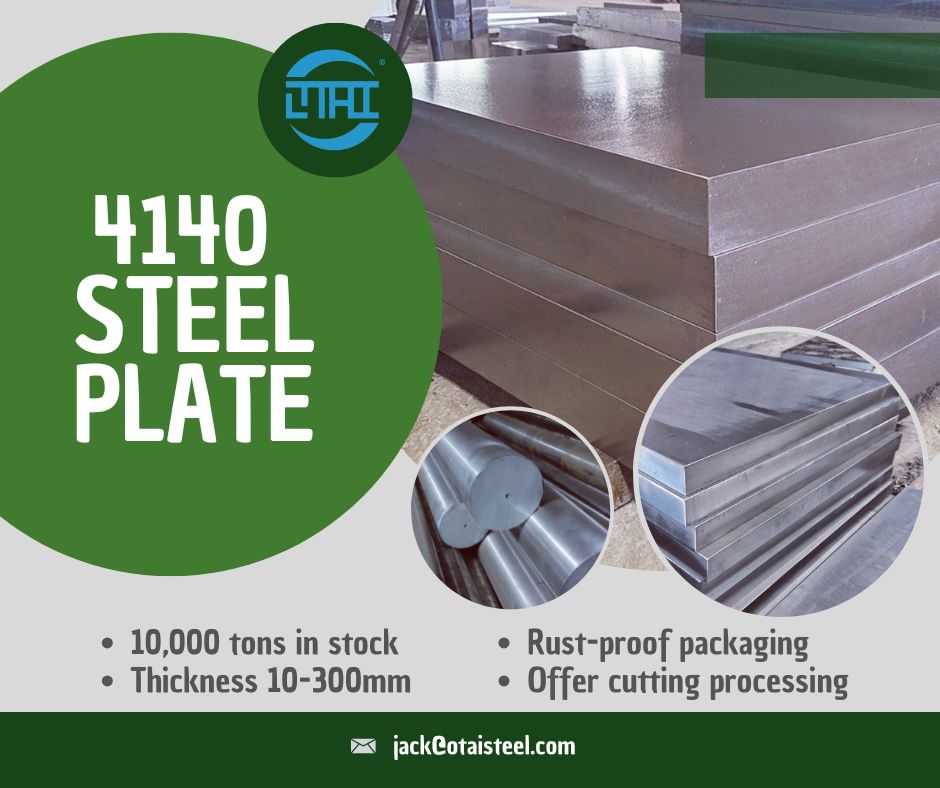
If you’ve ever asked yourself “is 4140 steel easy to machine?”, you’re not alone. 4140 steel is one of the most widely used alloy steels, thanks to its excellent balance of strength, toughness, and wear resistance. But when it comes to machining, its behavior depends heavily on its heat treatment condition. Understanding these differences helps you save tooling costs, improve surface finish, and meet tight tolerances.


🔍 Understanding 4140 Steel Machinability

The term 4140 steel machinability refers to how easily this alloy can be cut, drilled, milled, or turned without excessive tool wear. 4140 contains chromium and molybdenum, giving it high strength and hardenability — but also making it more challenging to cut than mild steel.

Machinability by Condition

Condition Typical Hardness (HRC) Machinability Rating* Comment
4140 Annealed 18 – 22 ~65% Easiest to machine, excellent for roughing operations
4140 Prehard 28 – 32 ~50% Requires rigid setups and slower speeds
4140 Quenched & Tempered (Q&T) 35 – 50 ~40% Hardest to machine, used mainly for finishing

*Relative to AISI 1112 steel (100% machinability).


🛠 Machining 4140 Steel Tips

When working with this alloy, following best practices makes a huge difference. Here are the top machining 4140 steel tips:

  • Use rigid machine setups – Minimize vibration to protect tool life and achieve consistent tolerances.
  • Select the right tooling – For hard 4140, use coated carbide, CBN, or ceramic inserts.
  • Control cutting speed – High speeds generate heat and cause rapid tool wear.
  • Apply coolant generously – Especially for drilling, tapping, and deep-hole boring.
  • Consider staged machining – Rough in annealed state, heat treat, then finish machine.
  • Use sharp tools – Dull tools create heat and work-hardening, increasing machining difficulty.

📊 Recommended Speeds and Feeds

Operation Tool Material Annealed (SFM) Prehard (SFM) Notes
Turning Carbide 400 – 600 250 – 350 Use positive rake inserts
Drilling HSS 50 – 70 35 – 50 Peck drilling recommended
Milling Carbide 350 – 500 200 – 300 Use climb milling for better finish
Tapping HSS 10 – 20 6 – 12 Use plenty of cutting fluid

Tip: Reduce feeds and speeds by 20-30% for 4140 prehard machinability to improve tool life and avoid chatter.


⚙️ Tooling Recommendations

Choosing the best tooling for 4140 steel is critical for productivity:

  • Carbide Inserts: PVD or CVD-coated inserts work well for general turning.
  • CBN or Ceramic: Best for hard turning (> 40 HRC) in Q&T condition.
  • HSS Tools: Suitable for low-speed drilling and tapping in annealed state.
  • Coolant: Use flood coolant or high-pressure coolant for deep holes.
  • Workholding: Ensure rigid clamping to prevent part deflection during cuts.

🏭 Applications Where Machinability Matters

When machining components like shafts, gears, spindles, and hydraulic parts, starting with the right condition saves time and cost. 4140 annealed machinability is ideal for rough machining before heat treatment. For molds, fixtures, and production tooling, many choose prehard 4140 to skip heat treatment and go directly to use.


💡 Practical Engineering Advice

  • Always check hardness on the MTC (mill test certificate) before machining.
  • If tight tolerances are required, machine in the HTSR condition to avoid distortion.
  • Plan heat treatment sequence early: rough machine first, then heat treat, then finish.
  • Stress relieve after heavy machining to avoid warpage in service.
  • Use toolpath simulation to reduce unexpected tool breakage in expensive materials.

🌟 Company Advantages

At Otai Special Steel, we supply 4140 annealed, 4140 prehard, and Q&T bars and plates ready for machining. With over 10,000 tons in stock, we offer:

  • Cut-to-size service for easy handling
  • Heat treatment and stress-relief options
  • Technical advice for machinability optimization
  • Third-party inspection (SGS, UT, chemical test) upon request

This ensures you receive the right condition for your machining project, saving time and cost.


❓ FAQ

Q: Is 4140 steel difficult to machine?
A: In annealed condition, it’s quite machinable (~65%). In prehard or quenched state, it requires proper tooling and slower speeds.

Q: Can I machine 4140 after heat treatment?
A: Yes, but use carbide or CBN tools for best results and adjust cutting speeds.

Q: Should I machine before or after heat treatment?
A: Rough machine before heat treatment, finish machine after to achieve final tolerance.

Q: Do I need coolant when machining 4140?
A: Yes, coolant is strongly recommended to manage heat and extend tool life.

Q: What’s the best cutting tool for 4140 prehard steel?
A: Coated carbide inserts with moderate cutting speed give the best balance of tool life and surface finish.

0 0 Continue Reading →

What Does “Quenched and Tempered” Mean for 4140 Steel?

What Does “Quenched and Tempered” Mean for 4140 Steel?When it comes to balancing strength, toughness, and wear resistance, 4140 steel quenched and tempered is a go-to choice for engineers, machinists, and manufacturers. This versatile alloy steel undergoes a specific heat treatment process that significantly boosts its mechanical performance, making it ideal for high-stress applications such as gears, shafts, bolts, and hydraulic components.
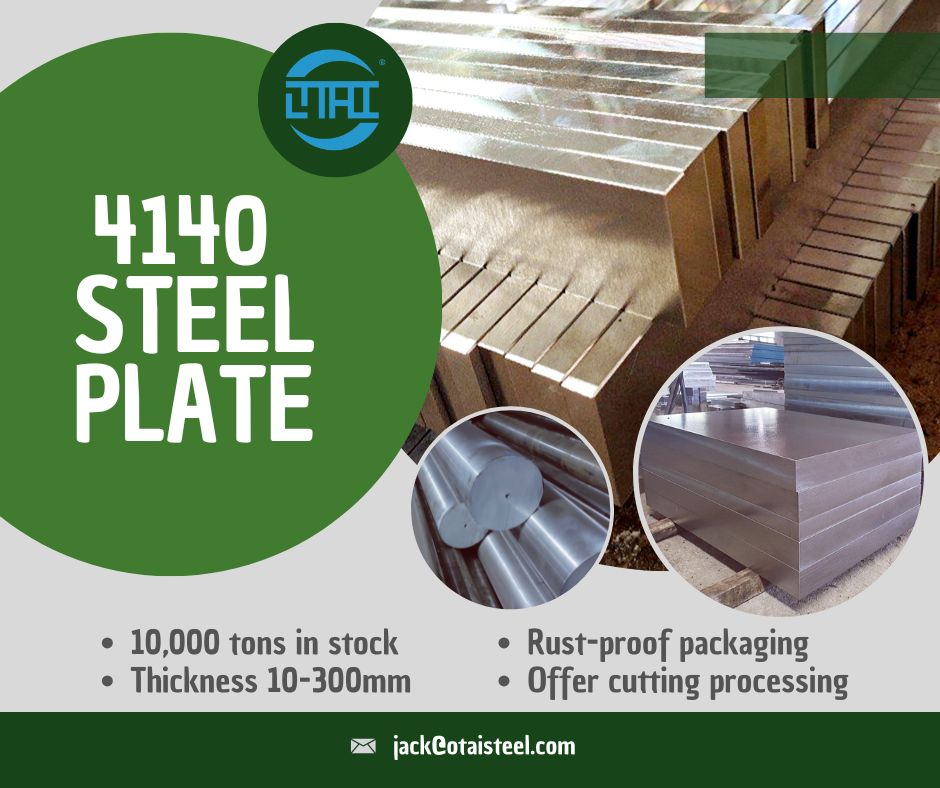
In this guide, we’ll dive deep into what quenching and tempering 4140 steel actually means, how it changes the steel’s microstructure, and why it’s so popular across industries. We’ll also share practical machining tips, hardness ranges, and real-world examples to help you choose the right material for your project.


🌟 What Does “Quenched and Tempered” Mean for 4140 Steel?

Quenching is a heat treatment step where the steel is heated to a high temperature—usually around 850–870°C (1560–1600°F)—to transform its internal structure into austenite. Then, it’s rapidly cooled in oil or water to lock in a hard, martensitic structure.

While this gives the steel exceptional hardness, it also makes it brittle. That’s where tempering comes in. Tempering involves reheating the quenched steel to a lower temperature—typically 400–650°C (750–1200°F)—to relieve stresses and adjust the hardness-toughness balance.

This process results in a tough yet strong steel that resists wear, fatigue, and impact damage, all while maintaining good machinability.


📊 Typical Mechanical Properties of Quenched and Tempered 4140 Steel

Property Typical Range After Q&T
Ultimate Tensile Strength (UTS) 850–1100 MPa (123–160 ksi)
Yield Strength 655–950 MPa (95–138 ksi)
Rockwell Hardness (HRC) 28–38 HRC (depending on tempering temperature)
Elongation 15–25%
Impact Toughness (Charpy V-Notch) Good (varies by heat treatment)

These values can shift depending on the exact tempering temperature used. Higher tempering temperatures lower hardness but improve toughness—lower temperatures do the opposite.


🔍 Why Choose Quenched and Tempered 4140 Steel?

  1. Excellent strength-to-weight ratio – Ideal for parts that need high strength without excessive mass.

  2. Wear resistance – Great for sliding or rotating components under heavy loads.

  3. Impact toughness – Handles sudden shocks without fracturing.

  4. Good machinability – Easier to machine than ultra-hard tool steels.

  5. Versatile hardness control – You can tailor hardness via tempering temperature.

Industries love it for parts like drill collars, crankshafts, high-strength bolts, and connecting rods—all of which benefit from its unique property mix.


🛠️ Heat Treatment Steps for 4140 Steel Quenching and Tempering

1. Preheating
Before hardening, 4140 steel is preheated in two stages—first at 400–500°C (750–930°F), then at 600–650°C (1110–1200°F)—to prevent thermal shock.

2. Austenitizing
The steel is heated to the critical temperature range of 850–870°C (1560–1600°F) until fully austenitic.

3. Quenching
Rapid cooling is done in oil (most common) or polymer solutions. Water quenching is less common because it increases the risk of cracking.

4. Tempering
The quenched steel is reheated to 400–650°C (750–1200°F) for 1–2 hours per inch of thickness, then air cooled.


⚙️ Machining Tips for Quenched and Tempered 4140 Steel

Even though Q&T 4140 is strong, it still machines well compared to harder tool steels. Here are some tips:

  • Use carbide tooling for extended tool life.

  • Reduce cutting speeds slightly compared to annealed 4140.

  • Ensure good coolant flow to prevent workpiece overheating.

  • For threading or tapping, use sharp, coated tools to handle the hardness.


📦 Applications of Quenched and Tempered 4140 Steel

  • Gears and pinions – Wear-resistant under heavy load.

  • Hydraulic shafts – High strength with good fatigue resistance.

  • Crankshafts and camshafts – Withstand cyclic stress.

  • High-strength bolts and studs – Maintain preload without failure.

  • Mining equipment – Handles abrasive environments.


🧪 How Quenching & Tempering Affects Microstructure

The process transforms the microstructure into tempered martensite, which combines the high strength of martensite with the improved toughness of tempered steel. This is why 4140 quenched and tempered steel offers such a balanced performance profile.


🏭 Why Choose Otai Special Steel

At Otai Special Steel, we provide a massive inventory of 4140 steel in various forms, including pre-hardened plates, Q&T bars, and custom-cut blanks. Our advantages include:

  • Over 10,000 tons of stock all year round

  • ✅ Customized cutting and heat treatment

  • ✅ UT-tested quality with third-party inspection options (SGS, etc.)

  • ✅ Competitive prices and fast global shipping

  • ✅ Technical support for material selection and machinability consultation

We’re proud to serve global giants like Thyssenkrupp, Borealis, and Schlumberger, providing stable, high-quality supply for every project.


❓ FAQ

Q1: What hardness can I expect from quenched and tempered 4140 steel?
A1: Usually between 28–38 HRC, depending on the tempering temperature.

Q2: Can 4140 Q&T be welded?
A2: Yes, but preheating and post-weld heat treatment are recommended to avoid cracking.

Q3: Is oil quenching better than water quenching for 4140?
A3: Yes, oil quenching is safer and reduces the risk of distortion or cracking.

Q4: Can I machine it after Q&T?
A4: Yes, but expect higher tool wear compared to annealed 4140.

0 0 Continue Reading →

What is annealing 4140 Steel?


What is annealing 4140 Steel?If you work with alloy steels in machining, fabrication, or heat treatment, you’ve probably come across annealing 4140 steel. This process is one of the most effective ways to soften the steel, improve machinability, and prepare it for further forming or heat treatment. But to get it right, you need to understand the temperatures, cooling rates, and metallurgical changes that happen during annealing.
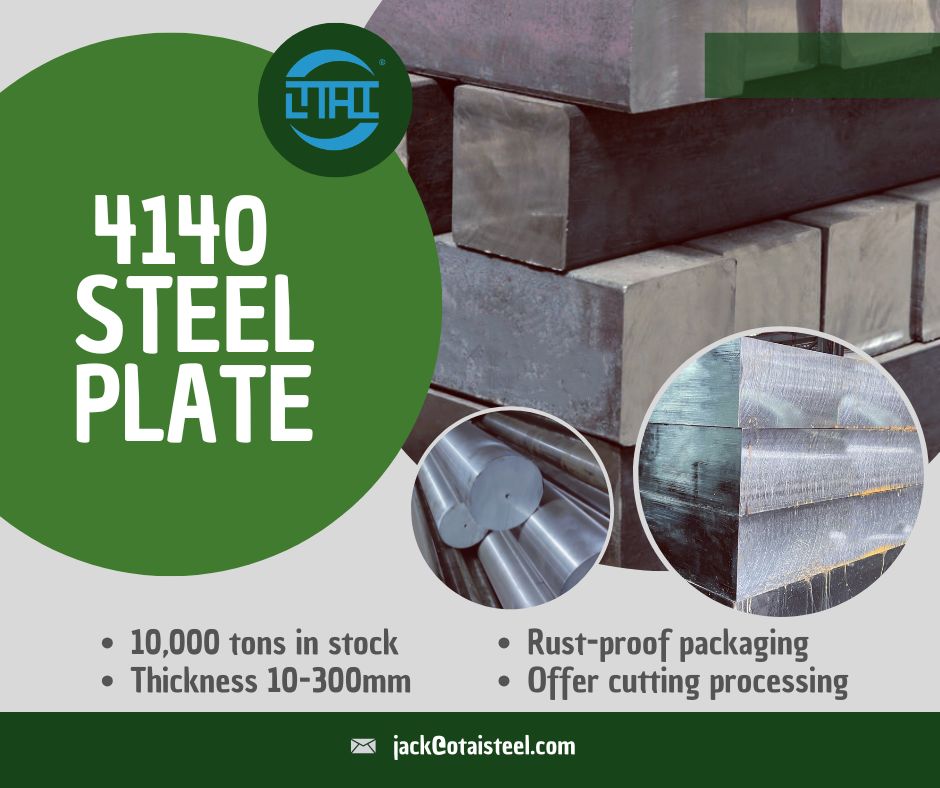
In this guide, we’ll break down what annealing does to 4140 steel, why it’s essential for certain projects, and how to perform it step by step—backed with technical data and practical shop tips.


🌟 What Is Annealing 4140 Steel?

4140 steel is a chromium-molybdenum alloy steel known for its high strength, wear resistance, and toughness. In its hardened state, it can be difficult to machine or bend. Annealing is a heat treatment process that reduces hardness, increases ductility, and relieves internal stresses.

When you perform annealing 4140 steel, you heat the material to a specific range (above its critical temperature), hold it to allow transformation, and then cool it slowly—typically in a furnace or insulating medium. This allows the microstructure to convert into a softer, more machinable form called ferrite-pearlite.


🔍 Chemical Composition of 4140 Steel

Before diving into the process, here’s the typical chemical makeup of 4140 alloy steel:

Element Percentage (%)
Carbon (C) 0.38–0.43
Chromium (Cr) 0.80–1.10
Molybdenum (Mo) 0.15–0.25
Manganese (Mn) 0.75–1.00
Silicon (Si) 0.15–0.35
Phosphorus (P) ≤ 0.035
Sulfur (S) ≤ 0.04

This alloy combination gives 4140 pre-annealed steel its balance of strength and hardenability.


🔥 Annealing Process for 4140 Steel – Step by Step

Here’s the typical cycle used by heat treatment shops when annealing 4140 steel:

Step Temperature (°C / °F) Time Cooling Method Purpose
Preheat 400–500°C / 750–930°F Furnace Reduce thermal shock
Full Heat 815–845°C / 1500–1550°F 1 hour per inch thickness Furnace Transform microstructure
Hold Same as full heat As required Furnace Uniform temperature throughout
Controlled Cooling ≤ 28°C/hour to 540°C (≤ 50°F/hour to 1000°F) Furnace or sand bed Prevent hardening during cooling
Final Cool Room temperature Air Complete cycle

📈 Effects of Annealing on Mechanical Properties

Annealing 4140 steel has a significant effect on hardness, tensile strength, and elongation:

Property Before Annealing (Q&T) After Annealing
Hardness (HRC) 28–32 18–22
Tensile Strength (MPa) 850–1100 620–700
Yield Strength (MPa) 650–950 415–500
Elongation (%) 12–18 20–25
Machinability (%) 60 80

💡 The increase in ductility and machinability is why many machinists prefer machining annealed 4140 steel over hardened stock.


🧪 Microstructural Changes During Annealing

When annealing 4140 alloy steel, the structure changes from tempered martensite or bainite to ferrite-pearlite. This transformation:

  • Relieves residual stresses from forging or machining

  • Improves toughness by eliminating brittleness

  • Prepares steel for carburizing or nitriding if needed later

  • Enhances cold forming capability such as bending or rolling


🛠️ When to Anneal 4140 Steel

You should consider annealing 4140 steel in situations like:

  • Before extensive cold forming 4140 steel

  • When high machinability is needed for precision components

  • To remove stresses after heavy welding or forging

  • Before applying surface hardening treatments like nitriding or carburizing


⚠️ Common Mistakes to Avoid

  • Overheating above 870°C (1600°F) – causes grain growth and reduces toughness

  • Cooling too quickly – may result in partial hardening

  • Skipping preheat – can cause thermal shock and cracking in large sections

  • Not holding long enough – results in incomplete transformation


🔍 Annealed 4140 Steel vs Normalized 4140 Steel

Feature Annealed 4140 Normalized 4140
Hardness Lower (softer) Slightly higher
Machinability Higher Lower
Grain Structure Ferrite-pearlite Finer pearlite
Stress Relief Excellent Good
Common Use Machining, cold forming General structural parts

🧠 Pro Tips from the Heat Treatment Floor

  • Always measure core temperature, not just surface, before holding time starts.

  • Use furnace charts to track exact cooling rates.

  • If annealing thick 4140 steel plate, allow extra soak time to avoid uneven properties.

  • Combine annealing with a later quench and temper cycle for optimal strength.


🏭 Company Advantages – Why Choose Otai Special Steel for Annealed 4140

At Otai Special Steel, we specialize in supplying 4140 steel in all heat treatment conditions, including fully annealed stock ready for machining or forming.

Our Advantages:

  • ✅ 10,000+ tons of 4140 steel in stock (6mm–300mm thick)
  • ✅ Available in annealed, normalized, Q&T, and nitrided states
  • ✅ Precision cutting service for your exact sizes
  • ✅ Heat treatment and technical support included
  • ✅ SGS/BV inspection and full material certificates
  • ✅ Global export with on-time delivery
  • ✅ Long-term supply partnerships with Thyssenkrupp, Borealis, Schlumberger

❓ FAQ – Annealing 4140 Steel

Q1: Can I anneal 4140 steel at home?
Yes, small parts can be annealed with a controlled furnace, but precision industrial annealing ensures better results.

Q2: Does annealing reduce strength?
Yes, but it increases ductility and machinability. Strength can be restored with later heat treatments.

Q3: How long should I hold at annealing temperature?
A general rule is 1 hour per inch of thickness after reaching target temperature.

Q4: Can I machine 4140 steel right after annealing?
Yes, in fact, annealed 4140 is much easier to machine.

Q5: What’s the difference between full annealing and subcritical annealing?
Full annealing transforms the entire microstructure; subcritical annealing focuses on stress relief without full softening.

0 0 Continue Reading →

4140 Steel Chemistry – Deep Dive into Composition & Performance

4140 Steel Chemistry – Deep Dive into Composition & Performance4140 Steel Chemistry – Deep Dive into Composition & Performance
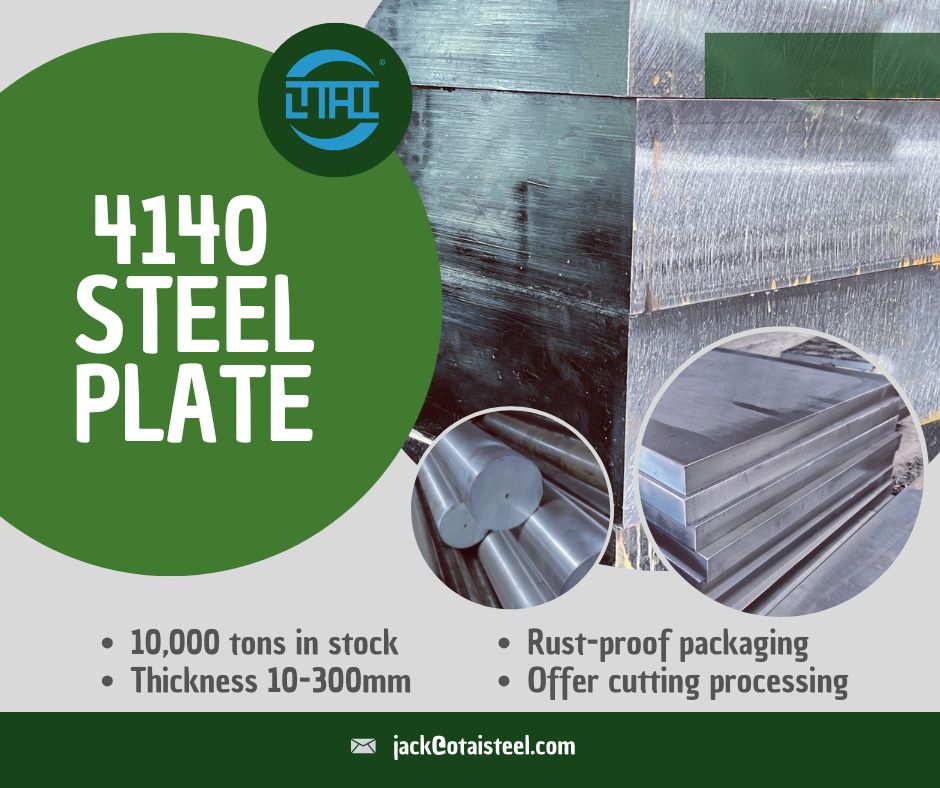
When engineers and buyers discuss 4140 steel chemistry, they are exploring the very heart of why this alloy is so trusted in demanding industries. Its precise chemical composition is the secret behind its strength, toughness, and versatility. In this article, we’ll fully explore the 4140 steel chemistry composition, how each chemical element affects performance, and why it’s a favorite for high-stress applications.


🔬 4140 Steel Chemistry Composition

4140 is a chromium-molybdenum alloy steel with medium carbon content. Its chemistry gives it excellent mechanical properties. Here’s the typical chemical composition:

Element Typical Range (%) Function in Steel
Carbon (C) 0.38 – 0.43 Boosts hardness, tensile strength, and wear resistance
Chromium (Cr) 0.80 – 1.10 Improves hardenability, strength, and mild corrosion resistance
Molybdenum (Mo) 0.15 – 0.25 Enhances high-temperature strength, prevents brittleness
Manganese (Mn) 0.75 – 1.00 Improves hardenability and overall toughness
Silicon (Si) 0.15 – 0.30 Increases strength, acts as a deoxidizer during steelmaking
Phosphorus (P) ≤ 0.035 Kept low to avoid brittleness
Sulfur (S) ≤ 0.040 Controlled to maintain toughness while aiding machinability

This 4140 steel chemical composition makes it one of the most reliable medium-alloy steels in manufacturing.


⚙️ Chemistry & Mechanical Properties

The synergy of carbon, chromium, and molybdenum defines 4140’s mechanical performance. Typical mechanical properties include:

Property Typical Value
Tensile Strength 655 – 1080 MPa
Yield Strength 415 – 930 MPa
Hardness (HB) 197 – 302 (annealed to quenched & tempered)
Elongation 12 – 25%
Impact Strength High, maintains toughness at low temperatures

The medium 4140 steel carbon content allows deep hardening while keeping toughness high — a crucial balance for parts that face shock and fatigue.


🔥 Microstructure & Heat Treatment Effects

Chemistry alone isn’t enough — heat treatment unlocks 4140’s full potential. Here’s what happens during different processes:

  • Annealing: Produces a soft, pearlitic microstructure that improves machinability.
  • Quenching: Transforms austenite into martensite, dramatically increasing hardness.
  • Tempering: Converts brittle martensite into tempered martensite, balancing strength with toughness.

Because chromium and molybdenum improve hardenability, even thick sections of 4140 steel develop a uniform hardness when quenched. This is why 4140 steel hardness after quenching is consistent across large parts.


🏭 Industrial Applications

The combination of chemistry and heat treatment makes 4140 a go-to material for:

  • Shafts, axles, and crankshafts
  • Gears, couplings, and sprockets
  • High-strength bolts and studs
  • Tool holders, dies, and molds
  • Oil & gas drilling tools

Its strength and toughness allow these parts to withstand heavy shock, torque, and fatigue.


🧪 4140 vs Other Alloy Steels

Compared to other steels, 4140 steel chemistry strikes an excellent cost-performance balance:

  • Vs 1045: Offers higher hardenability and wear resistance due to chromium and molybdenum.
  • Vs 4340: Slightly lower strength but more affordable while still providing excellent toughness.
  • Vs 8620: 4140 is preferred where core strength is more critical than surface hardness.

This explains why so many industries standardize on 4140 when they need performance without overpaying.


🌟 Why Choose Otai Special Steel

At Otai Special Steel, we keep over 10,000 tons of alloy steels in stock, including 4140 steel plates, bars, and blocks in sizes from 6mm to 300mm thick. We offer:

  • Reliable Quality: 100% UT-tested materials with mill certificates.
  • Flexible Processing: Saw cutting, heat treatment, and custom packaging.
  • Global Supply: Experience serving clients in automotive, oil & gas, and heavy equipment industries worldwide.
  • Fast Delivery: Large inventory ensures short lead times and consistent availability.

❓ FAQ – 4140 Steel Chemistry

Q1: Why is chromium so important in 4140 steel?
Chromium improves hardenability, strength, and mild corrosion resistance, which makes 4140 ideal for critical components.

Q2: Can I machine 4140 in its hardened state?
Yes, but it’s more difficult. Most machinists prefer to machine it in the annealed state, then heat treat.

Q3: How does molybdenum improve 4140 steel?
It prevents temper embrittlement and maintains toughness after heat treatment, making 4140 more reliable under stress.

Q4: What’s the main advantage of 4140 over carbon steels like 1045?
Better hardenability and strength, which means longer service life in high-load applications.

Q5: Does 4140 steel resist rust?
Only to a small degree. While chromium improves corrosion resistance slightly, 4140 still needs a coating or oil for protection in humid environments.


0 0 Continue Reading →

4140 Steel Chemistry – Deep Dive into Composition & Performance

4140 Steel Chemistry – Deep Dive into Composition & Performance4140 Steel Chemistry – Deep Dive into Composition & Performance
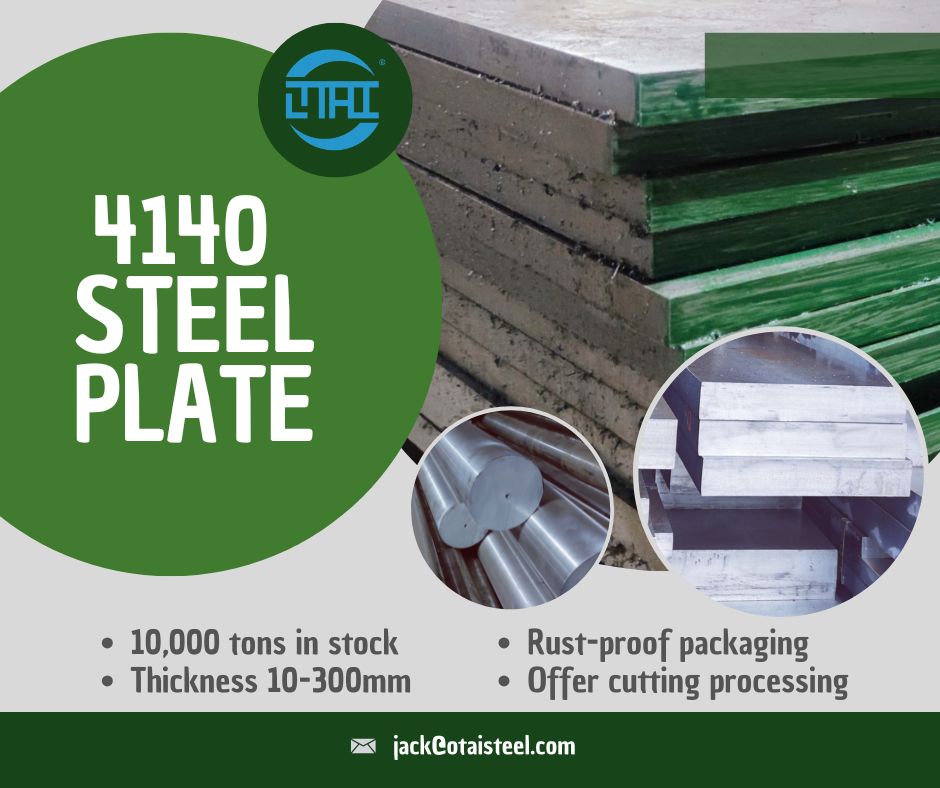
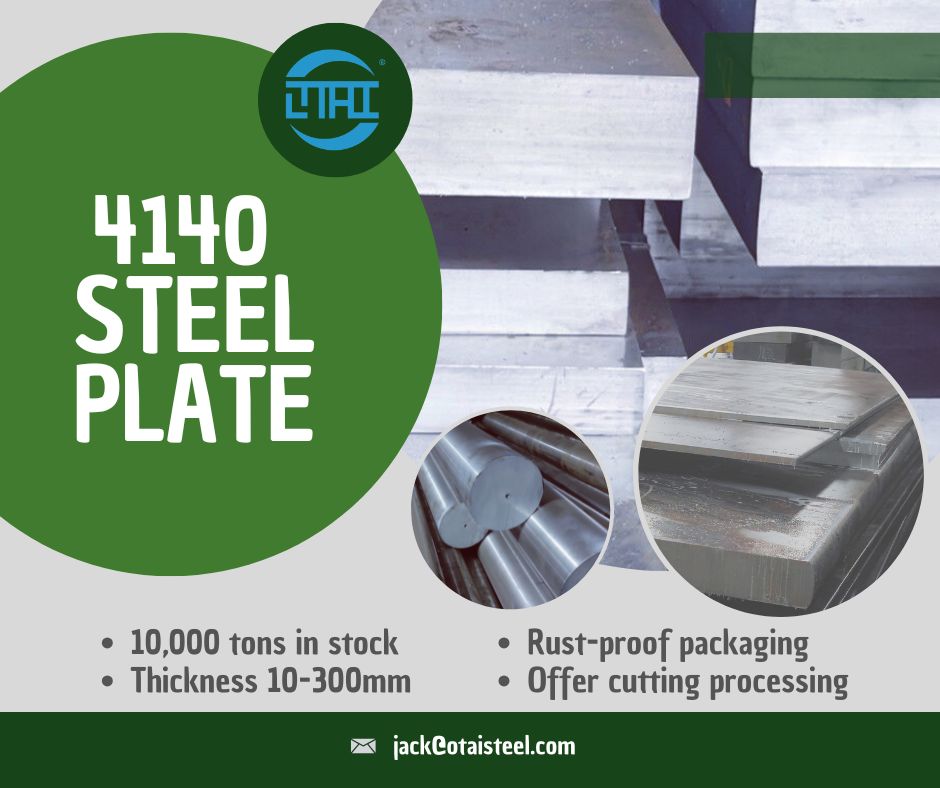
When engineers and buyers discuss 4140 steel chemistry, they are exploring the very heart of why this alloy is so trusted in demanding industries. Its precise chemical composition is the secret behind its strength, toughness, and versatility. In this article, we’ll fully explore the 4140 steel chemistry composition, how each chemical element affects performance, and why it’s a favorite for high-stress applications.


🔬 4140 Steel Chemistry Composition

4140 is a chromium-molybdenum alloy steel with medium carbon content. Its chemistry gives it excellent mechanical properties. Here’s the typical chemical composition:

Element Typical Range (%) Function in Steel
Carbon (C) 0.38 – 0.43 Boosts hardness, tensile strength, and wear resistance
Chromium (Cr) 0.80 – 1.10 Improves hardenability, strength, and mild corrosion resistance
Molybdenum (Mo) 0.15 – 0.25 Enhances high-temperature strength, prevents brittleness
Manganese (Mn) 0.75 – 1.00 Improves hardenability and overall toughness
Silicon (Si) 0.15 – 0.30 Increases strength, acts as a deoxidizer during steelmaking
Phosphorus (P) ≤ 0.035 Kept low to avoid brittleness
Sulfur (S) ≤ 0.040 Controlled to maintain toughness while aiding machinability

This 4140 steel chemical composition makes it one of the most reliable medium-alloy steels in manufacturing.


⚙️ Chemistry & Mechanical Properties

The synergy of carbon, chromium, and molybdenum defines 4140’s mechanical performance. Typical mechanical properties include:

Property Typical Value
Tensile Strength 655 – 1080 MPa
Yield Strength 415 – 930 MPa
Hardness (HB) 197 – 302 (annealed to quenched & tempered)
Elongation 12 – 25%
Impact Strength High, maintains toughness at low temperatures

The medium 4140 steel carbon content allows deep hardening while keeping toughness high — a crucial balance for parts that face shock and fatigue.


🔥 Microstructure & Heat Treatment Effects

Chemistry alone isn’t enough — heat treatment unlocks 4140’s full potential. Here’s what happens during different processes:

  • Annealing: Produces a soft, pearlitic microstructure that improves machinability.
  • Quenching: Transforms austenite into martensite, dramatically increasing hardness.
  • Tempering: Converts brittle martensite into tempered martensite, balancing strength with toughness.

Because chromium and molybdenum improve hardenability, even thick sections of 4140 steel develop a uniform hardness when quenched. This is why 4140 steel hardness after quenching is consistent across large parts.


🏭 Industrial Applications

The combination of chemistry and heat treatment makes 4140 a go-to material for:

  • Shafts, axles, and crankshafts
  • Gears, couplings, and sprockets
  • High-strength bolts and studs
  • Tool holders, dies, and molds
  • Oil & gas drilling tools

Its strength and toughness allow these parts to withstand heavy shock, torque, and fatigue.


🧪 4140 vs Other Alloy Steels

Compared to other steels, 4140 steel chemistry strikes an excellent cost-performance balance:

  • Vs 1045: Offers higher hardenability and wear resistance due to chromium and molybdenum.
  • Vs 4340: Slightly lower strength but more affordable while still providing excellent toughness.
  • Vs 8620: 4140 is preferred where core strength is more critical than surface hardness.

This explains why so many industries standardize on 4140 when they need performance without overpaying.


🌟 Why Choose Otai Special Steel

At Otai Special Steel, we keep over 10,000 tons of alloy steels in stock, including 4140 steel plates, bars, and blocks in sizes from 6mm to 300mm thick. We offer:

  • Reliable Quality: 100% UT-tested materials with mill certificates.
  • Flexible Processing: Saw cutting, heat treatment, and custom packaging.
  • Global Supply: Experience serving clients in automotive, oil & gas, and heavy equipment industries worldwide.
  • Fast Delivery: Large inventory ensures short lead times and consistent availability.

❓ FAQ – 4140 Steel Chemistry

Q1: Why is chromium so important in 4140 steel?
Chromium improves hardenability, strength, and mild corrosion resistance, which makes 4140 ideal for critical components.

Q2: Can I machine 4140 in its hardened state?
Yes, but it’s more difficult. Most machinists prefer to machine it in the annealed state, then heat treat.

Q3: How does molybdenum improve 4140 steel?
It prevents temper embrittlement and maintains toughness after heat treatment, making 4140 more reliable under stress.

Q4: What’s the main advantage of 4140 over carbon steels like 1045?
Better hardenability and strength, which means longer service life in high-load applications.

Q5: Does 4140 steel resist rust?
Only to a small degree. While chromium improves corrosion resistance slightly, 4140 still needs a coating or oil for protection in humid environments.

0 0 Continue Reading →

4140 Steel Bar Stock – Sizes, Grades, and Industrial Uses

4140 Steel Bar Stock – Sizes, Grades, and Industrial Uses

If you’re sourcing 4140 steel bar stock, you’re likely working on projects that demand strength, toughness, and reliability. From automotive shafts to oilfield tools, this alloy steel is one of the most versatile materials in engineering. Let’s dive into what makes 4140 alloy bar stock so valuable, how it’s supplied, and why it’s trusted in heavy-duty applications worldwide.


✨ What Is 4140 Steel Bar?

4140 steel bar stock refers to pre-manufactured round, square, or flat bars of 4140 alloy steel that are ready for machining or further processing. With its balanced chemistry of chromium, molybdenum, and carbon, 4140 steel offers a unique mix of strength, wear resistance, and machinability.

The typical composition of 4140 steel round bar is:

Element Percentage (%)
Carbon (C) 0.38 – 0.43
Chromium (Cr) 0.80 – 1.10
Molybdenum (Mo) 0.15 – 0.25
Manganese (Mn) 0.75 – 1.00
Silicon (Si) 0.15 – 0.35
Iron (Fe) Balance

This chemical balance makes 4140 forged bar stock especially suitable for both strength and toughness.


🔧 Mechanical Properties of 4140 Bar Stock

One of the biggest advantages of 4140 pre-hardened bar stock is its adaptability. Depending on heat treatment, it can achieve a wide range of mechanical properties.

Condition Tensile Strength (MPa) Yield Strength (MPa) Hardness (HRC)
Annealed 655 – 880 415 – 655 ~20 – 22
Normalized + Tempered 850 – 1000 655 – 850 ~28 – 32
Quenched + Tempered 950 – 1600 655 – 1300 ~28 – 55

This means buyers of 4140 alloy steel bar stock can select the exact hardness and strength required for their projects.


⚙️ Advantages of Using 4140 Steel Bar Stock

The reason 4140 hot rolled bar stock is a global favorite lies in its balance of properties:

  • ✅ High tensile strength for heavy load applications

  • ✅ Good toughness and impact resistance

  • ✅ Excellent response to heat treatment

  • ✅ Better wear resistance than plain carbon steels

  • ✅ Wide availability in multiple sizes and forms


🛠 Common Applications of 4140 Alloy Bar Stock

Because of its unique balance, 4140 cold drawn steel bar stock is used in industries like automotive, aerospace, and energy.

Some typical applications include:

  • Automotive industry: axles, crankshafts, gear shafts

  • Oil & Gas industry: drill collars, tool joints, downhole tools

  • Aerospace industry: landing gear components, engine shafts

  • Heavy machinery: hydraulic shafts, spindles, couplings

  • Tooling: dies, fixtures, machine tool bodies

The 4140 precision ground bar stock is particularly valued for components requiring close dimensional tolerance.


🔥 Heat Treatment Options for 4140 Steel Bar Stock

The performance of 4140 steel rod stock depends heavily on heat treatment:

  • Annealing: improves machinability, softens the steel

  • Normalizing: refines grain size, improves toughness

  • Quenching + Tempering: increases strength and wear resistance

  • Nitriding: produces a very hard surface while keeping the core tough

This adaptability makes 4140 quenched and tempered bar stock a preferred material for customized requirements.


📏 Availability and Sizes

4140 steel flat bar stock and round bars are supplied in a wide range of diameters and lengths, commonly:

  • Round bars: 10mm – 600mm

  • Flat bars: thickness 6mm – 300mm

  • Length: typically 3m – 6m, with custom cutting available

Suppliers often provide 4140 alloy round bar stock in both hot rolled and cold drawn conditions to meet different project needs.


🌍 Global Standards and Equivalents

Even though naming varies by region, 4140 steel bar stock maintains consistent chemical composition and properties.

  • AISI 4140 (USA)

  • DIN 1.7225 / 42CrMo4 (Europe)

  • JIS SCM440 (Japan)

  • GB 42CrMo (China)

This means buyers can source 4140 chromium molybdenum bar stock globally with confidence in its performance.


🏆 Company Advantages – Why Choose OTAI Steel

At OTAI Special Steel, we specialize in supplying 4140 steel bar stock with high quality and reliable service:

  • ✅ Over 10,000 tons in stock, in round, flat, and square bars

  • ✅ Sizes from 6mm to 600mm diameter, cut-to-size available

  • Ultrasonic testing (UT) and chemical composition certificates provided

  • Heat treatment services: annealing, Q&T, nitriding available

  • ✅ Proven supplier to world-leading companies like Thyssenkrupp & Schlumberger


❓ FAQ on 4140 Steel Bar Stock

Q1: What sizes are available in 4140 steel bar stock?
A: Round bars from 10mm to 600mm, flat bars up to 300mm thick, custom cutting available.

Q2: Is 4140 bar stock pre-hardened?
A: We supply it annealed, normalized, or quenched-and-tempered to match your hardness requirement.
Q3: Can 4140 bar stock be welded?
A: Weld it successfully—just pre-heat and post-weld stress-relieve to counter its carbon level.
Q4: What is the difference between hot-rolled and cold-drawn 4140 bar stock?
A: Cold drawing delivers tighter tolerances and higher strength; hot rolling keeps costs down.
Q5: Is 4140 alloy bar stock available worldwide?
A: We stock and ship it globally under the equivalent grades DIN 1.7225, 42CrMo4, and SCM440.
0 0 Continue Reading →

4140 Steel Galling – Causes, Prevention, and Engineering Insights

4140 Steel Galling – Causes, Prevention, and Engineering Insights

When engineers and buyers work with 4140 steel, one issue that sometimes arises in machining and service applications is galling. Galling is a severe form of adhesive wear where metal surfaces slide against each other, leading to localized welding, tearing, and surface damage. Understanding galling in 4140 steel is essential for applications involving fasteners, bushings, gears, or high-pressure contact surfaces.

This article explores the causes of galling in 4140 alloy, factors that influence its severity, methods to reduce it, and practical advice for industries that rely on this versatile alloy steel.


✨ What Is Galling in Steel?

Galling is different from ordinary wear. While abrasive wear removes material by cutting or scratching, galling happens when two metal surfaces with insufficient lubrication or hardness slide under pressure, causing:

  • Surface adhesion (micro-welding).

  • Material transfer between surfaces.

  • Severe scoring or tearing of the contact areas.

In the case of 4140 alloy material, galling may occur if the steel is used in fasteners, threads, or sliding contact without proper treatment, lubrication, or hardness control.


⚙️ Why Does Galling Occur in 4140 Alloy?

Several factors contribute to galling in 4140 steel components:

  1. Material Properties

    • 4140 steel contains chromium and molybdenum, which provide strength and toughness, but its moderate hardness in the annealed state (around Rockwell C 18–22) makes it prone to adhesive wear.

  2. Surface Roughness

    • Rough surfaces increase the chance of localized friction and micro-welding.

  3. Contact Pressure

    • High contact stress (such as in bolted joints or gear teeth) accelerates galling.

  4. Heat Build-Up

    • Sliding without lubrication generates heat, softening the steel surface and worsening adhesion.

  5. Improper Heat Treatment

    • Untempered or improperly quenched 4140 may lack the optimal hardness balance, making galling more likely.


📊 Galling Risk by Hardness Level

Heat Treatment Condition Typical Hardness (HRC) Galling Resistance
Annealed 4140 Steel 18–22 HRC Low (high risk)
Quenched Only 45–55 HRC Moderate (better surface strength)
Quenched & Tempered 28–40 HRC High (balanced hardness and toughness)
Nitrided/Carburized 55–65 HRC (surface) Very High (excellent galling resistance)

This shows that heat-treated 4140 steel has far better galling resistance compared to untreated material.


🔧 Practical Ways to Prevent Galling in 4140 Material

To minimize the risk of galling when using 4140 steel in engineering applications:

  1. Apply Heat Treatment

    • Use quenching and tempering to achieve hardness around 28–36 HRC for balanced strength and wear resistance.

  2. Surface Hardening Treatments

    • Nitriding or carburizing forms a hard outer layer (up to 65 HRC), significantly improving galling resistance.

  3. Use Lubrication

    • Apply anti-seize compounds, oils, or dry film lubricants in threaded or sliding applications.

  4. Choose Correct Surface Finish

    • A smoother surface reduces localized adhesion points. Polished surfaces are less likely to gall.

  5. Material Pairing

    • Avoid pairing 4140 steel with the same grade in high-load sliding contacts. Instead, use a dissimilar but compatible alloy (e.g., bronze or stainless).

  6. Controlled Tightening in Fasteners

    • Over-tightening bolts made of 4140 steel without lubrication increases galling risk. Use torque control methods.


🏭 Real-World Applications and Galling Considerations

  • Fasteners & Bolts

    • 4140 steel is often used in high-strength bolts. Without lubrication or coating (e.g., zinc, phosphate), galling can occur during tightening.

  • Gears & Shafts

    • In machinery, gears made of 4140 steel benefit from carburizing or nitriding to reduce galling in meshing contact.

  • Bushings & Bearings

    • When used against other steel surfaces, untreated 4140 may gall quickly; pairing with bronze bushings prevents this.

  • Hydraulic & Oilfield Tools

    • Sliding and threaded parts in oilfield environments require surface hardening and anti-galling coatings.


🧪 Engineering Recommendations

For industries choosing 4140 alloy steel in galling-sensitive applications:

  • For fasteners → Use a surface coating (phosphate, zinc plating) plus anti-seize lubricant.

  • For gears/shafts → Opt for carburizing or nitriding for a hard surface with tough core strength.

  • For threaded connections in oil & gas → Use phosphate coatings, controlled torque, and lubricants.

  • For sliding parts → Avoid steel-on-steel pairing; instead, combine 4140 with bronze or other alloys.


🌟 Company Advantages – Why Choose Otai Special Steel?

At Otai Special Steel, we supply 4140 steel in plates, bars, and customized forms, all with quality certification and international standards compliance. Our advantages include:

  • Over 10,000 tons of stock in sizes from 6mm to 300mm.

  • Heat treatment services including quenching, tempering, and nitriding.

  • Ultrasonic testing (UT), composition analysis, and third-party inspection (SGS, TUV).

  • Customized cutting and machining for fast delivery.

  • Export experience with top companies like Thyssenkrupp, Schlumberger, and Borealis.

With our expertise, we help clients minimize issues like galling by providing the right heat-treated 4140 steel solution.


❓ FAQ

Q1: Is 4140 steel more prone to galling compared to stainless steel?
Not necessarily. Austenitic stainless steels often have higher galling risk than 4140, but untreated 4140 can still gall if not hardened or lubricated.

Q2: What is the best way to prevent galling in 4140 fasteners?
Apply lubrication and surface coatings (phosphate, zinc, or dry film) to reduce adhesion.

Q3: Can nitriding 4140 steel eliminate galling completely?
It significantly reduces galling, but proper lubrication is still recommended under extreme loads.

Q4: What industries face galling issues with 4140 steel?
Oil & gas, automotive, aerospace, and heavy machinery industries often encounter this issue in bolts, shafts, and gears.

Q5: Should I use dissimilar metals with 4140 steel to avoid galling?
Yes, pairing 4140 with bronze, brass, or dissimilar steels reduces the risk of adhesive wear.

0 0 Continue Reading →

4140 Steel and Other Steel – A Practical Comparison for Buyers


4140 Steel and Other Steel – A Practical Comparison for BuyersWhen it comes to selecting materials for manufacturing and engineering projects, steel is always at the center of the discussion. But with so many options available, how do you know which one fits your project? Among the countless grades, 4140 steel is one of the most widely used because of its outstanding balance of strength, toughness, and machinability. In this guide, we’ll break down how 4140 steel stacks up against other steels in terms of mechanical properties, applications, and cost-effectiveness.


🌟 What is 4140 Steel?

4140 steel is a chromium-molybdenum alloy steel that belongs to the family of low-alloy steels. Its composition usually includes:

  • Carbon: 0.38–0.43%

  • Chromium: 0.8–1.1%

  • Molybdenum: 0.15–0.25%

  • Manganese: 0.75–1.0%

This specific chemistry allows it to achieve high tensile strength after heat treatment, while still maintaining good toughness and wear resistance. One of the main reasons buyers prefer 4140 over basic carbon steels is because it offers higher fatigue resistance and better hardenability, making it suitable for critical parts such as gears, shafts, and axles.


🔍 Comparing 4140 Steel and Other Steel Grades

To make the choice easier, let’s compare 4140 steel with other popular steel grades used in different industries.

Steel Grade Type Yield Strength (MPa) Rockwell Hardness (HRC) Typical Applications
4140 steel Alloy Steel 655–1080 28–32 (annealed), 50+ (quenched/tempered) Shafts, gears, crankshafts, high-stress parts
A36 steel Mild Carbon Steel ~250 <20 Construction beams, structural supports
4340 steel Nickel-Chromium-Moly Alloy 745–1080 Up to 50+ Aerospace components, landing gear
1045 steel Medium Carbon Steel ~530 22–30 Machinery parts, axles
8620 steel Low-Alloy, Carburizing Steel ~400 Up to 60 (case hardened) Gears, camshafts

🛠️ Why Choose 4140 Steel Over Others?

  1. Better Wear Resistance than Carbon Steels
    Compared with 1045 steel or A36 steel, 4140 steel shows superior resistance to wear and fatigue. This is particularly important in applications where components are subjected to repetitive stress, like automotive drive shafts or heavy-duty machinery gears.

  2. High Strength-to-Weight Ratio
    Compared to mild steels, 4140 alloy steel delivers higher yield strength without adding significant weight. This makes it ideal for aerospace and automotive parts where weight reduction is critical.

  3. Versatility in Heat Treatment
    One of the key differences between 4140 and many other steels is its ability to be quenched and tempered. 4140 steel heat treated can achieve Rockwell hardness values above 50 HRC, whereas mild steels cannot reach such levels.

  4. Good Machinability and Weldability
    While steels like 4340 can sometimes be difficult to machine due to their high hardness, machining 4140 steel is comparatively easier. It strikes a balance between hardness and machinability, making it a favorite for machine shops.


⚙️ Applications

  • 4140 Steel → Widely used in automotive, oil & gas, and industrial machinery for shafts, gears, drill collars, and hydraulic parts.

  • A36 Steel → Chosen primarily for construction due to its low cost and ease of welding.

  • 4340 Steel → Used in aerospace for landing gear, high-stress bolts, and crankshafts due to its ultra-high toughness.

  • 8620 Steel → Ideal for carburized gears, camshafts, and bushings because of its ability to form a tough surface with a softer core.

This highlights that 4140 is a versatile middle ground—affordable enough for general engineering but tough enough for demanding applications.


📊 Mechanical Property Comparison – 4140 vs Other Steels

To give you a better picture, here’s how 4140 stacks up against other steels in mechanical properties:

Property 4140 Steel A36 Steel 1045 Steel 4340 Steel
Ultimate Tensile Strength (MPa) 1080 (quenched/tempered) 400–550 ~620 1080–1180
Yield Strength (MPa) 655–1080 ~250 ~530 745–1080
Elongation (%) 20–25 20+ 16–18 10–15
Toughness High Moderate Good Very High

This shows that while 4340 offers extreme toughness, 4140 alloy material is more cost-effective and easier to machine, making it a more balanced choice for many industries.


💡 Practical Tips for Choosing Between 4140 and Other Steels

  • If cost is the main factor, A36 or 1045 may be sufficient.

  • If you need case hardening for gears, 8620 steel is better.

  • If you need ultra-high strength with toughness, 4340 is the choice.

  • But if you want a balance of strength, toughness, machinability, and cost, 4140 material is the go-to option.


🌍 Company Advantages – Why Choose Otai Special Steel?

At Otai Special Steel, we specialize in supplying 4140 steel plates, bars, and tubes in a wide range of dimensions. Our advantages include:

  • 📦 Large stock availability: Over 10,000 tons ready for shipment.

  • 🔍 Quality assurance: Ultrasonic testing, chemical composition analysis, and SGS third-party inspection.

  • ⚙️ Processing services: Cutting, heat treatment, and custom machining available.

  • 🌐 Global clients: Trusted by top corporations like Thyssenkrupp and Schlumberger.

  • 💰 Cost-effective supply chain: Competitive prices with guaranteed stable quality.


❓ FAQ

Q1: Is 4140 stronger than A36?
Yes, 4140 steel is significantly stronger and harder than A36 steel. A36 is used mainly for construction, while 4140 is designed for high-stress mechanical parts.

Q2: How does 4140 compare to 4340?
4340 steel is tougher and stronger, but more expensive and harder to machine. 4140 is a more balanced and versatile option.

Q3: Can 4140 be welded like A36?
Yes, but it requires preheating and post-weld heat treatment to avoid cracking due to its higher carbon content.

Q4: Is 4140 more wear-resistant than 1045?
Yes, thanks to its alloying elements (chromium and molybdenum), 4140 has higher wear and fatigue resistance than 1045.

Q5: When should I choose 8620 over 4140?
If surface hardness and core toughness are required—like in gears or camshafts—8620 with carburizing is better. Otherwise, 4140 works well for general engineering parts.

0 0 Continue Reading →