Skip to Content

Category Archives: Blog

What is 4140 Steel Heat Treatment?

What is 4140 Steel Heat Treatment?When it comes to 4140 steel heat treatment, getting it right is crucial. Whether you’re producing heavy-duty shafts, automotive parts, or industrial machinery components, the heat treatment process directly impacts your steel’s strength, hardness, and durability.

If you want to avoid costly rework or part failures, this guide will walk you through the key stages, temperatures, and real-world tips — all backed by industry experience.


🔍 What Is 4140 Steel Heat Treatment?

4140 steel heat treatment involves controlled heating and cooling cycles that change the steel’s internal structure, improving mechanical properties like hardness, tensile strength, and toughness.

Why heat treat?

  • To increase strength for demanding applications

  • To improve wear resistance and fatigue life

  • To optimize machinability during manufacturing

The main heat treatment steps are:

  1. Annealing – soften steel for machining or forming

  2. Normalizing – refine grain structure and improve toughness

  3. Quenching and tempering (Q&T) – harden the steel and then reduce brittleness

  4. Stress relieving – reduce residual stresses from welding or machining


🔥 Step 1: Annealing 4140 Steel for Machining Ease

When raw 4140 steel arrives, it’s often too hard to machine or bend easily. Annealing softens it by heating to around 840–860°C (1550–1580°F) and cooling slowly, often inside the furnace.

  • Annealed 4140 hardness drops to about 180 HB (Brinell), making it much easier to cut or bend.

  • This treatment promotes a fine pearlite and ferrite microstructure, improving ductility.


🔧 Step 2: Normalizing for Uniform Grain and Toughness

Normalizing involves heating slightly above annealing temperatures (~870–920°C) and then air cooling.

  • Results in a more uniform grain size and slightly higher hardness (~220 HB)

  • Often used before further heat treatment to reduce internal stresses


⚡ Step 3: Quenching and Tempering — The Core Strength Process

Quenching and tempering (Q&T) is the gold standard for 4140 steel’s final performance.

  • Quenching: Heat to 845–870°C, then rapidly cool in oil or water to produce hard but brittle martensite.

  • Tempering: Reheat quenched steel to 400–650°C to reduce brittleness and enhance toughness.

Tempering Temp (°C) Hardness (HRC) Typical Uses
400 40–45 Heavy-duty shafts, gears
500 32–38 General structural parts
600 28–32 Parts requiring machinability

⚠️ Important: Choosing the right tempering temperature balances hardness and toughness—too low, and steel is brittle; too high, and you lose strength.


🧪 Heat Treatment Cycles & Times

Precise heat treatment cycles for 4140 steel vary by part size and application. Here’s a typical example:

Process Temp (°C) Soak Time Cooling
Austenitize 845–870 30–60 min per inch thick Oil or water quench
Temper 400–650 1–2 hours Air cool

Larger parts need longer soak times to ensure even temperature distribution.


⚙️ Real-World Impact: Properties After Heat Treatment

Property Annealed Normalized Q&T (450°C temper)
Tensile Strength ~655 MPa ~760 MPa 850–1000 MPa
Yield Strength ~415 MPa ~620 MPa 655–830 MPa
Hardness (HRC) 15–18 18–22 32–40
Elongation (%) ~25% ~22% 20%
Impact Toughness Moderate Good High

🛠️ Practical Tips for Your 4140 Heat Treatment Success

  • Use oil quenching over water for thicker parts to reduce cracking risk.

  • For complex or welded components, consider stress relief annealing at 600°C for 1-2 hours.

  • Always perform hardness and microstructure tests post-treatment to ensure quality.

  • If machinability is a priority, anneal first, then do final Q&T after machining.

  • Avoid overheating during tempering—maintain precise temperature control.


🌎 Why Choose Otai Steel for 4140 Heat Treatment?

We don’t just supply steel—we provide solutions:

  • Over 10,000 tons of 4140 steel stock from 6mm to 300mm thickness
  • Customized annealed, normalized, or Q&T conditions per your needs
  • Precision cutting, grinding, and surface treatment services (nitriding, black oxide)
  • Full testing reports: chemical composition, hardness, UT inspection
  • Trusted by global leaders like Thyssenkrupp, Borealis, Schlumberger
  • Fast global shipping and expert consultation

❓ FAQs — 4140 Steel Heat Treatment

Q1: What temperature should I anneal 4140 steel?
Typically 840–860°C, slow furnace cooling.

Q2: How hard is 4140 after quench and temper?
Usually between 28–40 HRC depending on tempering temperature.

Q3: Can I heat treat 4140 steel myself?
With proper equipment and process control, yes—but it’s recommended to use professional services.

Q4: What’s the difference between normalizing and annealing 4140?
Annealing softens the steel more with slow cooling; normalizing refines grain structure with air cooling.

Q5: Does heat treatment affect corrosion resistance?
No significant effect; 4140 is not stainless, so consider coatings or plating for corrosion protection.


📩 Need help choosing the right 4140 steel heat treatment process for your project?
Get expert advice and fast quotes anytime:
📧 jack@otaisteel.com
📱 WhatsApp: +8676923190193
0 0 Continue Reading →

4140 Steel Strength: Everything You Need to Know

4140 Steel Strength: Everything You Need to Know

When engineers or buyers search for reliable alloy steels, one of the first materials that comes up is 4140 steel. Its popularity comes from a unique balance of hardness, toughness, and tensile capacity. But what exactly do we mean when we talk about 4140 steel strength? This article dives deep into the mechanical properties, testing data, heat treatment effects, and real-world applications that make 4140 steel a top choice across industries.


🔎 What Is Strength in 4140 Steel?

Strength generally refers to a material’s ability to resist deformation or failure under applied loads. For 4140 steel mechanical properties, we usually focus on:

  • Tensile strength – resistance to being pulled apart

  • Yield strength – point where permanent deformation begins

  • Impact strength – toughness against sudden loads

  • Fatigue strength – endurance against repeated stress cycles

Because 4140 is a chromium-molybdenum alloy steel, its strength can be tailored through heat treatment, such as quenching, tempering, or normalizing.


📊 Mechanical Strength of 4140 Steel

Below is a breakdown of the 4140 material strength values under different conditions:

Condition Tensile Strength (MPa) Yield Strength (MPa) Hardness (HRC) Notes
Annealed 655–850 415–550 ~18–22 Good machinability, lower strength
Normalized 850–1000 650–700 ~25–28 Balanced strength and toughness
Quenched & Tempered (200°C) 1600–1800 1300–1450 50–52 High strength, lower toughness
Quenched & Tempered (500°C) 950–1100 800–900 28–35 Good toughness, balanced properties
Oil & Gas Application Grade 1100–1300 850–1000 ~32–38 High reliability in harsh environments

👉 From the table, it’s clear that the strength of 4140 alloy steel can be adjusted significantly depending on the chosen heat treatment.


🌡️ Heat Treatment and Its Impact on Strength

One of the biggest advantages of 4140 is its ability to respond to heat treatment:

  • Annealing lowers hardness and strength but improves machinability.

  • Normalizing provides uniform grain size, improving toughness.

  • Quenching and tempering 4140 steel maximizes tensile and yield strength, making it ideal for gears, shafts, and structural components.

This tunable property is why 4140 quenched and tempered steel strength is widely used in demanding industries.


🛠️ Real-World Applications of 4140 Steel

Because of its strength-to-toughness ratio, 4140 is chosen in sectors such as:

  • Automotive – crankshafts, axles, and gear shafts

  • Aerospace – landing gear components

  • Oil & Gas – drill collars, subs, and downhole tools

  • Industrial machinery – rollers, hydraulic cylinders, and press tooling

  • Tooling industry – dies, molds, and wear-resistant parts

For example, a quenched and tempered 4140 steel shaft strength ensures it can transmit torque under high stress without bending or breaking.


🔬 Case Study: Gears Made from 4140 Steel

In gear manufacturing, surface strength is critical to withstand repeated loading. By tempering 4140 at 400–450°C, gears achieve around 38–42 HRC hardness with tensile strength above 1250 MPa. This balance prevents premature wear while ensuring the teeth resist cracking during high torque transfer.

This makes 4140 steel tensile strength highly suitable for automotive transmissions and heavy-duty machinery.


📐 Comparison of 4140 Steel Strength with Other Alloys

Steel Grade Tensile Strength (MPa) Yield Strength (MPa) Toughness Typical Use
4140 950–1800 (heat-treated) 650–1450 High Shafts, gears, cylinders
1045 570–700 300–350 Medium General machinery parts
4340 1080–1860 850–1400 Very High Aerospace, defense
8620 850–1000 650–750 High (case-hardened) Gears, camshafts

👉 Clearly, 4140 steel’s high strength positions it between general carbon steels like 1045 and high-alloy steels like 4340.


📊 Key Factors That Influence 4140 Steel’s Strength

Several factors affect the final strength values:

  1. Heat treatment cycle (temperature, cooling rate, tempering range)

  2. Size and geometry of the component (larger parts may retain lower hardness at core)

  3. Surface finish – rough surfaces reduce fatigue strength

  4. Stress concentration points – sharp corners may reduce effective strength

That’s why engineers often request 4140 steel tensile strength chart data before selecting the correct grade for their project.


🏆 Company Advantages – Why Otai Special Steel?

At Otai Special Steel, we specialize in supplying 4140 steel with guaranteed strength properties, tailored to client requirements. Our strengths include:

  • 📦 Extensive inventory – over 10,000 tons of 4140 plates, bars, and tubes in stock.

  • 🔍 Reliable testing – tensile testing, UT inspection, and third-party certification (SGS, TUV).

  • ⚙️ Custom processing – heat treatment, cutting, CNC machining, and mechanical testing.

  • 🌍 Trusted globally – suppliers to automotive, oil & gas, and aerospace clients worldwide.

  • 🚀 Quick delivery – stable supply chain ensuring timely shipments.


❓ FAQ

Q1: How strong is 4140 steel compared to mild steel?
4140 is 2–3 times stronger than mild steels like A36, especially after quenching and tempering.

Q2: What is the typical tensile strength of quenched and tempered 4140 material?
It ranges from 950–1800 MPa depending on the tempering temperature.

Q3: Does 4140 steel maintain strength at high temperatures?
Yes, it has good strength retention up to 400°C, but prolonged exposure above this can reduce hardness.

Q4: Can 4140 steel be surface-hardened to increase strength?
Yes, carburizing or nitriding can be applied to improve surface hardness while maintaining core toughness.

Q5: Does Otai supply 4140 steel with specific strength requirements?
Absolutely—we offer material certification with precise tensile and yield strength data.


👉 In summary, 4140 steel’s strength makes it one of the most versatile alloy steels in the market. With adjustable properties through heat treatment, it serves industries that demand both power and reliability, from gears and shafts to aerospace components.

0 0 Continue Reading →

Tempering 4140 Steel: The Complete Guide for Buyers


Tempering 4140 Steel: The Complete Guide for BuyersWhen it comes to alloy steels, tempering 4140 steel is one of the most critical processes that determines whether the material will perform well in real-world applications. Engineers, machinists, and buyers alike often ask how tempering affects strength, hardness, and toughness. This guide covers everything you need to know about tempering 4140 steel—from temperature ranges and microstructural changes to mechanical property adjustments and practical applications.

🔎 What Does Tempering Mean in Heat Treatment?

Tempering is a post-quenching process applied to steels like 4140. After quenching, the steel becomes extremely hard but also brittle. Tempering involves reheating the quenched steel to a controlled temperature below the critical point (typically between 200°C and 650°C), followed by air cooling.

The goals of tempering are:

  • Reduce brittleness

  • Improve toughness

  • Balance hardness and ductility

  • Relieve internal stresses

For 4140 steel heat treatment process, tempering is the key step that makes the material reliable for demanding applications.


🌡️ Tempering Temperature Ranges for 4140 Steel

The outcome of tempering 4140 steel depends largely on the chosen temperature. Below is a quick reference table:

Tempering Temperature (°C) Hardness (HRC) Tensile Strength (MPa) Applications
200–250°C 50–52 1700–1800 Tools requiring high wear resistance
300–350°C 45–48 1500–1600 Shafts, gears, high-stress parts
400–450°C 38–42 1250–1350 Axles, crankshafts
500–550°C 28–34 950–1100 Hydraulic cylinders, pressure vessels
600–650°C 22–28 750–900 Structural applications

👉 As shown, the higher the tempering temperature, the lower the hardness but the higher the toughness.


⚙️ Microstructural Changes During Tempering

When tempering 4140 alloy steel, martensite formed during quenching gradually transforms:

  • At lower temperatures (200–300°C), transition carbides precipitate, maintaining high hardness.

  • At medium range (400–500°C), tempered martensite forms, balancing toughness and hardness.

  • At high range (550–650°C), more carbides precipitate, significantly improving toughness but reducing hardness.

This transformation is why tempering 4140 quenched and tempered steel is so effective for critical applications.


🛠️ Practical Applications of Tempered 4140 Steel

Thanks to its balance of hardness and ductility, tempered 4140 steel is used in industries such as:

  • Automotive: gears, axles, crankshafts

  • Oil & Gas: drill collars, downhole tools

  • Aerospace: landing gear components

  • Industrial machinery: hydraulic cylinders, rollers, heavy-duty shafts

  • Tooling: dies, molds, and wear-resistant parts

Each application may demand a specific tempering temperature for 4140 steel, depending on whether hardness or toughness is the priority.


🔬 Example: How Tempering Affects Gear Manufacturing

In gear production, quenching gives gears maximum hardness, but that also makes them brittle and prone to cracking under shock loads. By tempering 4140 steel gears at 400–450°C, manufacturers achieve a hardness of 38–42 HRC, which ensures wear resistance while providing enough toughness to absorb dynamic loads without failure.


📊 Key Mechanical Properties After Tempering

Here’s a comparison of mechanical properties before and after tempering:

Condition Hardness (HRC) Yield Strength (MPa) Toughness Machinability
Quenched only 55–60 1800+ Very low Poor
Tempered at 300°C 45–48 1500–1600 Medium Fair
Tempered at 500°C 30–35 950–1100 High Good

This clearly shows how tempering 4140 steel tailors its properties for specific end uses.


🏆 Company Advantages – Why Choose Otai Special Steel?

At Otai Special Steel, we are experts in tempering 4140 steel and supplying it in both quenched and tempered conditions. Our advantages include:

  • 📦 Large stock availability – 4140 plates, bars, and tubes in sizes 6 mm–300 mm.

  • 🔍 Strict quality control – UT inspection, chemical analysis, and SGS certification.

  • ⚙️ Value-added services – customized cutting, heat treatment, CNC machining.

  • 🌍 Global reputation – trusted supplier for automotive, oil & gas, and aerospace industries.

  • 🚚 Fast delivery – ensuring stable supply chains for international clients.


❓ FAQ

Q1: Why is tempering 4140 steel necessary?
Because quenched steel is too brittle, tempering balances hardness and toughness for safe use.

Q2: What is the ideal tempering temperature for gears?
Around 400–450°C, which gives hardness of 38–42 HRC.

Q3: Can 4140 steel be double tempered?
Yes, double tempering is often used to relieve stresses and improve toughness.

Q4: Does tempering reduce hardness significantly?
Yes, but it makes the steel much tougher and less prone to cracking.

Q5: Can Otai provide pre-tempered 4140 steel?
Absolutely—we supply quenched and tempered 4140 plates, bars, and tubes worldwide.


👉 In conclusion, tempering 4140 steel is a critical step in achieving the perfect balance between strength, hardness, and toughness. Whether you need gears, axles, or hydraulic components, choosing the right tempering temperature ensures your material performs under demanding conditions.

0 0 Continue Reading →

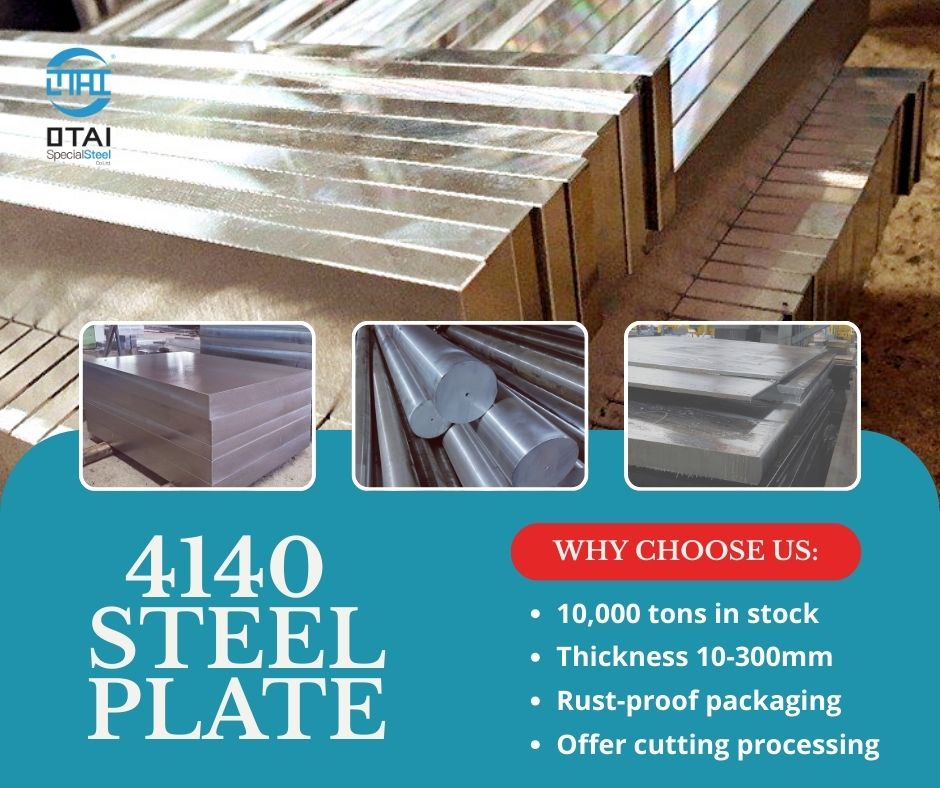
4140 Steel Tube Sizes: Complete Guide for Buyers

4140 Steel Tube Sizes: Complete Guide for BuyersWhen it comes to 4140 steel tube sizes, buyers often face challenges in choosing the right dimensions for their projects. Whether you’re designing high-performance machinery, oil & gas equipment, or automotive parts, knowing the standard sizes, tolerances, and applications of 4140 tubes is essential. This guide breaks down everything you need to know about 4140 steel tubes—from common dimensions to technical considerations—so you can make an informed decision.

🌟 Why 4140 Steel Tubes?

4140 steel is a chromium-molybdenum alloy steel known for its:

  • High tensile strength

  • Excellent toughness

  • Good fatigue resistance

  • Heat treatability

When manufactured into tubes, 4140 steel combines strength and formability, making it ideal for applications such as hydraulic cylinders, drive shafts, drill collars, and mechanical tubing.


📏 Standard 4140 Steel Tube Sizes

4140 tubes are available in a wide variety of outside diameters (OD), wall thicknesses, and lengths. Below is a reference table of common 4140 steel tube sizes available in the market:

Outside Diameter (OD) Wall Thickness Typical Lengths Notes
25.4 mm (1″) 3 mm 3–6 meters Common for small machinery parts
50.8 mm (2″) 5 mm 3–6 meters Widely used in automotive shafts
76.2 mm (3″) 6–8 mm 3–6 meters Ideal for hydraulic cylinders
101.6 mm (4″) 8–12 mm 6 meters Heavy-duty machinery
152.4 mm (6″) 12–16 mm 6–9 meters Oil & gas applications
203.2 mm (8″) 20+ mm 9 meters Large-scale structural projects

👉 Custom 4140 steel tube sizes can also be produced depending on specific project requirements.


⚙️ Manufacturing and Tolerances

4140 steel tubes are typically manufactured through seamless hot-rolled or cold-drawn processes.

  • Seamless tubes: Stronger, preferred for high-pressure environments.

  • Cold-drawn tubes: Provide tighter dimensional tolerances and smoother surface finishes.

Tolerances often follow standards such as ASTM A519 or DIN EN 10294, ensuring consistent performance in demanding applications.


🔥 Heat Treatment Options for 4140 Steel Tubes

One of the reasons 4140 tubes are popular is their heat treatability. Depending on customer requirements, tubes can be supplied in:

  • Annealed condition – Easier machining and forming

  • Normalized – Balanced strength and ductility

  • Quenched & tempered – High hardness (28–60 HRC) and toughness for wear resistance

The selected 4140 steel tube sizes and heat treatment condition together determine mechanical properties and end-use suitability.


🛠️ Applications of 4140 Steel Tubes

Because of their strength and versatility, 4140 tubes are widely used in:

  • Automotive: drive shafts, axles, gear components

  • Oil & Gas: drill collars, casing, downhole tools

  • Heavy Machinery: hydraulic cylinders, crane booms

  • Aerospace: landing gear components

  • Industrial Equipment: conveyor rollers, spindles

Each application requires careful consideration of tube sizes and wall thickness to ensure performance and durability.


🏆 Company Advantages – Why Buy 4140 Steel Tubes from Otai Special Steel?

At Otai Special Steel, we offer one-stop solutions for 4140 steel tube sizes and processing:

  • 📦 Extensive inventory – OD from 25mm to 500mm, wall thickness from 3mm to 100mm.

  • 🔍 Quality assurance – Ultrasonic testing (UT), chemical composition checks, and SGS/third-party inspections.

  • ⚙️ Custom services – Cutting, heat treatment, CNC machining, and tailored tube sizes.

  • 🌍 Trusted worldwide – Long-term supplier for top clients in oil & gas, automotive, and aerospace.

  • 🚀 Fast global delivery – Ensuring your production schedules stay on track.


❓ FAQ: 4140 Steel Tube Sizes

Q1: What are the standard 4140 steel tube sizes?
Common ODs range from 25mm to 500mm, with wall thickness from 3mm to 100mm.

Q2: Can 4140 tubes be customized?
Yes. We supply tailor-made sizes based on customer drawings and specifications.

Q3: Which is better—seamless or welded 4140 tubes?
Seamless tubes are stronger and preferred for high-pressure or fatigue applications.

Q4: Do tube sizes affect heat treatment?
Yes. Larger wall thicknesses require more controlled heat treatment for uniform hardness.

Q5: Where can I buy reliable 4140 steel tube sizes?
Otai Special Steel supplies both standard and custom dimensions with global delivery.


👉 In conclusion, understanding 4140 steel tube sizes is critical for choosing the right material in demanding engineering projects. With the right supplier, you get not only the correct dimensions but also guaranteed quality and technical support.

0 0 Continue Reading →

Can You Bend 4140 Steel?

Can You Bend 4140 Steel?Can You Bend 4140 Steel?
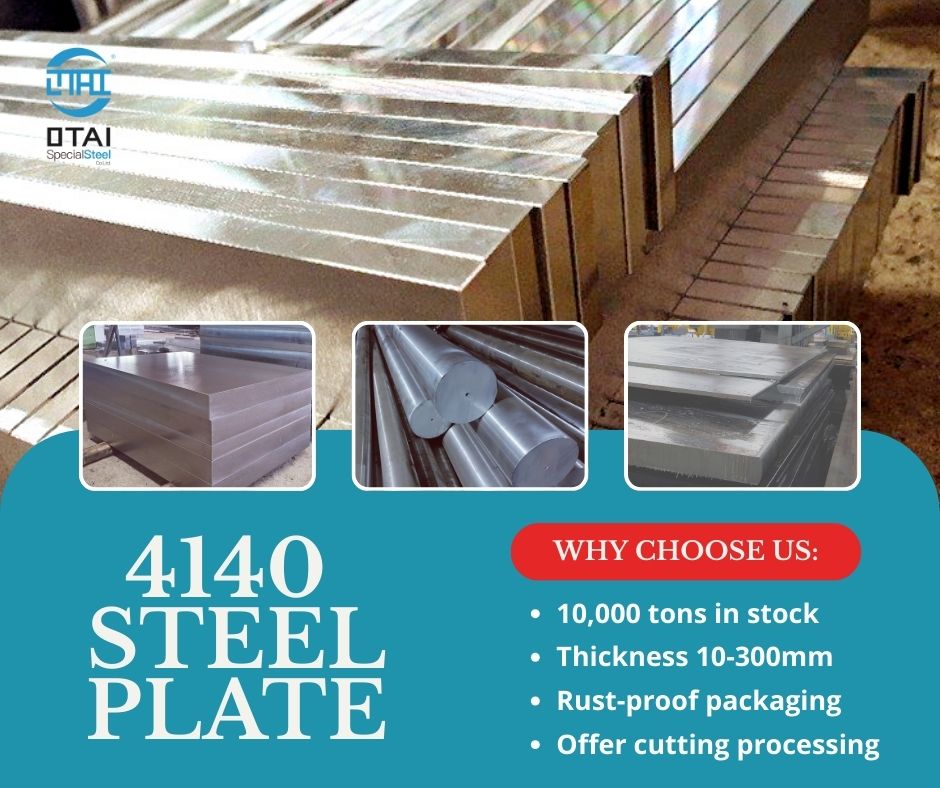
When working with 4140 steel, one of the most common questions engineers, fabricators, and buyers ask is: “Can you bend 4140 steel?” The short answer is yes—but the full story is more nuanced. Because of its unique balance of toughness, hardness, and tensile strength, bending this alloy requires the right knowledge, preparation, and processing techniques. Let’s dive into what makes bending 4140 steel possible, what challenges you might face, and how to handle the process effectively.


🌟 What Makes 4140 Steel Special?

4140 steel is a chromium-molybdenum low-alloy steel widely used in automotive, aerospace, oil & gas, and toolmaking industries. Its composition provides excellent strength, toughness, and wear resistance while still maintaining good machinability.

  • Carbon content: 0.38–0.43%

  • Chromium content: 0.8–1.1%

  • Molybdenum content: 0.15–0.25%

  • Typical tensile strength: ~655–850 MPa (in normalized condition)

  • Common hardness range (quenched & tempered): 28–60 HRC

These characteristics make 4140 suitable for shafts, gears, crankshafts, spindles, and bolts, but they also influence how it reacts when bending.


🔧 Can You Bend 4140 Steel?

Yes, you can bend 4140 steel, but the difficulty depends on three key factors:

  1. Heat treatment condition – 4140 in the annealed state is more ductile and easier to bend. Once it has been quenched and tempered, the hardness increases, making bending more challenging.

  2. Thickness of the plate or bar – Thicker sections require more force and risk cracking if not preheated properly.

  3. Bending radius – A tighter bend radius increases stress concentration, which can cause fractures.

👉 In simple terms: bending annealed 4140 is relatively straightforward, while bending hardened 4140 requires preheating or post-forming stress relief to avoid cracks.


🔥 The Role of Heat in Bending 4140 Steel

Heat treatment dramatically impacts the steel’s bending performance.

Condition Bendability Notes
Annealed Easy Best condition for bending—soft and ductile.
Normalized Moderate Can be bent but requires more force.
Quenched & Tempered Difficult Risk of cracking; preheating recommended.
Fully Hardened (50+ HRC) Very Poor Not recommended; likely to crack.

Preheating 4140 steel to around 400–600°F (200–315°C) before bending reduces cracking risk. After bending, stress relief heat treatment is often advised.


⚙️ Practical Tips for Bending 4140 Steel

  1. Choose the right condition – Always bend in the annealed or normalized state when possible.

  2. Use proper equipment – Hydraulic presses are preferred over manual bending for precise control.

  3. Preheat thicker sections – Especially for plates and bars above 25mm.

  4. Maintain proper bend radius – As a rule of thumb, use a radius at least 3× the material thickness.

  5. Stress relieve if necessary – Heat treating after bending restores toughness and reduces brittleness.


📌 Applications Requiring Bending of 4140

Bending is often necessary in applications such as:

  • Automotive suspension parts

  • Oil & gas drilling components

  • Heavy machinery brackets

  • Tool holders and fixtures

  • Custom shafts and spindles

By combining bending with machining and heat treatment, manufacturers can achieve durable and customized shapes for high-performance uses.


🏆 Company Advantages – Why Choose Otai Special Steel?

At Otai Special Steel, we are not only stockholders of a large range of 4140 steel plates and bars, but also provide value-added processing services, including cutting, pre-machining, heat treatment, and bending guidance.

  • 📦 Large inventory – Over 10,000 tons in stock, thickness from 6mm to 300mm.

  • 🔍 Strict quality control – UT testing, chemical analysis, and third-party inspection available.

  • 🌍 Global clients – Trusted by top companies in aerospace, oil & gas, and engineering industries.

  • ⚙️ Custom processing – Heat treatment, CNC machining, and bending support upon request.

  • 🚀 Fast delivery worldwide – Ensuring your projects stay on schedule.


❓ FAQ: Can You Bend 4140 Steel?

Q1: Can hardened 4140 be bent?
Yes, but it is very risky without preheating. Annealed or normalized 4140 is much easier to bend.

Q2: What is the best condition to bend 4140 steel?
The annealed condition—it provides maximum ductility.

Q3: Does bending affect 4140’s strength?
Yes. Bending can introduce stress. Stress relief or post-forming heat treatment restores balance.

Q4: What’s the minimum bend radius for 4140 steel?
Generally 3× thickness, but this varies with hardness and thickness.

Q5: Where can I buy bendable 4140 steel?
Otai Special Steel supplies 4140 in annealed, normalized, and quenched & tempered conditions, customized to your needs.


👉 So, can you bend 4140 steel? Absolutely—but success depends on choosing the right condition and following proper techniques.

0 0 Continue Reading →

Is 4140 Alloy Steel Magnetic?

Is 4140 Alloy Steel Magnetic?Is 4140 Alloy Steel Magnetic?
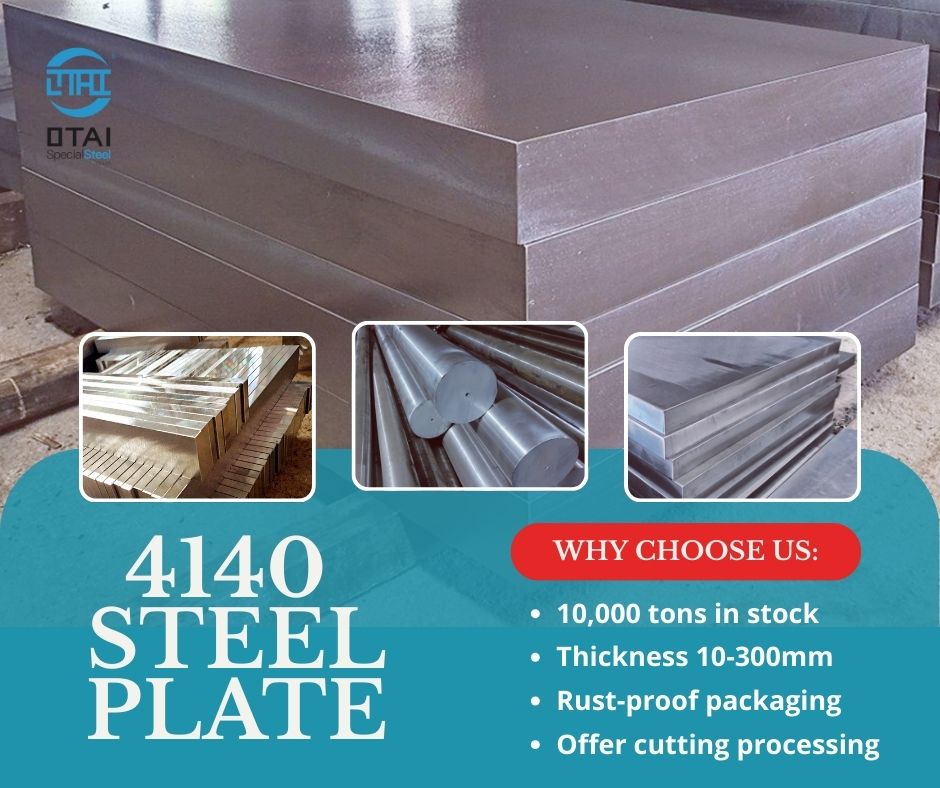
When engineers and buyers search for materials with high strength and reliability, 4140 alloy steel is often at the top of the list. But one common question is: is 4140 alloy steel magnetic? The answer matters because magnetic behavior influences how a material can be used in industries like automotive, oil & gas, tool manufacturing, and even in applications where magnetic interference needs to be avoided.

In this detailed guide, we’ll break down the magnetic properties of 4140 steel, how its composition and heat treatment affect magnetism, and what industries should know before choosing it.


✨ What Makes Steel Magnetic?

Before we answer is 4140 alloy steel magnetic, let’s look at why steel can or cannot be magnetic. The magnetism of steel is determined by:

  1. Iron Content – The higher the iron content, the stronger the material’s ability to be attracted to magnets.

  2. Crystal Structure – Steels with a body-centered cubic (BCC) structure (like ferrite) are magnetic, while those with a face-centered cubic (FCC) structure (like austenite) are not.

  3. Heat Treatment – Different thermal processes can change the steel’s microstructure, affecting whether it remains magnetic.


🔎 So, Is 4140 Alloy Steel Magnetic?

Yes, 4140 alloy steel is magnetic in most of its common conditions, such as annealed, quenched, or tempered states.

That’s because 4140 is a chromium-molybdenum alloy steel with a high percentage of iron, which dominates its behavior. Its microstructure is typically ferritic-pearlitic or martensitic after heat treatment, both of which are ferromagnetic.

However, its magnetic strength can vary depending on how the steel is processed.


⚙️ How Composition Affects Magnetism

The chemical makeup of 4140 alloy steel plays a major role in answering the question: is 4140 alloy steel magnetic?

Element Typical % in 4140 Role in Magnetism
Iron (Fe) ~97% Main source of magnetism
Carbon (C) 0.38–0.43% Strengthens structure but does not remove magnetism
Chromium (Cr) 0.8–1.1% Adds corrosion resistance, minor effect on magnetism
Molybdenum (Mo) 0.15–0.25% Increases toughness, negligible impact on magnetism
Manganese (Mn) 0.75–1.0% Improves hardenability, slight effect on magnetism

Since iron remains the dominant element, 4140 retains its ferromagnetic behavior even with alloying additions.


🔥 Effect of Heat Treatment on Magnetism

One interesting aspect is how thermal treatment alters the answer to is 4140 alloy steel magnetic:

  • Annealed Condition – Mostly ferritic-pearlitic, magnetic.

  • Normalized Condition – Fine-grain pearlite and ferrite, still magnetic.

  • Quenched & Tempered – Martensitic structure, magnetic, but hardness increases.

  • Austenitized (during heating) – At high temperatures, steel enters an austenitic phase (FCC), which is non-magnetic. But as soon as it cools back to ferrite/martensite, magnetism returns.

So, the only time 4140 steel temporarily loses magnetism is during austenitizing at high temperatures.


🛠️ Applications Where Magnetism Matters

Now that we know 4140 alloy steel is magnetic, let’s see why this property is important in real-world uses:

  • Gears & Shafts – Magnetic testing methods (like magnetic particle inspection) can detect cracks and defects.

  • Oilfield Tools – Some drilling tools require non-magnetic alloys, so knowing 4140’s behavior helps in selection.

  • Machine Components – Magnetic lifting and clamping equipment works with 4140 parts.

  • Knives & Axes – While strength is key, magnetism helps in automated handling during production.

However, if an application requires non-magnetic materials (like in MRI machines or sensitive electronic environments), 4140 steel would not be suitable.


📊 Comparison with Other Steels

To better understand is 4140 alloy steel magnetic, let’s compare it with a few other common steels:

Steel Grade Magnetism Notes
4140 Alloy Steel Magnetic Strong ferromagnetic behavior in most states
AISI 304 Stainless Non-magnetic Austenitic structure
316 Stainless Non-magnetic Preferred for MRI & chemical uses
1018 Carbon Steel Magnetic Similar to 4140, but with lower strength

This comparison shows why 4140 is magnetic like most carbon and alloy steels, but unlike common stainless steels.


✅ Key Takeaways

  • Is 4140 alloy steel magnetic? → Yes, in almost all practical conditions.

  • Heat treatment changes the degree of magnetism but does not eliminate it permanently.

  • The high iron content ensures strong magnetic response.

  • Applications requiring non-magnetic steel should look at alternatives like austenitic stainless steels.


🌟 Company Advantages – Why Choose Otai Special Steel?

At Otai Special Steel, we are proud to be a trusted global supplier of 4140 alloy steel in plates, bars, and custom-cut formats.

  • 📦 Large Inventory – Over 10,000 tons in stock with sizes from 6mm to 300mm.

  • ⚙️ Processing Services – Precision cutting, heat treatment, and machining available.

  • 🧪 Quality Assurance – UT testing, chemical analysis, and third-party inspection (SGS, etc.).

  • 🌍 Global Clients – Supplying leading companies like Thyssenkrupp, Schlumberger, and Borealis.

  • 💰 Competitive Pricing – Stable supply chain and cost-effective solutions for trade companies and end-users.

If you’re sourcing 4140 steel distributors, we are here to support your projects with reliability and expertise.


❓ FAQ

Q1: Is 4140 alloy steel always magnetic?
Yes, except when heated above critical temperatures into the austenitic range, where it becomes temporarily non-magnetic.

Q2: Can magnetism be used to test defects in 4140 steel?
Absolutely. Magnetic particle inspection (MPI) is commonly used to check for cracks and flaws in 4140 components.

Q3: How does magnetism affect machining of 4140 steel?
It doesn’t impact machining directly, but magnetic clamping systems can be used efficiently.

Q4: Is 4140 suitable for non-magnetic applications?
No, industries needing non-magnetic materials (like medical or electronic equipment) should use austenitic stainless steels instead.

Q5: Does quenching or tempering remove magnetism?
No, quenching and tempering change hardness and toughness but keep 4140 magnetic.

0 0 Continue Reading →

4140 Plate Suppliers: How to Choose the Right Partner

4140 Plate Suppliers: How to Choose the Right PartnerWhen it comes to sourcing alloy steel plates for demanding applications, one question buyers often ask is: Where can I find reliable 4140 plate suppliers? With so many options in the global steel market, it’s important to understand what makes one supplier stand out from another. In this article, we’ll explore the role of suppliers, what to look for when purchasing 4140 plates, and why choosing the right partner can save both cost and risk.
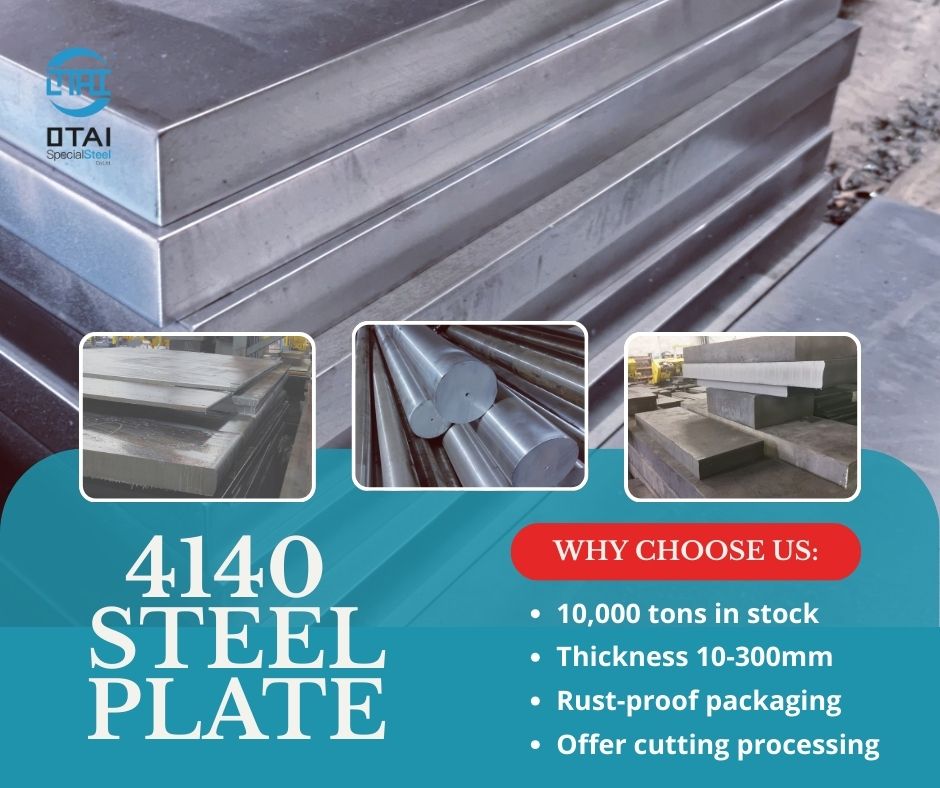

📖 What Is 4140 Steel Plate?

4140 steel is a chromium-molybdenum alloy steel widely used for parts requiring a combination of strength, hardness, and toughness. In plate form, it’s commonly applied in:

  • Heavy machinery components

  • Tooling and molds

  • Structural parts for oil & gas equipment

  • Industrial gears and shafts

Because 4140 plates are often used in high-stress environments, quality consistency and heat treatment conditions are critical factors to consider when working with 4140 plate suppliers.


🛠️ Typical Chemical Composition of 4140 Plate

Element Content (%)
Carbon 0.38 – 0.43
Chromium 0.8 – 1.1
Molybdenum 0.15 – 0.25
Manganese 0.75 – 1.0
Silicon 0.15 – 0.35

This balanced composition makes 4140 steel highly versatile. The chromium provides wear resistance, the molybdenum enhances toughness, and the carbon content allows for excellent heat treatability.


🔍 Key Qualities Buyers Should Expect from 4140 Plate Suppliers

When evaluating potential 4140 plate suppliers, here are some factors that matter most:

  1. Product Availability

    • A strong supplier should carry 4140 alloy steel plates in multiple sizes, typically ranging from 6mm up to 300mm thickness.

    • Reliable stock ensures faster lead times for urgent projects.

  2. Heat Treatment Options

    • Buyers often require plates in specific conditions: annealed, normalized, or quenched & tempered.

    • Good 4140 steel plate suppliers offer multiple supply conditions tailored to end-use applications.

  3. Quality Assurance

    • Ultrasonic Testing (UT), chemical analysis, and mechanical property testing are essential for ensuring reliability.

    • Some industries also require third-party inspection (SGS, TUV, BV).

  4. Processing Services

    • Many customers look for cut-to-size 4140 plates, surface grinding, and customized packaging.

    • Suppliers with in-house processing reduce extra costs and lead time.

  5. Global Supply Capability

    • A strong supplier should be experienced in exporting 4140 steel plates internationally, with stable shipping solutions and competitive pricing.


⚖️ Comparing Different 4140 Plate Suppliers

Criteria Weak Supplier Reliable Supplier
Stock Range Limited availability Wide range, 6–300mm
Heat Treatment Only annealed Annealed, normalized, Q&T
Quality Control No UT or inspection UT + chemical + SGS
Processing Services None Cutting, grinding, packaging
Delivery Uncertain Stable & fast export logistics

This comparison highlights why choosing professional 4140 plate suppliers makes a big difference in cost efficiency and product performance.


🏗️ Applications of 4140 Plates from Trusted Suppliers

Reliable 4140 plate suppliers provide materials used in:

  • Oil & gas equipment (drill collars, tool joints)

  • Automotive industry (axles, crankshafts, chassis parts)

  • Aerospace sector (landing gear, fasteners)

  • Heavy machinery (press plates, gear components)

  • Molds & tooling (plastic injection molds, die plates)

For each of these, the plate thickness and heat treatment condition can be customized depending on supplier capability.


🌍 Why Choosing the Right 4140 Plate Supplier Matters

Poor-quality plates may lead to:

  • Cracking under stress

  • Shorter service life

  • High machining costs

  • Delays in project timelines

By contrast, trusted 4140 plate suppliers ensure consistency in mechanical properties, hardness range, and toughness, giving end users confidence in high-stress applications.


💡 Key Takeaway

If you’re in the market for 4140 steel plates, don’t just look at price. Evaluate 4140 plate suppliers based on inventory, processing services, testing capabilities, and global supply record. The right supplier will help you reduce risks, save costs, and keep your projects on schedule.


🌟 Company Advantages – Why Otai Special Steel?

At Otai Special Steel, we are one of the leading 4140 plate suppliers with:

  • 10,000+ tons of stock year-round.

  • Plate thickness from 6mm to 300mm.

  • Heat treatment options: annealed, normalized, quenched & tempered.

  • In-house cutting, grinding, and custom packaging services.

  • Strict quality control with UT, chemical testing, and SGS reports.

  • Over 20 years of export experience serving top global companies.


❓ FAQ

1. Do all 4140 plate suppliers offer heat treated plates?
No, some only stock annealed plates. Professional suppliers provide multiple heat treatment conditions.

2. What is the standard hardness of quenched & tempered 4140 plate?
Typically 28–32 HRC, but it can be adjusted depending on tempering temperature.

3. Can suppliers provide custom cut sizes?
Yes, reliable 4140 plate suppliers offer cut-to-size services to save machining costs for buyers.

4. What certifications should I check before buying?
Look for UT test reports, mill certificates, and optional third-party inspection like SGS or TUV.

5. Why choose 4140 steel plate over mild steel plate?
Because 4140 offers higher strength, wear resistance, and toughness, making it ideal for high-stress applications.

0 0 Continue Reading →

Is 4140 Steel Heat Treated?

Is 4140 Steel Heat Treated?When engineers and buyers consider 4140 steel, one of the most common questions is: is 4140 steel heat treated? The answer is yes—4140 is a heat-treatable alloy steel, and its performance depends heavily on the heat treatment process applied. In this guide, we’ll explain why heat treatment matters, how it changes the properties of 4140, and what options you have when sourcing this material.

🔍 What Makes 4140 Steel Special?

4140 steel is a chromium-molybdenum alloy steel widely used for shafts, gears, and other high-stress components. Its base properties are good, but it is the heat treatment of 4140 steel that unlocks its full potential.

Typical Chemical Composition of 4140 Steel

Element Content (%)
Carbon 0.38 – 0.43
Chromium 0.8 – 1.1
Molybdenum 0.15 – 0.25
Manganese 0.75 – 1.0
Silicon 0.15 – 0.35

The presence of chromium and molybdenum makes the steel highly responsive to heat treatment, improving its balance of hardness, toughness, and wear resistance.


🔥 Is 4140 Steel Heat Treated in Its Supply State?

When you buy 4140 steel, it can be supplied in different heat-treated conditions:

Condition Description Typical Hardness Application
Annealed Softened by slow cooling ~197 HB Machining and forming
Normalized Air-cooled for uniform grain ~217 HB General structural uses
Quenched & Tempered Heated, quenched, then tempered 28–60 HRC Gears, shafts, dies
Pre-hardened (Q&T) Supplied ready-to-use 28–32 HRC Tooling, molds

So the short answer is: 4140 steel can be heat treated to various hardness levels depending on your needs.


⚙️ Heat Treatment Processes for 4140 Steel

1. Annealing

Annealing softens the steel for easier machining. The process involves heating to ~850°C, holding, then furnace cooling. This reduces hardness and improves ductility.

2. Normalizing

Normalizing improves toughness and refines grain size. Steel is heated to 870–900°C and cooled in air.

3. Quenching & Tempering (Q&T)

This is the most common method when buyers ask: “is 4140 steel heat treated?”

  • Quenching: heated to ~850°C and cooled rapidly in oil or water.

  • Tempering: reheated to 200–600°C to balance hardness and toughness.

👉 This produces quenched and tempered 4140 steel, with hardness ranging from 28 HRC (tough applications) up to 55+ HRC (high wear resistance).

4. Induction Hardening

For parts like gears or shafts, only the surface may need hardness. Induction hardened 4140 steel achieves a hard outer layer (55–60 HRC) with a tough core.


🏗️ Applications of Heat Treated 4140 Steel

The reason 4140 steel is heat treated is to make it suitable for demanding industrial use. Some key applications include:

  • Automotive parts: axles, crankshafts, connecting rods

  • Oil & gas: drill collars, tool joints

  • Industrial tooling: molds, dies, jigs

  • Heavy machinery: gears, sprockets, shafts

  • Aerospace components: landing gear, fasteners

Each application uses a specific heat treatment for 4140 steel to achieve the right balance of toughness and strength.


📊 Comparison: Heat Treated vs Non-Heat Treated 4140

Property Annealed 4140 Quenched & Tempered 4140
Hardness (HRC) ~20–22 28–60 (adjustable)
Tensile Strength (MPa) ~655 850–1080
Wear Resistance Low High
Toughness Moderate Adjustable (by tempering)

This shows why heat treated 4140 steel is the preferred choice in high-stress industries.


💡 Key Takeaway

So, is 4140 steel heat treated? Absolutely—its performance relies on heat treatment. Whether you need machinability, wear resistance, or toughness, the right heat treatment process tailors 4140 steel for your project.

If you are a buyer, it’s essential to specify the heat treatment condition when ordering, otherwise you might receive annealed material not ready for direct use.


🌍 Company Advantages – Why Choose Otai Special Steel?

At Otai Special Steel, we specialize in supplying 4140 steel in all heat treatment conditions, including annealed, quenched & tempered, and induction hardened. Our advantages include:

  • Over 10,000 tons of 4140 steel in stock.

  • Thickness range from 6mm to 300mm.

  • Cut-to-size, heat treatment, and surface finishing services.

  • Strict quality control with UT and SGS testing.

  • Long-term supply to top companies worldwide.


❓ FAQ

1. Is 4140 steel always heat treated before delivery?
Not always. It can be supplied annealed, normalized, or quenched & tempered depending on customer needs.

2. What hardness can 4140 steel reach after heat treatment?
It can reach up to 55–60 HRC with quenching and tempering or induction hardening.

3. Can I machine 4140 steel after heat treatment?
Yes, but it becomes more difficult as hardness increases. Pre-hardened 4140 (28–32 HRC) is machinable.

4. What industries use heat treated 4140 steel the most?
Automotive, oil & gas, aerospace, and heavy machinery industries rely on it.

5. Why choose heat treated 4140 instead of carbon steels?
Because it offers a much better strength-to-toughness ratio, making it suitable for high-performance parts.

0 0 Continue Reading →

4140 Steel Composition: A Complete Guide for Engineers and Buyers

4140 Steel Composition: A Complete Guide for Engineers and Buyers4140 Steel Composition: A Complete Guide for Engineers and Buyers
When engineers search for 4140 steel composition, they want to understand the precise chemical makeup that gives this alloy steel its outstanding strength, toughness, and versatility. As one of the most popular chromium-molybdenum steels, 4140 is widely used in automotive, oil & gas, aerospace, and heavy machinery.

In this guide, we’ll break down everything you need to know about the chemical composition of AISI 4140, compare it with international equivalents, and explain why its balanced chemistry makes it a go-to choice for high-stress components.


🧪 What is the 4140 Steel Composition?

The core strength of 4140 lies in its chemical balance. It’s a chromium-molybdenum low alloy steel with carbon content carefully controlled to optimize toughness and hardenability.

Element Percentage (%) Role in Properties
Carbon (C) 0.38 – 0.43 Increases hardness & strength
Manganese (Mn) 0.75 – 1.00 Improves toughness & wear resistance
Chromium (Cr) 0.80 – 1.10 Enhances hardenability & corrosion resistance
Molybdenum (Mo) 0.15 – 0.25 Provides high-temperature strength & creep resistance
Silicon (Si) 0.20 – 0.35 Improves strength & shock resistance
Phosphorus (P) ≤ 0.035 Kept low to prevent brittleness
Sulfur (S) ≤ 0.040 Controlled for machinability

This balance explains why 4140 steel chemical composition is suitable for parts that demand both high fatigue strength and shock resistance.


🔩 Mechanical Properties Linked to 4140 Steel Composition

The chemistry of 4140 directly affects its performance after different heat treatments.

Property Annealed Condition Quenched & Tempered
Tensile Strength 655 MPa 850 – 1080 MPa
Yield Strength 415 MPa 600 – 930 MPa
Hardness 197 HB 28 – 32 HRC
Elongation 20 – 25% 12 – 16%
Impact Toughness High Moderate to high

Thanks to its carbon and chromium content, 4140 achieves excellent hardness without losing ductility, making it ideal for heavy-duty shafts, gears, and high-strength fasteners.


🌍 International Standards and Equivalents

Since steel is traded globally, knowing the equivalents of 4140 steel composition in different standards is crucial.

Standard Equivalent Grade Notes
AISI / SAE (USA) 4140 Base grade
DIN (Germany) 42CrMo4 Widely used in Europe
EN (Europe) EN 1.7225 European norm
JIS (Japan) SCM440 Automotive industry standard
GB (China) 42CrMo Chinese equivalent
BS (UK) 708M40 British designation

This makes sourcing easier, as 42CrMo4 composition and SCM440 composition are nearly identical to AISI 4140.


⚙️ How the Composition Influences Applications

The 4140 alloy steel composition allows it to perform in highly stressed conditions where other steels might fail. Some examples include:

  • 🚗 Automotive Industry – crankshafts, connecting rods, and gears require high fatigue resistance.

  • Oil & Gas Equipment – drill collars, tool joints, and downhole components need high toughness and wear resistance.

  • 🛫 Aerospace Components – landing gear and structural parts rely on strength-to-weight ratio.

  • 🏗️ Construction & Machinery – shafts, spindles, and high-strength bolts benefit from the alloy’s hardenability.

  • 🔧 Tooling Applications – dies, fixtures, and molds where surface hardness is critical.

The chromium and molybdenum in the 4140 steel chemical composition ensure excellent wear resistance and high-temperature stability.


🔍 Heat Treatment Behavior of 4140 Steel

One major advantage of 4140 is its responsiveness to heat treatment, thanks to its balanced chemical composition:

  1. Annealing – Improves machinability, hardness reduced to ~197 HB.

  2. Normalizing – Refines grain structure, enhances toughness.

  3. Quenching & Tempering – Achieves 28–32 HRC hardness with strong fatigue resistance.

  4. Nitriding – Surface hardness up to 600–650 HV while maintaining core toughness.

Because of this, many industries select AISI 4140 composition for parts that need both core toughness and a wear-resistant surface.


🏆 Company Advantages – Why Choose Otai Special Steel

  • Large Stock Availability: Over 10,000 tons of alloy steel plates and bars in stock, including all 4140 steel equivalents.

  • Value-Added Services: Precision cutting, heat treatment, and custom machining to save time and cost.

  • Strict Quality Assurance: UT testing, chemical analysis, and third-party inspections (SGS, TUV).

  • Trusted by Global Leaders: Long-term supplier for companies like Thyssenkrupp and Schlumberger.

  • Competitive Pricing: Stable supply with cost-effective solutions for buyers worldwide.


❓ FAQ

Q1: What elements make 4140 steel special compared to carbon steel?
The addition of chromium and molybdenum gives 4140 higher hardenability, toughness, and wear resistance.

Q2: Is 42CrMo4 composition identical to 4140 steel?
Yes, 42CrMo4 chemical composition is nearly identical, making it a true equivalent.

Q3: Does 4140 steel weld well?
Yes, but preheating and post-weld heat treatment are recommended to avoid cracking due to its carbon content.

Q4: Can 4140 be surface hardened?
Yes, nitriding or induction hardening can improve surface hardness while maintaining core strength.

Q5: What industries use 4140 steel the most?
Automotive, oil & gas, aerospace, and heavy machinery are the largest consumers.

0 0 Continue Reading →

4140 Steel Equivalent: Global Grades Comparison and Guide

4140 Steel Equivalent: Global Grades Comparison and Guide4140 Steel Equivalent: Global Grades Comparison and Guide
When engineers, buyers, or suppliers talk about 4140 steel equivalent, they are usually searching for comparable grades across different international standards. Since global supply chains often involve sourcing steel from multiple countries, knowing the right equivalent grade ensures that material performance remains consistent regardless of origin.

This article will give you a complete guide to 4140 steel equivalent material, covering its mechanical and chemical properties, common equivalents in ASTM, DIN, JIS, EN, and Chinese standards, and practical advice for selecting the right grade.


🌍 Why Understanding 4140 Steel Equivalents Matters

4140 alloy steel is widely used for shafts, gears, bolts, and high-strength components. However, buyers outside the United States may not always purchase steel under the “AISI 4140” designation. Instead, they need to recognize equivalents such as 42CrMo4 (DIN/EN) or SCM440 (JIS) to ensure they are sourcing the correct steel.

Failure to match the right equivalent can result in performance issues such as poor hardenability, reduced fatigue strength, or even mechanical failure in critical applications.


📐 Chemical Composition of 4140 Steel

The chemical makeup is the foundation of identifying equivalents. Below is the typical composition of AISI 4140 steel equivalent grades:

Element Percentage (%)
Carbon (C) 0.38 – 0.43
Manganese (Mn) 0.75 – 1.00
Chromium (Cr) 0.80 – 1.10
Molybdenum (Mo) 0.15 – 0.25
Silicon (Si) 0.20 – 0.35
Phosphorus (P) ≤ 0.035
Sulfur (S) ≤ 0.040

The balance of carbon, chromium, and molybdenum gives 4140 its strength, toughness, and heat-treatment response. When comparing 4140 steel equivalent grades, these chemical ranges must closely align.


🔧 Mechanical Properties of AISI 4140 Steel

The mechanical profile of 4140 is what makes it so versatile.

Property Typical Value
Tensile Strength 655 MPa (as rolled) – up to 1080 MPa (heat treated)
Yield Strength 415 MPa – 930 MPa (depending on heat treatment)
Hardness 197 HB (annealed) – 28–32 HRC (quenched and tempered)
Elongation 20–25%
Impact Toughness High, even at low temperatures

Equivalent grades must deliver nearly the same performance in tensile strength, yield strength, and hardness.


🌐 Global 4140 Steel Equivalent Grades

Here is a reference table of 4140 steel equivalents in various international standards:

Standard Grade (Equivalent) Notes
AISI / SAE (USA) 4140 Original designation
ASTM ASTM A29 4140 Common ASTM reference
DIN (Germany) 42CrMo4 Widely used in Europe
EN (Europe) EN 1.7225 Equivalent to 42CrMo4
JIS (Japan) SCM440 Used in automotive and tool steel
GB (China) 42CrMo Chinese equivalent
IS (India) 40CrMo Indian equivalent of 4140
BS (UK) 708M40 British standard

This chart is a quick way to identify 4140 steel DIN equivalent, 4140 steel JIS equivalent, or 4140 steel Chinese equivalent depending on your sourcing region.


🛠️ Applications Across Equivalent Grades

All equivalents of 4140 serve similar industries, though slight differences may exist in heat treatment response or machinability. Some common applications include:

  • Automotive: gears, crankshafts, connecting rods

  • Oil & Gas: drill collars, tool joints, and downhole equipment

  • Aerospace: landing gear components

  • Construction: high-strength bolts and fasteners

  • Industrial: heavy-duty shafts, spindles, and machinery parts

Whether you buy 4140 steel Indian equivalent or the European 42CrMo4, the applications remain nearly identical.


💡 Key Considerations When Choosing an Equivalent

  1. Chemical Composition Alignment – Verify that the equivalent matches the chromium and molybdenum ranges to ensure similar hardenability.

  2. Mechanical Property Comparison – Look at tensile strength, yield strength, and hardness values after heat treatment.

  3. Regional Standards – Ensure that your client or supplier accepts the equivalent grade under their national standard.

  4. Heat Treatment Compatibility – Different equivalents may respond slightly differently to quenching and tempering cycles.

  5. Machinability & Weldability – While most equivalents behave similarly, machining parameters may vary slightly.


🏆 Company Advantages – Why Choose Otai Special Steel

  • Extensive Inventory: Over 10,000 tons of alloy steels, including all major 4140 steel equivalent material grades.

  • Value-Added Services: Custom cutting, heat treatment, and machining to meet your project requirements.

  • Strict Quality Control: UT (Ultrasonic Testing), chemical composition analysis, and third-party inspections such as SGS.

  • Global Supply Network: Trusted by international giants like Thyssenkrupp, Borealis, and Schlumberger.

  • Cost-Effective Pricing: Stable supply with competitive rates to reduce your sourcing risks.


❓ FAQ

Q1: Is 42CrMo4 exactly the same as AISI 4140?
Not exactly, but they are considered equivalents. Minor differences in composition exist, but properties are nearly identical.

Q2: Which is the most commonly used 4140 steel equivalent in Europe?
The European standard 42CrMo4 (EN 1.7225) is the most recognized equivalent.

Q3: Does 4140 steel Chinese equivalent perform the same as AISI 4140?
Yes, GB 42CrMo offers nearly identical performance when produced by reliable mills.

Q4: Can I use SCM440 instead of 4140 in automotive components?
Yes, SCM440 (JIS standard) is widely used in Japan for automotive parts and is interchangeable with 4140.

Q5: How do I confirm if my supplier is providing the right equivalent grade?
Request a Mill Test Certificate (MTC) that shows chemical composition and mechanical property compliance.

0 0 Continue Reading →

4140 Steel ASTM – Standards, Properties, and Applications

4140 Steel ASTM – Standards, Properties, and Applications4140 Steel ASTM – Standards, Properties, and Applications
When engineers, buyers, or manufacturers talk about 4140 steel ASTM, they are referring to one of the most reliable and widely used alloy steels in the industry. The ASTM (American Society for Testing and Materials) specifications provide precise guidelines for the chemical composition, mechanical properties, and heat treatment of this versatile steel.


📖 What Does ASTM 4140 Steel Mean?

The term refers to chromium-molybdenum alloy steel defined under ASTM standards such as ASTM A29, ASTM A322, or ASTM A331. These standards outline the production, composition, and performance expectations.

  • 4XXX series → Indicates molybdenum-chromium steels.

  • 41 → Grouped under Cr-Mo steels with good hardenability.

  • 40 → Approximate carbon content of 0.40%.

This classification ensures that material purchased under the ASTM 4140 specification will meet consistent quality benchmarks.


⚙️ Chemical Composition

Element Content (%)
Carbon (C) 0.38 – 0.43
Manganese (Mn) 0.75 – 1.00
Silicon (Si) 0.15 – 0.35
Chromium (Cr) 0.80 – 1.10
Molybdenum (Mo) 0.15 – 0.25
Sulfur & Phosphorus ≤ 0.035

👉 This composition gives the alloy its toughness, fatigue resistance, and ability to respond to heat treatment.


🔬 Mechanical Properties

After proper quenching and tempering, the steel achieves excellent strength and ductility.

Property Value (Typical)
Tensile Strength 655 – 1100 MPa
Yield Strength 415 – 655 MPa
Elongation 20 – 25%
Impact Toughness High
Hardness (as-quenched) 28 – 32 HRC
Hardness (surface hardened) Up to 55 HRC

These properties explain why ASTM 4140 alloy steel is widely used for shafts, gears, and high-stress components.


🔥 Heat Treatment

Heat treatment is critical for unlocking the full potential of this grade:

  1. Normalizing – Improves machinability and refines grain structure.

  2. Quenching – Typically in oil or water to increase hardness.

  3. Tempering – Provides the right balance between strength and toughness.

  4. Surface Hardening – Flame or induction hardening for wear resistance on critical surfaces.

Result: A durable material suitable for impact and fatigue applications.


🏗️ Applications

Because of its unique mix of toughness and strength, 4140 alloy steel to ASTM standards is widely used in industries that demand reliability under stress.

  • Automotive industry → Axles, crankshafts, connecting rods.

  • Oil & gas industry → Drill collars, downhole tools, pipe fittings.

  • Industrial machinery → Shafts, couplings, gears, bolts.

  • Aerospace → Landing gear parts, support components.

  • Tooling → Dies, molds, hammers.


📊 ASTM 4140 vs Other Standards

Many buyers often compare this steel with other international equivalents.

Standard Equivalent Grade Region
ASTM 4140 AISI 4140 USA
DIN 1.7225 42CrMo4 Germany
JIS SCM440 Japan Japan
GB 42CrMo China China

This cross-reference ensures engineers can source equivalent steel worldwide without losing quality.


🏭 Company Advantages – Why Choose OTAI

At OTAI Special Steel, we specialize in supplying alloy steels under ASTM 4140 specification with guaranteed consistency and quality.

  • ✅ Over 10,000 tons of inventory in stock for fast delivery.

  • ✅ Supply in various forms: round bar, flat bar, plate, and block.

  • ✅ Professional heat treatment services tailored to ASTM requirements.

  • ✅ Full testing support: ultrasonic testing, chemical composition verification, and SGS inspection.

We supply to industries worldwide, including automotive, oil & gas, and machinery manufacturers, ensuring reliable material sourcing.


❓ FAQ

Q1: What ASTM standard covers 4140 steel?
ASTM A29 and ASTM A322 are commonly used specifications.

Q2: Is it weldable?
Yes, but preheating and post-weld stress relief are recommended to avoid cracking.

Q3: How hard can it get?
Up to 55 HRC with surface hardening, while the core remains tough.

Q4: What is the difference between ASTM 4140 and DIN 42CrMo4?
They are equivalent in composition and properties, but follow different regional standards.

Q5: Where can I buy it?
Trusted suppliers like OTAI Special Steel provide certified alloy steels with full testing reports.


📌 Conclusion:
4140 steel ASTM is a versatile and globally recognized alloy steel, balancing strength, toughness, and cost-efficiency. Its standardization ensures consistent quality for critical applications across industries.

0 0 Continue Reading →

4140 Steel for Axe: The Ultimate Guide for Makers and Users

4140 Steel for Axe: The Ultimate Guide for Makers and Users4140 Steel for Axe: The Ultimate Guide for Makers and Users

When it comes to forging or buying an axe, one of the biggest decisions is the choice of steel. An axe needs to withstand repeated impact, maintain a sharp edge, and resist chipping even in tough conditions. Among the many steel grades available, 4140 steel for axe has gained popularity among blacksmiths, outdoorsmen, and tool manufacturers.

In this article, we’ll explore why 4140 is considered a strong candidate for axes, its strengths and limitations, how it compares to other steels, and practical advice for makers and users.


🪓 Why 4140 Steel Works for Axes

4140 is a chromium-molybdenum low alloy steel, well-known for its balance of toughness, strength, and hardenability. These traits make it suitable for impact tools like hammers, tomahawks, and axes.

Key reasons why axe makers use 4140 steel:

  • Toughness under impact – Reduces the chance of cracking or breaking when chopping hardwood.

  • Good edge stability – Holds a working edge reasonably well, though not as long as high-carbon tool steels.

  • Versatile heat treatment – Can be hardened for wear resistance while maintaining a ductile core.

  • Availability and cost – More economical and widely available than tool steels.


🔬 Mechanical Properties of 4140 Steel for Axe Heads

Property Typical Range
Carbon Content 0.38–0.43%
Hardness (after heat treatment) 28–32 HRC (core), up to 55 HRC (surface)
Yield Strength ~655 MPa
Tensile Strength ~950–1100 MPa
Impact Toughness High (suitable for repeated striking)

These numbers show that 4140 axe heads can be both durable and shock-resistant. Unlike brittle steels, they can handle abuse in outdoor conditions.


🔥 Heat Treatment for Axe Performance

To get the best results from 4140 steel axes, heat treatment is crucial:

  1. Quenching and tempering – Gives a strong yet tough structure.

  2. Differential hardening – Common in blacksmith-forged axes, where the edge is hardened (50–55 HRC) while the body remains softer.

  3. Surface hardening (induction or flame) – Provides extra wear resistance on the cutting edge.

👉 A well-treated 4140 steel axe head can take a razor-sharp edge and endure hard chopping without deforming.


⚔️ 4140 vs Other Steels for Axes

Not all steels behave the same in axe applications. Here’s how 4140 axe steel compares with other popular choices:

Steel Advantages Disadvantages
4140 Steel Excellent toughness, economical, widely available Edge retention not as high as tool steels
1055 Carbon Steel Tough, affordable, easy to sharpen Lower wear resistance
5160 Spring Steel Great balance of toughness and hardness, good for large axes Harder to forge, more expensive
High Carbon Tool Steels (O1, D2) Very sharp edges, great wear resistance Brittle under impact, higher cost

Result: 4140 steel is excellent for impact resistance, making it great for utility axes, splitting mauls, and throwing axes, but not the absolute best for fine woodworking axes where edge retention is critical.


🛠️ Forging 4140 Steel into Axes

Many blacksmiths choose 4140 steel bars for axe forging because it forges well at high temperatures and can be shaped without cracking.

Tips for forging:

  • Forge between 900–1200°C.

  • Avoid overheating, as 4140 is prone to grain growth.

  • Normalize after forging to refine the grain.

  • Apply a tailored heat treatment to get a hard edge and tough body.

The result? A reliable, tough axe that can last for years with proper care.


🌲 Real-World Applications of 4140 Axes

Axes made from 4140 steel are often used for:

  • Camping and bushcraft axes – Strong enough for chopping wood and clearing paths.

  • Throwing axes and tomahawks – Excellent toughness against repeated impact.

  • Utility axes for construction – Withstand abuse in job sites.

  • Splitting mauls and sledge axes – Handle high shock loads without fracturing.

👉 This versatility explains why axe makers often prefer 4140 steel for general-purpose tools.


🏭 Company Advantages – Why Buy 4140 Steel from OTAI

At OTAI Special Steel, we provide high-quality 4140 alloy steel bars and plates suitable for forging axe heads.

  • ✅ Inventory of over 10,000 tons of 4140 steel in various sizes.

  • ✅ Professional heat treatment services to achieve the right hardness for axes.

  • ✅ Precision cutting and forging support for blacksmiths and tool manufacturers.

  • ✅ Strict testing: ultrasonic inspection and chemical analysis for consistent quality.

Whether you’re a custom axe maker or a tool manufacturer, we can supply the right steel for your projects.


❓ FAQ – 4140 Steel for Axe

Q1: Is 4140 steel good for axes?
Yes. It offers toughness and shock resistance, making it suitable for chopping and throwing axes.

Q2: Can 4140 steel hold a sharp edge?
It holds a decent edge but not as long as high-carbon tool steels. Regular sharpening is recommended.

Q3: What hardness is best for a 4140 axe?
Around 50–55 HRC at the edge provides the best balance of sharpness and durability.

Q4: Is forging an axe from 4140 difficult?
No. 4140 forges well at high temperatures but needs proper heat treatment to unlock its potential.

Q5: Can 4140 steel be used for fine woodworking axes?
It can, but steels like 5160 or O1 may perform better for tasks needing maximum edge retention.


📌 Conclusion:
4140 steel for axe is a smart choice for anyone looking for toughness, durability, and reliability. While it may not hold the sharpest edge as long as tool steels, its impact resistance makes it ideal for chopping, splitting, and throwing applications.


0 0 Continue Reading →