Skip to Content

Category Archives: Blog

4140 vs 4340: what is the difference between 4140 steel and 4340 steel?

4140 vs 4340

4140 vs 4340: what is the difference between 4140 steel and 4340 steel?

A: Let me share with you something interesting. My customer—— Mike asked me what is the difference between P20 steel and 4140 steel.

B: Distinguish from the type of steel, 4140 steel, and 4340 steel are all alloy steels.

A: From the analysis of the composition, they all contain Chromium and molybdenum.

B: Yes. But 4340 steel has Nickel content, while 4140 steel does not.

A: From the analysis of the hardness,4140 steel is usually supplied with ready heat treated to hardness in 18-22 HRC.

B: Hardened and tempered 4340 alloy steel can be nitrided, giving a surface hardness of up to 60 HRC. 

A: In terms of use, 4140 steel can be used for engineering structural parts, like high tensile shafts and gears.

B4340 steel can be also used for engineering structural parts, like high tensile shafts and gears. 

A: So what is the difference between them?

B4340 steel is used in most industry sectors for applications requiring higher tensile/yield strength than 4140 steel can provide.

A: I hope that customers should consider what kind of performance you need for the steel you purchase and then buy on demand. 

B: The above is about the difference between P20 steel and 4140 steel. If you want to know more, you can visit our website:www.otaialloysteel.com

A: You can also send an email or call us.

Otai does not act as a material handler. We possess proprietary technology and continuously iterate. We undertake every order to end and solve customers’ problems without any hesitation on responsibility. We are welcome to your kind inquiry.
0 0 Continue Reading →

4340 steel vs 9310 steel:We Otai is a manufacturer and has a large quantity of stock in our warehouse

4340 steel vs 9310 steel: For the different material comparisons, which one we should choose to use?

4340 steel China suppliers, wholesale, distributors, and stockholder–Dongguan Otai Special Steel Co Ltd. We Otai is a manufacturer and has a large quantity of stock in our warehouse. We supply in Round bar, gauge plate steel, pipe, tube, rod, square, hexagonal, blanks, plate, sheet, precision ground flat bar. Including precision ground bar stock, hollow bar, we provide black surface and black surface alloy steel material.

4340 alloy structural steel belongs to gear steel.

It is used for important tempering parts that require good toughness, high strength, and large size, such as heavy machinery high-load shaft, turbine shaft with a diameter greater than 250mm, helicopter rotor shaft, turbojet engine turboshaft, blade, high-load transmission parts, crankshaft fasteners. Gear, etc. It can also be used for rotor shaft and blade with an operating temperature of over 400℃. It can also be used to make important parts with special performance requirements after nitriding treatment, which can be used for ultra-high-strength steel after low-temperature tempering or isothermal quenching.

9310 Alloy Steel (also known as AISI 9310 steel) is low alloy steel composed primarily of nickel and chromium.

The standard is ASTM A322. It shows high hardenability, high core hardness, and high fatigue strength. It also possesses solid ductility, weldability, and machinability properties. Its Components with large cross-sections require high toughness and core strength. It is Mainly used for such as critical aircraft engine gears, automotive applications, structural components, gears, rods, heat-treatable shafts, high-performance helicopter transmission gears, and other components.

Otai provides the grinding, milling, polishing, turning, drilling, and other machining services as your required tolerances and size. (4340 steel vs 9310 steel)

Otai does not act as a material handler. We possess proprietary technology and continuously iterate. We undertake every order to end and solve customers’ problems without any hesitation on responsibility. We are welcome to your kind inquiry.
0 0 Continue Reading →

4340 steel vs 8620 steel : Which one we should choose to use?

4340 steel vs 8620 steel: For the different material comparisons, which one we should choose to use?

4340 steel China suppliers, wholesale, distributors, and stockholder–Dongguan Otai Special Steel Co Ltd. We Otai is a manufacturer and has a large quantity of stock in our warehouse. We supply in Round bar, gauge plate steel, pipe, tube, rod, square, hexagonal, blanks, plate, sheet, precision ground flat bar. Including precision ground bar stock, hollow bar, we provide black surface and black surface alloy steel material.

4340 alloy structural steel belongs to gear steel.

It is used for important tempering parts that require good toughness, high strength, and large size. Such as heavy machinery high-load shaft, turbine shaft with a diameter greater than 250mm. Also, it can be used for helicopter rotor shaft, turbojet engine turboshaft, blade, high-load transmission parts, crankshaft fasteners and etc. Besides, it can also be used for rotor shaft and blade with an operating temperature of over 400℃. It can also be used to make important parts with special performance requirements after nitriding treatment, which can be used for ultra-high-strength steel after low-temperature tempering or isothermal quenching.

8620 is the structural steel with the hardenability guaranteed by American standards, and the standard is as follows: ASTM A29/ A29m-2015 (hot forged and cold processed carbon steel and alloy steel bar).

It has high hardenability, no tempering brittleness, good weldability, little tendency to form a cold crack, good machinability, and cold strain plasticity. Generally used in quenching and tempering or carburizing state, used for manufacturing small and medium-sized automobile, tractor engine and gear in the transmission system, oil drilling and metallurgy open mine cone bit teeth and teeth body, manufacturing steam turbine gear whole rotor internal combustion engine connecting rod valve section forgings. At the same time, the surface of 8620 steel after carburizing heat treatment has relatively high hardness, wear-resistance, and contact fatigue strength, while the core retains good toughness and can withstand high impact load. It can be used as automobile bearing, spindle, gear, mechanical parts, and other impact-resistant, wear-resistant workpieces.

Otai provides the grinding, milling, polishing, turning, drilling, and other machining services as your required tolerances and size.

Otai does not act as a material handler. We possess proprietary technology and continuously iterate. We undertake every order to end and solve customers’ problems without any hesitation on responsibility. We are welcome to your kind inquiry.
0 0 Continue Reading →

A2 steel vs 4140 steel-Which steel should we choose to use?

A2 Steel vs 4140 steel: Their material comparison

A2 tool steel China suppliers, wholesale, distributors, and stockholder–Dongguan Otai Special Steel Co Ltd. We Otai is a manufacturer and has a large quantity of stock in our warehouse. We supply in Round bar, gauge plate steel, pipe, tube, rod, square, hexagonal, blanks, plate, sheet, precision ground flat bar. Including precision ground bar stock, hollow bar, we provide black surface and black surface alloy steel material.

A2 Tool Steel/1.2363 is a German Cold work tool alloy steel material grade.

A-2 steel is an air hardening alloy chromium-molybdenum-Vanadium die steel. As cold work steel, its grade contains 5% chromium. In applications that require greater size stability, A2 steel is preferable to O1 tool steel.

A typical application such as blanking die, the molding dies, blanking dies, stamping die, stamping die, die, extrusion die, boxing, shear knife blade, instrumentation, knurling tools, volume, head, and machine parts.

4140 steel, the steel has good workability, machining deformation of small, anti-fatigue performance is quite good.

On the hardenability of steel, 4140 heat treatment has good strength and good comprehensive mechanical properties, good manufacturability, high yield. The highest temperature is 427 degrees Celsius. 4140 strength, high hardenability, and good toughness, quenching deformation of small, high temperature creep rupture strength, and high. It is used for manufacturing forgings with higher strength and larger tempering cross-section than 35CrMo steel. Such as big gear for locomotive traction, supercharger drive gear, rear axle, connecting rod, and spring clamp with the great load. Also can be used for drilling pipe joint and fishing tool of oil deep well below 2000m and can be used for bending machine mold, etc.

Otai provides the grinding, milling, polishing, turning, drilling, and other machining services as your required tolerances and size. We are welcome to your kind inquiry. (A2 Steel vs 4140 steel)
0 0 Continue Reading →

4140 hot rolled plate producing

4140 hot rolled plate producing

4140 steel plate

4140 plate stocking

4140 hot rolled plate

4140 hot rolled plate stocking


0 0 Continue Reading →

4140 plates loading

4140  plates loading

5 trucks totally 160 tons 4140 steel plates loading

4140 plates 42CrMo4 plates SCM440 plates 1.7225 plates


0 0 Continue Reading →

Tool steel making 1.2379

Tool steel making 1.2379

1.2379 Tool Steel | D2 | SKD11 | Cr12Mo1V1 Alloy Steel

0 0 Continue Reading →

16MnCr5 Case Hardening Steel

16MnCr5 Case Hardening Steel

1.16MnCr5 This grade is a low alloy chromium, manganese case hardening steel.

Carburised 16MnCr5 gives a hard case with a strong core whilst retaining a degree of toughness.

It is suited for applications which require a combination of toughness and wear resistance and is commonly supplied in round bar.

2.16MnCr5 Chemical composition

3.16MnCr5 Mechanical Properties

The mechanical properties of annealed DIN 16MnCr5|1.7131 gearing steel (typical for steel) are outlined in the table below:

4.16MnCr5 Applications

DIN 16MnCr5|1.7131 steel is widely used for a variety of applications in the used to the gearings in rotating machinery.

Typical applications such as valve bodies, pumps and fittings, the high load of wheel, bolts, double-headed bolts, gears, internal combustion engine. Electric locomotives, machine tools, tractors, steel rolling equipment, boring machine, railway vehicle, and mining machinery transmission shaft on the steel ball, roller and shaft sleeve, etc.

https://otaialloysteel.com/16mncr5/

16MnCr5 Case Hardening Steel

0 0 Continue Reading →

60Si2MnA Alloy Steel Spring Steel

60Si2MnA Alloy Steel Spring Steel

Otai Specials steel 60Si2MnA Alloy Steel Round Bar 60Si2Mn Spring Steel

0 0 Continue Reading →

Bearing Steel 100Cr6

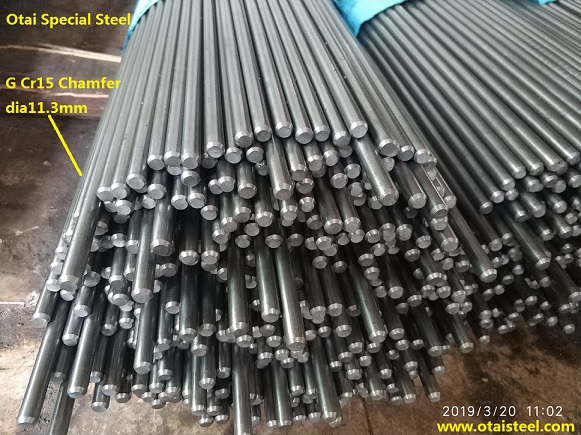
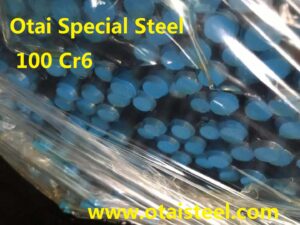
Bearing Steel 100Cr6-Through-hardening Bearing Steel


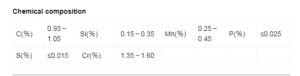
Chemical composition

Through-hardening steel contains typically 1% carbon and alloying elements for hardenability, exhibiting very high strength but low ductility. Used with martensitic or bainitic hardening.

100Cr6 is equivalent to AISI 52100, GB GCr15.

Heat Treatment

In order to harden steel, the iron matrix must contain a certain amount of carbon.

The higher carbon content in the steel the higher achievable hardness. In through-hardening steel, there is a relatively high level of carbon added to the steel. When the component is heat treated, it becomes hard all the way through from the surface to the core, hence the term “through-hardened”. Through-hardened steel components are relatively brittle and can fracture under impact or shock loads.

Applications

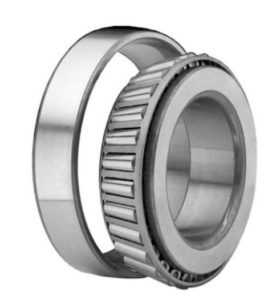
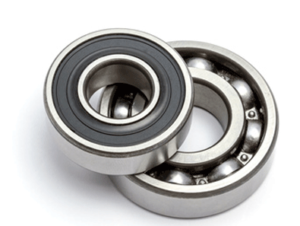
for through-hardening bearing steel are typically roller bearing components but also components that require high fatigue strength such as diesel injection components.

The hardness levels these steel reach also makes them excellent in wear applications or cutting/slitting/grinding applications.

When also combined with a stabilizing heat treatment they give a dimensional stability needed in many tool steel applications.


0 0 Continue Reading →

What is Engineering Steel?-30crnimo8 steel  Alloy Steel

What is Engineering Steel?-30crnimo8 steel  Alloy Steel

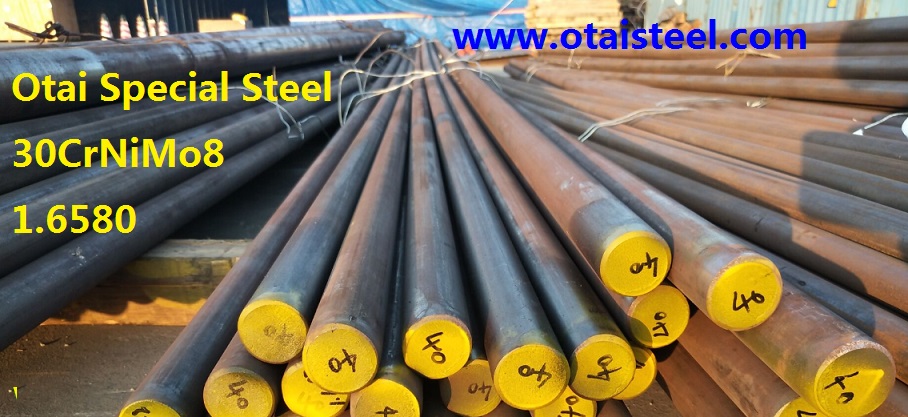
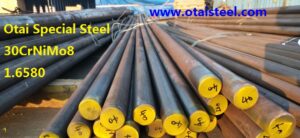
30crnimo8 round bar
IN STOCK
READY FOR SHIPMENT

Alloying elements

Engineering Steel is a steel that has had small amounts of one or more alloying elements (other than carbon) such as manganese, silicon, nickel, titanium, copper, chromium, and aluminium added.

Properties

This produces specific properties that are not found in regular carbon steel.

Engineering Steels are workhorses of industry because of their economical cost, wide availability, ease of processing, and good mechanical properties. Alloy steels are generally more responsive to heat and mechanical treatments than carbon steels.

Engineering steels are essentially wrought steels designed for mechanical and engineering applications.

These require critical and often stringent levels of elasticity, strength, ductility, toughness, and fatigue resistance. In some cases, it may also require resistance to high or low temperatures, corrosive and other aggressive environments.

Application:

Applications of advanced high-strength steels, sometimes called ultra-high strength steels, are finding their way into current production vehicles all over the world because of their unique qualities that allow for lighter weight parts that are as strong or stronger than conventional steel counterparts.

There is a great variety of engineering steel types and shapes. Each is carefully tailored to meet specific user requirements, in terms of properties and performance and in some cases to facilitate the manufacturing and fabrication techniques.

These techniques are then used to make components or parts. The composition, process route and heat treatment parameters are carefully selected to meet the customers’ needs.

What is Engineering Steel?-30crnimo8-Alloy Steel

30crnimo8 round bar stock

1.Grade 30CrNiMo8 is used for production of heavily loaded parts, shafts and drive axes, steering shafts, crankshafts of engines, screws and elements exposed to temperatures in the power industry.

2. 30CrNiMo8 equal to 1.6580, 30NCD8, 30CND8 alloy steel

3. Alloyed structural steel with medium hardenability designed for heavy duty components, characterized by high elasticity and strength properties reaching over 1560 N/mm2 at small diameters. When softened, the hardness reaches max. 248 HRB.


0 0 Continue Reading →

4 development direction of bearing steel

4 development direction of special steel bearing steel

Bearings are widely used in mining machinery, precision machine tools, metallurgical equipment, heavy equipment and high-end cars and other major equipment fields, as well as wind power generation, high-speed rail motor cars and aerospace and other emerging industries. The bearings produced in China are mainly medium and low-end bearings and small and medium-sized bearings, which are characterized by low-end surplus and high-end lack. Compared with foreign countries, there is a big gap in high-end bearings and large bearings. China’s high-speed railway passenger car special supporting wheelset bearings all need to be imported from abroad. For the key bearings used in aerospace, high-speed railway, high-end cars and other industrial fields, there is a big gap between China’s bearings and the advanced level in service life, reliability, DN value and bearing capacity. For example, the service life of foreign automobile gearbox bearings is the lowest of 500000 km, while the service life of domestic similar bearings is about 100000 km, with poor reliability and stability.
Aviation
As a key basic component of aero-engine, the second generation aero-engine bearing with thrust ratio of 15-20 is being developed abroad, which is ready to be assembled into the fifth generation fighter around 2020. In the past 10 years, the United States has developed the second generation of bearing steel for aero-engine, and the representative steels are css-42l with high strength and corrosion resistance at 500 ℃ and x30 (cronidur30) with high nitrogen and rust resistance at 350 ℃. China is developing the second generation of bearing steel for aero-engine.
Automobile
For automotive hub bearings, the first and second generation of hub bearings (ball bearings) are widely used in China, while the third generation of hub bearings have been widely used in Europe. The main advantages of the third generation hub bearings are reliability, short payload spacing, easy installation, no adjustment, compact structure, etc. At present, most of the imported vehicles in China adopt this kind of lightweight and integrated hub bearing.
Railway vehicles
At present, China’s railway heavy haul train bearings are made of domestic ESR g20crni2moa carburized steel, while foreign countries have applied the vacuum degassing smelting technology, inclusion homogenization technology (IQ steel), ultra long life Steel Technology (TF steel), fine heat treatment technology, high purity bearing steel (EP steel) and other technologies Surface super hardening treatment technology and advanced sealing lubrication technology are applied to the production and manufacturing of bearings, which greatly improves the service life and reliability of bearings. The quality of ESR bearing steel in China is not only low, but also the cost is 2000-3000 yuan / ton higher than that of vacuum degassing steel. In the future, China needs to develop ultra-high purity, fine-grained, homogenized and stable quality vacuum degassing bearing steel to replace the current ESR bearing steel.
Wind power and energy
For wind turbine bearings, at present, China has not been able to produce high-tech spindle bearings and speed increaser bearings, basically relying on imports, and the localization of bearings for wind turbine units above 3MW has not been solved. In order to improve the strength, toughness and service life of wind turbine bearings abroad, a new type of special heat treatment steel SHX (40crsimo) is used. For yaw and variable pitch bearings, the depth of hardened layer, surface hardness, width of soft belt and surface crack are controlled by surface induction hardening heat treatment; Carbonitriding is used for speed increaser bearing and main shaft bearing, so that more stable volume fraction of retained austenite (30% – 35%) and a large number of fine carbides and carbonitrides can be obtained on the surface of parts, and the service life of bearing under pollution lubrication condition is improved.
In order to improve the service life and operation accuracy of rolling mill bearings, it is necessary to research and develop ultra-high purity vacuum degassing smelting of GCr15SiMn and g20cr2ni4 bearing steels for rolling mill and large austenite mass control heat treatment of bearing surface in the future. NSK and NTN have developed the surface austenite strengthening technology respectively, that is, TF bearing and WTF bearing have been developed by increasing the surface austenite content, so that the service life of bearing has been increased by 6-10 times.

The future R & D direction of bearing steel in China is mainly reflected in four aspects:
One is economic cleanliness: on the premise of considering economy, further improve the cleanliness of the steel, reduce the content of oxygen and titanium in the steel, so that the mass fraction of oxygen and titanium in the bearing steel is less than 6 × 10⁻⁶ and 15 × The content and size of inclusions in the steel are reduced and the distribution uniformity is improved.
The second is the refinement and homogenization of microstructure: through the application of alloying design and controlled rolling and cooling process, the uniformity of inclusions and carbides can be further improved, the network and band carbides can be reduced and eliminated, the average size and maximum particle size can be reduced, and the average size of carbides can be less than 1 μ The goal of M; The grain size of the matrix is further improved, and the grain size of the bearing steel is further refined.
The third is to reduce macrostructure defects: further reduce the central porosity, central shrinkage and central composition segregation in bearing steel, and improve the uniformity of macrostructure.
Fourth, high toughness of bearing steel: through new alloying, hot rolling process optimization and heat treatment process research, improve the toughness of bearing steel.

0 0 Continue Reading →