 Is 4140 Steel Good for Knives? The Complete Guide
When it comes to knife making, choosing the right steel is crucial. Many machinists, hobbyists, and even custom knife makers have wondered: Is 4140 steel good for knives? The short answer is—yes and no—it depends entirely on the type of knife, the heat treatment, and the intended use.
Let’s break this down so you can decide whether 4140 steel for knife making is the right choice for you.
🌟 What Is 4140 Steel?
4140 is a chromium-molybdenum alloy steel, originally designed for mechanical components that require strength, toughness, and wear resistance. Its typical composition gives it a unique balance of properties:
| Element | Percentage (%) |
|---|---|
| Carbon (C) | 0.38–0.43 |
| Chromium (Cr) | 0.80–1.10 |
| Molybdenum (Mo) | 0.15–0.25 |
| Manganese (Mn) | 0.75–1.00 |
| Silicon (Si) | 0.15–0.35 |
| Phosphorus (P) | ≤0.035 |
| Sulfur (S) | ≤0.040 |
This chemistry gives it better toughness than many higher-carbon steels, but also limits maximum hardness—something important to keep in mind when making knives.
🔍 Hardness and Edge Retention
4140 steel blade hardness after proper quenching and tempering typically reaches 28–32 HRC. This is lower than what you’d find in high-carbon knife steels (which are often in the 55–62 HRC range).
| Property | 4140 Steel (Q&T) | High Carbon Knife Steel (e.g., 1095) |
|---|---|---|
| Hardness (HRC) | 28–32 | 55–62 |
| Edge Retention | Low–Moderate | High |
| Toughness | High | Moderate |
| Corrosion Resistance | Low | Low–Moderate (depends on alloy) |
This means that 4140 steel edge retention is not exceptional compared to dedicated knife steels. However, its high toughness makes it suitable for impact tools, machetes, or survival knives that endure heavy abuse.
🛠️ Heat Treating 4140 Steel for Knives
To get the most out of heat treating 4140 steel for knives, you’ll need to optimize hardness without sacrificing toughness:
-
Normalize at ~870°C (1600°F) to refine grain structure.
-
Quench in oil at ~850°C (1560°F) to achieve maximum hardness.
-
Temper between 400–600°C (750–1100°F) depending on desired hardness/toughness balance.
⚠️ Even with optimal treatment, the hardness won’t reach that of premium knife steels—so it’s not ideal for fine-edged kitchen knives.
🍴 Is 4140 Steel Good for Kitchen Knives?
For kitchen applications, 4140 steel for kitchen knives isn’t the best choice. Why?
-
Corrosion resistance is poor compared to stainless steels.
-
Lower hardness means more frequent sharpening.
-
Acidic foods can discolor and pit the blade.
It’s better suited for outdoor, survival, or large chopping knives than for precision culinary tools.
🥊 Pros and Cons of 4140 Steel Knives
| Pros 👍 | Cons 👎 |
|---|---|
| High toughness — resists chipping and breaking | Low edge retention — needs frequent sharpening |
| Easy to machine and shape before heat treatment | Prone to rust without maintenance |
| Affordable and widely available | Lower hardness than dedicated knife steels |
| Good for large blades, machetes, and impact tools | Not suitable for fine slicing blades |
🔄 4140 Steel vs Stainless Steel for Knives
| Feature | 4140 Alloy Steel | Stainless Steel (e.g., 440C) |
|---|---|---|
| Hardness Potential | Medium (28–32 HRC) | High (56–60 HRC) |
| Toughness | High | Medium |
| Corrosion Resistance | Low | High |
| Edge Retention | Low–Moderate | High |
| Ease of Sharpening | Easy | Moderate |
If your knife needs to withstand impacts, pry work, or repeated abuse, 4140 steel toughness for knives makes it a better option than brittle high-hardness stainless. But for food prep or decorative blades, stainless wins.
🪒 Sharpening 4140 Steel Knives
Because of its relatively low hardness, sharpening 4140 steel knives is easy with standard whetstones or diamond sharpeners. However, the edge will dull faster, so maintenance will be more frequent.
📌 When to Use 4140 Steel for Knives
Best suited for:
-
Outdoor survival knives
-
Machetes
-
Bushcraft tools
-
Throwing knives (toughness over sharpness)
Avoid for:
-
Fine kitchen cutlery
-
Hunting knives requiring long-lasting sharpness
-
Display knives where corrosion resistance is key
🏭 Company Advantages – Why Choose Otai Special Steel
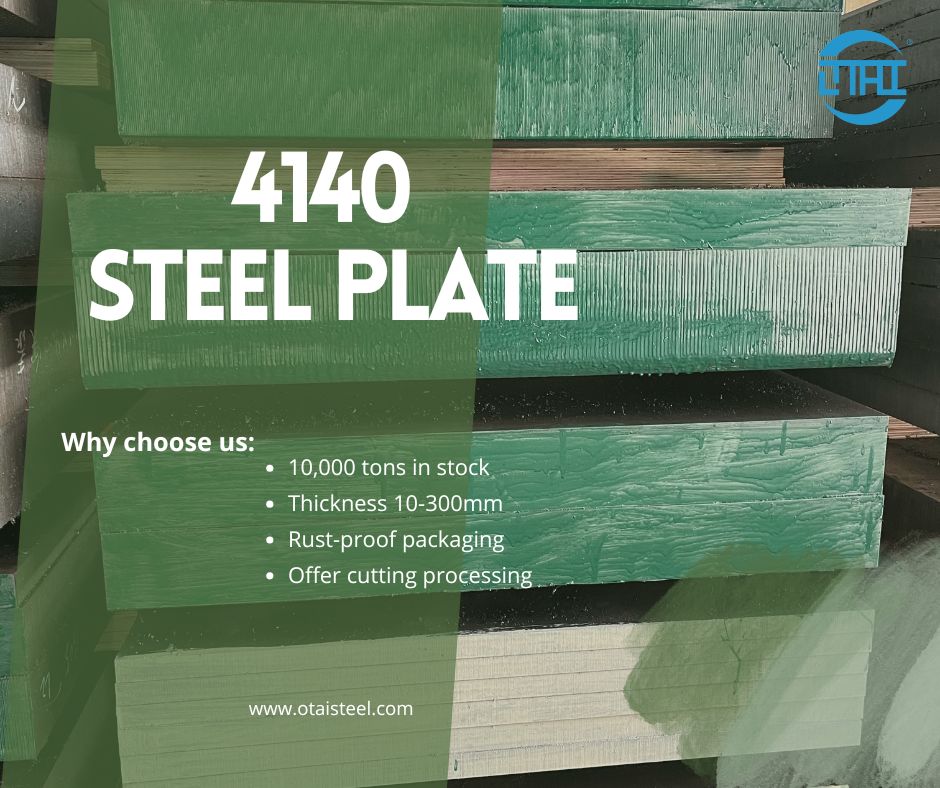
At Otai Special Steel, we supply top-quality 4140 alloy steel in various forms, perfect for custom knife projects requiring toughness and durability.
- ✅ Over 10,000 tons of alloy steel in stock (6mm–300mm thickness)
- ✅ Cut-to-size, heat-treated, or annealed supply options
- ✅ Full chemical composition and mechanical property testing
- ✅ Optional surface treatments (black oxide, nitriding)
- ✅ Export-ready with SGS/BV inspection available
- ✅ Global supply to over 50 countries
- ✅ Trusted by Thyssenkrupp, Borealis, Schlumberger
❓ FAQ – Is 4140 Steel Good for Knives?
Q1: Is 4140 steel good for knife making?
A: Yes, for tough, impact-resistant blades—no, for fine cutting edges.
Q2: How hard can 4140 steel get for knives?
A: Up to about 32 HRC with oil quenching and tempering.
Q3: Does 4140 steel rust?
A: Yes, it has low corrosion resistance—needs oiling and care.
Q4: Can you make kitchen knives from 4140?
A: Technically yes, but performance will be inferior to stainless or high-carbon steels.
Q5: Is 4140 steel easy to sharpen?
A: Yes, but it will need sharpening more often than high-hardness steels.