 Normalizing Temperature of 4140 Steel: Key Considerations for Heat Treatment
When engineers work with high-strength materials, normalizing plays a crucial role in ensuring uniform grain structure, improved toughness, and optimized mechanical properties. For 4140 steel, a low-alloy steel, normalizing is essential to refine the material and prepare it for subsequent processes like quenching and tempering. In this article, we will explore the normalizing temperature of 4140 steel, the normalizing process, and its impact on the steel’s performance.
🌡️ What is Normalizing?
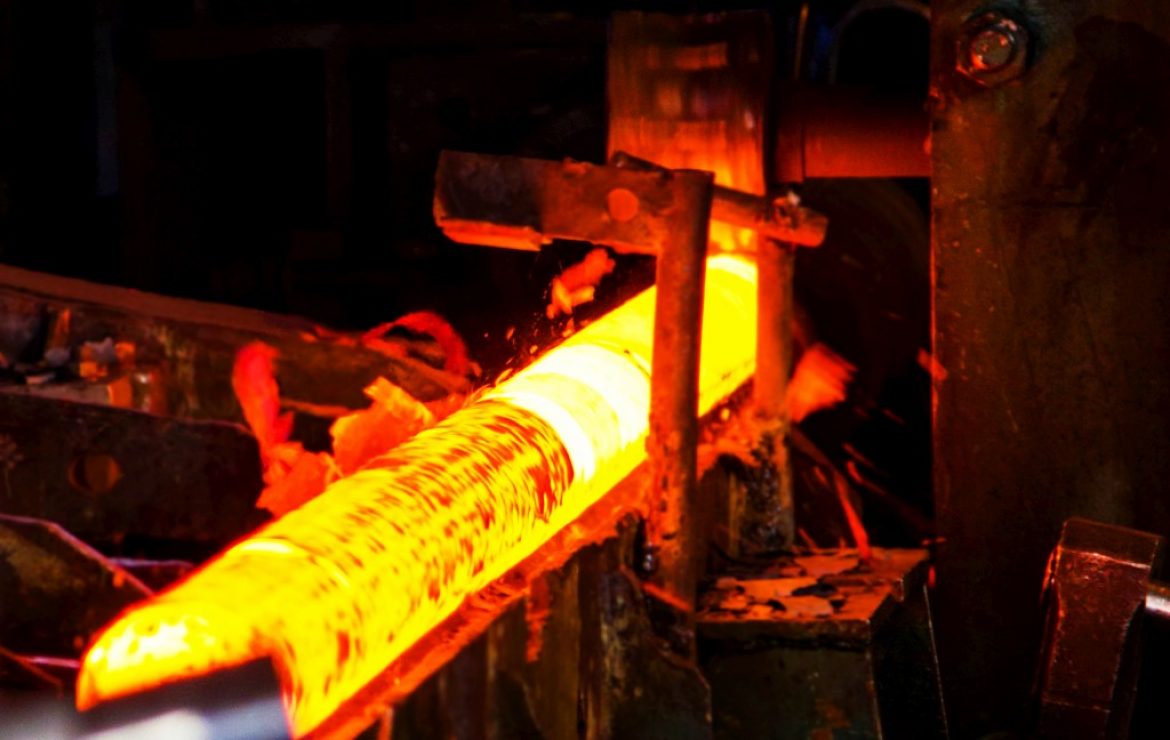
Normalizing involves heating steel to a specific temperature, then allowing it to cool in air. This process refines the grain structure, relieving internal stresses and improving uniformity. By subjecting 4140 steel to this treatment, engineers can enhance the material’s strength, toughness, and ductility, setting the stage for additional heat treatments.
🔥 Normalizing Temperature of 4140 Steel
The normalizing temperature for 4140 steel typically ranges between 850°C and 900°C (1,560°F to 1,650°F). At this temperature, the steel becomes more uniform in composition, which leads to improved properties after cooling. The normalizing temperature allows 4140 steel to undergo austenitization, where the steel’s structure transitions into austenite, optimizing its microstructure.
Why This Temperature Range?
Heating 4140 steel to 850°C – 900°C (1,560°F – 1,650°F) ensures that it reaches the ideal temperature for austenitization. This promotes the formation of a fine pearlite and ferrite microstructure, enhancing the material’s strength and toughness. The process results in better hardness and wear resistance while minimizing internal stresses and imperfections.
🛠️ Importance of Normalizing for 4140 Steel
1. Improved Grain Structure
By normalizing 4140 steel, we refine its grain structure. A finer and more uniform grain structure improves the material’s strength and toughness, making it more resistant to wear and impact.
2. Relieves Internal Stresses
Normalizing helps relieve internal stresses built up during manufacturing processes like casting or welding. This prevents warping or cracking during later heat treatments, making 4140 steel more stable and reliable in high-stress applications.
3. Enhanced Homogeneity
The process ensures that the steel’s properties are uniform throughout the material. A homogeneous structure improves consistency in hardness and tensile strength, leading to better overall performance in demanding applications.
4. Preparation for Further Heat Treatment
Normalizing enhances the material’s ability to withstand subsequent heat treatment processes like quenching and tempering. After normalizing, 4140 steel is better prepared to achieve the desired balance between strength, hardness, and toughness.
🌍 Applications of 4140 Steel After Normalizing
After the normalizing process, 4140 steel is ready for a variety of high-strength applications. Some common uses include:
-
Automotive Parts: Axles, gears, crankshafts, and suspension components
-
Heavy Machinery: Tool holders, machine shafts, pinions, and dies
-
Oil and Gas: Drill collars, wellhead components, pressure vessels
-
Tooling: Cutting tools, press molds, and dies
-
Aerospace: Landing gears, engine components, and structural parts
Normalizing ensures that these components maintain their required properties, such as high strength, toughness, and resistance to fatigue.
🔍 How to Normalize 4140 Steel
Normalizing 4140 steel involves the following steps:
-
Heating: Heat the steel to a temperature between 850°C and 900°C (1,560°F and 1,650°F) in a furnace.
-
Holding: Maintain the temperature for 1 to 2 hours, depending on the thickness of the material, to ensure uniform heating and grain refinement.
-
Cooling: After heating, remove the steel from the furnace and allow it to cool naturally in air at room temperature. The air cooling process results in a fine, uniform grain structure.
-
Post-Normalizing Inspection: After normalizing, inspect the material for defects and measure its mechanical properties, such as hardness and tensile strength, to ensure it meets the required standards.
🌟 Why Choose Otai Special Steel for 4140 Steel?
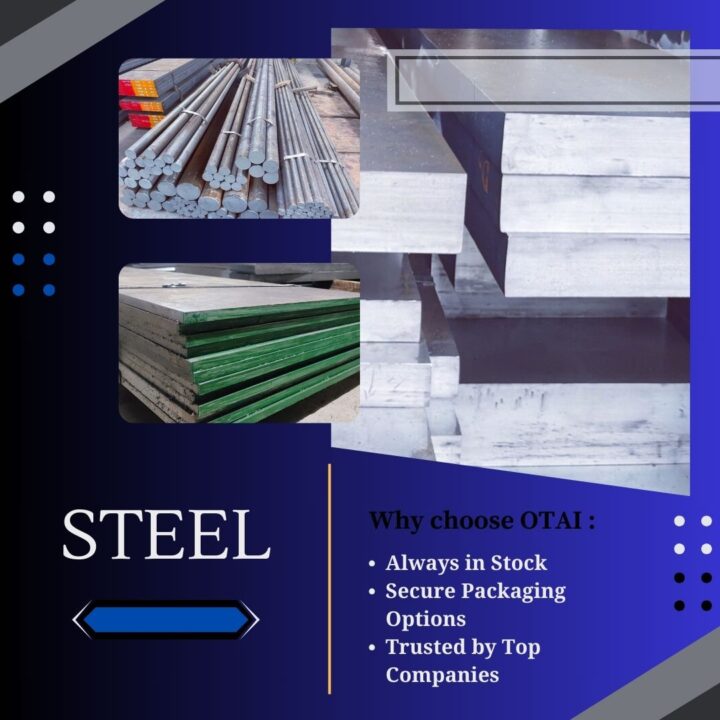
At Otai Special Steel, we supply high-quality 4140 steel that has undergone rigorous heat treatment, including normalizing. We offer:
-
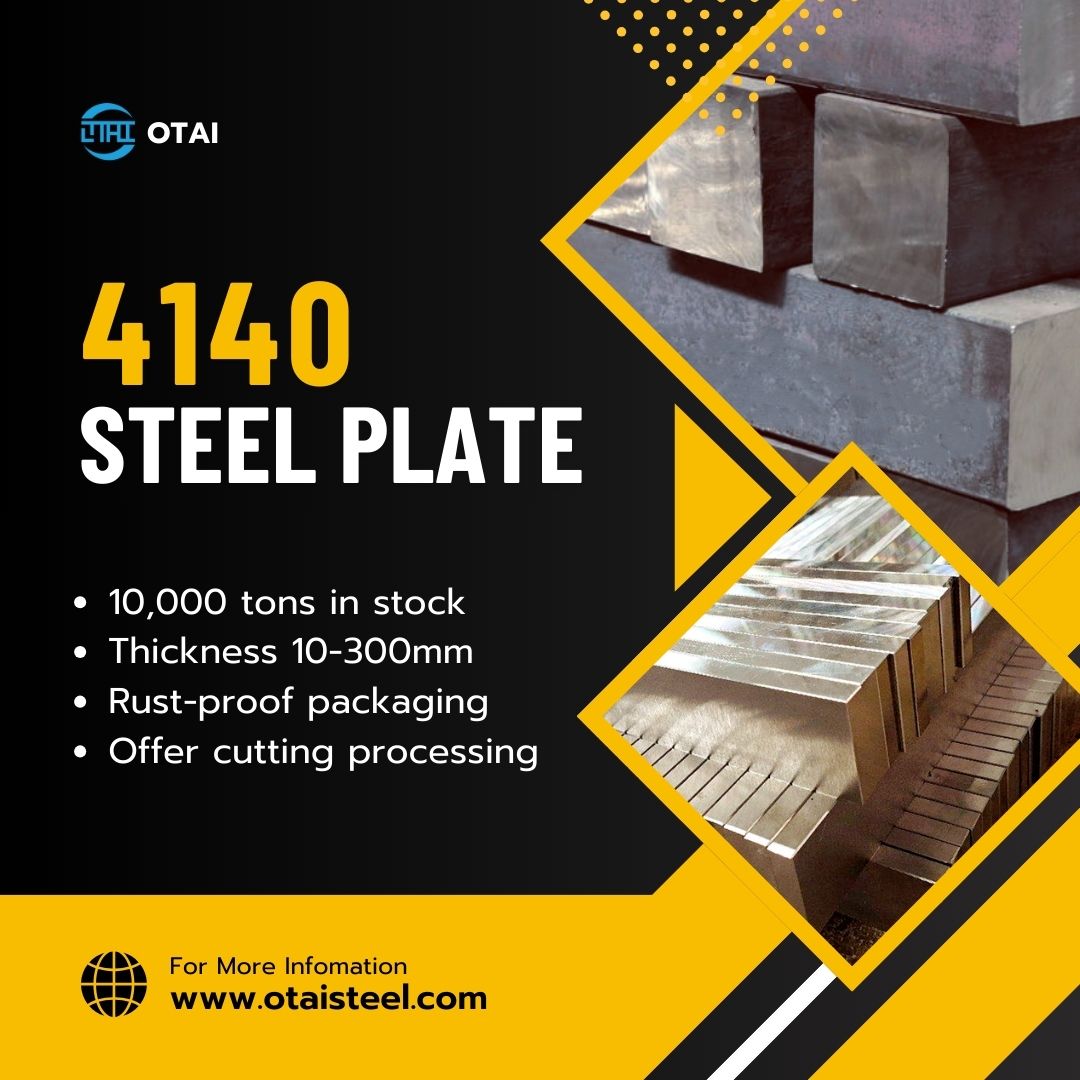
🏭 Large Inventory: We maintain over 10,000 tons of 4140 steel in stock, available in various sizes and forms.
-
📐 Custom Cutting and Heat Treatment: We provide customized services, including cutting to size and normalizing, to meet your specific needs.
-
🔍 Quality Assurance: We rigorously test our 4140 steel for hardness, tensile strength, and other mechanical properties.
-
🌍 Global Shipping: We deliver 4140 steel to over 50 countries worldwide.
-
💰 Competitive Pricing: We offer high-performance 4140 steel at competitive prices.
❓ FAQ
Q1: What is the normalizing temperature for 4140 steel?
A: The normalizing temperature for 4140 steel is between 850°C and 900°C (1,560°F and 1,650°F).
Q2: Why should I normalize 4140 steel?
A: Normalizing refines the grain structure, relieves internal stresses, and ensures uniformity, enhancing the material’s strength, toughness, and machinability.
Q3: How does normalizing affect the hardness of 4140 steel?
A: Normalizing can increase the hardness of 4140 steel slightly, but additional heat treatments like quenching and tempering are required to achieve high hardness.
Q4: Is normalizing necessary for all 4140 steel applications?
A: While not always required, normalizing improves the material’s properties and prepares it for further processing, making it essential for many high-performance applications.
Q5: How long does the normalizing process take for 4140 steel?
A: The normalizing process typically lasts 1-2 hours, depending on the steel’s thickness, followed by air cooling to room temperature.