 Preheat for Welding 4140 Steel: How to Get It Right the First Time
Welding 4140 steel can be tricky if you’re not careful—and the biggest mistake most welders make? Skipping the preheat. If you’re wondering why preheat for welding 4140 steel is such a big deal, you’re in the right place.
Whether you’re joining shafts, building dies, or repairing heavy equipment, understanding the correct preheating process will save you from cracks, distortion, and costly rework. Let’s dive into the why, how, and best practices for preheating this high-strength alloy steel.
🔍 Why Preheat for Welding 4140 Steel Is So Important
4140 steel is a chromium-molybdenum alloy steel with high hardenability and strength. It’s often used in components that see high stress or require wear resistance—things like axles, gears, or structural parts.
But here’s the catch: 4140 isn’t mild steel. It has a relatively high carbon content (around 0.38-0.43%), which makes it prone to:
-
Hydrogen-induced cracking
-
Hard heat-affected zones (HAZ)
-
Brittleness if cooled too fast
💡 That’s where preheat for welding 4140 steel comes in—warming the metal before welding reduces the cooling rate, helps hydrogen escape, and prevents micro-cracks from forming.
📈 Recommended Preheat Temperatures for 4140
The correct preheat temperature depends on several factors: the thickness of the material, joint design, and whether the steel is annealed, normalized, or quenched and tempered.
Here’s a quick reference table:
| Thickness | Condition | Recommended Preheat Temp (°C) | Preheat Temp (°F) |
|---|---|---|---|
| ≤ 12 mm (0.5″) | As-rolled / Annealed | 150–200°C | 300–400°F |
| 12–50 mm (0.5″–2″) | Normalized or Q&T | 200–300°C | 400–570°F |
| > 50 mm (2″) | Any condition | 250–350°C | 480–660°F |
➡️ For thicker sections or multi-pass welds, it’s wise to aim for the upper range of these preheat temperatures.
🛠️ How to Apply Preheat Properly
It’s not just about heating—it’s about consistency. Here’s how to make sure you’re doing it right:
-
Use an open flame, induction heater, or oven to preheat evenly across the weld zone.
-
Monitor the temperature with a temp stick or infrared thermometer.
-
Maintain preheat during welding, especially for large components.
-
Avoid rapid cooling after welding; use blankets or slow cooling methods.
⚠️ Skipping preheat or uneven heating is one of the most common causes of weld failure when working with 4140.
🧪 Welding Processes Suitable for 4140
You can use several processes for welding 4140, but each has its quirks:
| Welding Method | Recommended Filler Metal | Comments |
|---|---|---|
| SMAW (Stick) | E11018, E8018-B2 | High-strength, low hydrogen rods preferred |
| TIG (GTAW) | ER80S-B2, ER110S-G | For clean, controlled welds |
| MIG (GMAW) | ER80S-D2 | Good for high deposition with moderate heat |
| FCAW | E91T1-K2 | For structural components |
Preheat is essential no matter which process you choose—especially for TIG and MIG, which have lower heat input compared to stick.
💡 Post-Weld Heat Treatment (PWHT): Is It Needed?
For critical applications, post-weld heat treatment is often necessary to relieve residual stresses and improve ductility. A typical recommendation for 4140 is:
-
Stress-relieve at 600–650°C (1100–1200°F) for 1 hour per inch of thickness
-
Cool slowly in still air or insulated blankets
If you don’t stress-relieve, at least allow for slow cooling to avoid hard zones that could crack during service.
🧱 Real-World Example
Let’s say you’re fabricating a hydraulic cylinder rod from 4140 steel, 75mm in diameter. You preheat the part to 300°C (570°F), use ER80S-D2 filler, and TIG weld the joint. Without preheat, the part might develop internal cracking—but with proper preheating and slow cooling, you ensure full penetration and structural integrity.
🏆 Company Advantage: Why Choose Otai for 4140 Welding Projects?
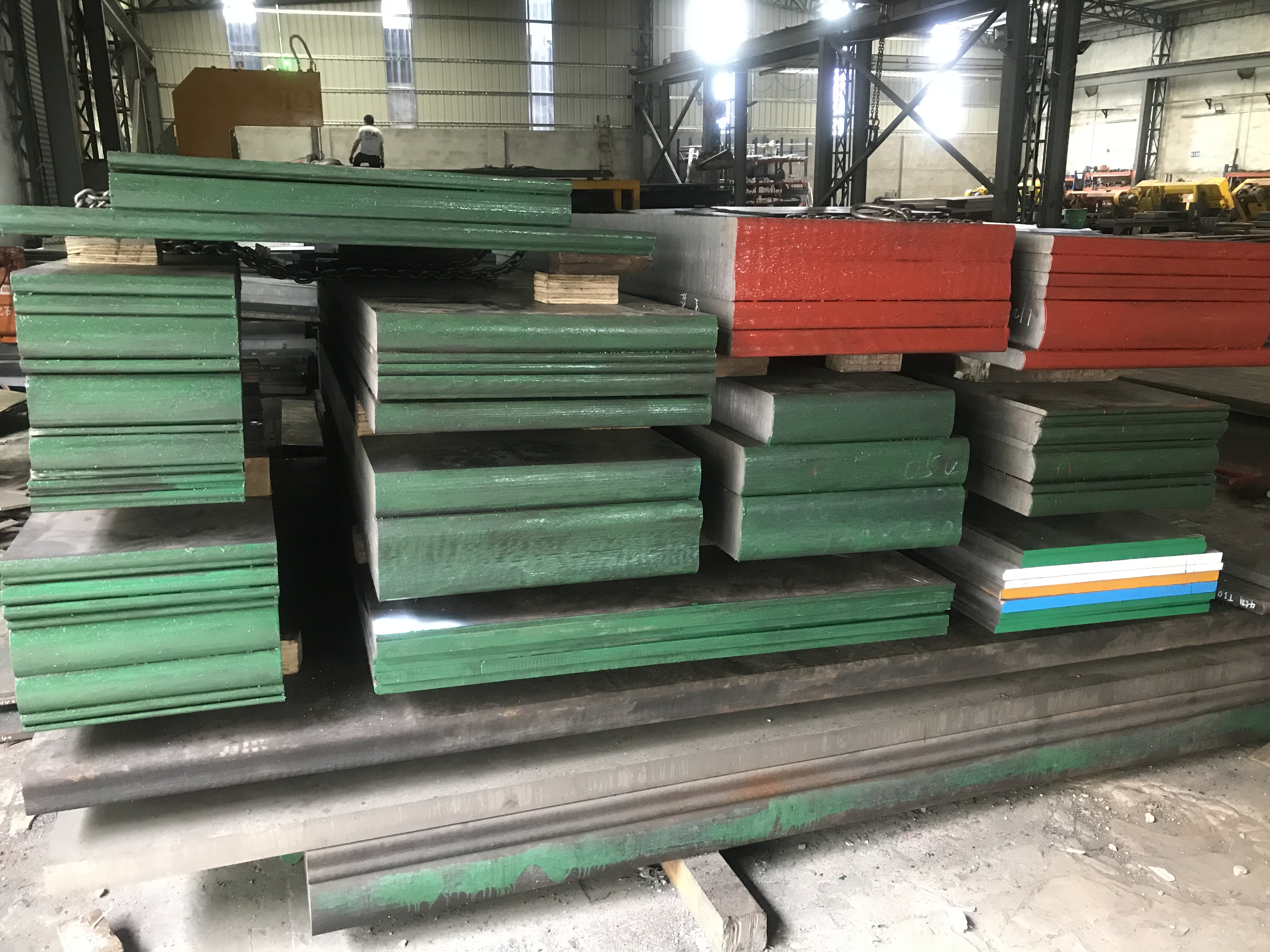
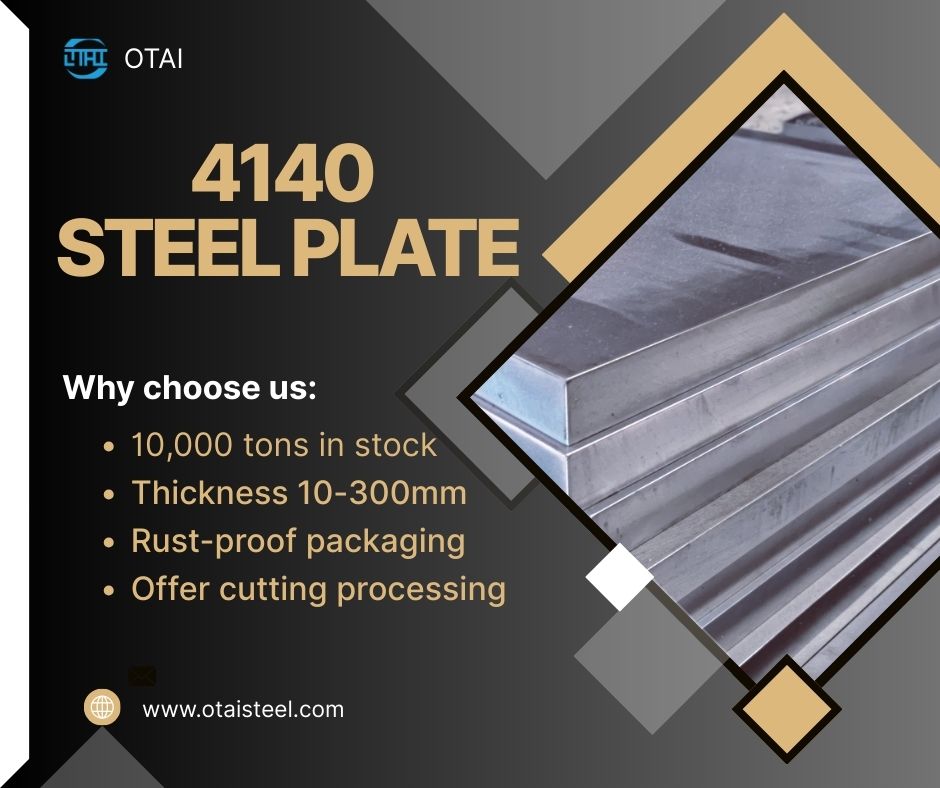
At Otai Special Steel, we don’t just supply 4140 steel plates and bars—we offer complete technical support:
-
✅ Expert recommendations on preheat for welding 4140 steel
-
✅ Large inventory from 6mm to 300mm in stock
-
✅ Custom cutting, annealing, and heat treatment services
-
✅ Material certification, ultrasonic testing, and 3rd party inspections
-
✅ Over 20 years of export experience serving industries like automotive, oil & gas, and tooling
Whether you’re a fabricator, end user, or a trade company—we’ve got the steel and support you need. 💪
📞 Need advice or a quote? Contact us today and let our engineers guide your next welding project!
📧 Contact us: jack@otaisteel.com
📱 WhatsApp: +8676923190193
❓FAQ: Preheat for Welding 4140 Steel
Q1: What happens if I don’t preheat 4140 before welding?
A: You risk cracks in the heat-affected zone, hard martensitic structures, and poor weld toughness.
Q2: Can I use a propane torch for preheating?
A: Yes, for small parts. Just ensure even temperature across the weld zone.
Q3: What if I’m welding 4140 to mild steel?
A: Use a more ductile filler like ER70S-6 and still preheat to minimize stress mismatch.
Q4: Is post-heat always required?
A: Not always, but stress-relief is recommended for heavy-duty parts or thick weldments.
Q5: Do you supply pre-machined or normalized 4140 steel?
A: Yes! We offer normalized, annealed, and Q&T 4140 steel, cut to size and ready for your process.