4140 Steel Material Properties: What Buyers Should Know Before Selecting the Material
📑 Table of Contents
- 🔍 What Is AISI 4140 Steel?
- 🧪 Chemical Composition and Alloying Elements
- 📊 Mechanical Properties of 4140 Steel
- 🌡️ Physical Properties and Performance
- 🔥 How Heat Treatment Changes 4140 Steel Properties
- ⚙️ Machinability, Weldability, and Wear Resistance
- 🏭 Applications and Material Selection
- 🔄 4140 Steel Compared with Other Alloy Steels
- 📋 What Buyers Should Check Before Purchasing 4140 Steel
- 🏢 Why Source 4140 Steel from Otai?
- ❓ Frequently Asked Questions
AISI 4140 is a chromium-molybdenum alloy steel valued for its combination of strength, toughness, hardenability, and wear resistance. However, the properties of 4140 steel are not fixed. Its performance changes significantly with heat treatment, section size, manufacturing route, and delivery condition.
For industrial buyers, selecting 4140 steel involves more than checking a grade designation or comparing a single tensile-strength figure. You also need to confirm the required mechanical properties, material specification, product dimensions, heat-treatment condition, and inspection documents. This article explains the main 4140 steel material properties and the practical points buyers should evaluate before placing an order.
🔍 What Is AISI 4140 Steel?
AISI 4140, also known as SAE 4140 or UNS G41400, is a medium-carbon chromium-molybdenum alloy steel. It contains approximately 0.40% carbon, together with chromium and molybdenum as its principal alloying elements. This combination allows the steel to respond well to heat treatment and develop a useful balance of strength and toughness.
Unlike ordinary carbon steel, 4140 offers improved hardenability. This means that suitable heat treatment can produce a hardened structure to a greater depth, although the result depends on section size, quenching conditions, and the material’s actual composition. Chromium contributes to hardenability and wear performance, while molybdenum helps improve hardenability and resistance to temper-related softening.
Why is 4140 widely used in engineering?
Engineers often select 4140 when components must withstand repeated loads, mechanical stress, impact, or surface wear. The grade can be supplied in different conditions, including annealed, normalized, and quenched and tempered. Buyers can therefore select a delivery condition that suits subsequent machining, further heat treatment, or direct component production.
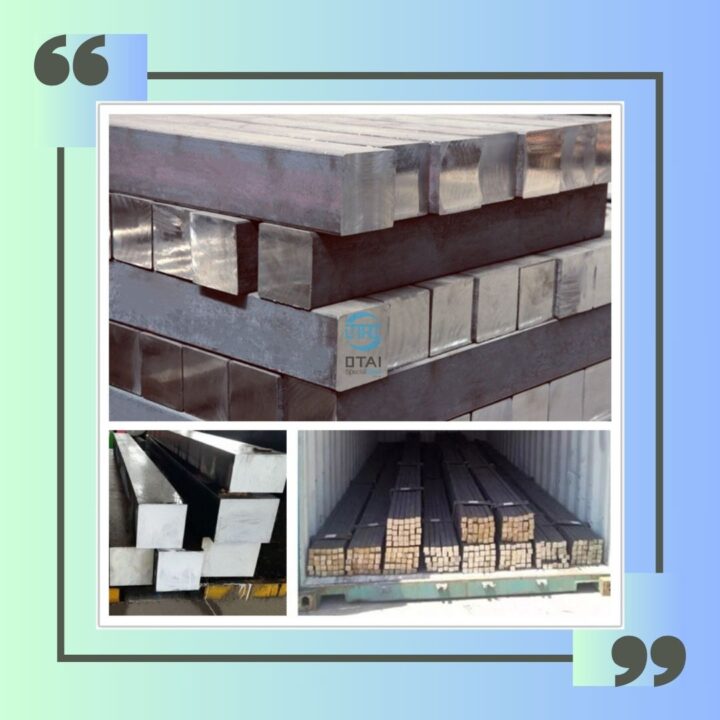
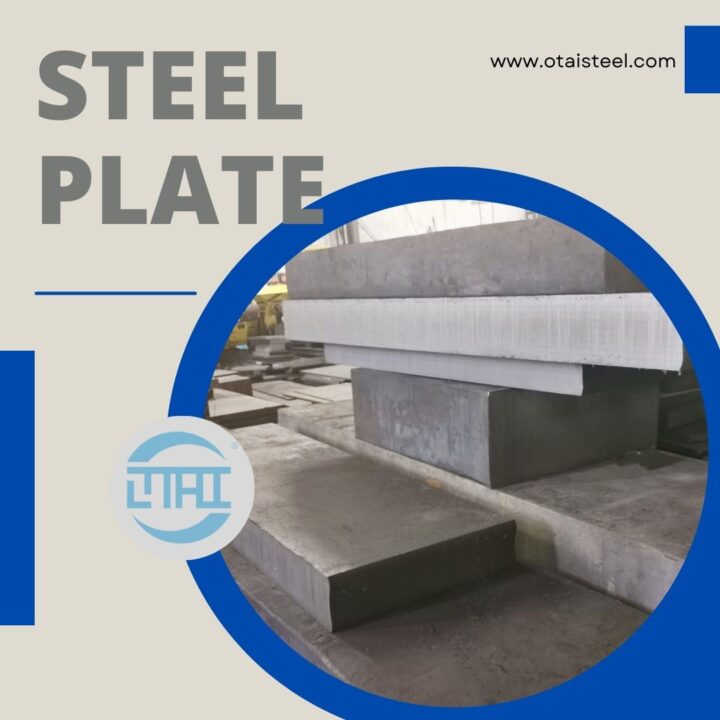
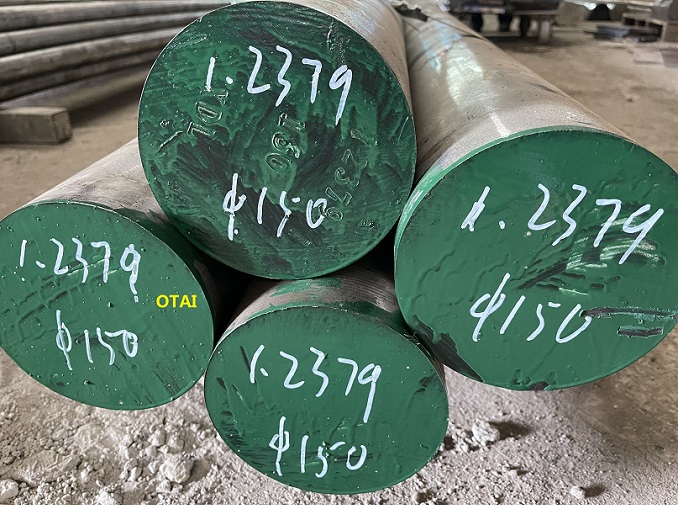
Common product forms include plate, round bar, flat bar, and forged material. However, availability and applicable property requirements differ by product form and specification. A buyer should not assume that a datasheet for round bar automatically applies to a thick steel plate.
Is 4140 a stainless steel?
No. AISI 4140 is a low-alloy engineering steel, not stainless steel. Its chromium content improves hardenability, but it does not provide the corrosion resistance associated with stainless grades. Exposed 4140 can rust in humid or corrosive environments, so buyers may need protective oil, coating, controlled storage, or another corrosion-prevention method.
🧪 Chemical Composition and Alloying Elements
The chemical composition of 4140 steel explains much of its heat-treatment response and mechanical performance. Carbon provides the foundation for hardening, while chromium and molybdenum improve the steel’s response to quenching and tempering.
The following table gives commonly referenced AISI 4140 composition ranges. Buyers must confirm the governing material specification and product form before using these figures as acceptance limits. Different standards or purchasing specifications may apply different limits.
| Element | Common reference range (wt.%) | Main contribution |
|---|---|---|
| Carbon (C) | 0.38–0.43 | Supports hardening, strength, and hardness. |
| Manganese (Mn) | 0.75–1.00 | Improves hardenability and contributes to strength. |
| Chromium (Cr) | 0.80–1.10 | Improves hardenability, strength, and wear performance. |
| Molybdenum (Mo) | 0.15–0.25 | Supports hardenability and tempering performance. |
| Silicon (Si) | 0.15–0.35 | Acts as a deoxidizer and contributes to strength. |
| Phosphorus (P) | 0.035 max. | Controlled as an impurity because excessive levels can affect toughness. |
| Sulfur (S) | 0.040 max. | Controlled because it can affect ductility and transverse properties. |
| Iron (Fe) | Balance | Base metal. |
How do chromium and molybdenum affect 4140?
Chromium and molybdenum work together to improve the steel’s response to heat treatment. They help 4140 develop useful hardness and strength beyond the surface in appropriately sized sections. This makes the grade suitable for components that require a combination of load-bearing capacity and resistance to mechanical wear.
Nevertheless, alloy content alone does not guarantee a particular tensile strength or hardness. The final properties also depend on the austenitizing temperature, quenching medium, cooling rate, tempering process, and section dimensions.
Standard composition versus the MTC
The composition ranges above are general reference values, not a substitute for the purchasing specification. A mill may report a typical analysis for its product, while the Material Test Certificate (MTC) records the actual heat analysis for the supplied batch. Buyers should compare the MTC results with the exact standard and acceptance requirements stated in the purchase order.
📊 Mechanical Properties of 4140 Steel
Mechanical properties determine how 4140 steel behaves under tension, impact, deformation, and contact stress. The most important values for industrial selection usually include tensile strength, yield strength, elongation, hardness, and impact toughness.
However, there is no single set of mechanical properties that applies to every 4140 product. Annealed steel is generally easier to machine, while quenched and tempered material can provide higher strength and hardness. The figures below are representative reference values for understanding common conditions, not guaranteed values for every plate thickness or delivery specification.
| Property | Representative reference | Buyer consideration |
|---|---|---|
| Tensile strength | Varies substantially with condition and section size | Confirm the required range or minimum in the specification. |
| Yield strength | Varies with heat treatment and product dimensions | Important for components designed around permanent deformation limits. |
| Elongation | Generally decreases as strength and hardness increase | Check the specified gauge length and test direction. |
| Hardness | Depends on annealing, normalizing, or Q&T condition | Confirm the hardness scale and test location. |
| Impact toughness | Depends on temperature, heat treatment, and specimen orientation | Specify Charpy test temperature and acceptance value where required. |
Tensile strength and yield strength
Tensile strength indicates the maximum stress a test specimen withstands before fracture. Yield strength indicates the stress at which permanent deformation begins, according to the test method used. Both values matter when selecting 4140 for shafts, connecting components, gears, and other parts exposed to mechanical loads.
Do not compare tensile-strength figures without checking the material condition and test basis. A value reported for a small prehardened bar may not represent a thick plate supplied in an annealed condition. If a design requires a minimum yield strength, specify the applicable standard, product form, heat treatment, and test requirements.
Hardness and toughness
Hardness indicates resistance to localized indentation and often helps buyers assess machinability and surface-wear requirements. Toughness describes the material’s ability to absorb energy before fracture. A high hardness value does not automatically mean better overall performance. In many applications, excessive hardness can reduce ductility and impact resistance.
The correct balance depends on the component. A highly loaded shaft may require a specific strength-toughness combination, while a machined part may need a softer delivery condition before final heat treatment.
Why the test condition matters
Mechanical test results should be linked to the actual supplied material. Buyers should check whether the values are guaranteed by the product specification, reported as typical data, or measured on the supplied heat. For critical parts, confirm test direction, specimen location, section size, and inspection requirements before ordering.
🌡️ Physical Properties and Performance
Physical properties help engineers evaluate 4140 steel in machining, thermal processing, dimensional design, and service environments. These values are generally less sensitive to delivery condition than tensile strength or hardness, but they can still vary with temperature and material condition.
| Physical property | Typical reference value | Practical relevance |
|---|---|---|
| Density | Approximately 7.85 g/cm³ | Used for weight estimation and material planning. |
| Elastic modulus | Approximately 200–210 GPa | Relevant to stiffness and elastic deformation calculations. |
| Poisson’s ratio | Approximately 0.29–0.30 | Used in engineering stress and deformation analysis. |
| Thermal conductivity | Approximately 40–45 W/(m·K) | Relevant to heat transfer during machining and service. |
| Thermal expansion | Approximately 11–13 × 10⁻⁶/K over common temperature ranges | Important for dimensional changes during heating and cooling. |
Density and weight calculation
With a density of approximately 7.85 g/cm³, 4140 has a similar weight per unit volume to many other carbon and low-alloy steels. Buyers can use this value for preliminary shipping estimates and material planning. Actual order weight depends on the final dimensions, cutting allowance, and dimensional tolerances.
Thermal expansion and dimensional stability
4140 expands when heated and contracts when cooled. This matters when components undergo heat treatment, welding, or machining operations that generate substantial heat. For precision parts, buyers should discuss machining allowance, stress relief, and final dimensional inspection with the processor.
Corrosion behavior
4140 does not have stainless-steel corrosion resistance. Chromium in its alloy composition improves hardenability but does not create the protective passive layer found in stainless steel. Moisture, condensation, salts, and industrial contaminants can cause oxidation. Protective oil, suitable coatings, dry storage, and appropriate export packaging help reduce corrosion during storage and transport.
🔥 How Heat Treatment Changes 4140 Steel Properties
Heat treatment is one of the most important factors affecting 4140 steel material properties. The same grade can have very different hardness, strength, ductility, and machinability depending on its thermal processing history. Buyers should therefore identify the required delivery condition before comparing prices or technical data.
Annealed condition
Annealing softens 4140 and generally improves its machinability and suitability for subsequent processing. This condition can be useful when a component requires substantial machining before hardening. The final hardness and mechanical properties depend on the annealing cycle and the material specification.
Normalized condition
Normalizing involves heating the steel to an appropriate temperature and allowing it to cool in air. It can refine the microstructure and provide a more uniform condition than some as-rolled products. However, normalized 4140 does not have one universal strength or hardness value. Section dimensions and processing details influence the result.
Quenched and tempered condition
Quenching and tempering provide the strength and toughness combination for which 4140 is widely selected. The steel is heated into the appropriate austenitizing range, quenched, and then tempered. Quenching develops a hard structure, while tempering reduces brittleness and adjusts the final mechanical properties.
A lower tempering temperature generally retains higher hardness and strength, while a higher tempering temperature generally reduces strength and improves toughness and ductility. The exact outcome depends on the complete process and section size.
Reference heat-treatment temperatures
The following temperatures are common starting references found in technical data for 4140. They are not universal production instructions. The material specification, furnace practice, section size, quenching equipment, and required properties must determine the actual procedure.
| Process | Common reference range | Purpose |
|---|---|---|
| Normalizing | Approximately 840–880°C | Refines the structure and establishes a more uniform condition. |
| Annealing | Approximately 680–720°C for subcritical annealing references; full annealing procedures may differ | Softens the steel and supports machining. |
| Hardening | Approximately 830–860°C | Austenitizes the steel before quenching. |
| Tempering | Approximately 540–680°C | Adjusts hardness, strength, and toughness after quenching. |
These ranges should not replace a qualified heat-treatment procedure. In particular, the correct holding time and quenching method depend on the dimensions and required properties. Thick sections may cool differently from small specimens, creating differences between surface and core properties.
What should buyers specify?
When purchasing 4140 QT plate, do not specify only the grade. State the required hardness or mechanical-property range, applicable specification, plate thickness, and inspection requirements. If the material will undergo further machining or heat treatment, confirm the intended processing route before choosing the delivery condition.
⚙️ Machinability, Weldability, and Wear Resistance
4140 offers a useful combination of machining performance, hardenability, and wear resistance. Nevertheless, each characteristic depends on the material condition and the manufacturing process. Buyers should consider the complete production route rather than evaluating one property in isolation.
Machinability
Annealed 4140 is generally easier to machine than material supplied at a higher quenched-and-tempered hardness. Prehardened 4140 can reduce the need for additional heat treatment after machining, but cutting tools, speeds, feeds, and finishing methods must suit the actual hardness.
For large components or precision parts, confirm the machining allowance and final dimensional requirements. If the supplier will provide saw cutting, CNC machining, or grinding, agree on the required dimensions and tolerances before production.
Weldability
4140 can be welded, but its medium carbon content and alloy composition make welding more demanding than welding many low-carbon steels. Rapid cooling can produce hard microstructures and increase the risk of cracking. A suitable welding procedure may require preheating, controlled interpass temperature, low-hydrogen consumables, controlled cooling, and post-weld heat treatment.
Do not assume that a component can be welded safely simply because the base material is identified as 4140. The welding procedure should account for material thickness, restraint, initial hardness, joint design, and service requirements.
Wear resistance and surface hardening
4140 can achieve increased hardness through through-hardening and can also be surface hardened by suitable methods such as induction or flame hardening. These processes can help components resist localized wear while retaining a tougher core, provided the process is properly controlled.
For applications involving sliding contact, repeated impact, or abrasive wear, buyers should identify whether the design requires uniform hardness, a hardened surface, or a specific case depth. A hardness number alone may not describe the complete performance requirement.
🏭 Applications and Material Selection
4140 is used in many industrial applications because it can be heat treated to meet different strength and toughness requirements. It is particularly useful for components exposed to mechanical loads, repeated stress, and wear.
| Industry or application | Typical components | Relevant 4140 properties |
|---|---|---|
| Mechanical engineering | Shafts, axles, couplings | Strength, fatigue performance, and toughness. |
| Automotive and machinery | Gears, pins, crankshaft-related components | Hardenability and wear resistance. |
| Oil and gas equipment | Mechanical parts, high-load components | Strength and toughness when the correct specification and processing route are selected. |
| Industrial machinery | Bolts, connecting parts, tooling components | Adjustable hardness and mechanical performance. |
| Manufacturing equipment | Wear-exposed machine components | Surface-hardening potential and core strength. |
When is 4140 a suitable choice?
4140 is a strong candidate when a component needs more strength and hardenability than many common carbon steels can provide. It also offers flexibility because engineers can choose different heat-treatment conditions to balance strength, hardness, and toughness.
However, 4140 may not be the best option for every application. If corrosion resistance is the primary requirement, a suitable stainless steel or protective coating system may be more appropriate. If welding is extensive, a lower-carbon alloy such as 4130 may be worth evaluating. If the component requires a specific surface-hardness profile, compare 4140 with grades designed for case hardening.
Match the product form to the manufacturing route
Plate, bar, and forged products do not necessarily share the same delivery requirements or mechanical-property guarantees. A buyer ordering plate for machining should confirm the plate specification, thickness range, delivery condition, and test requirements. Do not use data from a bar datasheet as a guaranteed basis for a plate purchase without checking applicability.
🔄 4140 Steel Compared with Other Alloy Steels
Comparing 4140 with other alloy steels can help buyers identify a suitable grade, but equivalent designations do not automatically mean identical chemical composition, manufacturing requirements, or mechanical properties. Always compare the applicable standards and product specifications.
| Grade | General characteristics | Selection consideration |
|---|---|---|
| 4140 | Medium-carbon Cr-Mo alloy steel. | A versatile choice for strength, toughness, and hardenability. |
| 4130 | Lower-carbon Cr-Mo alloy steel. | Consider when weldability and lower carbon content are important. |
| 42CrMo4 | European Cr-Mo alloy steel commonly compared with 4140. | Check the applicable EN specification and delivery requirements. |
| SCM440 | Japanese Cr-Mo alloy steel commonly compared with 4140. | Verify the JIS specification, product form, and actual test results. |
| 4340 | Nickel-chromium-molybdenum alloy steel. | Consider where higher hardenability and toughness requirements justify the grade and cost. |
4140 versus 4130
The main compositional difference is carbon content: 4140 generally contains more carbon than 4130. This gives 4140 greater potential for hardness and strength after suitable heat treatment, while 4130 is often considered when welding and lower-carbon characteristics are important. Actual performance still depends on product size, condition, and specification.
4140 versus 42CrMo4 and SCM440
42CrMo4 and SCM440 are commonly used as comparison grades for 4140. Their chemistry and intended applications are similar, but buyers should not treat the designations as interchangeable without reviewing the relevant standards. Differences in composition limits, product specifications, and acceptance requirements can affect whether a substitution is acceptable.
How to select the right grade
Start with the component’s design requirements rather than the grade name alone. Define the required strength, hardness, toughness, welding needs, corrosion protection, and machining route. Then compare the standards and confirm that the proposed material meets the actual technical requirements.
📋 What Buyers Should Check Before Purchasing 4140 Steel
For industrial procurement, selecting the correct 4140 steel involves both technical verification and supplier evaluation. A competitive price is useful only when the material meets the required specification and can be delivered in the right dimensions and condition.
1. Confirm the material specification
State the grade and governing standard clearly. If the purchase requires ASTM, SAE, AMS, or another specification, identify the applicable edition and product form. Avoid relying on a quotation that lists only “4140” without explaining the standard or delivery condition.
2. Define the delivery condition
Specify whether the material should be annealed, normalized, quenched and tempered, or supplied in another agreed condition. If you need QT plate, state the required hardness or mechanical-property range and confirm whether the supplier can provide supporting test documents.
3. Confirm dimensions and tolerances
Provide the required thickness, width, length, quantity, and dimensional tolerances. For cut pieces, clarify whether the dimensions refer to the raw material or the finished cut size. Machining allowance and flatness may also affect the final material requirement.
4. Review the MTC and inspection requirements
Ask for a Material Test Certificate that identifies the heat number and reports the actual chemical analysis. Where specified, the certificate should also include mechanical test results, hardness, heat-treatment condition, and relevant inspection information. For critical applications, discuss ultrasonic testing or third-party inspection before placing the order.
5. Evaluate processing and delivery support
Check whether the supplier can provide saw cutting, precision cutting, machining, grinding, and suitable export packaging. These services can reduce handling and processing steps after the material reaches your facility. Also confirm the delivery schedule, packaging method, shipping documents, and corrosion protection for the expected transport conditions.
6. Compare total procurement cost
The lowest material price may not produce the lowest overall purchasing cost. Consider yield from cutting, machining allowance, inspection, packaging, lead time, transport, and the risk of receiving material that does not meet the specification. A supplier with suitable stock and processing capability may help reduce both lead time and downstream costs.
🏢 Why Source 4140 Steel from Otai?
For buyers sourcing 4140 alloy steel plate, stable inventory, accurate cutting, technical documentation, and export coordination are important parts of the purchasing decision. Otai Special Steel supplies alloy steel and tool steel to international customers, with stock and processing services designed to support industrial procurement.
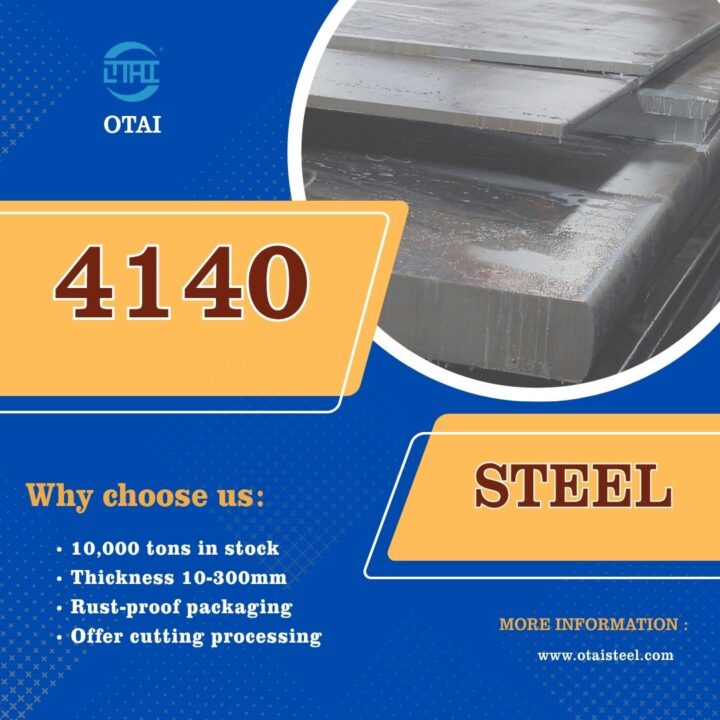
- 4140 inventory: 4140 / SCM440 / 42CrMo4 steel plate thickness range: 4–380 mm in stock; 4140 quenched and tempered plate thickness range: 13–200 mm.
- Large stock capacity: More than 10,000 tons of steel inventory supports a range of industrial purchasing requirements.
- Cutting capability: 20 saw-cutting machines support cutting services and customized dimensions.
- Further processing: CNC machining, grinding, and customized size and tolerance services are available according to project requirements.
- Quality documentation: Material test certificates and traceability support can be arranged. Ultrasonic testing and third-party inspection can be discussed when required.
- Export experience: Otai has supplied customers in more than 54 countries since 1999.
- Packaging support: Anti-rust protection, strapping, bundling, and wooden export packaging can be arranged to suit shipping requirements.
- One-stop service: Material supply, cutting, processing coordination, inspection support, and export arrangements help simplify procurement.
For product details and available specifications, visit the 4140 alloy steel and 4140 steel plate product page. Buyers can share their required grade, thickness, delivery condition, quantity, and inspection requirements to request a quotation.
❓ Frequently Asked Questions
1. What are the main properties of 4140 steel?
4140 is a medium-carbon chromium-molybdenum alloy steel known for its strength, hardenability, toughness, and wear resistance. Its actual mechanical properties depend on heat treatment, section size, and product specification.
2. Is 4140 steel considered high strength?
4140 can achieve high strength through suitable quenching and tempering. However, its strength is not a fixed grade value. Buyers should check the required delivery condition and verify the specified tensile strength, yield strength, and hardness.
3. What is the hardness of 4140 steel?
4140 hardness varies with its condition. Annealed material is generally softer and easier to machine, while quenched and tempered material can reach substantially higher hardness. Always confirm the required hardness range, test method, and delivery condition.
4. Is 4140 steel corrosion resistant?
No. 4140 is not stainless steel and can rust when exposed to moisture or corrosive environments. Protective oil, coatings, dry storage, and suitable packaging can help reduce corrosion during storage and transport.
5. What should I specify when ordering 4140 steel plate?
Provide the grade and standard, plate thickness, width, length, quantity, delivery condition, required mechanical properties, dimensional tolerances, and inspection requirements. If an MTC, ultrasonic testing, or third-party inspection is necessary, state this clearly in the purchase order.