 Is 4140 Steel Weldable?
When working on projects involving 4140 steel, one of the most common questions engineers and procurement teams ask is: Is 4140 steel weldable? The short answer is yes—but with important precautions. 4140 steel is a chromium-molybdenum alloy steel known for its high tensile strength, excellent toughness, and wear resistance. However, its medium carbon content (around 0.40%) means welding must be handled carefully to avoid cracking, distortion, or loss of mechanical properties.
This comprehensive guide will explain everything you need to know about welding 4140 steel, from preheating requirements to post-weld heat treatment, so you can achieve strong, reliable joints.
💡 Understanding 4140 Steel Composition and Its Effect on Weldability
4140 steel contains approximately:
| Element | Percentage (%) |
|---|---|
| Carbon (C) | 0.38 – 0.43 |
| Chromium (Cr) | 0.80 – 1.10 |
| Molybdenum (Mo) | 0.15 – 0.25 |
| Manganese (Mn) | 0.75 – 1.00 |
| Silicon (Si) | 0.15 – 0.35 |
The medium carbon content gives it high strength but also increases the risk of hardening in the heat-affected zone (HAZ) during welding. Chromium and molybdenum further enhance hardness and toughness but also make it more susceptible to hydrogen-induced cracking if not handled correctly.
Because of this, welding 4140 steel without preheating can lead to microcracks, especially in thick sections or highly stressed components.
🔧 Preheat Requirements for Welding 4140 Steel
One of the most important factors in determining how to weld 4140 steel is preheat temperature. Preheating helps reduce thermal shock and minimizes the risk of cracking.
Recommended preheat ranges:
-
Thin sections (< 12 mm): 200°C – 300°C
-
Medium sections (12–50 mm): 300°C – 400°C
-
Thick sections (> 50 mm): 400°C – 450°C
It’s also critical to maintain the interpass temperature (the temperature between weld passes) within similar ranges to ensure consistent metallurgical properties.
🛠 Choosing the Right Filler Material
For welding 4140 steel, filler selection depends on whether you want to match the base metal’s strength or prioritize ductility.
Common filler choices include:
-
ER80S-D2 (for matching strength and toughness)
-
E8018-B2 (low-hydrogen electrode, good for high-strength applications)
-
ER70S-2 (for improved ductility, often used when post-weld heat treatment is applied)
Using a low-hydrogen electrode is highly recommended to prevent hydrogen cracking.
🔥 Post-Weld Heat Treatment (PWHT) – Why It’s Essential
4140 steel often requires post-weld heat treatment to restore toughness and relieve stresses caused by welding.
Typical PWHT process:
-
Slow cool to around 200°C after welding.
-
Temper at 540–675°C depending on the desired mechanical properties.
-
Avoid quenching directly after welding, as it can cause excessive hardness in the HAZ.
Skipping PWHT may lead to brittle welds, especially in applications with impact or fatigue loading.
⚠ Common Welding Problems with 4140 Steel and How to Avoid Them
-
Cracking in the HAZ – Prevent by preheating and controlling cooling rates.
-
Loss of toughness – Apply correct PWHT.
-
Distortion – Use proper clamping and balanced welding sequences.
-
Hydrogen embrittlement – Use low-hydrogen consumables and dry electrodes.
🏭 Industrial Applications Where Weldability Matters
4140 steel is widely used in industries like:
-
Oil & gas (drill collars, tool joints)
-
Automotive (axles, crankshafts)
-
Heavy machinery (gears, shafts, couplings)
In these sectors, welding must be flawless because components often operate under high stress and fatigue conditions.
🌟 Company Advantages – Why Choose Otai Special Steel?
-
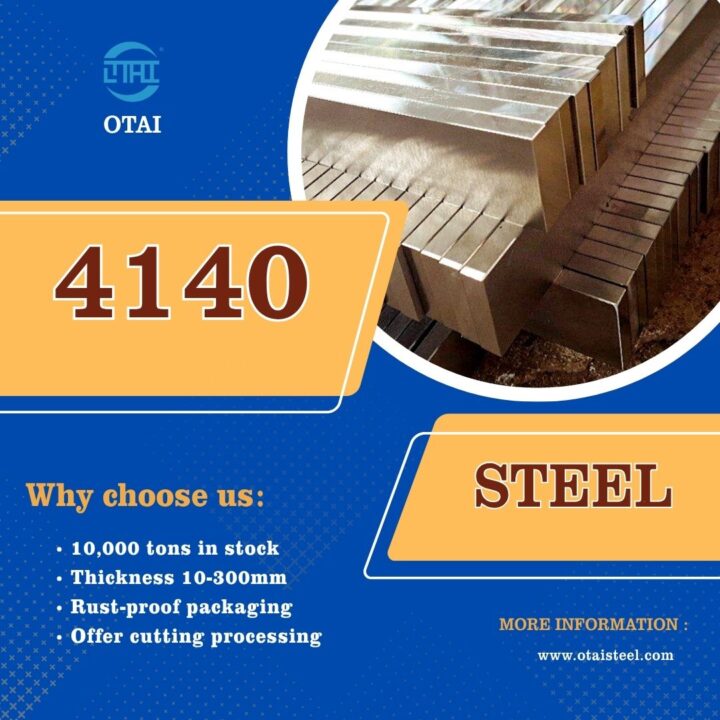
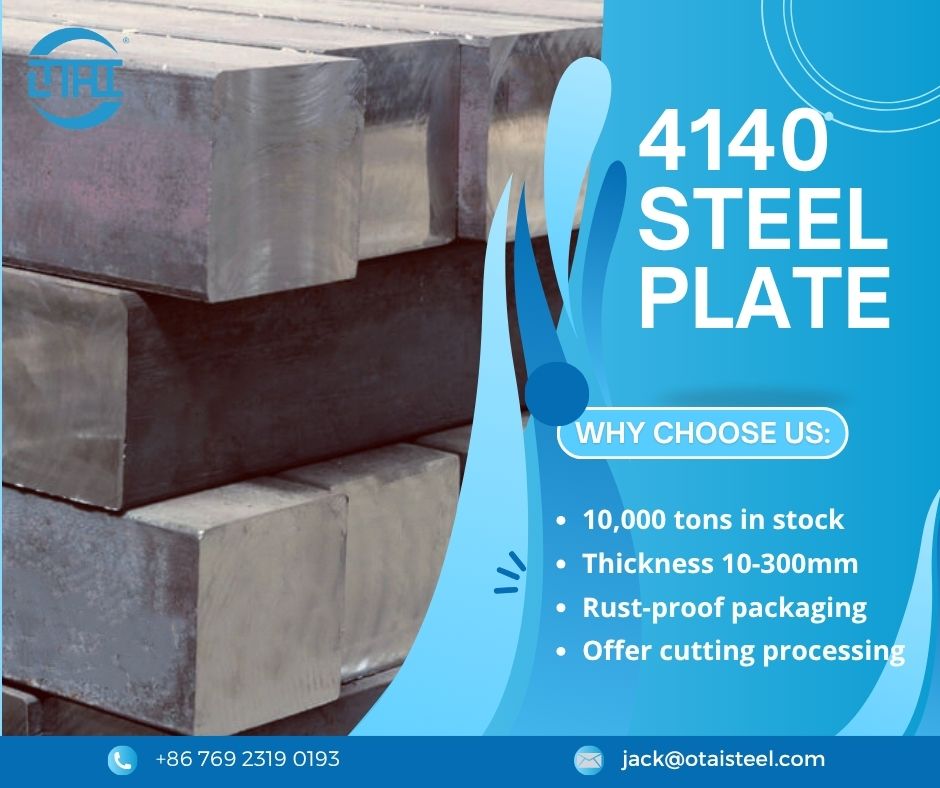
Massive Inventory – Over 10,000 tons of alloy and tool steels, thickness from 6 mm to 300 mm.
-
Customized Processing – Cutting, heat treatment, and packaging tailored to your needs.
-
Strict Quality Control – Ultrasonic testing (UT), chemical analysis, and SGS inspection available.
-
Global Client Base – Trusted supplier to industry leaders like Thyssenkrupp, Borealis, Schlumberger.
-
Competitive Pricing & Fast Delivery – Reliable supply chain and efficient logistics.
❓ FAQ – Is 4140 Steel Weldable?
Q1: Can I weld 4140 steel without preheating?
No, preheating is strongly recommended to avoid cracking.
Q2: What is the best filler rod for 4140 steel?
ER80S-D2 or E8018-B2 for strength matching, ER70S-2 for more ductility.
Q3: Do I always need post-weld heat treatment?
For critical components, yes—it improves toughness and reduces residual stresses.
Q4: Can 4140 steel be welded to mild steel?
Yes, but filler selection and heat control are crucial.
Q5: What welding process is best for 4140 steel?
TIG and low-hydrogen stick welding are common for precision and quality.