Heat Treating 4140 Steel: How Does Heat Treatment Affect Its Properties?
📑 Table of Contents
- 🔍 Why Is Heat Treatment Important for 4140 Steel?
- 🔥 Annealing 4140 Steel: How Does It Affect Hardness?
- 🌡️ Normalizing 4140 Steel: Improving Structure and Uniformity
- 💪 Hardening 4140 Steel: What Happens During Quenching?
- ⚙️ Tempering 4140 Steel: Balancing Hardness and Toughness
- 📊 4140 Steel Hardness After Heat Treatment
- 🏭 Applications of Heat-Treated 4140 Steel
- 📦 What Should Buyers Check When Purchasing Heat-Treated 4140 Steel?
- 🏢 Why Choose Otai for 4140 Steel?
- ❓ Frequently Asked Questions
🔍 Why Is Heat Treatment Important for 4140 Steel?
Heat treating 4140 steel is an important manufacturing process that changes its microstructure and mechanical properties. By controlling heating temperatures, holding times, and cooling conditions, manufacturers can adjust hardness, tensile strength, yield strength, toughness, and machinability to meet different industrial requirements.
AISI 4140 is a chromium-molybdenum alloy steel known for its strength, toughness, wear resistance, and hardenability. Its chemical composition typically includes approximately 0.38–0.43% carbon, 0.80–1.10% chromium, and 0.15–0.25% molybdenum. These alloying elements help the steel respond effectively to different heat treatment processes.
However, 4140 steel does not have one fixed set of mechanical properties. Annealed 4140, normalized 4140, hardened 4140, and quenched and tempered 4140 can perform very differently, even though they belong to the same steel grade.
What changes during heat treatment?
Heat treatment changes the internal structure of 4140 steel. Depending on the process, the material may develop ferrite, pearlite, bainite, or martensite, which influence its mechanical behavior.
For example, annealing produces a relatively soft structure that supports machining. Quenching creates a hard martensitic structure, while tempering adjusts that structure to reduce brittleness and improve toughness.
The main effects of heat treating 4140 steel include:
- Hardness: Changes the material’s resistance to indentation and localized deformation.
- Tensile strength: Determines the maximum tensile stress the material can withstand.
- Yield strength: Influences the stress level at which permanent deformation begins.
- Toughness: Determines the ability to absorb energy before fracture.
- Machinability: Affects cutting performance, tool life, and production efficiency.
- Dimensional stability: Influences distortion and dimensional changes during processing.
Which heat treatment process should manufacturers choose?
The correct process depends on the final application and manufacturing sequence. For example, a manufacturer producing a large machined shaft may prefer annealed material for easier cutting before conducting final heat treatment. A buyer sourcing finished mechanical components may instead require quenched and tempered 4140 with specified hardness and tensile properties.
| Heat treatment | Main purpose | Typical application |
|---|---|---|
| Annealing | Reduce hardness and improve machinability | Machined components |
| Normalizing | Refine and improve structural uniformity | General engineering parts |
| Hardening | Increase hardness and strength | Wear-resistant components |
| Tempering | Improve toughness and adjust hardness | High-strength mechanical parts |
| Quenching and tempering | Balance strength, hardness, and toughness | Shafts, gears, and heavy machinery |
For industrial buyers, understanding these differences is essential. Selecting the correct heat treatment condition helps prevent unnecessary processing costs and ensures that the purchased material matches the actual engineering requirements.
🔥 Annealing 4140 Steel: How Does It Affect Hardness?
Annealing is a heat treatment process used to soften 4140 steel, improve machinability, and reduce internal stresses. Manufacturers commonly select annealed 4140 when they need to perform extensive machining before applying a final hardening treatment.
Compared with hardened and tempered material, annealed 4140 generally offers lower hardness and strength but better machining conditions. This makes it suitable for manufacturing components with complex shapes, deep holes, and substantial material removal.
Typical annealing temperature for 4140 steel
A common full annealing practice for 4140 steel involves heating the material to approximately 845–870°C (1550–1600°F), holding it until the section reaches a sufficiently uniform temperature, and then cooling it slowly in the furnace.
The cooling process is important. Slow cooling allows the steel to develop a softer microstructure and reduces the risk of excessive hardness. Some industrial procedures use controlled furnace cooling to approximately 650°C (1200°F), followed by air cooling.
However, these temperatures are general processing references rather than universal specifications. The correct cycle depends on the starting microstructure, material dimensions, furnace conditions, and required final properties.
How does annealing affect 4140 steel hardness?
Annealing reduces the hardness of 4140 steel and generally improves its machinability. Depending on the exact process and material condition, annealed 4140 commonly has a hardness around 197–235 HBW. This is an indicative range, not a guaranteed acceptance requirement.
The actual hardness can vary with chemical composition, section size, previous processing, and cooling rate. Therefore, buyers should check the supplier’s inspection certificate rather than assume every annealed 4140 product has the same hardness.
When should manufacturers use annealed 4140?
Annealed 4140 is particularly useful when machining efficiency is a priority. For example, manufacturers producing shafts, couplings, hydraulic components, and custom mechanical parts may prefer softer material before final hardening.
Annealing can also help reduce the machining difficulties associated with high-strength material. Nevertheless, if the finished component needs to withstand substantial loads, the manufacturer must consider whether additional heat treatment is necessary after machining.
From a purchasing perspective, specify annealed condition clearly when requesting quotations. Otherwise, a supplier may offer 4140 in another delivery condition that does not match the planned manufacturing process.
🌡️ Normalizing 4140 Steel: Improving Structure and Uniformity
Normalizing is another important heat treatment process for 4140 steel. Its primary purpose is to refine the steel’s microstructure and improve structural uniformity through controlled heating and air cooling.
Unlike annealing, which uses slow furnace cooling, normalizing involves cooling the material in still or controlled air. Consequently, normalized 4140 generally has a finer microstructure and higher hardness than fully annealed material.
What is the normalizing temperature for 4140 steel?
A typical normalizing temperature for 4140 steel is approximately 870–900°C (1600–1650°F). The steel is heated above its critical transformation temperature, held long enough to achieve the required austenitic structure, and then cooled in air.
The holding time must account for the material’s thickness and heating conditions. Large sections require sufficient time for the core to reach the appropriate temperature. Therefore, using the same holding time for thin and thick products may produce inconsistent results.
How does normalizing change mechanical properties?
Normalizing generally produces a finer ferrite-pearlite structure than conventional full annealing. As a result, normalized 4140 often provides higher hardness and strength while maintaining useful ductility.
The process can also help reduce structural variations caused by previous manufacturing operations. However, normalizing does not guarantee completely uniform properties throughout every large section. Cooling rates can differ between the surface and the center.
Typical changes after normalizing include:
- Higher hardness compared with fully annealed material in many cases.
- Improved structural uniformity.
- Refined grain structure when the process is properly controlled.
- Moderate strength suitable for certain engineering applications.
- A different machining response compared with annealed 4140.
Normalizing vs. annealing: Which is better?
Neither process is universally better. The correct choice depends on the next manufacturing operation and the required properties.
| Comparison | Annealing | Normalizing |
|---|---|---|
| Cooling method | Slow furnace cooling | Air cooling |
| Hardness | Generally lower | Generally higher |
| Machinability | Generally better | Depends on final hardness |
| Microstructure | Relatively soft structure | Generally finer structure |
| Main objective | Softening and machinability | Structural refinement |
For buyers, the key question is whether the material needs to be machined extensively or used in a normalized condition. Confirming this requirement before ordering helps the supplier recommend the appropriate product condition.
💪 Hardening 4140 Steel: What Happens During Quenching?
Hardening is the process used to increase the hardness and strength of 4140 steel. It generally involves heating the material to an austenitizing temperature and then cooling it rapidly through a suitable quenching medium.
During heating, the original microstructure transforms into austenite. Rapid cooling then produces a predominantly martensitic structure, which provides high hardness and strength.
However, as-quenched 4140 can be relatively brittle and contain substantial internal stresses. For most demanding industrial applications, manufacturers follow hardening with tempering.
4140 steel hardening temperature
A typical austenitizing temperature range for 4140 steel is approximately 845–870°C (1550–1600°F). The material must reach a suitable temperature throughout the section before quenching begins.
Holding time, furnace atmosphere, heating rate, and component geometry all influence the result. Excessive heating or prolonged holding can cause grain growth, oxidation, or other undesirable changes.
For this reason, industrial heat treatment should follow an established procedure based on the material specification and the dimensions of the workpiece.
Which quenching medium should manufacturers use?
Oil is a common quenching medium for 4140 steel because it provides a practical balance between cooling rate and the risk of distortion or cracking. Water and other faster quenchants may be suitable for specific situations, but they require careful evaluation.
The correct medium depends on the section size, required hardness, hardenability, component geometry, and equipment capabilities.
For example, a large 4140 plate may not develop the same hardness throughout its thickness as a small round bar. The surface cools faster than the core, creating differences in the resulting microstructure and mechanical properties.
What is the difference between hardness and hardenability?
These two terms are important when evaluating 4140 steel.
- Hardness measures resistance to localized indentation or deformation.
- Hardenability describes the ability of steel to develop hardness to a certain depth during quenching.
A material may reach high surface hardness but still show lower hardness at its center. Hardenability becomes especially important when manufacturers process thick plates, large shafts, or components with substantial cross-sections.
4140 steel contains chromium and molybdenum, which improve its hardenability compared with plain carbon steels of similar carbon content. Nevertheless, the final hardness distribution still depends on the actual chemical composition, dimensions, and cooling conditions.
Why must 4140 steel be tempered after hardening?
As-quenched martensite provides high hardness but may have insufficient toughness for practical service. High internal stresses can also increase the risk of cracking or dimensional instability.
Tempering helps reduce these problems by allowing the microstructure to change in a controlled manner. Therefore, manufacturers generally use hardening and tempering together when producing high-strength 4140 mechanical components.
⚙️ Tempering 4140 Steel: Balancing Hardness and Toughness
Tempering is a critical step in the heat treatment of 4140 steel. After quenching, manufacturers reheat the hardened material to a temperature below the lower critical transformation temperature and hold it for a controlled period.
This process reduces internal stresses and adjusts the balance between hardness, strength, ductility, and toughness. The tempering temperature has a major influence on the final mechanical properties.
What is the tempering temperature for 4140 steel?
4140 steel can be tempered across a relatively broad temperature range, commonly about 205–650°C (400–1200°F). The exact temperature depends on the required hardness and mechanical properties.
Lower tempering temperatures generally retain more hardness and strength, while higher temperatures usually reduce hardness and improve toughness and ductility.
However, the relationship is not completely linear. Certain temperature ranges may increase susceptibility to temper embrittlement, depending on the steel’s composition, impurities, and cooling conditions. Heat treatment procedures should therefore consider the intended service requirements rather than simply choosing the highest or lowest temperature.
How does tempering temperature affect 4140 steel?
| Tempering condition | General effect | Potential application |
|---|---|---|
| Lower temperature | Retains higher hardness and strength | Components requiring higher hardness |
| Intermediate temperature | Balances strength and toughness | General mechanical components |
| Higher temperature | Reduces hardness and generally improves toughness | Components exposed to impact and heavy loads |
The table illustrates general trends rather than guaranteed mechanical properties. Actual results depend on the initial quenching condition, holding time, section size, and chemical composition.
What is quenched and tempered 4140 steel?
Quenched and tempered 4140, often called 4140 QT, is steel that has undergone both hardening by quenching and subsequent tempering.
This condition is widely used in mechanical engineering because it offers a useful combination of tensile strength, yield strength, hardness, and toughness. It is suitable for shafts, gears, industrial fasteners, hydraulic components, and other load-bearing parts.
Compared with as-quenched material, 4140 QT generally offers a more practical balance of properties for industrial service.
Why is tempering important for industrial buyers?
Buyers should not specify only that 4140 must be hardened. They should also identify the required final hardness or mechanical properties after tempering.
For example, two suppliers may both offer 4140 QT, but their products may have different hardness levels because they use different tempering conditions. These differences can affect machining, component strength, and performance in service.
When purchasing QT material, request the specified hardness range, tensile properties where applicable, and a material test certificate confirming the actual inspection results.
📊 4140 Steel Hardness After Heat Treatment
Hardness is one of the most frequently requested properties when buyers purchase heat-treated 4140 steel. It provides a practical indication of the material’s resistance to indentation and helps manufacturers assess whether the steel meets their machining and service requirements.
However, hardness alone cannot fully describe the performance of 4140 steel. Tensile strength, yield strength, toughness, and the uniformity of properties throughout the section must also be considered.
Typical hardness ranges for different heat treatment conditions
The following table provides indicative hardness ranges commonly associated with different 4140 heat treatment conditions. These figures are general references, not universal grade requirements or guaranteed delivery values.
| Condition | Indicative hardness | Main characteristic |
|---|---|---|
| Annealed | 197–235 HBW | Lower hardness and better machinability |
| Normalized | Approximately 200–260 HBW | Refined structure and moderate strength |
| Quenched | Can reach approximately 54–60 HRC in suitable sections | High hardness with limited toughness before tempering |
| Quenched and tempered | Often specified around 28–32 HRC for some applications | Balanced strength and toughness |
Note: Actual hardness varies with section size, chemical composition, quenching conditions, tempering temperature, and inspection location. The ranges above are illustrative only. The purchase specification and actual MTC results take precedence.
Why can the same 4140 steel have different hardness values?
Several factors explain why two 4140 products may show different hardness results:
- Carbon content: Variations within the permitted chemical composition range can influence hardening response.
- Section thickness: Large sections may cool more slowly at the center during quenching.
- Quenching medium: Oil, water, and other cooling media produce different cooling rates.
- Tempering temperature: Higher tempering temperatures generally reduce final hardness.
- Holding time: Insufficient or excessive holding can affect the resulting microstructure.
- Testing location: Surface and core hardness may differ, particularly in thick products.
Which hardness test should buyers request?
Brinell hardness (HBW) and Rockwell C hardness (HRC) are common methods for checking 4140 steel. The appropriate method depends on the material’s hardness, dimensions, surface condition, and applicable testing standards.
For softer annealed material, Brinell testing is frequently used. For harder quenched and tempered material, Rockwell C testing is common.
When reviewing test results, buyers should confirm the testing method, measurement location, acceptance range, and applicable standard. If the material is thick, it may also be necessary to define whether the required hardness applies to the surface, core, or specified depth.
This is particularly important when ordering large plates or round bars because a surface hardness reading alone may not demonstrate uniform hardness throughout the entire section.
🏭 Applications of Heat-Treated 4140 Steel
Heat-treated 4140 steel is widely used in industries that require a combination of high mechanical strength, toughness, and wear resistance. The ability to adjust its properties through heat treatment makes it suitable for components with different loading conditions and manufacturing requirements.
Shafts and transmission components
4140 QT is a popular choice for shafts, axles, and transmission components. These parts often experience torsional stress, bending loads, and repeated mechanical forces.
By controlling the quenching and tempering process, manufacturers can achieve the required strength and toughness while reducing the risk of brittle failure. The selected hardness should match the component’s operating conditions and design requirements.
Gears and mechanical parts
4140 steel is also used for certain gears, pinions, couplings, and other mechanical components. Its response to hardening makes it useful when the design requires improved surface hardness and overall mechanical strength.
However, buyers should distinguish between through-hardening and surface-hardening requirements. If a component requires a hard outer layer and a tougher core, additional processes such as induction hardening may be considered. The correct process depends on the geometry and performance requirements.
Hydraulic and oilfield equipment
Hydraulic equipment often operates under substantial pressure and mechanical loads. Components such as shafts, connectors, and selected structural parts may use 4140 because of its strength and toughness.
Oilfield equipment also uses 4140 for certain mechanical components that require reliable performance under demanding service conditions. Buyers should confirm any additional requirements for corrosion resistance, fatigue performance, impact toughness, or specialized inspection.
Heavy machinery and industrial equipment
Heavy machinery manufacturers use 4140 steel for parts that experience repeated loads and mechanical wear. Examples include selected rollers, machine components, pins, and high-strength fasteners.
The final heat treatment condition should reflect the component’s operating environment. A part exposed to impact may require greater toughness, while another part may prioritize hardness and resistance to surface deformation.
Choosing the correct 4140 product form
Heat-treated 4140 is available in different product forms, including plates and round bars. The selection depends on the component design and the amount of machining required.
- 4140 steel plate: Suitable for machining larger components, mounting structures, and custom industrial parts.
- 4140 round bar: Commonly used for shafts, pins, rollers, and cylindrical mechanical components.
- 4140 QT plate: Useful when the project requires material supplied in a specified quenched and tempered condition.
Before ordering, manufacturers should confirm whether the available product form and dimensions can meet their heat treatment and machining requirements.
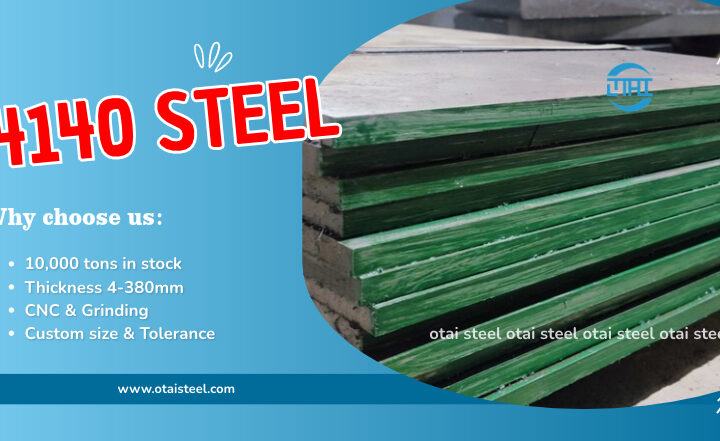
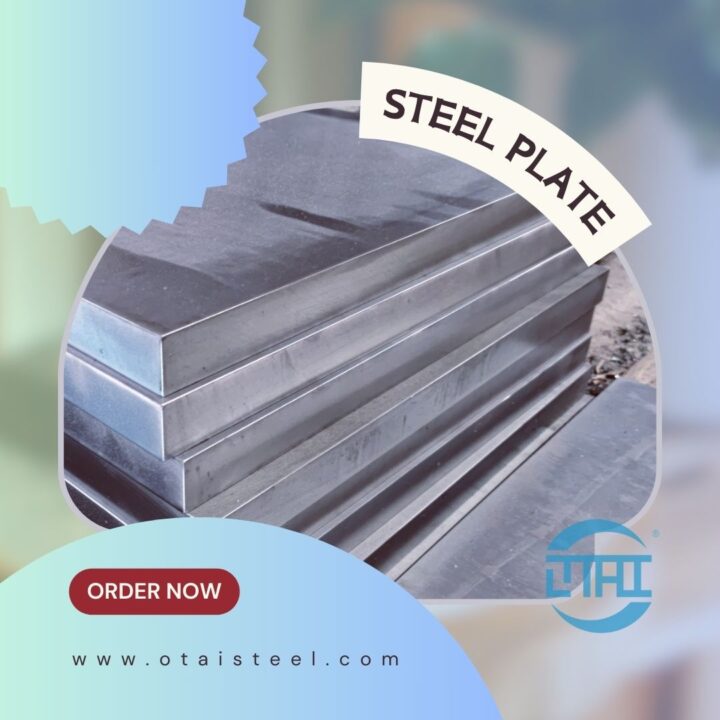
For product specifications and supply information, visit Otai’s 4140 alloy steel and 4140 steel plate page.
📦 What Should Buyers Check When Purchasing Heat-Treated 4140 Steel?
For industrial procurement, purchasing 4140 steel involves more than selecting the grade and dimensions. Buyers must also confirm the delivery condition, mechanical properties, inspection requirements, and suitability for subsequent manufacturing operations.
A supplier may offer 4140 in annealed, normalized, or quenched and tempered condition. These products have different properties and may require different production processes. Therefore, clear purchasing specifications help prevent misunderstandings and reduce the risk of material rejection.
1. Confirm the heat treatment condition
Specify whether the required material is annealed, normalized, or quenched and tempered. If the material must be supplied in QT condition, state this explicitly in the purchase order.
Do not rely on a general description such as heat-treated 4140. The supplier needs to understand the exact condition required for the application.
2. Define the required hardness and mechanical properties
Hardness requirements should include the acceptable range and testing method. If the component needs specific tensile strength, yield strength, elongation, or impact properties, include these values in the specification.
For example, specifying 28–32 HRC provides a clearer requirement than simply requesting high-hardness 4140. However, the chosen range must be appropriate for the component’s design and service conditions.
3. Check thickness and section-size effects
Section size influences cooling rates during quenching and can affect the final hardness distribution. This is particularly important for thick plates and large-diameter bars.
Buyers should ask whether the supplier can meet the required properties at the actual ordered dimensions. If uniform through-section properties are important, specify the testing location and any additional inspection requirements.
4. Review the material test certificate
The MTC is an important document for verifying the delivered material. Before accepting the shipment, check the following information:
- Steel grade and applicable material standard.
- Heat number and material traceability.
- Actual chemical composition.
- Heat treatment condition.
- Hardness test results.
- Tensile and impact test results when specified.
- Product dimensions and inspection information.
Buyers should also distinguish between the supplier’s typical chemical analysis and the actual heat analysis recorded for the supplied batch. The actual MTC results should meet the agreed material specification.
5. Consider additional inspection requirements
For demanding industrial applications, buyers may need additional inspection beyond routine chemical and mechanical testing. Depending on the product and application, this may include ultrasonic testing (UT), dimensional inspection, surface examination, and third-party inspection.
Ultrasonic testing can help identify certain internal discontinuities in suitable steel products. However, the inspection method, acceptance level, and applicable standard should be agreed upon before production or shipment.
6. Evaluate the supplier’s processing capabilities
Purchasing from a supplier that offers cutting and machining services can simplify the procurement process. Instead of arranging several processing steps independently, buyers may obtain material prepared to their required dimensions.
Before confirming an order, ask about available stock, cutting tolerances, surface condition, processing capacity, packaging, and delivery schedules.
| Purchasing item | What buyers should confirm |
|---|---|
| Grade | AISI 4140 / SAE 4140 |
| Heat treatment | Annealed, normalized, or quenched and tempered |
| Hardness | Required range and testing method |
| Mechanical properties | Tensile strength, yield strength, and impact requirements |
| Dimensions | Thickness, diameter, width, and length |
| Inspection | MTC, hardness, UT, and third-party inspection if required |
| Processing | Saw cutting, CNC machining, and grinding |
| Delivery | Packaging, quantity, lead time, and shipping terms |
By confirming these details before placing an order, buyers can compare supplier quotations more accurately and reduce unexpected processing or inspection costs.
🏢 Why Choose Otai for 4140 Steel?
Otai Special Steel is a professional supplier of alloy steel and tool steel with international supply experience dating back to 1999. We support manufacturers, distributors, and industrial buyers with a range of steel products, processing services, and export solutions.
Our advantages include:
- Large inventory: More than 10,000 tons of steel stock available to support different purchasing requirements.
- 4140 steel plate stock: Thicknesses from 4–380 mm.
- 4140 QT plate stock: Thicknesses from 13–200 mm.
- 4140 round bar stock: Diameters from 14–500 mm.
- Cutting capacity: 20 saw cutting machines for preparing materials according to customer dimensions.
- Precision processing: CNC machining, grinding, and customized cutting services.
- Quality control: Material inspection, quality testing, and ultrasonic testing support where required.
- Third-party inspection: Support for independent inspection according to customer specifications.
- Export packaging: Anti-rust protection, steel strapping, bundled packaging, and wooden boxes.
- International experience: Steel supply experience covering more than 54 countries and regions.
- One-stop service: Support from material selection and dimensional confirmation to processing and delivery.
Whether you need annealed 4140 for machining or quenched and tempered 4140 for high-strength mechanical components, Otai can help you evaluate available stock and confirm suitable supply conditions.
When requesting a quotation, please provide the required grade, dimensions, quantity, heat treatment condition, hardness range, and inspection requirements. Our team can help assess your purchasing needs and provide a suitable steel supply solution.
❓ Frequently Asked Questions
1. What is the best heat treatment for 4140 steel?
Quenching and tempering is one of the most widely used heat treatment processes for 4140 steel when high strength, hardness, and toughness are required. However, annealing may be more suitable when the material needs extensive machining before final heat treatment. The best process depends on the application and required mechanical properties.
2. What temperature do you heat treat 4140 steel?
Typical austenitizing temperatures for hardening 4140 steel are approximately 845–870°C (1550–1600°F). After heating and holding, the steel is quenched in a suitable medium. The subsequent tempering temperature depends on the required final hardness and toughness.
3. What hardness can 4140 steel achieve after heat treatment?
4140 steel can reach approximately 54–60 HRC in suitable sections under appropriate quenching conditions. After tempering, hardness decreases according to the selected tempering temperature. The final value also depends on section size, chemical composition, and cooling conditions.
4. Is 4140 steel better annealed or quenched and tempered?
Neither condition is universally better. Annealed 4140 is generally easier to machine and is suitable for manufacturing operations that require substantial material removal. Quenched and tempered 4140 offers higher strength and hardness with a more practical balance of toughness for demanding mechanical applications.
5. Does heat treating 4140 steel make it stronger?
Yes. Hardening and tempering can significantly increase the strength and hardness of 4140 steel compared with its annealed condition. However, the final properties depend on the complete heat treatment cycle. Proper tempering is essential to obtain a suitable balance between strength, hardness, and toughness.