Skip to Content

Category Archives: Blog

4140 Steel Corrosion Resistance: Factors, Prevention, and Solutions

4140 Steel Corrosion Resistance: Factors, Prevention, and Solutions4140 Steel Corrosion Resistance: Factors, Prevention, and Solutions

Hi everyone! If you’ve worked with steel, you’ve probably heard of 4140 steel. It’s like the Swiss Army Knife of steels—strong, versatile, and up to almost any task. But I’m often asked: Does this stuff rust? After all, rust is the bane of steel. If you’re not careful, it can have a huge impact on your performance. So, today we’re going to talk about this and see how to keep your 4140 steel in top condition.

**What is 4140 steel? **

4140 steel is a high-quality material known for its strength and durability. It contains a mix of carbon and other alloying elements that contribute to its tough properties. However, it is important to note that 4140 steel is not stainless steel. While stainless steel is naturally resistant to rust due to its chromium content, 4140 steel requires more care to prevent corrosion. Think of 4140 steel as a reliable, hard-working material—just be sure to maintain it properly to avoid rusting.

**Does 4140 steel rust? **

Yes, 4140 steel can rust. While it’s more durable than many other steels, it is still susceptible to rust if not properly protected. Unlike stainless steel, 4140 lacks a natural resistance to corrosion. However, don’t worry—there are several methods to prevent it from rusting.

**What factors affect the rust resistance of 4140 steel? **

The likelihood of 4140 steel rusting depends on several factors, with the environment being one of the most significant. Prolonged exposure to damp conditions increases the risk of rust. Additionally, chemicals, acids, and alkalis can speed up the corrosion process. The good news is that surface treatments can improve rust resistance. For instance, applying a zinc coating acts like a protective raincoat for the steel, effectively blocking moisture and air, and preventing rust.

**How ​​to effectively prevent 4140 steel from rusting? **

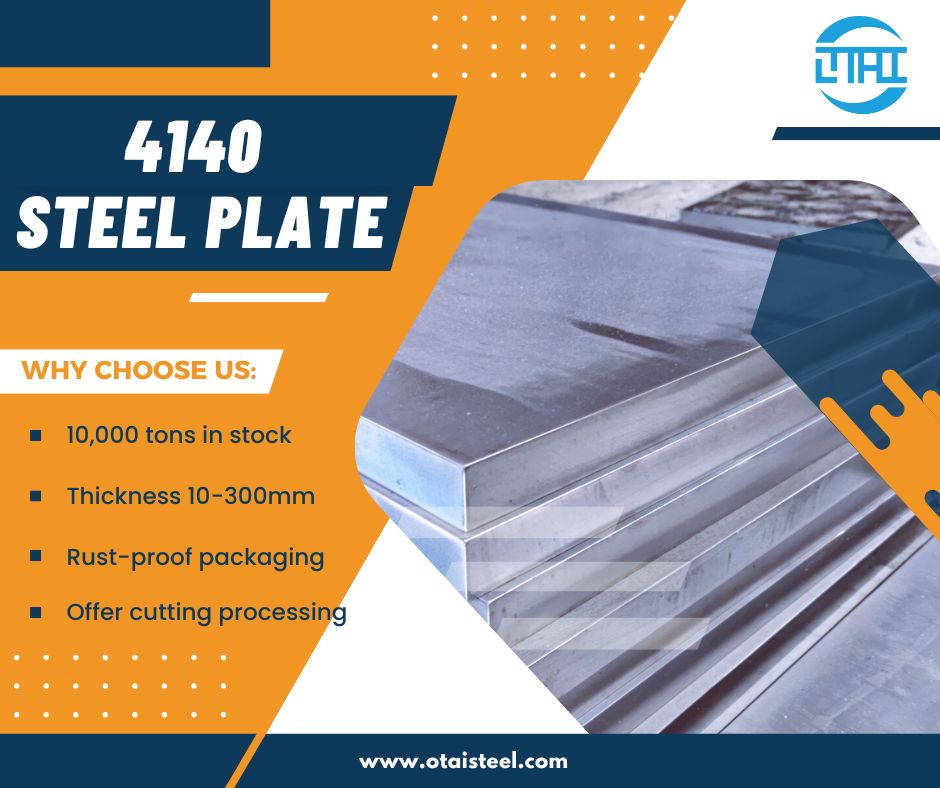
So, how to prevent 4140 steel from rusting? In addition to regular cleaning and keeping it dry, sometimes more professional protection methods are required. Zinc coating is a good choice, it can provide a strong protective film for steel, greatly reducing the possibility of rust. Hot-dip galvanizing is also a good choice, it is like a super strong protective cover for steel. And don’t forget the packaging! We have a special anti-rust packaging solution at OTAI, which can provide extra protection for your steel, like putting the steel in a “protective bubble”.

**Rust-proof success case**

Let me share two real examples. A customer in the automotive industry once encountered rust problems on 4140 steel parts. We recommended them to carry out zinc coating treatment, and the results were very good. The parts no longer rusted and the service life was greatly extended. Another example comes from the agricultural field. A customer’s agricultural machinery equipment was also troubled by rust. We provided them with customized anti-rust packaging, which was also very effective and greatly improved the condition of their tools.

**Rust-proof comparison of 4140 steel and other steels**

Compared with other common steels, the rust-proof performance of 4140 steel is much better than that of 1045 steel. 1045 steel is just plain carbon steel, and it has a weak rust resistance. 4140 steel is a little less rust-resistant than stainless steel. Stainless steel is naturally very rust-resistant, but 4140 steel needs some extra help.

**Rust-Proofing Solutions from OTAI**

At OTAI, we understand the importance of keeping steel in great shape. To help our customers keep their steel in top shape, we offer custom rust-proofing packages and coatings. We have worked with many large companies and have earned the trust of our customers with our experience and professional services. Our goal is to help you effectively prevent steel from rusting and extend its service life.

**Conclusion: Choose the right steel to meet your needs**

In general, 4140 steel does rust, but with proper care and treatment, it can be kept in great shape. Whether you are working on automotive parts, agricultural equipment, or other applications, it is important to manage the rust protection of your steel. If you need a reliable partner to help you deal with rust protection, OTAI is here to support you. We have the experience, solutions, and confidence to keep your steel in top shape.
0 0 Continue Reading →

4140 Steel Alloy Composition: A Technical Guide
4140 Steel Alloy Composition: A Technical Guide4140 Steel Alloy Composition: A Technical Guide

Introduction to Elements Alloy 4140 steel

Alloy 4140, commonly referred to as chromoly steel, is widely used across multiple industries because of its superior mechanical properties. A solid understanding of its chemical composition is essential for engineers and manufacturers who depend on this material to create components that require both strength and durability.

Chemical Composition of Alloy 4140

The composition of Alloy 4140 is finely tuned to deliver excellent performance in demanding applications. Below are the key elements and their typical proportions:

  • Carbon (C): 0.38-0.43%
    Carbon is a crucial component of steel, enhancing the strength and hardness of Alloy 4140.
  • Manganese (Mn): 0.75-1.00%
    Manganese improves the material’s hardenability and strength, increasing its resistance to wear.
  • Chromium (Cr): 0.80-1.10%
    Chromium boosts the steel’s hardenability and resistance to corrosion. It also contributes to a finer grain structure, enhancing the overall toughness.
  • Molybdenum (Mo): 0.15-0.25%
    Molybdenum enhances the strength and toughness of the alloy, particularly at elevated temperatures.
  • Silicon (Si): 0.15-0.35%
    Silicon is used primarily for deoxidizing molten metal and improving overall strength.
  • Phosphorus (P): ≤0.035%
    Phosphorus is minimized to prevent brittleness in the final product.
  • Sulfur (S): ≤0.040%
    Sulfur is controlled to minimize hot shortness and enhance machinability.

How Composition Affects Properties

The careful balance of elements in Alloy 4140 leads to a unique set of characteristics that make it highly versatile for a range of applications:

  • Mechanical Properties
    Alloy 4140 offers a tensile strength of approximately 1020 MPa and a yield strength of around 655 MPa. It also demonstrates good elongation and a reduction in area, which enhances its ductility and suitability for various manufacturing processes.
  • Heat Treatment and Hardening
    Alloy 4140 responds well to heat treatment processes. Techniques like quenching and tempering can significantly improve its hardness, achieving a hardness level of up to 302 HB.

Real-World Case Study

A renowned automotive manufacturer successfully used Alloy 4140 for producing high-strength shafts in their vehicles. The composition of the alloy allowed these shafts to handle heavy loads and stress, which resulted in superior vehicle performance and extended durability.

Advantages of Understanding Alloy 4140 Composition

A thorough understanding of Alloy 4140’s chemical makeup brings several benefits:

  • Enhanced Product Performance
    By recognizing how each element affects the alloy’s properties, manufacturers can optimize the material for specific applications, ensuring better performance.
  • Cost Efficiency
    Properly managing the composition of Alloy 4140 can reduce material waste and enhance overall efficiency, which translates into cost savings.

Case Study: Cost Savings through Composition Optimization

One of our clients achieved considerable cost savings by optimizing the heat treatment process based on a detailed analysis of the alloy’s composition. This adjustment allowed them to meet the desired mechanical properties without incurring extra material costs.

Challenges and Considerations

While Alloy 4140 offers numerous benefits, it is not without challenges:

  • Variability in Composition
    Small variations in the chemical composition can impact the consistency of the final product. It’s crucial to maintain strict control over the alloy’s composition to ensure uniformity.
  • Quality Control and Testing
    Regular testing is essential to verify the composition and mechanical properties, ensuring that the material meets industry standards and performs reliably.

Conclusion

A deep understanding of 4140 Steel Alloy Composition is vital for optimizing its performance in various applications. By leveraging the specific properties of this alloy, manufacturers can create components that offer strength, durability, and resistance to wear, making it an ideal choice for industries such as automotive, aerospace, and oil and gas.

0 0 Continue Reading →

4140 Steel Axe: A Reliable Choice for Tough Jobs
4140 Steel Axe: A Reliable Choice for Tough Jobs4140 Steel Axe: A Reliable Choice for Tough Jobs

**Introduction**

Hi there! If you’re in the market for a strong and dependable axe, you’ve probably come across 4140 steel. This alloy is well-known for its toughness and versatility, making it a popular material for axes. Whether you’re a hunter, a woodworker, or just need a solid tool for heavy-duty work, a 4140 steel axe is definitely worth considering. Let’s explore what makes this steel special and how it can serve you well.

**What Makes 4140 Steel Special**

4140 steel is a medium-carbon alloy that contains chromium and molybdenum. These elements boost its strength and wear resistance. Here’s why it’s great for axes:

High tensile strength:** It can withstand a lot of force without breaking.
Excellent impact resistance:** Perfect for chopping and heavy use.
Durability:** With proper care, it lasts for a long time.

**Choosing the Right 4140 Steel**

Finding the perfect axe can be tricky because:

Size options are limited:** Sometimes it’s hard to find the exact length or thickness you want.
Quality varies:** Not all axes are made from good steel, which affects how well they perform and how long they last.
Custom needs are hard to meet:** If you want something tailored, it’s not always easy to find suppliers who can customize.

**How OTAI Special Steel Can Help**

We get these challenges, and here’s how we make things easier for you:

Wide stock:** We have plenty of 4140 steel available in different sizes and thicknesses.
Custom cutting:** Need a special size? We cut steel to fit your exact needs.
Strict quality checks:** Every axe we make is tested thoroughly, including ultrasonic inspections and chemical composition tests.
Reliable delivery:** With over 25 years of experience, we’re known for delivering on time, every time.

**A Real-Life Example**

One hunting gear manufacturer chose our 4140 steel axes because of their strength and durability. Their customers gave great feedback, praising the axe’s long-lasting performance.

**Additional Services**

We offer more than just steel:

Packaging options:** From straps to wooden crates, we make sure your axe arrives safely.
Rust protection:** We provide treatments to keep your axe rust-free during shipping and storage.
Expert support:** Our team is always ready to help with material advice and processing tips.

**Why Choose OTAI Special Steel?**

Here’s why we’re a good pick for your 4140 steel axe:

Direct from the factory:** Get competitive prices without middlemen.

Steady supply:** Our large inventory and trusted suppliers mean consistent availability.

Custom solutions:** We tailor steel cutting and processing to your needs.

High-quality control:** Every axe passes rigorous tests before it reaches you.

Trusted by top companies:** Many leading brands rely on us for quality and punctual delivery.

0 0 Continue Reading →

Steel 4140 Hardness: Balancing Durability and Performance

Steel 4140 Hardness: Balancing Durability and PerformanceSteel 4140 Hardness: Balancing Durability and Performance
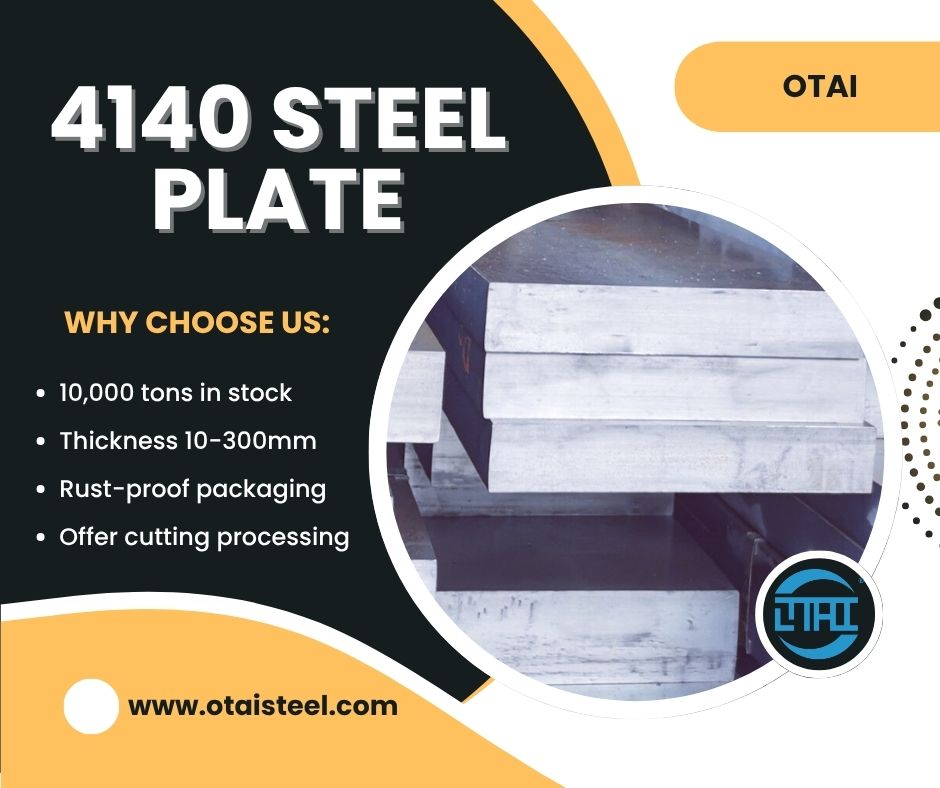
In contemporary engineering, 4140 steel shines as a symbol of superior strength and durability. This chromium-molybdenum alloy epitomizes advanced metallurgical innovation. Found in high-performance machinery, from racecars to spacecraft, 4140 is crucial in advancing industrial technology.

**The Genesis of 4140 Steel: An Elemental Journey**

The distinct properties of 4140 steel arise from its composition of carbon, chromium, and molybdenum. Carbon contributes essential hardness, while chromium and molybdenum enhance wear resistance and toughness. This alloying results in a steel that excels in hardness without sacrificing ductility, making it vital for demanding applications.

**Hardness: A Defining Feature**

Hardness is not merely a characteristic but a mark of its reliability. Its hardness can be precisely adjusted through heat treatment, making it ideal for parts subjected to substantial stress and strain. The balance between hardness and ductility in 4140 steel represents a pinnacle of metallurgical success, providing a material that merges toughness with resilience.

**Heat Treatment: The Performance Enhancer**

The transformation of 4140 steel from raw material to high-performance product is largely attributed to heat treatment. This process involves a series of thermal treatments that unlock the steel’s full potential. By quenching to form martensite and tempering to refine its microstructure, heat treatment prepares 4140 material for rigorous applications.

**Machining 4140 alloy: Precision in Practice**

Machining 4140 steel demands skill and precision. Its high hardness requires specialized tools and techniques. Machinists must adeptly handle the material to achieve components of exceptional accuracy and strength, showcasing the steel’s full potential when processed correctly.

**Applications: A Broad Spectrum**

4140 steel exhibits impressive versatility across multiple industries. Its uses include precision components such as gears for high-end watches, durable axles for heavy trucks, intricate parts for aerospace engines, and crucial elements in oil rigs. These varied applications highlight the steel’s ability to meet and surpass stringent performance standards in diverse and demanding environments.

**Market Dynamics: Cost vs. Value**

4140 steel commands a higher market price due to its exceptional properties and the complex production methods required. This cost is often justified by the steel’s outstanding performance and durability. For sectors where failure is not an option, It offers a cost-effective solution over the long term.

**The Future of 4140 Steel: Embracing Progress**

Looking forward, 4140 alloy is poised for further advancements. Ongoing research aims to enhance its properties and broaden its applications. Innovations such as additive manufacturing and integration with smart materials are on the horizon. Additionally, sustainability and circular economy principles are driving advancements in steel production. Ensuring that 4140 continues to be a material of strength and responsibility.

What is the steel 4140 hardness

4140 steel exemplifies the height of human ingenuity and industrial advancement. Its enduring strength, durability, and superior performance make it a cornerstone of modern engineering. As technology advances, this steel will remain a key material, setting the standard for engineering excellence.

0 0 Continue Reading →

4140 Sheet Steel: For Tough Applications
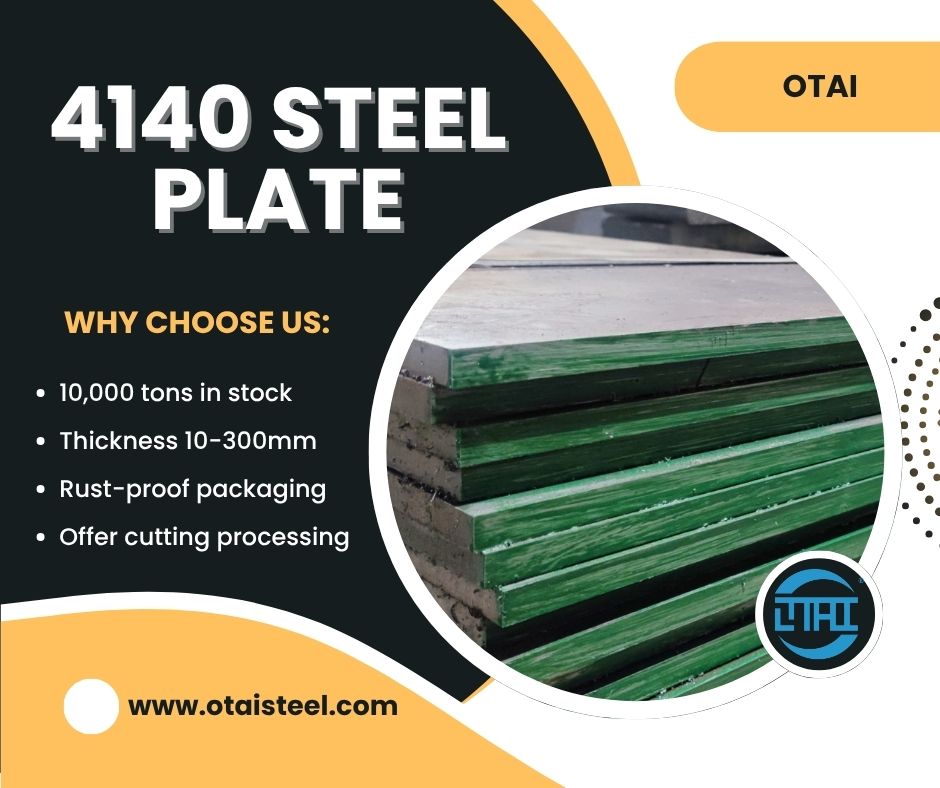
4140 Sheet Steel: For Tough Applications4140 Sheet Steel: For Tough Applications

Introduction

In the field of modern engineering, 4140 alloy steel is renowned for its exceptional strength and reliability. This alloy plays a vital role in industries where high performance is essential. In this article, we will examine the distinctive features that make 4140 alloy steel a preferred choice, as well as how these characteristics manifest in practical applications.

Compositional Foundation

The strength of 4140 alloy steel is rooted in its carefully formulated chemical composition. It is more than just steel; it’s a specialized combination of chromium, molybdenum, and other elements that enhance its performance. These additives not only improve the steel’s properties but also allow it to excel in challenging environments. For instance, chromium increases hardness and provides effective corrosion resistance.

Mechanical Excellence

The mechanical properties of 4140 alloy steel are truly impressive. It combines high strength with the flexibility needed to endure stress without breaking. With a tensile strength of up to 1300 MPa, 4140 alloy steel stands out as a heavyweight in the materials world. You can think of it as the superhero of steel—strong enough for demanding tasks while retaining the ability to bend without fracturing.

The Power of Heat Treatment

What distinguishes 4140 alloy steel is its capability for heat treatment, which acts as a transformative enhancement. Processes like quenching and tempering may sound fantastical, but they are essential for boosting the steel’s strength. This treatment allows the material to achieve hardness levels that rival the finest in the industry.

Corrosion Resistance

Although 4140 alloy steel is not completely immune to corrosion, it possesses a solid defense thanks to its chromium content. While it may not win awards for corrosion resistance, it performs well in moderate environments. Think of it as a knight in slightly tarnished armor—still capable of defending its domain.

Versatile Applications

The adaptability of 4140 alloy steel is a significant part of its reputation. It’s not limited to one specific use; rather, it excels in various roles. From critical aerospace components like landing gear to automotive parts such as driveshafts and suspension springs, 4140 alloy steel proves to be a versatile player.

Stock and Service Availability

At OTAI, we don’t just promise quality; we deliver with our extensive stock of 4140 alloy steel. With over 10,000 tons available and ready for shipment, we meet diverse needs efficiently. Additionally, our processing services can cut or shape the material to your specifications—like having a dedicated steel concierge at your service.

Protective Packaging

We place a strong emphasis on protecting our products. Our packaging solutions serve as a robust barrier for your 4140 alloy steel, ensuring it reaches you in perfect condition. Whether it’s through steel strapping, wooden crates, or anti-corrosion materials, we make sure your order is thoroughly safeguarded.

Is 4140 Alloy Steel Sheet Ideal for Heavy-Duty Applications?

4140 alloy steel represents more than just a material; it embodies strength and reliability in engineering. Strengths of 4140 Alloy Steel are not just specifications; they are the keys to achieving high performance in demanding applications. At OTAI, we take pride in offering this exceptional alloy steel, supported by our unwavering commitment to quality and service.

0 0 Continue Reading →

4140 Alloy Steel Uses: The Ultimate Guide
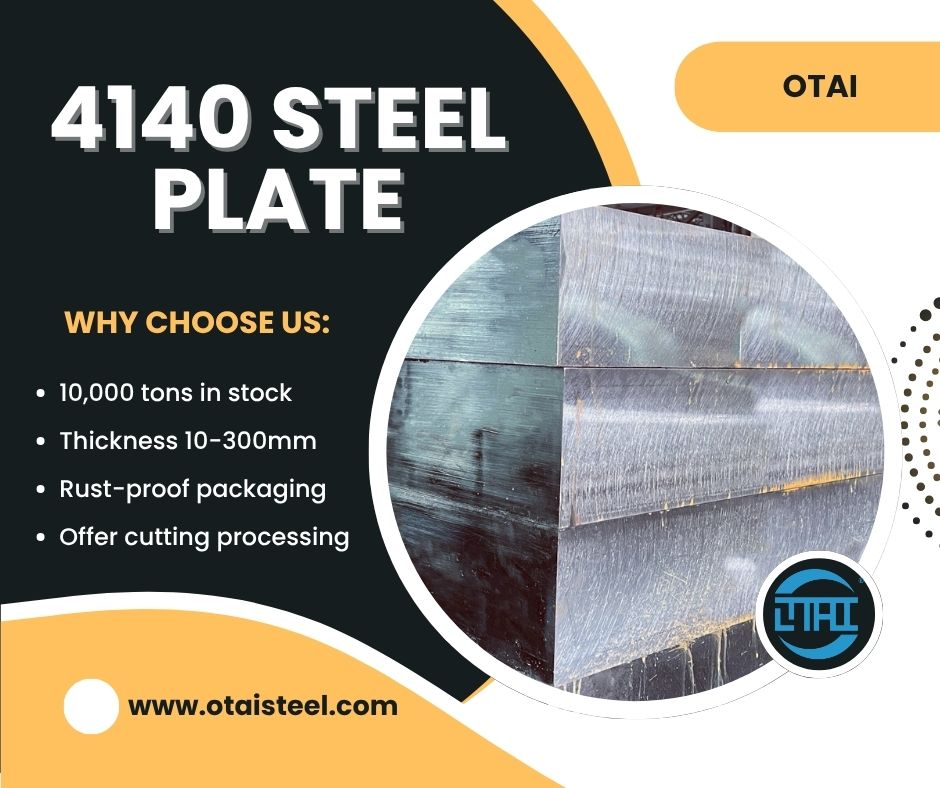
4140 Alloy Steel Uses4140 Alloy Steel Uses: The Ultimate Guide

Introduction

If you’ve been in manufacturing, you’ve likely encountered 4140 alloy steel. But what makes it stand out? This material is far from ordinary—it’s a versatile workhorse that powers numerous industries across the globe. From automotive to aerospace, construction to oil rigs, 4140 alloy steel is an essential part of modern engineering. In this article, we’ll dive into why this steel is a favorite of manufacturers and engineers alike, and why it should be on your radar.

The Core of 4140 Alloy Steel

4140 is more than just a technical term—it’s a symbol of strength, durability, and adaptability. This medium-carbon steel, enhanced with chromium and molybdenum, is designed to be incredibly tough, resistant to wear, and capable of hardening to meet the most demanding requirements. Often overlooked, it’s the reliable material that thrives in tough environments. Its exceptional performance comes from the meticulous care in its production process. Through precise heat treatments, such as quenching and tempering, 4140 strikes the perfect balance between hardness and toughness, allowing it to endure even the harshest conditions.

Where 4140 Alloy Steel Excels

**Automotive: The Power Behind Performance**

In the automotive industry, strength and lightness are essential. 4140 alloy steel provides the ideal balance between both. Whether used in axles, gears, or shafts, 4140 withstands the powerful forces at play in vehicle movement. Its unique mix of strength and lightweight properties makes it a key material for the drivetrain in high-performance vehicles. Without it, those powerful engines wouldn’t perform nearly as efficiently.

**Industrial Machinery: The Unsung Workhorse**

Industrial machinery runs under constant pressure. Gears and shafts face continuous wear as they operate around the clock. 4140 alloy steel is often the material of choice for these high-stress components, thanks to its resilience to both load-bearing and repetitive motion. A firsthand example I’ve seen involved a factory switching from traditional steel components to 4140. The result? Reduced breakdowns, less downtime, and a significant increase in productivity.

**Construction: Building for the Long Haul**

When it comes to construction, materials need to be as durable as they are strong. 4140 alloy steel answers the call, particularly for structural beams and supports. This steel is capable of handling immense weight and enduring harsh environmental conditions. I’ve seen this material in action during the construction of high-rise buildings where, years later, the support beams remain strong and dependable.

Why Choose 4140 Alloy Steel?

Strength and durability are just the start. 4140 alloy steel is also highly cost-effective. While not the cheapest option, it delivers an outstanding balance of performance and value, so you won’t have to stretch your budget for long-lasting parts. Its machinability further adds to its appeal, making it a go-to for manufacturers. With the ability to be shaped with precision, it’s perfect for CNC machining, giving engineers the confidence to design complex parts without worrying about material failure.

Real-World Applications:4140 alloy steel uses

**Automotive Gear Manufacturing**

A few years ago, a leading automotive manufacturer faced frequent gear failures in their transmissions, leading to expensive repairs and downtime. By switching to 4140 alloy steel, they saw remarkable improvements—the gears became more durable, and the transmission’s overall efficiency saw a significant boost.

**Industrial Equipment**

A heavy machinery manufacturer was dealing with frequent equipment breakdowns, costing them time and money. After they switched to 4140 alloy steel for their gears and shafts, the results were evident immediately. The equipment saw fewer failures, longer-lasting components, and a boost in overall productivity.

**Construction Projects**

During the construction of a large commercial complex, a company opted for 4140 alloy steel to ensure the reliability of their structural beams. Despite heavy loads and challenging weather, the beams held firm. Even years later, the building still stands as a testament to the material’s durability.

Finding the Right Supplier

Selecting a dependable supplier for 4140 alloy steel is crucial. You need a partner who understands the material and guarantees consistent quality. At OTAI, we specialize in 4140 alloy steel uses, providing a wide range of inventory and custom services such as cutting and packaging. We’re more than just a supplier—we’re your trusted ally in ensuring your success.

Looking Ahead

4140 alloy steel has proven itself time and again as a reliable, high-performance material. As industries continue to advance, its demand will only grow. Whether you’re involved in automotive innovation, construction, aerospace, or oil and gas, 4140 alloy steel is a material you can rely on. It’s time to explore its full potential and see how it can support your projects.

0 0 Continue Reading →

2 4140 Round Bar: Precision Engineering’s Ultimate Material

2 4140 Round Bar: Precision Engineering’s Ultimate Material2 4140 Round Bar: Precision Engineering’s Ultimate Material
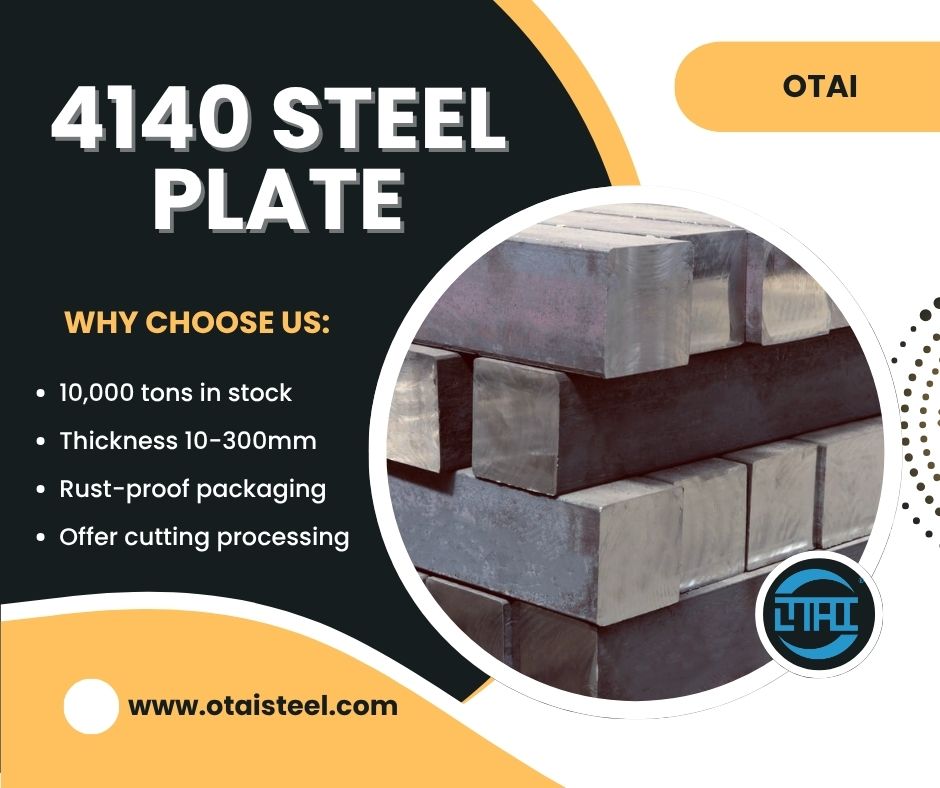
At the core of every precision engineering project lies the material that underpins its success. Among steel options, the 4140 precision ground bar stands out as a paragon of strength and accuracy. At OTAI, we don’t just supply steel; we shape the future of engineering with every bar we deliver.

The Unique Composition of 4140 Steel

4140 steel is renowned for its robust properties, thanks to its high chromium and molybdenum content. This alloy is not merely steel; it represents a legacy of exceptional performance and durability. Each 4140 bar embodies a metallurgical excellence honed over decades to meet the stringent demands of modern engineering.

Precision Ground to Exacting Standards

In precision engineering, “close” is not sufficient. That’s why we meticulously craft OTAI’s precision ground bars to ensure every dimension aligns perfectly with your specifications. Our grinding process transforms raw steel into a precision tool, meticulously refined to be the cornerstone of your next engineering achievement.

Versatile Applications, Unwavering Performance

Whether used in the drivetrain of a high-end sports car or in the framework of cutting-edge aerospace components, 4140 steel consistently proves its worth. Its versatility spans numerous industries, yet the constant is its steadfast performance and reliability.

OTAI’s Pledge to Excellence

Our inventory isn’t just a range of steel bars; it represents a promise of availability and adaptability. Choosing OTAI means you’re not just buying steel; you’re forming a partnership that ensures you get the materials you need precisely when you need them. We tailor our cutting and processing services to your specifications, making sure each bar integrates perfectly with your project.

Thoughtful Packaging for Safe Delivery

At OTAI, we recognize that the journey from our facility to your workshop is crucial. Our packaging services are designed with care, including steel strapping for secure delivery and wooden crates for added protection. We ensure that your steel arrives in pristine condition, just as it left our facility.

A Legacy Built on Quality and Trust

For OTAI, quality is more than a standard; it’s a commitment embedded in every facet of our operations. We not only adhere to international quality standards but also strive to surpass them. With third-party inspections and certifications, we set new benchmarks in quality and reliability.

2 4140 Round Bar: Precision Engineering’s Ultimate Material

The 4140 precision ground bar symbolizes the precision and excellence that define OTAI. By choosing us, you’re not just selecting a supplier; you’re joining a tradition of quality and trust built on superior materials and exceptional service. Partner with OTAI, and together, let’s drive the future of engineering with unmatched precision.

0 0 Continue Reading →

4140 Alloy Steel Sheet: Heavy-Duty Solutions
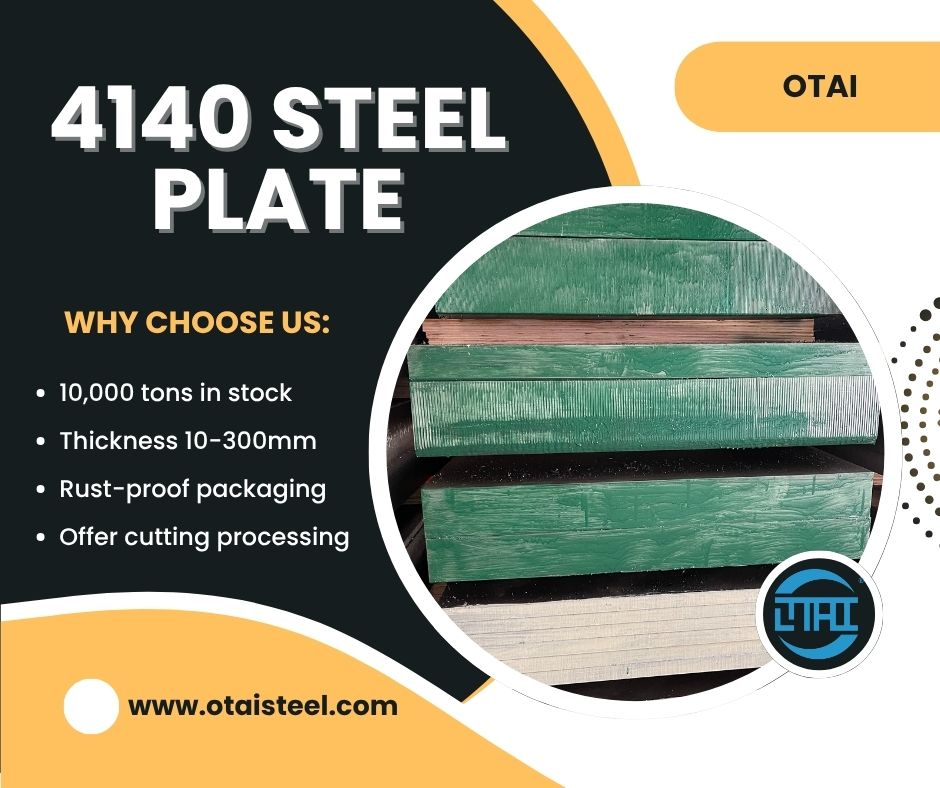
4140 Alloy Steel Sheet: Heavy-Duty Solutions4140 Alloy Steel Sheet: Heavy-Duty Solutions

Introduction

In the field of modern engineering, 4140 alloy steel is renowned for its exceptional strength and reliability. This alloy plays a vital role in industries where high performance is essential. In this article, we will examine the distinctive features that make 4140 alloy steel a preferred choice, as well as how these characteristics manifest in practical applications.

Compositional Foundation

The strength of 4140 alloy steel is rooted in its carefully formulated chemical composition. It is more than just steel; it’s a specialized combination of chromium, molybdenum, and other elements that enhance its performance. These additives not only improve the steel’s properties but also allow it to excel in challenging environments. For instance, chromium increases hardness and provides effective corrosion resistance.

Mechanical Excellence

The mechanical properties of 4140 alloy steel are truly impressive. It combines high strength with the flexibility needed to endure stress without breaking. With a tensile strength of up to 1300 MPa, 4140 alloy steel stands out as a heavyweight in the materials world. You can think of it as the superhero of steel—strong enough for demanding tasks while retaining the ability to bend without fracturing.

The Power of Heat Treatment

What distinguishes 4140 alloy steel is its capability for heat treatment, which acts as a transformative enhancement. Processes like quenching and tempering may sound fantastical, but they are essential for boosting the steel’s strength. This treatment allows the material to achieve hardness levels that rival the finest in the industry.

Corrosion Resistance

Although 4140 alloy steel is not completely immune to corrosion, it possesses a solid defense thanks to its chromium content. While it may not win awards for corrosion resistance, it performs well in moderate environments. Think of it as a knight in slightly tarnished armor—still capable of defending its domain.

Versatile Applications

The adaptability of 4140 alloy steel is a significant part of its reputation. It’s not limited to one specific use; rather, it excels in various roles. From critical aerospace components like landing gear to automotive parts such as driveshafts and suspension springs, 4140 alloy steel proves to be a versatile player.

Stock and Service Availability

At OTAI, we don’t just promise quality; we deliver with our extensive stock of 4140 alloy steel. With over 10,000 tons available and ready for shipment, we meet diverse needs efficiently. Additionally, our processing services can cut or shape the material to your specifications—like having a dedicated steel concierge at your service.

Protective Packaging

We place a strong emphasis on protecting our products. Our packaging solutions serve as a robust barrier for your 4140 alloy steel, ensuring it reaches you in perfect condition. Whether it’s through steel strapping, wooden crates, or anti-corrosion materials, we make sure your order is thoroughly safeguarded.

Is 4140 Alloy Steel Sheet Ideal for Heavy-Duty Applications?

4140 alloy steel represents more than just a material; it embodies strength and reliability in engineering. Strengths of 4140 Alloy Steel are not just specifications; they are the keys to achieving high performance in demanding applications. At OTAI, we take pride in offering this exceptional alloy steel, supported by our unwavering commitment to quality and service.

0 0 Continue Reading →

4140 Alloy Steel Properties: Power and Durability

4140 Alloy Steel Properties: Power and Durability4140 Alloy Steel Properties: Power and Durability
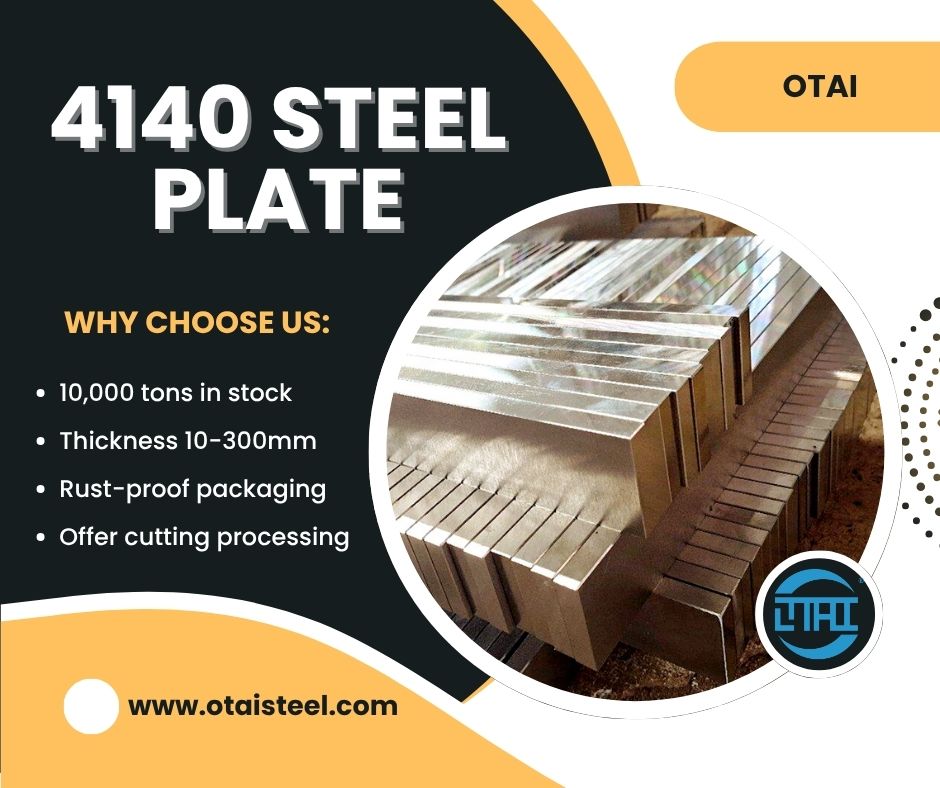
When it comes to robust steel that means business, 4140 steel is the ultimate choice. It’s the preferred option for projects demanding unparalleled strength and durability. This article delves into the characteristics that define 4140 steel, how its properties are determined, and why OTAI is the premier supplier for 4140 steel.

So, what exactly is 4140 Steel?

Think of it as the tough guy in your neighborhood—this low-alloy steel is enriched with chromium, molybdenum, and manganese, providing exceptional toughness and strength. Here are the specifications:

What is 4140 Steel?

4140 alloy steel is a low-alloy steel, packed with chromium, molybdenum, and manganese. These elements give it toughness and strength. Here’s the breakdown:

ASTM C Si Mn Cr Mo P S
4140 0.38~0.43 0.15~0.35 0.75~1.00 0.80~1.10 0.15~0.25 ≤0.035 ≤0.040

Mechanical Strength of 4140 Steel

Understanding the capabilities of 4140 alloy is crucial for its proper application. Here’s an overview of its key attributes:

Tensile Strength: With a robust tensile strength ranging from 655 to 1020 MPa, 4140 steel is perfect for the most demanding tasks.

Yield Strength: Its yield strength is between 415 and 655 MPa, showing excellent resistance to permanent deformation.

Hardness: On the Brinell scale, 4140 alloy measures between 197 to 241, and with appropriate heat treatment, it becomes even more resilient, effectively handling wear and tear.

Impact Resistance: Thanks to its exceptional impact resistance, it withstands strong impacts without compromising performance.

Factors Affecting Performance

Various factors influence the performance of 4140 material:

Heat Treatment: Techniques like quenching and tempering are used to adjust its hardness and strength to meet specific requirements.

Machinability: It is relatively easy to work with but requires proper handling to preserve its properties.

Thickness: The strength characteristics can vary between thicker and thinner plates, necessitating careful selection based on project needs.

Why Choose OTAI’s 4140 Steel Plate?

Here’s why OTAI stands out as your preferred supplier:

Stock Availability: We maintain a stock of 10,000 tons of 4140 steel plates in sizes ranging from 10mm to 300mm, ensuring prompt delivery.

Cutting and Processing: Our precision cutting and shaping services cater to your exact specifications, minimizing material wastage.

Packaging: We ensure secure packaging to guarantee safe delivery, including options such as strap packaging and anti-rust measures.

Applications of 4140 alloy material

4140 steel finds extensive applications across various industries:

Automotive: Used in gears and crankshafts subjected to heavy-duty operations.

Oil and Gas: Essential for equipment and drilling rigs operating in harsh environments.

Construction: Ideal for durable structural components.

Manufacturing: From tools to machine parts, it withstands challenging conditions.

Real-World Example

A leading automotive manufacturer required gears capable of withstanding severe stress. They chose OTAI’s 4140 steel plates due to their durability and performance, which enhanced efficiency and reduced downtime.

Understanding 4140 Alloy Steel Mechanical Properties for Optimal Performance

Understanding the properties of 4140 steel is crucial for selecting the right material. With OTAI, you not only get superior quality and a readily available stock but also exceptional customer service. Whether you operate in automotive, oil and gas, construction, or manufacturing sectors, we offer the ideal steel material solution for your needs.

0 0 Continue Reading →

4140 Alloy Steel Yield Strength: Heavy-Duty Reliability

4140 Alloy Steel Yield Strength: Heavy-Duty Reliability4140 Alloy Steel Yield Strength: Heavy-Duty Reliability
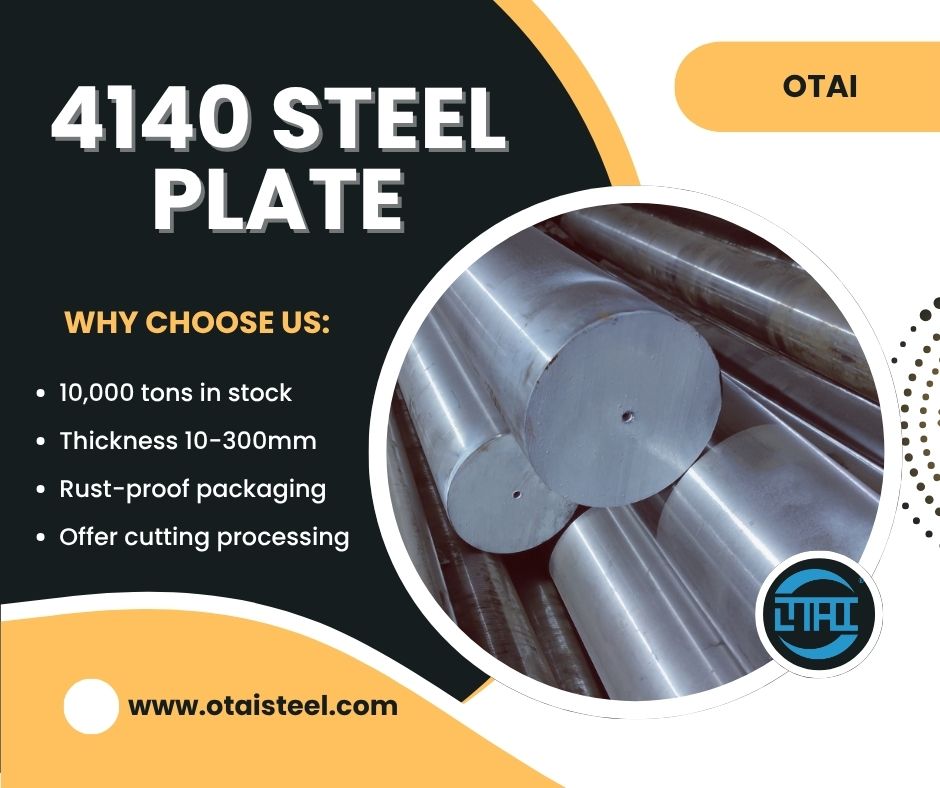
Introduction

Choosing the right material is a critical step in engineering and manufacturing projects, much like picking the right tool for a specific task. 4140 alloy steel stands out as a versatile and reliable choice due to its strength, durability, and flexibility across industries. To fully leverage its advantages, understanding its yield strength is key. Let’s explore why this property is crucial and how to maximize 4140 steel’s performance.

Yield Strength: What It Means

Think of pulling a steel bar—initially, it stretches and then snaps back when you release it. However, there’s a point at which it no longer returns to its original shape. This point is the yield strength, representing the stress level at which the material begins to permanently deform. Unlike tensile strength, which marks the breaking point, yield strength serves as an early warning, signaling when a material will start to fail.

Why Yield Strength Is Crucial

Imagine a company manufacturing a critical part for heavy machinery, assuming they had selected the perfect material. However, they failed to check the yield strength. As the machine operated, the component deformed under pressure, leading to failure. This costly mistake could’ve been avoided with careful attention to yield strength. Although often overlooked, yield strength is vital in material selection.

What Makes 4140 Alloy Steel Special

4140 alloy steel is renowned for its unique composition—carbon, chromium, and molybdenum. Carbon provides a solid structural foundation, while chromium and molybdenum enhance toughness and wear resistance. Together, these elements create a steel that’s both tough and reliable, making it ideal for demanding applications.

4140 Steel’s Yield Strength in Numbers

4140 alloy steel boasts an impressive yield strength range of 60,000 to 100,000 psi, depending on the processing technique used. This is significantly higher than standard structural steel, which typically maxes out at around 36,000 psi. With its superior yield strength, 4140 steel can endure greater stress before permanent deformation. Additionally, heat treatment can further enhance its strength, boosting overall performance.

Heat Treatment: Unlocking Full Potential

Heat treatment is essential for maximizing 4140 steel’s capabilities. By carefully controlling temperature, the steel’s properties can be customized to meet specific project requirements. Techniques like quenching (rapid cooling after heating) and tempering (reheating to a lower temperature) dramatically increase yield strength, making the material even more durable and resistant to stress.

Putting Yield Strength to Work

Consider designing a machine shaft that must withstand significant torque and wear. By choosing 4140 alloy steel and applying the right heat treatment, you can ensure the shaft will perform reliably under stress. This results in a more durable component, enhancing the overall performance and efficiency of the machinery.

Testing Yield Strength: The Basics

Accurate yield strength testing is essential for ensuring the material meets project requirements. The most common method for determining yield strength is tensile testing. In this process, a sample is pulled in a machine until it begins to deform, and the machine records the stress at this point, which indicates the material’s yield strength. This simple yet vital test ensures the material will meet your needs.

The Importance of Standards

Standards provide consistency and reliability in material testing. For instance, ASTM E8 outlines procedures for sample preparation, testing, and data recording. Adhering to these standards ensures reliable yield strength measurements, allowing for easy comparison across different projects and materials.

Conclusion

When should you choose 4140 alloy steel? It’s an excellent choice for applications requiring strength and toughness, such as gears, shafts, and structural components. However, always evaluate the yield strength, especially in projects involving significant stress or bending. In some cases, other alloys like 4340 or 8620 might be better suited. Understanding your project’s specific needs and selecting the right material is crucial.

Engineer and Designer Tips

Keep these points in mind:

  • Always check yield strength—it’s essential to the success of your project.
  • Don’t hesitate to consult experts if you’re uncertain about the best material choice.
  • Use heat treatment to improve material properties and extend the service life of your components.

In the end, understanding and testing yield strength allows you to make informed material choices. With this knowledge, you can fully unlock 4140 alloy steel yield strength, ensuring your products are strong, reliable, and up to the task. Keep testing, learning, and making thoughtful material decisions to guarantee the success of your engineering projects.

0 0 Continue Reading →

4140 Steel Welding Rod: Hardened Excellence for Industrial Demands

4140 Steel Welding Rod: Hardened Excellence for Industrial Demands4140 Steel Welding Rod: Hardened Excellence for Industrial Demands
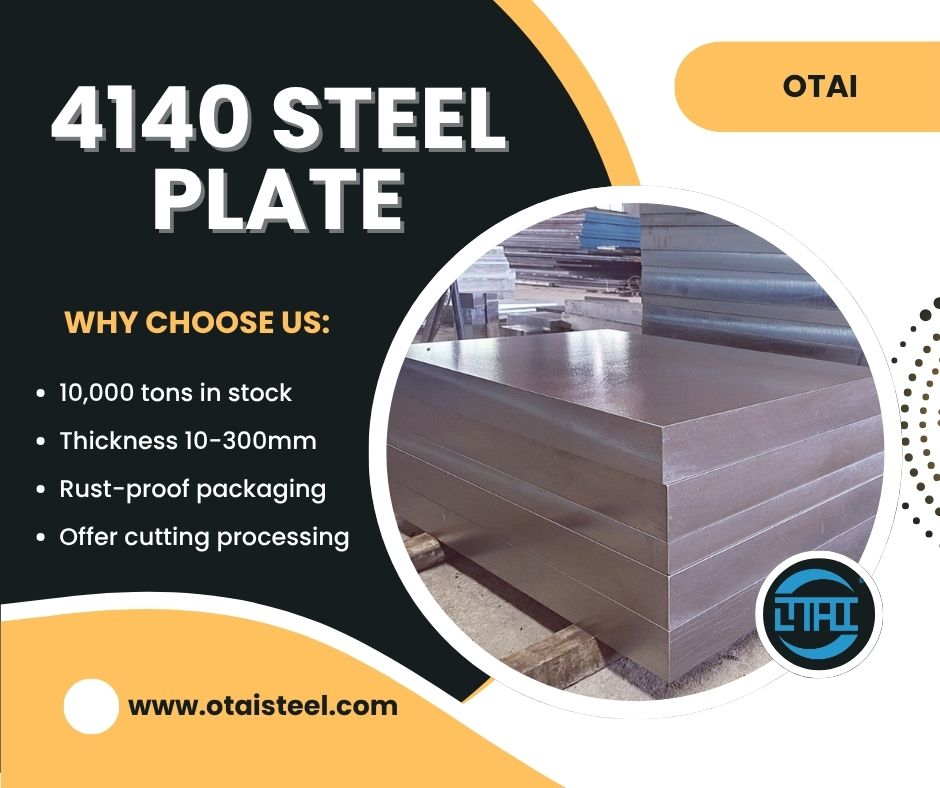
Introduction

In the intricate world of engineering, where precision and performance are essential, 4140 alloy steel rod stand out as a versatile and durable option. At OTAI, our chrome-plated, hardened multipurpose 4140 alloy steel rods go beyond being simple products; they represent forward-thinking solutions tailored for the future of engineering. We are dedicated to providing high-strength steel rods that meet the rigorous requirements of today’s industries.

1. The Essence of 4140 Alloy Steel Rods

Harnessing the Strength of 4140 Alloy Steel
4140 alloy steel rods are defined by their unique blend of chromium and molybdenum. This composition not only provides remarkable strength but also guarantees reliability in extreme conditions. Our rods serve as the unseen foundation of machinery and infrastructure, delivering a steadfast promise of durability.

2. The Chrome Plating Advantage

A Protective Chrome Shield
The chrome plating on our 4140 alloy steel rods is more than just an aesthetic enhancement; it’s a crucial upgrade. This protective layer shields the steel from environmental corrosion, distinguishing products that simply endure from those that truly excel.

3. The Art of Hardening

Precision in Steel Transformation
The journey from raw material to hardened excellence is a tale of heat and innovation. Our 4140 alloy steel rods undergo a careful hardening process that enhances their strength and wear resistance. This is not just a procedure; it’s a craft that OTAI has perfected, ensuring each rod exemplifies outstanding durability.

4. Versatility in Action

Wide-Ranging Applications of 4140 Alloy Steel The adaptability of 4140 alloy steel rod is evident in their extensive applications. From the precision of aerospace engineering to the demands of automotive manufacturing, these rods play a vital role in keeping industries moving. We’ve witnessed their effectiveness in construction and their resilience in heavy machinery.

5. Stock and Services

Your Needs, Our Assurance At OTAI, we back our promises with action. We have over 10,000 tons of 4140 alloy steel rods readily available, enabling us to meet any demand. Our cutting and processing services are tailored to your specifications, ensuring each order matches your needs perfectly. Additionally, our packaging services include rust prevention, guaranteeing that your order arrives in perfect condition.

6. The OTAI Edge

A Commitment to Excellence Our reputation extends beyond steel; it is rooted in a legacy of excellence. As a trusted supplier to Fortune 500 companies, OTAI’s commitment to quality is unwavering. We understand that each project is unique, and we strive to meet your steel needs with precision and dependability.

4140 steel welding rod with a Polished Chrome Surface

OTAI’s 4140 alloy steel rods are more than just materials; they are the foundation for innovation. Our chrome-plated hardened multipurpose steel rods unlock the potential of your projects. We invite you to discover the OTAI difference and join our community of satisfied clients. Together, let’s build the future, one steel rod at a time.

0 0 Continue Reading →

What is 4140 tool steel used for?

What is 4140 tool steel used for?What is 4140 tool steel used for?

Introduction

If you’ve been in manufacturing, you’ve likely encountered 4140 alloy steel. But what makes it stand out? This material is far from ordinary—it’s a versatile workhorse that powers numerous industries across the globe. From automotive to aerospace, construction to oil rigs, 4140 alloy steel is an essential part of modern engineering. In this article, we’ll dive into why this steel is a favorite of manufacturers and engineers alike, and why it should be on your radar.

The Core of 4140 Alloy Steel

4140 is more than just a technical term—it’s a symbol of strength, durability, and adaptability. This medium-carbon steel, enhanced with chromium and molybdenum, is designed to be incredibly tough, resistant to wear, and capable of hardening to meet the most demanding requirements. Often overlooked, it’s the reliable material that thrives in tough environments. Its exceptional performance comes from the meticulous care in its production process. Through precise heat treatments, such as quenching and tempering, 4140 strikes the perfect balance between hardness and toughness, allowing it to endure even the harshest conditions.

What is 4140 tool steel used for

**Automotive: The Power Behind Performance**

In the automotive industry, strength and lightness are essential. 4140 alloy provides the ideal balance between both. Whether used in axles, gears, or shafts, 4140 withstands the powerful forces at play in vehicle movement. Its unique mix of strength and lightweight properties makes it a key material for the drivetrain in high-performance vehicles. Without it, those powerful engines wouldn’t perform nearly as efficiently.

**Industrial Machinery: The Unsung Workhorse**

Industrial machinery runs under constant pressure. Gears and shafts face continuous wear as they operate around the clock. 4140 alloy steel is often the material of choice for these high-stress components, thanks to its resilience to both load-bearing and repetitive motion. A firsthand example I’ve seen involved a factory switching from traditional steel components to 4140. The result? Reduced breakdowns, less downtime, and a significant increase in productivity.

**Construction: Building for the Long Haul**

When it comes to construction, materials need to be as durable as they are strong. 4140 alloy steel answers the call, particularly for structural beams and supports. This steel is capable of handling immense weight and enduring harsh environmental conditions. I’ve seen this material in action during the construction of high-rise buildings where, years later, the support beams remain strong and dependable.

**Aerospace: Precision and Strength in the Skies**

Aerospace components require unmatched performance. 4140 alloy steel is used in parts such as aircraft landing gear, which must withstand high pressure, extreme temperatures, and immense forces. The reliability of 4140 ensures that planes stay safe, even under the most demanding conditions, making it a crucial part of the aerospace industry.

**Oil and Gas: Endurance in Extreme Conditions**

The oil and gas industry faces some of the harshest environments—corrosive chemicals, extreme temperatures, and high pressure. 4140 alloy steel thrives in these conditions, making it indispensable for drilling equipment and pipelines. I’ve witnessed its remarkable performance firsthand on oil rigs, where it holds up against the elements without fail, proving its reliability in the toughest situations.

Why Choose 4140 Alloy Steel?

Strength and durability are just the start. 4140 alloy steel is also highly cost-effective. While not the cheapest option, it delivers an outstanding balance of performance and value, so you won’t have to stretch your budget for long-lasting parts. Its machinability further adds to its appeal, making it a go-to for manufacturers. With the ability to be shaped with precision, it’s perfect for CNC machining, giving engineers the confidence to design complex parts without worrying about material failure.

Real-World Applications:What is 4140 tool steel used for

**Automotive Gear Manufacturing**

A few years ago, a leading automotive manufacturer faced frequent gear failures in their transmissions, leading to expensive repairs and downtime. By switching to 4140 alloy steel, they saw remarkable improvements—the gears became more durable, and the transmission’s overall efficiency saw a significant boost.

**Industrial Equipment**

A heavy machinery manufacturer was dealing with frequent equipment breakdowns, costing them time and money. After they switched to 4140 alloy steel for their gears and shafts, the results were evident immediately. The equipment saw fewer failures, longer-lasting components, and a boost in overall productivity.

**Construction Projects**

During the construction of a large commercial complex, a company opted for 4140 alloy steel to ensure the reliability of their structural beams. Despite heavy loads and challenging weather, the beams held firm. Even years later, the building still stands as a testament to the material’s durability.

Finding the Right Supplier

Selecting a dependable supplier for 4140 alloy steel is crucial. You need a partner who understands the material and guarantees consistent quality. At OTAI, we specialize in 4140 alloy steel uses, providing a wide range of inventory and custom services such as cutting and packaging. We’re more than just a supplier—we’re your trusted ally in ensuring your success.

Looking Ahead

4140 alloy steel has proven itself time and again as a reliable, high-performance material. As industries continue to advance, its demand will only grow. Whether you’re involved in automotive innovation, construction, aerospace, or oil and gas, 4140 alloy steel is a material you can rely on. It’s time to explore its full potential and see how it can support your projects.

0 0 Continue Reading →