4140 Plate Stock: How Can Buyers Match Available Sizes to Machining Requirements?
📑 Table of Contents
- 🔍 Why Does Matching 4140 Plate Stock to Machining Requirements Matter?
- 📏 What 4140 Plate Sizes Are Available?
- ⚙️ How Should Buyers Read Part Drawings Before Selecting Stock?
- 📐 How Much Machining Allowance Should Buyers Consider?
- ✂️ How Can Buyers Reduce Material Waste?
- 🔥 Should Buyers Choose Standard 4140 or QT Plate?
- 🧪 Which Material and Quality Details Should Buyers Confirm?
- 📦 How Do Cutting and Processing Services Affect Stock Selection?
- 🤝 How Can Buyers Confirm the Right 4140 Plate with a Supplier?
- 🏭 Company Advantages
- ❓ Frequently Asked Questions
Choosing 4140 plate stock involves more than finding a thickness within a supplier’s published inventory range. Buyers also need to consider the finished component dimensions, machining allowance, material condition, cutting method, and final tolerance. A plate that looks suitable on a quotation may still create unnecessary machining work or material waste if its dimensions do not match the production drawing.
For manufacturers purchasing AISI 4140 steel plate, the practical objective is to select a stock size that supports the complete manufacturing route. The right choice should provide enough material for rough machining and finishing without requiring excessive removal. It should also meet the component’s mechanical and inspection requirements.
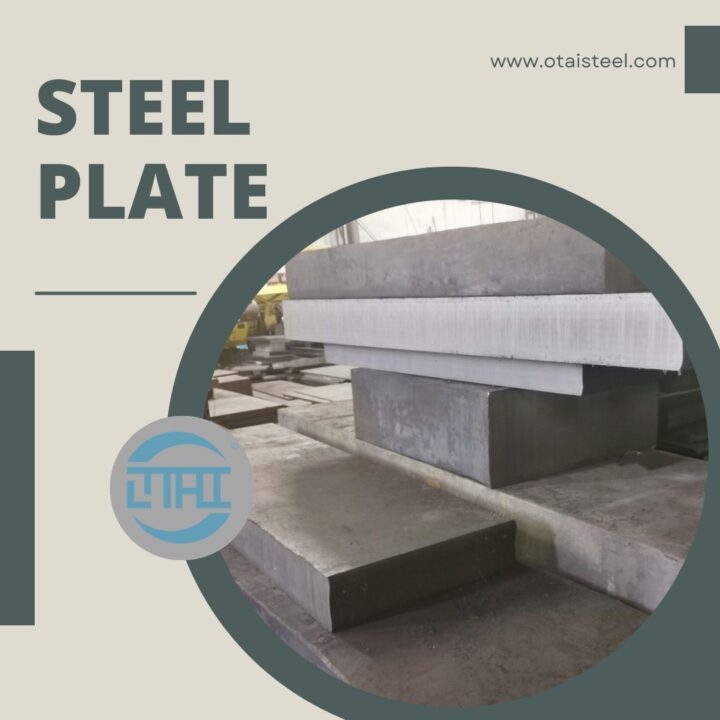
OTAI supplies 4140 steel plate in thicknesses from 4–380 mm and 4140 quenched and tempered (QT) plate in thicknesses from 13–200 mm, subject to current inventory confirmation. Buyers can use these ranges as an initial reference, then confirm the available width, length, condition, and quantity for their specific project.
🔍 Why Does Matching 4140 Plate Stock to Machining Requirements Matter?
Stock dimensions influence the whole production process
When buyers select plate stock, they are making an early production decision. The selected thickness and cutting dimensions affect material utilization, machining time, handling, and delivery planning. A suitable stock size can simplify production, while an unsuitable one may require additional cutting or create excessive machining allowance.
Consider a manufacturer producing a rectangular machine component. The finished part may require a specific thickness, width, and length after milling. If the buyer purchases a plate that is too thin, the machining team may not have enough material to achieve the required final dimensions. If the plate is unnecessarily thick, the workshop must remove more material, increasing machining time and potentially creating more waste.
Material suitability matters as much as dimensional suitability
4140 is a chromium-molybdenum alloy steel commonly selected for components that need a useful combination of strength, toughness, and wear resistance. However, the grade designation alone does not define the final mechanical properties. Delivery condition and subsequent heat treatment also influence performance and machinability.
For this reason, buyers should evaluate three connected questions:
- Does the available plate provide enough material for the finished dimensions and machining allowance?
- Does the delivery condition suit the planned machining and heat-treatment route?
- Can the supplier provide the required material documentation and inspection support?
Answering these questions before purchasing helps prevent a common sourcing problem: receiving material that meets the grade description but does not fit the actual manufacturing process.
📏 What 4140 Plate Sizes Are Available?
Start with the available thickness range
Thickness is often the first dimension buyers check because it determines whether a plate can provide enough material for the component. OTAI’s current stated stock ranges are:
| 4140 Product Type | Thickness Range | Main Buyer Consideration |
|---|---|---|
| 4140 steel plate | 4–380 mm | Check delivery condition, machining allowance, width, and length. |
| 4140 QT plate | 13–200 mm | Confirm hardness, mechanical properties, and machining strategy. |
These ranges help buyers determine whether their required thickness may be available from existing stock. However, a published range does not mean every thickness, width, length, and quantity is immediately available. Buyers should request confirmation of the actual dimensions and delivery condition before placing an order.
Thickness is only one part of the size calculation
A plate order normally requires three principal dimensions: thickness, width, and length. Buyers should compare all three with the component drawing and the cutting plan. For example, a plate with sufficient thickness may still be unsuitable if its available width cannot accommodate the required blanks.
It is also important to distinguish between the original plate dimensions and the cut-piece dimensions. A supplier may hold a larger plate and cut it into smaller pieces according to the buyer’s requirements. This option can help manufacturers avoid purchasing more material than they need.
Confirm actual stock before finalizing the drawing-to-stock match
Procurement teams should send the supplier a dimension list rather than asking only whether 4140 plate is available. Include the required thickness, width, length, quantity, and acceptable dimensional tolerance. If the project allows alternative dimensions, identify those options clearly.
This gives the supplier a practical basis for checking inventory and proposing suitable cutting arrangements. It also reduces the risk of receiving a quotation based on a size that does not match the buyer’s production needs.
⚙️ How Should Buyers Read Part Drawings Before Selecting Stock?
Identify the finished dimensions first
The finished-part drawing should guide the stock selection process. Buyers should identify the dimensions that remain after all machining operations, including the final thickness, width, length, holes, slots, pockets, and other machined features.
Do not use the finished dimensions as the exact raw-material dimensions unless the manufacturing process allows it. Milling, grinding, facing, and other operations remove material. Therefore, the raw plate usually needs additional material in the areas that will be machined.
For example, a component with a finished thickness of 40 mm may require a thicker blank if both faces need machining. The exact starting thickness depends on the drawing, the initial plate condition, the machining process, and the agreed dimensional tolerance.
Separate critical dimensions from non-critical dimensions
Not every dimension on a drawing has the same manufacturing importance. Some surfaces may require tight tolerances or a specified surface finish, while other dimensions may allow more flexibility. Buyers should identify these differences before asking for cut-to-size material.
A practical drawing review should include:
- Finished dimensions: The final thickness, width, and length after machining.
- Critical tolerances: Dimensions that directly affect assembly, fit, or component performance.
- Machined surfaces: Faces, edges, holes, and profiles that require material removal.
- Reference surfaces: Surfaces used to establish machining positions and measurements.
- Production quantity: The number of finished components required from each plate or cut blank.
Check the manufacturing route before requesting cut dimensions
A component may pass through several operations, such as rough cutting, milling, drilling, heat treatment, and finish grinding. The sequence affects the amount of material required at each stage. For example, a part that undergoes heat treatment after rough machining may need a different allowance from a part that receives its final machining before heat treatment.
Buyers should therefore ask the engineering or machining team to confirm the intended process route. The supplier can then evaluate whether standard plate dimensions or customized cut pieces offer a better starting point.
📐 How Much Machining Allowance Should Buyers Consider?
Machining allowance depends on the production process
Machining allowance is the extra material left on a raw blank so that the workshop can remove it and achieve the required finished dimensions. Buyers should not apply one fixed allowance to every 4140 plate order. The appropriate amount depends on the initial plate condition, thickness, flatness, cutting method, machining sequence, and final tolerance.
For a simple milled plate, the workshop may need material on the top and bottom faces to establish the final thickness and surface finish. A component with several machined sides may also need additional width and length. More complex parts can require a larger allowance in specific areas.
Use a dimension-by-dimension calculation
Buyers can start with a basic calculation for each dimension:
Required blank dimension = Finished dimension + Total machining allowance
For thickness, the total allowance may include material removed from both faces. For width and length, it may include edge cleanup, squaring, and final milling. The machining team should define the allowance for each surface rather than adding an arbitrary amount to the entire blank.
| Drawing Requirement | Possible Allowance Consideration | Buyer Action |
|---|---|---|
| Final thickness | Material removal from one or both faces | Confirm the machining sequence and surface finish. |
| Final width | Edge milling, trimming, or squaring | Check the required edge condition and tolerance. |
| Final length | Saw cutting and end-face machining | Allow for cutting and final end preparation. |
| Flatness or parallelism | Face milling or grinding | Confirm the required tolerance and inspection method. |
Avoid excessive allowance
Too little allowance can make it impossible to achieve the finished dimensions. However, excessive allowance increases the amount of material removed during machining. It can also raise raw-material costs, machining time, tool consumption, and material handling requirements.
Buyers should work with their production team to define realistic allowances based on actual machining capability. If the component requires tight flatness or parallelism, discuss whether the supplier can provide a more suitable prepared blank or whether the machining shop should perform the final correction.
✂️ How Can Buyers Reduce Material Waste?
Plan the cutting layout around the component list
Material utilization depends on how the buyer arranges finished components within the available plate dimensions. If a production order contains several parts, the purchasing team should review their dimensions together instead of sourcing each blank independently.
A cutting layout can show how many blanks fit within a plate and where the saw kerf, edge trimming, and separation gaps occur. This approach helps the buyer compare alternative plate sizes and identify a more efficient purchasing option.
For example, a project may require several rectangular machine plates in two or three different sizes. A larger stock plate may allow the supplier to cut all the required blanks from one piece. In another situation, smaller available plates may reduce leftover material or simplify handling. The best choice depends on the actual layout and stock dimensions.
Compare the cost of the blank, not only the price per ton
A lower unit price does not always produce the lowest total manufacturing cost. Buyers should consider how much usable material each stock option provides and how much machining work remains after delivery.
A practical comparison can include:
- Raw-material price and total purchase weight.
- Number of finished blanks obtained from each plate.
- Material lost during saw cutting and edge trimming.
- Machining time required to reach final dimensions.
- Handling, storage, and transportation costs.
- Value and usability of any remaining offcuts.
Consider nesting and reusable offcuts
When the project includes repeated parts, nesting can improve material utilization. The cutting team arranges the required blanks to use the plate area efficiently while maintaining the necessary separation and cutting allowances.
Buyers should also consider whether leftover pieces can support future production. If the same component will be manufactured again, retaining identifiable offcuts may reduce future purchasing requirements. However, the remaining material must retain traceability, including its grade, heat number where applicable, and material documentation.
For one-time projects, the buyer may prefer a plate size that minimizes unused material even if the price per ton is slightly higher. For recurring production, a standardized blank size may offer better long-term efficiency. Compare both options using the actual production forecast.
🔥 Should Buyers Choose Standard 4140 or QT Plate?
Delivery condition affects machining and performance
Standard 4140 plate and quenched and tempered 4140 plate are not automatically interchangeable. Although both carry the 4140 grade designation, their delivery conditions can differ. These differences influence hardness, strength, machinability, and the additional processing required before a component enters service.
Buyers should select the condition according to the component specification and manufacturing route. If the part requires a particular hardness or strength level, the purchase order should state the relevant requirements rather than simply requesting 4140 plate.
| Selection Factor | Standard 4140 Plate | 4140 QT Plate |
|---|---|---|
| Delivery condition | Must be confirmed, such as annealed or another agreed condition. | Supplied in a quenched and tempered condition. |
| Machining considerations | Depends on the supplied condition and planned heat treatment. | Hardness may affect tool selection and machining parameters. |
| Mechanical requirements | May require further heat treatment to achieve final properties. | Check the specified hardness and mechanical test results. |
| Current stated thickness range | 4–380 mm | 13–200 mm |
When might QT plate be a suitable option?
QT plate may suit components that require material supplied with a defined quenched and tempered condition. It can reduce the need for the buyer to arrange the initial bulk heat-treatment operation. However, buyers must still confirm whether the supplied properties meet the drawing and applicable specification.
Machining QT material may require different cutting tools, feeds, speeds, and machining strategies compared with softer material. The workshop should review the supplied hardness before finalizing its production plan. If the component requires additional heat treatment after machining, the buyer should also consider the possible dimensional changes and finishing allowance.
Do not select a condition based on grade name alone
Before choosing between standard and QT plate, confirm the required hardness, strength, toughness, and any subsequent treatment. The supplier should identify the delivery condition in the quotation and provide the agreed test documentation. This helps the buyer avoid receiving a material condition that does not match the intended process.
For product details, buyers can review OTAI’s 4140 pre-hard steel plate information and confirm the required condition and dimensions with the sales team.
🧪 Which Material and Quality Details Should Buyers Confirm?
Specify the grade and applicable standard
The purchase order should identify the required material as AISI or SAE 4140 and state the applicable product specification. The correct specification depends on the product form and the buyer’s technical requirements. A grade designation identifies the intended alloy, but it does not automatically define every dimensional, testing, and delivery requirement.
If the project uses a customer-specific specification, drawing, or approved material list, provide it to the supplier before ordering. Buyers should also state whether any additional requirements apply to chemical composition, mechanical properties, hardness, heat treatment, or inspection.
Review the material test certificate
The material test certificate (MTC) provides important information about the supplied batch. Buyers should check that the certificate corresponds to the ordered grade and agreed requirements. In particular, verify the heat number and ensure that the material markings maintain traceability between the plate and its documentation.
Do not treat a typical chemical composition table as a substitute for the actual test results. Standard composition limits define acceptable ranges, while the MTC records the reported results for the supplied heat or batch. The buyer should evaluate those results against the specification stated in the purchase order.
Confirm dimensional and inspection requirements
Dimensional checks should cover the dimensions that matter to the planned machining process. These may include thickness, width, length, flatness, surface condition, and cut-piece tolerances. If the buyer requires ultrasonic testing or third-party inspection, the purchase order should identify the applicable inspection scope and acceptance criteria.
| Quality Item | What Buyers Should Verify |
|---|---|
| Grade and standard | 4140 designation and the applicable product specification. |
| Chemical composition | Actual MTC results against the specified limits. |
| Mechanical properties | Required test values, delivery condition, and applicable test requirements. |
| Dimensions | Thickness, width, length, tolerances, and cut-piece measurements. |
| Traceability | Heat number, plate markings, and matching documentation. |
| Additional inspection | Ultrasonic testing or third-party inspection when required. |
Clear inspection requirements help the supplier prepare the correct documents and coordinate any additional checks before shipment. They also give the buyer a consistent basis for incoming inspection and material acceptance.
📦 How Do Cutting and Processing Services Affect Stock Selection?
Cut-to-size service can bridge the gap between stock and finished blanks
Available plate dimensions do not always match the dimensions required by a machining shop. Cutting services help bridge this gap by preparing material closer to the buyer’s required blank size. Instead of receiving a full plate and arranging all initial cutting internally, the buyer can discuss cut-to-size or cut-to-length requirements with the supplier.
This service can reduce handling and simplify production preparation. It may also help buyers purchase a more suitable quantity of material, especially when the project requires several different blank dimensions.
Provide clear cutting instructions
When requesting a cutting quotation, buyers should provide a dimensioned list of the required pieces. The list should identify thickness, width, length, quantity, and any special cutting tolerance. If the parts require a particular orientation or identification marking, include that information as well.
Buyers should distinguish between saw-cut dimensions and final machined dimensions. A cut blank may still need milling or grinding to achieve the final tolerance and surface finish. Confirming this distinction avoids misunderstandings about the supplier’s processing responsibility.
Consider additional machining requirements
Some projects need more than basic plate cutting. CNC machining and grinding may help prepare material for specific production requirements, depending on the agreed scope and available processing capacity. Buyers should provide the drawing and identify which operations they want the supplier to complete.
For example, a buyer may request a plate cut into rectangular blanks before carrying out detailed machining at the factory. Another buyer may need additional surface preparation or dimensional processing before the material reaches the production line. The supplier can assess the drawing and discuss suitable processing arrangements.
Plan packaging and export protection early
For international orders, cutting and machining are only part of the delivery plan. Buyers should also specify anti-rust protection, strapping, bundling, wooden cases, or other packaging requirements according to the shipment route and handling conditions.
Clear packaging instructions help protect the material during storage and transportation. They also help ensure that cut pieces remain identified and organized when the shipment arrives. For orders with multiple dimensions or heat numbers, agree on piece identification and packing lists before dispatch.
🤝 How Can Buyers Confirm the Right 4140 Plate with a Supplier?
Prepare a complete inquiry instead of sending only the grade name
A detailed inquiry helps the supplier check stock and processing options more accurately. Rather than asking only for a price per ton of 4140 plate, provide the dimensions and technical details that determine whether the material suits the project.
At a minimum, buyers should include:
- Material grade and applicable standard.
- Required plate thickness, width, and length.
- Quantity or number of cut pieces.
- Delivery condition, such as annealed or quenched and tempered.
- Required hardness or mechanical properties, where applicable.
- Machining allowance or requested cut-piece dimensions.
- Inspection requirements and MTC expectations.
- Packaging, destination, and requested delivery schedule.
Ask the supplier to confirm the stock dimensions
Once the supplier receives the inquiry, ask for confirmation of the actual plate dimensions and quantity available. If the exact requested size is not available, discuss whether another plate dimension can provide a suitable cutting layout. The alternative should still meet the technical and machining requirements.
For example, a supplier may suggest a different stock width or length that allows the required blanks to be cut efficiently. Buyers should evaluate that proposal against their drawings and material utilization plan before accepting it.
Compare quotations on the same technical basis
When comparing suppliers, use the same grade, standard, dimensions, delivery condition, inspection scope, and packaging requirements. Otherwise, the quotations may represent different products or service levels. A lower price may reflect a different material condition, fewer inspection requirements, or a less suitable cutting arrangement.
Also compare the full delivery plan. A supplier that can provide the correct stock, cutting service, documentation, and export packaging may reduce coordination work for the buyer. The best purchasing decision should balance material cost, usable yield, processing needs, quality requirements, and delivery reliability.
Confirm all details in the purchase order
Before placing the order, record the agreed dimensions, tolerances, material condition, inspection requirements, documentation, and packaging instructions in writing. Attach the relevant drawing or cutting list when necessary. This final review helps both parties work from the same technical information.
For buyers sourcing 4140 plate, a complete specification is more useful than a broad request for stock availability. It allows the supplier to check whether the available material can support the planned machining process and helps reduce avoidable changes after order confirmation.
🏭 Company Advantages
- 4140 steel plate stock: Thickness range of 4–380 mm, subject to current inventory confirmation.
- 4140 QT plate stock: Thickness range of 13–200 mm, subject to current inventory confirmation.
- Large company-wide inventory: More than 10,000 tons of steel stock across different product categories.
- Cutting capacity: 20 saw cutting machines support cutting and material preparation according to customer requirements.
- Machining services: CNC machining and grinding support customized dimensions and tolerances.
- One-stop service: Material supply, cutting, processing coordination, inspection support, and export packaging.
- Quality support: Material testing, ultrasonic testing coordination, and third-party inspection support according to agreed requirements.
- Export experience: Supplying international customers in more than 54 countries since 1999.
- Export packaging: Anti-rust protection, strapping, bundling, and wooden cases according to order and transportation requirements.
OTAI supplies 4140 alloy steel plate for industrial machining and manufacturing applications. Buyers can review our 4140 steel plate product information and contact our team with their required dimensions, material condition, quantity, and inspection requirements.
To help us assess the most suitable stock option, provide the finished-part drawing or a complete blank-size list. Our team can then discuss available plate dimensions, cutting arrangements, and processing requirements. Actual stock sizes and quantities should be confirmed when requesting a quotation.
❓ Frequently Asked Questions
1. What thicknesses of 4140 plate stock are available?
OTAI’s current stated stock range for standard 4140 steel plate is 4–380 mm. For 4140 quenched and tempered plate, the stated thickness range is 13–200 mm. Buyers should confirm the actual thickness, width, length, quantity, and delivery condition before placing an order.
2. How do I choose the correct 4140 plate thickness for machining?
Start with the finished component drawing. Add the machining allowance required for the surfaces that will be milled, ground, or otherwise machined. The allowance depends on the machining route, initial material condition, dimensional tolerance, and surface-finish requirements. Ask the machining team to confirm the required blank dimensions before purchasing.
3. Is 4140 QT plate easier to machine than standard 4140 plate?
Not necessarily. QT plate has undergone quenching and tempering, which changes its hardness and mechanical properties. Higher hardness can affect tool selection, cutting parameters, and machining time. The comparison depends on the actual delivery condition of both materials and the workshop’s equipment and process. Buyers should check the supplied hardness before planning machining operations.
4. Can a supplier cut 4140 plate to custom dimensions?
Yes, suppliers with suitable cutting equipment can often prepare plate blanks to customer-specified dimensions. Buyers should provide the required thickness, width, length, quantity, and cutting tolerance. They should also clarify whether the requested dimensions are saw-cut blank sizes or final machined sizes.
5. What information should I provide when requesting a quotation for 4140 plate?
Provide the grade, applicable standard, thickness, width, length, quantity, delivery condition, and required mechanical or hardness properties. Include the part drawing or cutting list when available. You should also state the MTC, inspection, packaging, destination, and delivery requirements so the supplier can assess the complete order.