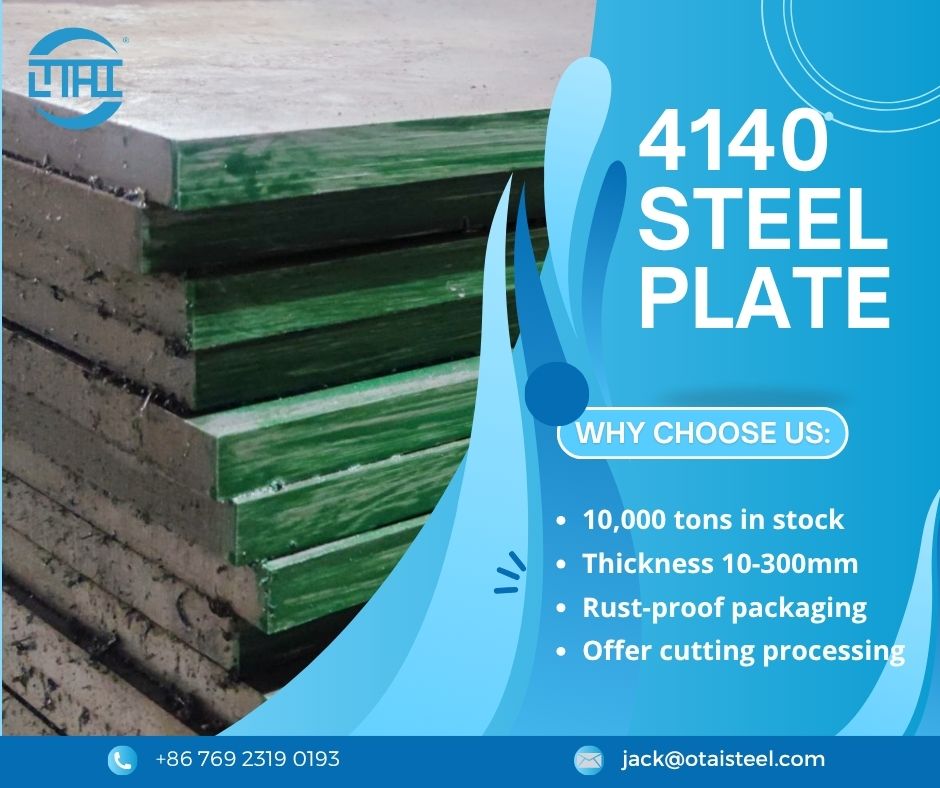
 Ultimate Tensile Strength of 4140 Steel?
When engineers, machinists, or manufacturers evaluate a steel grade for a project, one of the most critical factors is ultimate tensile strength (UTS). For 4140 steel, known for its outstanding strength and toughness, UTS is a key performance indicator.
Ultimate tensile strength of 4140 steel typically falls in the range of 655–1080 MPa (95,000–157,000 psi) depending on the heat treatment condition. This strength makes it a go-to choice in demanding industries like automotive, oil & gas, and tooling.
📐 4140 Steel UTS Values by Condition
Below is a detailed table showing how the ultimate tensile strength of 4140 steel varies under different heat-treated or quenched & tempered conditions:
| Condition | UTS (MPa) | UTS (psi) | Yield Strength (MPa) | Hardness (HRC) |
|---|---|---|---|---|
| As-rolled (annealed) | 655 | 95,000 | ~415 | ~20 |
| Quenched & tempered @ 315°C | 1080 | 157,000 | ~930 | ~50 |
| Quenched & tempered @ 540°C | 930 | 135,000 | ~800 | ~40 |
| Normalized | 850 | 123,000 | ~655 | ~28–32 |
These values illustrate that 4140 steel’s strength can be tailored significantly via heat treatment, which allows engineers to optimize performance for specific applications.
🔍 Why UTS Matters for 4140 Steel Applications
The ultimate tensile strength of 4140 steel isn’t just a number—it’s directly related to how well the steel performs under maximum stress before breaking. That’s crucial for:
-
Axles and shafts in automotive components
-
Forged parts under cyclic loading
-
Heavy-duty gears and crankshafts
-
High-performance tools and dies
If you’re working on parts that will undergo bending, torque, or tensile loads, UTS helps determine whether 4140 is strong enough to survive the stress.
🧱 Mechanical Properties Overview
Here’s a quick snapshot of key mechanical properties of 4140 steel in typical quenched and tempered condition (at 540°C):
| Property | Value |
|---|---|
| Ultimate Tensile Strength | 930 MPa (135,000 psi) |
| Yield Strength | 800 MPa |
| Modulus of Elasticity | 205 GPa |
| Elongation @ break | 20% |
| Impact Toughness (Charpy) | 54 J |
These numbers make it clear that 4140 balances strength with ductility, which is why it’s widely used in dynamic applications.
🔧 Heat Treatment and Its Impact on UTS
The beauty of 4140 alloy steel lies in its responsiveness to heat treatment. Here’s how heat treatment affects UTS:
-
Quenching & tempering drastically increases both yield strength and UTS, making the material more suitable for wear-resistance.
-
Annealing lowers the UTS but improves machinability and ductility, suitable for forming or machining before hardening.
-
Normalization creates a balanced structure with moderate UTS and good machinability.
This is why heat treated 4140 steel mechanical properties are often customized for each client’s application.
🛠️ How Does 4140 Compare with Other Steels?
| Steel Grade | UTS (MPa) | Comment |
|---|---|---|
| 1045 Carbon Steel | ~570 | Lower strength, higher machinability |
| 4340 Alloy Steel | ~1080–1250 | Higher toughness, more expensive |
| A36 Structural | ~400 | Not suitable for high-strength uses |
4140 offers the best strength-to-cost ratio, especially in medium carbon alloy steels, making it a top pick in many industries.
📌 Use Cases Requiring High UTS
Below are common applications where high ultimate tensile strength is a must:
-
Oil & gas drill collars
-
High-stress automotive components
-
Forged brackets and structural parts
-
Tool bodies for heavy-duty machining
In these scenarios, high UTS and toughness help resist cracking, fatigue, and deformation.
🌟 Why Customers Love 4140’s Strength
Whether you need 4140 quenched and tempered bar stock, high-strength forged rings, or precision machined components, its versatile tensile performance keeps your application safer and more durable.
Some clients even ask, “Is 4140 steel good for pressure vessels?” While it’s not ASME-certified for all pressure uses, its mechanical strength and temperability make it a strong contender for many related parts.
🏢 Company Advantages – Why Choose Otai Special Steel?
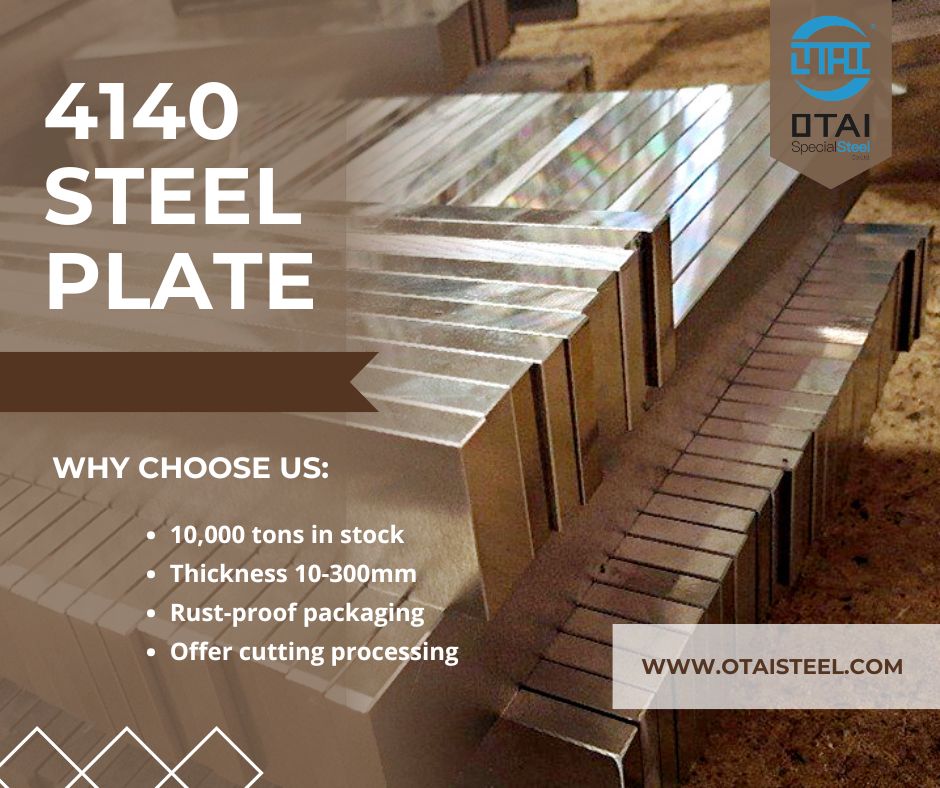
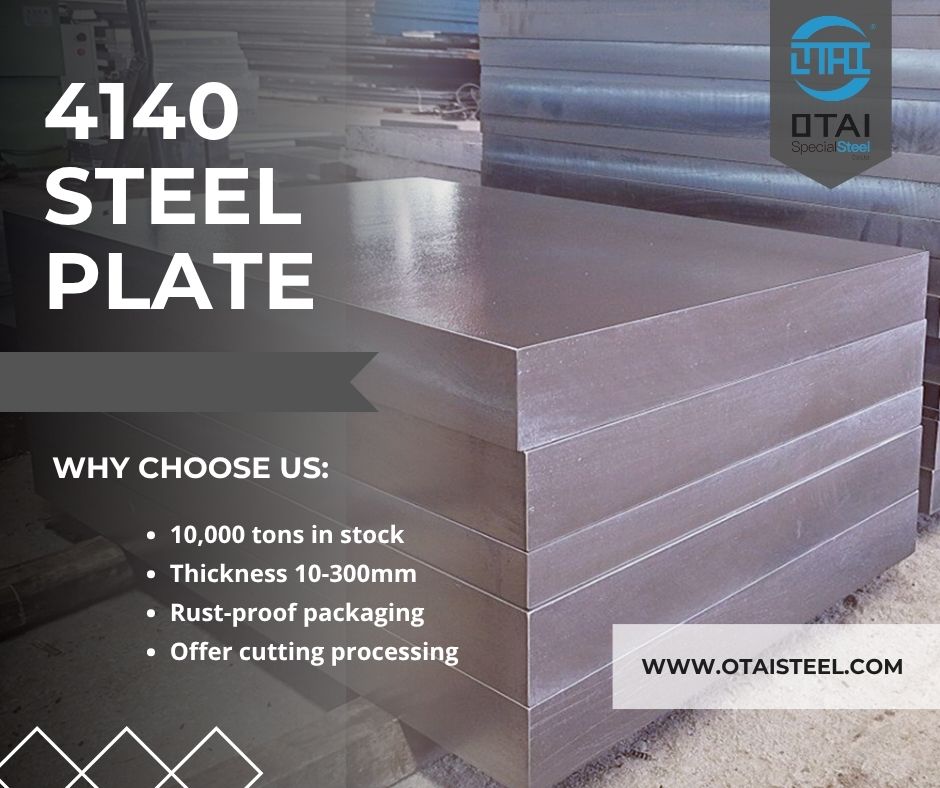
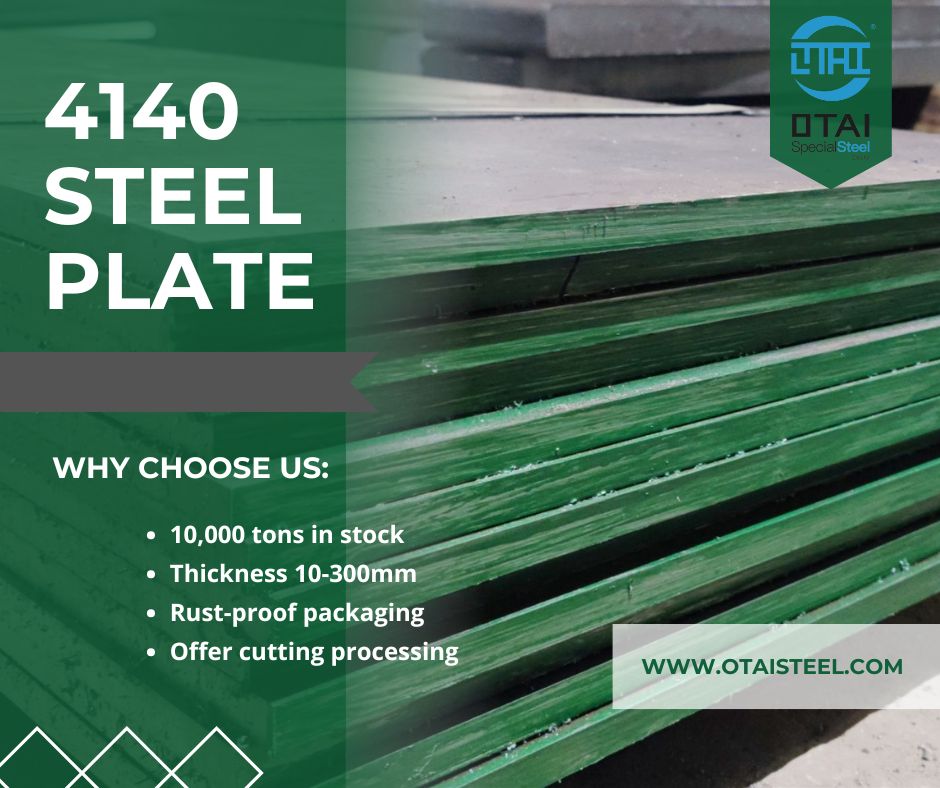
At Otai Special Steel, we specialize in delivering high-performance 4140 steel plates, bars, and blocks in various conditions—annealed, normalized, or quenched & tempered. Here’s why clients choose us:
-
✅ Inventory over 10,000 tons of 4140 and similar grades
-
✅ Custom heat treatment and hardness adjustment available
-
✅ UT testing, chemical composition reports, and third-party inspection support
-
✅ Cutting, machining, and export packaging services
-
✅ Global clients in aerospace, automotive, oil & gas, and tooling industries
Need 4140 steel with specific tensile strength requirements? We deliver precision and performance—fast.
❓FAQ – Ultimate Tensile Strength of 4140 Steel
Q1: Can I increase the UTS of 4140 steel further?
Yes. You can increase UTS through more aggressive quenching & tempering at lower tempering temperatures, but beware of reduced ductility.
Q2: How does hardness relate to UTS in 4140 steel?
Generally, higher hardness correlates with higher UTS. For instance, ~50 HRC corresponds to ~157,000 psi UTS.
Q3: What’s the difference between yield strength and UTS?
Yield strength is the point where permanent deformation begins. UTS is the maximum stress the material can withstand before breaking.
Q4: Is UTS the same for 4140 bar and 4140 plate?
Not necessarily. Manufacturing process (forged vs rolled), section size, and heat treatment method affect the final UTS.
Q5: Is 4140 good for fatigue resistance?
Yes, especially in Q&T condition, where its combination of high strength and toughness improves fatigue performance.
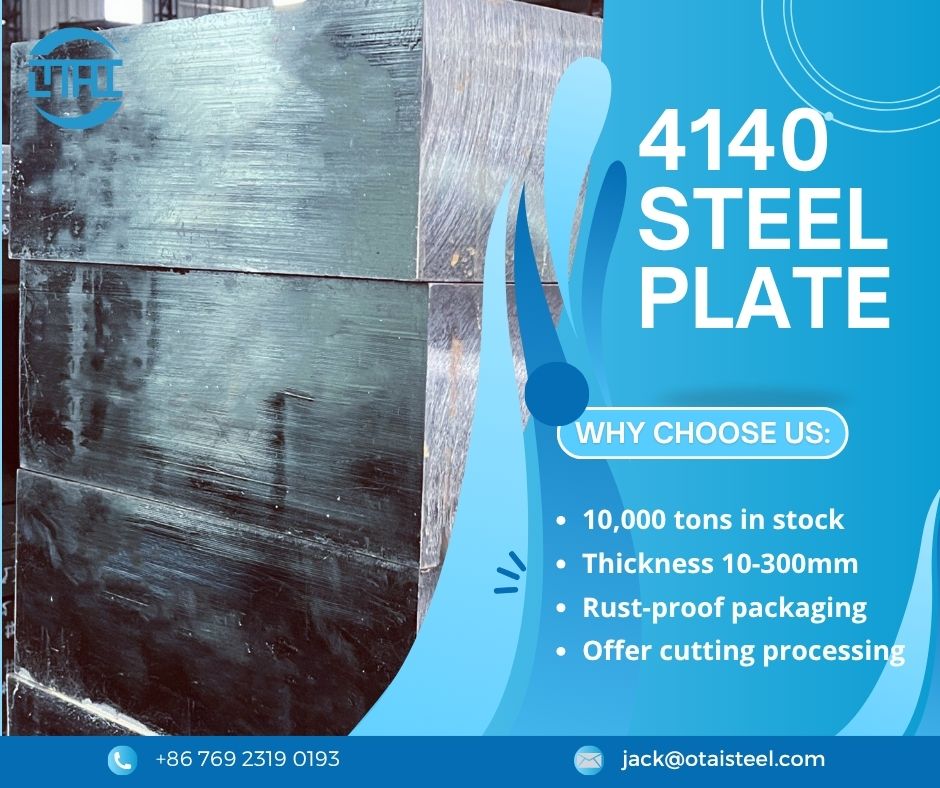 4140 Steel Yield Strength vs Hardness: The Real Performance Story
 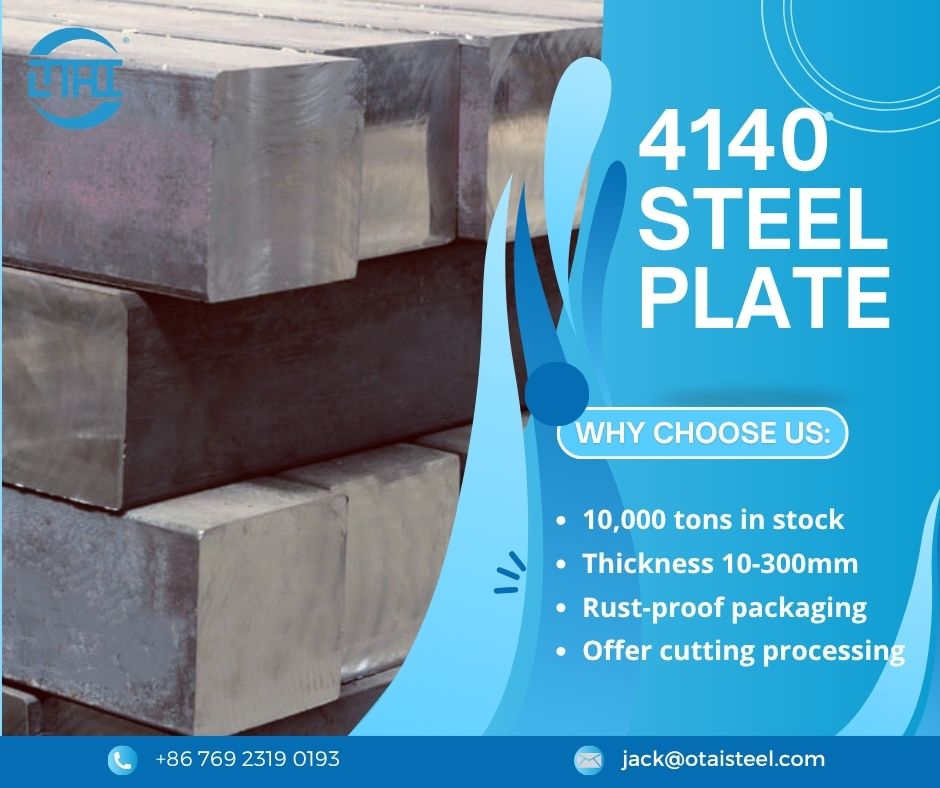 Is 4140 an Alloy Steel? Everything You Need to Know
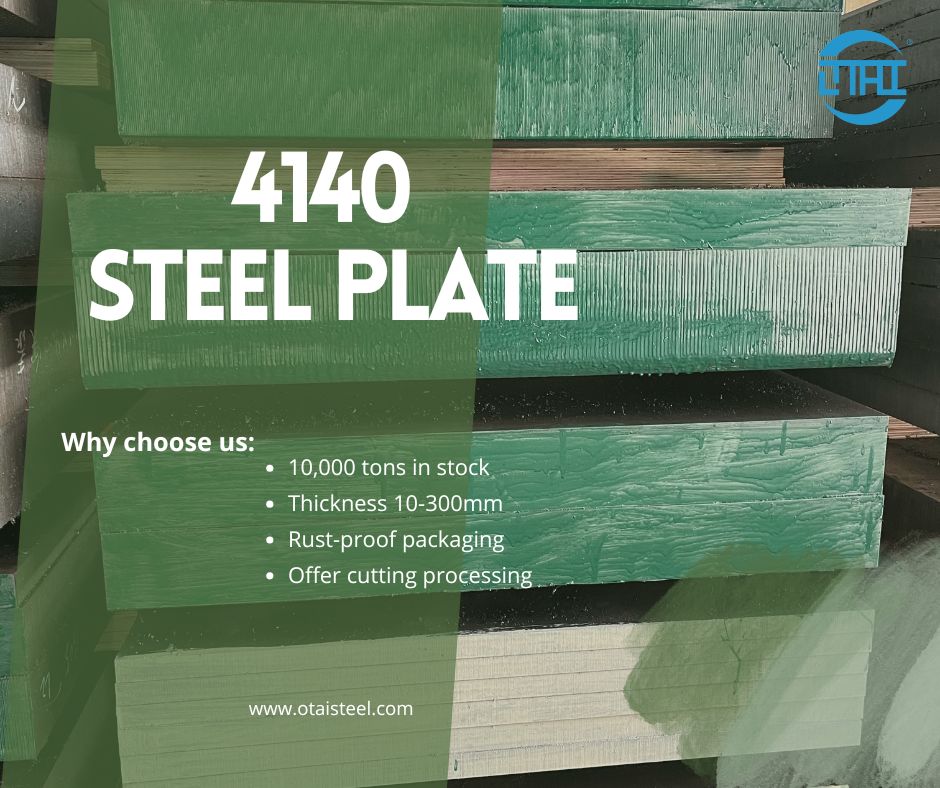 Is 4140 Steel Good for Knives? The Complete Guide
 4140 Steel Density: The Facts You Need to Know
 Annealing 4140 Steel: The Complete Heat Treatment Guide
 Bending 4140 Steel: Practical Guide for Safe and Effective Forming
 Forming 4140 Steel: About Its Behavior in Shaping Processes
 4140 Grade Steel Properties: What Makes It a Top Engineering Choice?
 4140 Steel Heat Treated Properties: Why They Matter for High-Performance Applications
 How to Identify 4140 Steel: Practical Techniques You Can Use
 When it comes to producing high-strength, high-precision parts, 4140 steel investment castings offer a remarkable combination of performance and cost-efficiency. Whether you’re manufacturing critical components for mining, automotive, or industrial machinery, 4140 investment castings deliver a winning balance of strength, toughness, and dimensional precision.