Forged 4140 Steel Properties: What Makes It Suitable for Heavy-Duty Parts?
📑 Table of Contents
- 🔍 What Is Forged 4140 Steel?
- ⚙️ How Does Forging Affect 4140 Steel Properties?
- 📊 What Are the Typical Mechanical Properties of Forged 4140 Steel?
- 🔥 How Does Heat Treatment Change Forged 4140 Steel Performance?
- 🏗️ Which Heavy-Duty Components Use Forged 4140 Steel?
- 📐 How Do Forging Size and Section Thickness Affect Performance?
- 🔬 What Quality Tests Should Buyers Request?
- ⚖️ Forged 4140 vs Rolled 4140 Steel: Which Should You Choose?
- 🏢 What Should You Confirm When Sourcing 4140 Steel from OTAI?
- ❓ Frequently Asked Questions About Forged 4140 Steel Properties
Forged 4140 steel is widely considered for heavy-duty components that must withstand substantial loads, repeated stress and demanding operating conditions. Its combination of strength, hardenability and toughness makes it a practical material for shafts, gears, machinery parts and other critical components.
However, the performance of forged 4140 steel does not depend on its grade alone. The forging process influences the steel’s internal structure, while heat treatment determines much of its final hardness and mechanical strength. Component size, cooling conditions and inspection requirements also affect the result.
For engineers and procurement teams, understanding these factors helps prevent a common purchasing mistake: comparing materials only by their grade name or a single tensile strength value. This article explains the main properties of forged 4140 steel and the technical details buyers should verify before placing an order.
🔍 What Is Forged 4140 Steel?
Understanding the 4140 alloy steel grade
AISI 4140 is a medium-carbon chromium-molybdenum alloy steel. Its composition combines carbon, chromium and molybdenum with other alloying elements to provide a useful balance of strength, toughness and hardenability.
Unlike plain carbon steel, 4140 responds well to different heat-treatment processes. Manufacturers can adjust its properties through normalizing, annealing, quenching and tempering to suit different component requirements.
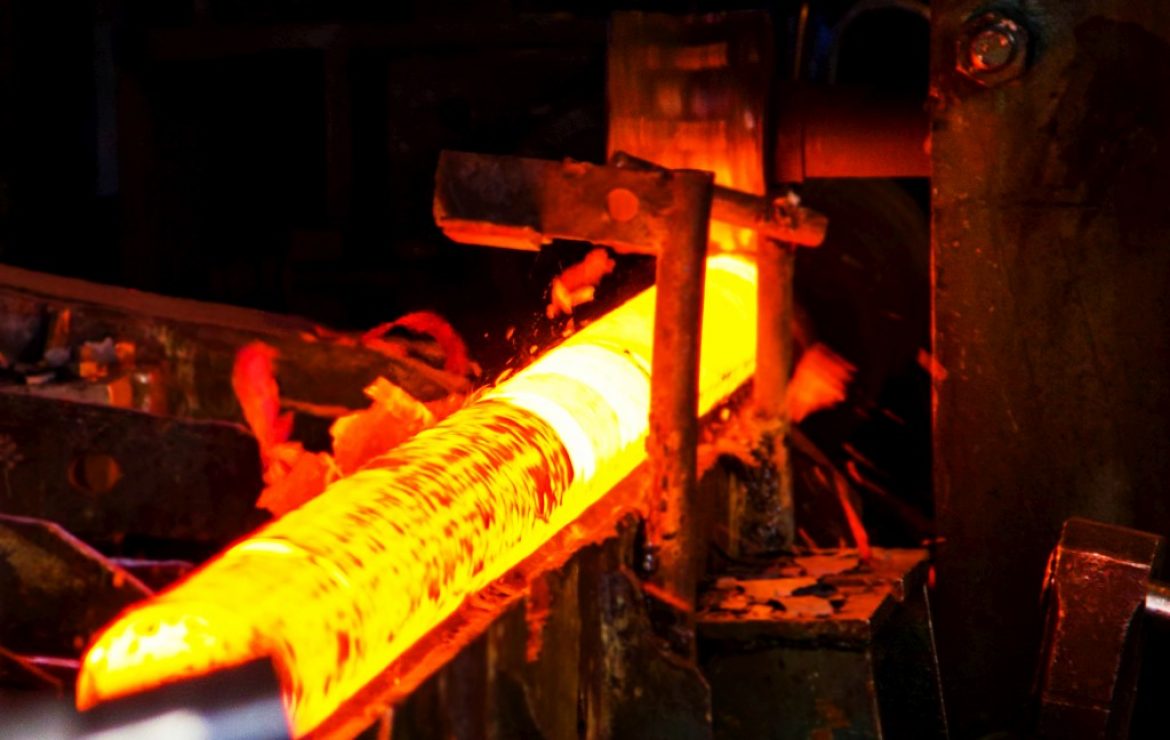
Forged 4140 steel refers to 4140 material shaped through a forging process. During forging, manufacturers heat the steel to a suitable temperature and apply compressive force using a press or hammer. This operation changes the shape of the material and can influence its grain structure and internal characteristics.
What makes forged 4140 different?
The word “forged” describes the manufacturing route rather than a separate chemical grade. A forged 4140 component still belongs to the AISI 4140 material family, but its production history differs from that of rolled or cast products.
Forging can help refine the grain structure and establish directional grain flow around the component’s shape. These characteristics can benefit parts exposed to mechanical loading, particularly when the forging process and subsequent heat treatment are properly controlled.
Nevertheless, forging does not automatically guarantee superior performance. Poor temperature control, insufficient deformation, unsuitable cooling or inadequate heat treatment can reduce the benefits. Buyers should therefore evaluate the complete manufacturing specification rather than relying on the word “forged” alone.
Why is chromium-molybdenum composition important?
Chromium contributes to hardenability and wear-related performance, while molybdenum supports hardenability and helps reduce the risk of certain tempering-related problems. Carbon contributes to the strength and hardness achievable through heat treatment.
Together, these elements make 4140 suitable for components that require more strength than many general-purpose carbon steels can provide. The alloy also offers useful machinability in appropriate supply conditions, making it practical for manufacturing complex mechanical parts.
For buyers, the important distinction is that chemical composition establishes the material’s potential, while forging quality and heat treatment influence how effectively the final component uses that potential.
⚙️ How Does Forging Affect 4140 Steel Properties?
Grain refinement and internal structure
One important benefit of forging is its ability to change the steel’s internal structure through controlled plastic deformation. When manufacturers forge 4140 at an appropriate temperature and apply sufficient deformation, they can refine the grain structure and improve structural uniformity compared with an unsuitable starting condition.
Grain refinement can contribute to a favorable combination of strength and toughness. However, the result depends on the original billet quality, forging temperature, deformation amount and subsequent thermal processing.
For this reason, buyers should not assume that every forged 4140 product has the same grain size or internal quality. These characteristics depend on the manufacturing route and the quality controls applied during production.
Directional grain flow
During forging, the material flows under compressive force. In open-die forging, the deformation pattern depends on how the workpiece moves between the dies. In closed-die forging, the die cavity helps shape the material into a more defined geometry.
When the forging process follows the component’s shape, grain flow can align with important load paths. This feature can improve resistance to certain types of loading compared with a component whose material structure does not follow its geometry.
However, directional grain flow also means that properties may vary with orientation. A test specimen taken parallel to the forging direction may produce different results from one taken in the transverse direction. Engineers should consider this distinction when specifying mechanical tests for critical parts.
Potential improvement in internal soundness
Proper forging can help close certain internal voids and consolidate the material. This is particularly valuable when manufacturers begin with sound steel billets and apply a suitable reduction during forging.
However, forging cannot reliably eliminate every internal defect. Inclusions, segregation, cracks and other discontinuities may remain if the starting material or process quality is inadequate. Therefore, forging should complement—not replace—material inspection.
Forging quality depends on process control
Several manufacturing variables influence the final result:
- Starting material quality: The billet or ingot should meet the required chemical and internal-quality standards.
- Forging temperature: The temperature must remain within the appropriate working range for the material and process.
- Deformation amount: The forging reduction should be suitable for the starting section and final dimensions.
- Cooling practice: Cooling must avoid unwanted thermal gradients and cracking risks.
- Post-forging heat treatment: Normalizing, annealing or quenching and tempering may be required to achieve the intended condition.
When evaluating a forged 4140 supplier, ask about these process controls if the component has demanding fatigue, impact or structural requirements. A clear manufacturing specification provides more useful assurance than a general statement that the steel has been forged.
📊 What Are the Typical Mechanical Properties of Forged 4140 Steel?
Mechanical properties depend on the delivery condition
Forged 4140 steel does not have one universal set of mechanical properties. Its tensile strength, yield strength, hardness and toughness depend on heat treatment, section size, cooling conditions and specimen orientation.
For example, annealed 4140 generally offers better machinability than a high-strength quenched-and-tempered condition. Conversely, a properly quenched-and-tempered forging can provide substantially higher strength and hardness, although the selected tempering condition also affects toughness.
Therefore, buyers should request values that correspond to the actual delivery condition and applicable product specification. A generic online datasheet should not replace the inspection results for the ordered material.
Key mechanical properties to understand
| Property | What it measures | Why it matters for heavy-duty parts |
|---|---|---|
| Tensile strength | Maximum tensile stress before fracture | Indicates the material’s resistance to pulling loads |
| Yield strength | Stress at which permanent deformation begins | Helps assess whether a component can withstand working loads without permanent distortion |
| Hardness | Resistance to localized indentation | Supports wear-related and contact-performance requirements |
| Elongation | Plastic deformation before fracture | Provides information about ductility |
| Impact toughness | Energy absorbed during impact fracture | Matters when components experience shock or impact loading |
| Fatigue resistance | Resistance to failure under repeated loading | Important for rotating shafts and cyclically loaded components |
How should buyers interpret hardness values?
Hardness is often one of the first values buyers request when sourcing 4140 steel. However, a hardness result only has meaning when the delivery condition, test method and measurement location are clear.
For example, a Rockwell C result from a quenched-and-tempered component should not be compared directly with a Brinell result from an annealed forging without considering the test method and material condition. Conversion tables can provide estimates, but they do not replace direct testing when a contract specifies a particular hardness scale.
In addition, surface hardness may not represent the center of a large forging. If the component has a substantial cross-section, ask whether the specification requires testing at multiple locations or through-thickness verification.
Typical values are not guaranteed delivery values
Published datasheets often provide representative mechanical-property ranges for selected heat-treatment conditions. These figures help engineers understand the potential performance of 4140, but they should not be treated as guaranteed values for every forged product.
Actual acceptance criteria must come from the agreed material specification, product standard or purchase order. The MTC and relevant test reports should then demonstrate whether the supplied batch meets those requirements.
🔥 How Does Heat Treatment Change Forged 4140 Steel Performance?
Normalizing after forging
Forging can leave a component with a non-uniform thermal and microstructural condition. Normalizing provides a controlled heating and air-cooling cycle that can help refine the structure and improve uniformity after hot working.
For 4140, the normalizing process typically involves heating above the critical transformation range and then allowing the steel to cool in air under controlled conditions. The exact temperature and holding time depend on section size and the applicable procedure.
Normalizing can also prepare the material for further machining or heat treatment. Nevertheless, it does not guarantee identical properties throughout every section, particularly in large forgings.
Annealing for machinability
Annealing generally produces a softer condition that supports machining and forming operations. Manufacturers may select an appropriate annealing cycle when the forging requires substantial material removal before final heat treatment.
For buyers, this condition can be useful when machining cost and tool life matter more than achieving high strength at the delivery stage. However, the final component may still require a separate quenching and tempering operation to meet its service requirements.
Quenching and tempering for strength and toughness
Quenching and tempering is a common route for producing high-strength 4140 components. During austenitizing, the steel is heated to a suitable temperature so that its microstructure transforms. The manufacturer then quenches it using an appropriate cooling medium and procedure.
Quenching produces a hard microstructure, but the as-quenched condition can be too brittle for many engineering applications. Tempering follows the quench to reduce brittleness and adjust the balance between strength, hardness and toughness.
The selected tempering temperature has a major influence on the final properties. A lower tempering temperature generally retains more hardness and strength, while a higher temperature usually reduces hardness and improves toughness. The exact response depends on the steel chemistry, section size and processing history.
Compare heat-treatment conditions before purchasing
| Condition | Main purpose | Typical purchasing consideration |
|---|---|---|
| As-forged | Material supplied after forging with the specified cooling practice | Confirm the actual microstructure and whether further heat treatment is required |
| Normalized | Improve structural uniformity and prepare for further processing | Check hardness and mechanical-property requirements |
| Annealed | Provide a softer condition for machining | Verify the specified hardness range and machinability needs |
| Quenched and tempered | Achieve a selected balance of strength, hardness and toughness | Confirm hardness, tensile properties and testing location |
Do not assume that the term “forged 4140” means the product is already quenched and tempered. If your application requires a specific mechanical-property range, state the delivery condition and acceptance criteria in the purchase order.
🏗️ Which Heavy-Duty Components Use Forged 4140 Steel?
Shafts and rotating machinery components
Forged 4140 is a common candidate for shafts that carry torque or experience bending loads. Examples include industrial drive shafts, transmission shafts and selected heavy-machinery components.
These parts often experience repeated loading during operation. Their design therefore requires more than adequate tensile strength. Engineers must also consider fatigue resistance, stress concentrations, surface finish and the effects of machining.
For large shafts, the forging route can help establish a suitable grain-flow pattern. However, the final design and inspection plan should account for the direction of loading and the actual material properties throughout the section.
Gears and power-transmission components
Some gears and power-transmission parts require a strong core to support repeated contact and bending loads. 4140 can provide a useful combination of core strength and toughness when manufacturers select an appropriate heat-treatment route.
Depending on the design, a component may also require surface hardening or another treatment to improve contact-wear performance. Buyers should distinguish between the core properties of the forged material and the surface properties produced by subsequent processing.
Crankshafts, connecting parts and industrial machinery
Crankshafts and other heavily loaded components can experience complex combinations of bending, torsion and cyclic stress. Forged 4140 may suit selected designs because it offers good hardenability and can achieve a useful strength-toughness balance.
Other potential applications include heavy-duty pins, couplings, hydraulic components, machine-tool parts and industrial equipment components. The suitability of 4140 depends on the operating environment, component geometry and required mechanical properties.
Match the material to the actual service conditions
Not every heavy-duty part requires forged 4140. Some applications may need higher wear resistance, corrosion resistance, impact toughness or a different hardenability profile. Engineers should evaluate the full service environment before choosing a grade.
For example, a component exposed to corrosive chemicals may need a corrosion-resistant alloy rather than 4140. A part requiring a very hard wear-resistant surface may need a different steel or a specialized surface-treatment process.
The best material selection balances load capacity, fatigue life, manufacturing requirements, maintenance conditions and total cost. A material that offers higher strength than necessary may increase machining or heat-treatment costs without improving the component’s practical service life.
📐 How Do Forging Size and Section Thickness Affect Performance?
Section size influences hardening response
One important consideration when purchasing forged 4140 is the size of the final component. During quenching, the surface cools faster than the center. As section thickness increases, the temperature difference between these areas can become more significant.
This difference affects the transformation of the microstructure and can produce variations in hardness and mechanical properties across the section. A large forging may therefore show different center properties from those measured near its surface.
4140 has useful hardenability for a medium-carbon alloy steel, but it does not guarantee uniform through-hardening at every diameter. Buyers should evaluate the required properties against the actual section size and heat-treatment capability.
Understand the importance of forging reduction
Forging reduction describes the change in cross-sectional area during deformation. A suitable reduction can help refine the structure and improve the distribution of deformation through the workpiece.
However, a high reduction ratio alone does not prove that the forging is free from internal defects or has the required mechanical properties. The starting material, deformation temperature, process sequence and inspection results remain important.
For critical applications, ask the supplier whether the forging specification defines a minimum reduction ratio or other process requirements. If the project uses a special forging standard, include its requirements in the purchase documents.
Consider machining allowance and final dimensions
Forged blanks often require machining before they become finished components. Buyers should therefore consider the initial forging dimensions, machining allowance and final tolerances together.
Insufficient allowance can leave surface defects or decarburized material in the finished part. Excessive allowance, on the other hand, increases material consumption and machining time. A practical specification should define the required dimensions at each stage.
What should buyers confirm for large forgings?
- Maximum and minimum dimensions of the supplied forging.
- Required forging reduction or process standard, where applicable.
- Heat-treatment condition and expected property uniformity.
- Mechanical-test specimen location and orientation.
- Ultrasonic inspection requirements and acceptance level.
- Machining allowance and final dimensional tolerances.
These details become particularly important when the component has a large diameter, thick cross-section or strict fatigue requirements. Confirming them before production helps align the material supply with the engineering design.
🔬 What Quality Tests Should Buyers Request?
Chemical composition analysis
The first step is to verify that the material meets the agreed 4140 chemical-composition requirements. The supplier should provide a material test certificate identifying the heat or cast number and reporting the actual chemical analysis.
Compare the reported results with the applicable standard or purchase specification. Do not confuse typical analysis values with mandatory specification limits. A typical value describes representative production chemistry, while the actual certificate records the results for the supplied heat.
Mechanical testing and hardness verification
Tensile testing can establish properties such as yield strength, tensile strength and elongation. Impact testing may also be necessary when the component must withstand shock loading or operate at a specified temperature.
Hardness testing provides another useful quality check, especially for quenched-and-tempered 4140. However, the test method, specimen location and acceptance range should be agreed in advance.
For large forgings, consider whether the test results represent the material’s critical regions. A single surface measurement may not be sufficient to verify the properties required at the center of a thick section.
Ultrasonic testing for internal quality
Ultrasonic testing (UT) uses sound waves to identify internal discontinuities in steel. It can help detect defects such as inclusions, voids and cracks, depending on the inspection procedure and material characteristics.
For heavy-duty forgings, UT may be particularly important because internal defects can affect fatigue performance and structural reliability. However, the inspection method alone does not define acceptance. Buyers should specify the applicable standard, inspection coverage and acceptance criteria.
Check traceability and inspection documents
Quality documentation should connect the test results to the actual material being delivered. The heat number, batch identification and product markings should remain traceable throughout processing and shipment.
| Quality check | What it verifies | Buyer action |
|---|---|---|
| Chemical analysis | Material chemistry and grade compliance | Compare MTC results with the agreed specification |
| Tensile testing | Strength and elongation | Check specimen location, orientation and test results |
| Hardness testing | Resistance to indentation | Confirm scale, location and required range |
| Impact testing | Energy absorption under impact | Specify test temperature and acceptance criteria |
| Ultrasonic testing | Internal discontinuities | Agree inspection standard and acceptance level |
| Third-party inspection | Independent verification | Arrange inspection before shipment when required |
A supplier should be able to explain which inspections are included in the quotation and which require additional arrangements. This clarity helps buyers avoid unexpected costs and quality disputes after delivery.
⚖️ Forged 4140 vs Rolled 4140 Steel: Which Should You Choose?
Different manufacturing routes produce different characteristics
Forged and rolled 4140 steel share the same basic alloy designation, but their manufacturing processes differ. Forging uses compressive force to shape a heated workpiece, while rolling passes heated or processed steel through rolls to reduce thickness or change its cross-section.
Both routes can produce high-quality engineering steel. The better choice depends on the component geometry, load direction, dimensions, required properties and available supply options.
Compare the main differences
| Comparison factor | Forged 4140 | Rolled 4140 |
|---|---|---|
| Manufacturing process | Shaped through compressive deformation | Shaped through rolling reduction |
| Grain flow | Can follow the component geometry when properly designed | Generally follows the rolling direction |
| Common product forms | Forged blocks, shafts, rings and shaped blanks | Plates, bars and other rolled sections |
| Typical application focus | Components requiring a specific forged shape or grain-flow arrangement | Machined components made from standard plate or bar stock |
| Key quality considerations | Forging reduction, internal quality and heat treatment | Rolling quality, section uniformity and heat treatment |
When should you choose forged 4140?
Forged 4140 may be a strong candidate when the component requires a particular shape, substantial section size or a grain-flow arrangement suited to its loading conditions. It can also be appropriate for critical components where the engineering specification explicitly requires a forged product.
However, the forging route may involve additional production steps, longer lead times or higher costs, depending on the geometry and order quantity. Buyers should evaluate these factors alongside the mechanical requirements.
When is rolled 4140 a practical choice?
Rolled 4140 can be a cost-effective option for components manufactured from standard plates or bars. It is often suitable when the required dimensions are available and the material’s properties meet the design specification.
For example, a machined component produced from a plate or round bar may not need a custom forging. In that case, available rolled stock can reduce lead time and simplify procurement.
Make the decision based on the component specification
Neither forging nor rolling automatically produces better mechanical properties in every situation. The final performance depends on the complete manufacturing route, material quality, heat treatment, section size and inspection results.
Before choosing, compare the required load capacity, fatigue performance, geometry, machining allowance, material availability and total delivered cost. If the engineering specification requires a forged blank, confirm that the supplier can provide the correct manufacturing route and supporting documentation.
🏢 What Should You Confirm When Sourcing 4140 Steel from OTAI?
Check available product forms and stock dimensions
OTAI Special Steel supplies alloy steels and tool steels to international industrial customers. For buyers sourcing 4140-related materials, confirming the available product form and dimensions is an important first step.
OTAI’s confirmed stock dimensions for 4140-related products include:
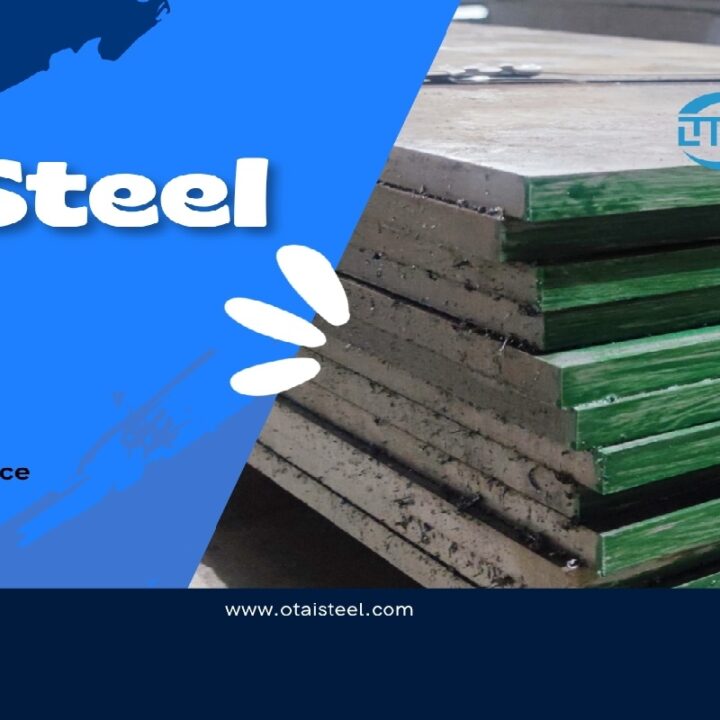
- 4140 / SCM440 / 42CrMo4 plates: thicknesses from 4–380 mm.
- 4140 QT plates: thicknesses from 13–200 mm.
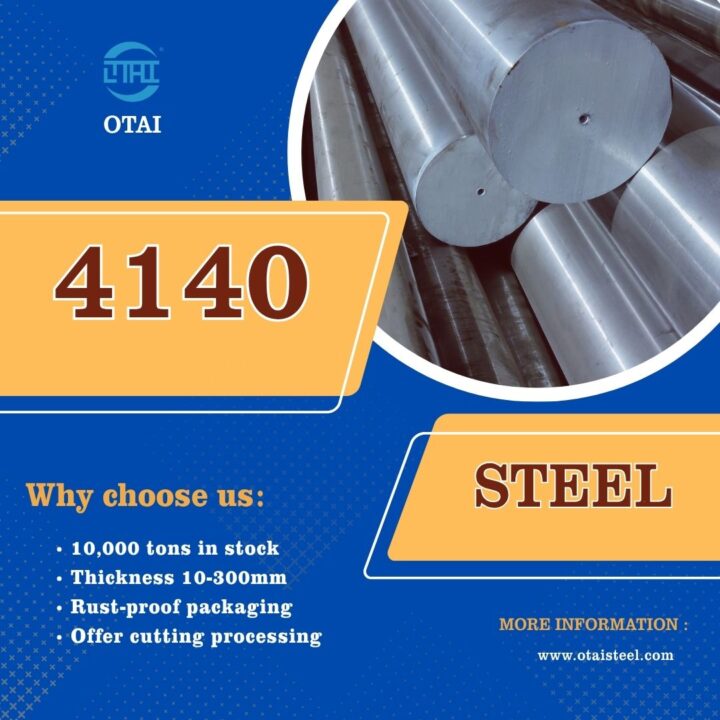
- 4140 round bars: diameters from 14–500 mm.
These ranges help buyers assess whether standard stock may meet their project requirements. However, actual availability, quantity and delivery condition must be confirmed for each order. In particular, buyers should specify whether they require annealed, normalized or quenched-and-tempered material.
You can review the product information on OTAI’s official 4140 alloy steel plate page.
Confirm processing and dimensional requirements
OTAI provides cutting, CNC machining and grinding services to support different industrial purchasing requirements. The company operates 20 saw-cutting machines and can discuss customized dimensions and tolerances according to the project specification.
For buyers preparing forged or machined components, it is important to distinguish between the required finished dimensions and the dimensions of the material supplied. If your project specifically requires a forged blank, confirm the required forging route and product availability before placing the order. Do not assume that standard plate or round-bar stock is equivalent to a forged product.
Review quality documentation and inspection options
Material traceability and inspection documentation help buyers verify that the delivered steel meets the agreed requirements. Depending on the order, buyers can discuss material certificates, ultrasonic testing and third-party inspection arrangements.
When requesting a quotation, provide the required grade, applicable standard, dimensions, quantity, delivery condition and mechanical-property requirements. If the component has special fatigue or impact requirements, include the relevant test methods and acceptance criteria as well.
Consider export experience and delivery support
OTAI maintains more than 10,000 tons of stock and has exported steel to over 54 countries since 1999. The company supports international customers with material processing, order coordination and export packaging.
Depending on the shipment requirements, packaging options can include anti-rust protection, strapping and wooden cases. Buyers should confirm the packaging method, shipping terms and delivery schedule before order confirmation.
For an accurate quotation, send your drawings or technical specification together with the required material condition and inspection details. This allows the supply team to assess the appropriate product form and clarify which requirements can be met through available stock or additional sourcing arrangements.
❓ Frequently Asked Questions About Forged 4140 Steel Properties
1. Is forged 4140 steel stronger than regular 4140 steel?
Forging can improve grain structure and create directional grain flow that benefits certain component designs. However, forged 4140 is not automatically stronger than every rolled 4140 product. Final strength depends on the manufacturing process, heat treatment, section size and test conditions.
2. What is the hardness of forged 4140 steel?
There is no single hardness value for all forged 4140 steel. Hardness depends mainly on the heat-treatment condition, section size and cooling process. Annealed material is generally softer, while quenched-and-tempered material can achieve higher hardness. Buyers should specify the required range and verify it through the relevant test report.
3. Is forged 4140 steel suitable for heavy-duty shafts?
Yes, forged 4140 can be suitable for many heavy-duty shaft applications because it offers useful strength, hardenability and toughness. However, engineers must also consider fatigue loading, shaft diameter, heat treatment, surface finish and the required mechanical properties throughout the section.
4. Does forged 4140 steel need heat treatment?
Not every forging requires the same heat-treatment route. Some products may be supplied in an as-forged or normalized condition, while others require annealing or quenching and tempering. The correct condition depends on machining requirements and the final component’s mechanical-property specification.
5. What should I check before buying forged 4140 steel?
Confirm the chemical composition, forging specification, reduction requirements where applicable, heat-treatment condition, mechanical properties, dimensions and inspection criteria. You should also review the MTC, hardness results and ultrasonic inspection report when required. Finally, make sure the supplier can provide the specified forged product form rather than assuming that standard rolled stock meets the same requirement.