preheating for welding 4140 steel: What Should Buyers Specify in a Welding Project?
📑 Table of Contents
- 🔍 Why Is Preheating 4140 Steel Important in Welding Projects?
- 🌡️ Which Preheating Temperature Should Buyers Specify?
- 📏 How Do Material Thickness and Joint Design Affect Preheating?
- 🔬 How Does the 4140 Steel Condition Influence Welding Requirements?
- ⚙️ What Welding Process and Filler Metal Information Should Buyers Provide?
- 💧 Why Must Hydrogen Control Be Included in Welding Specifications?
- 🔥 Should Buyers Specify Interpass Temperature and Post-Weld Heat Treatment?
- 📋 What Should a Complete 4140 Welding Material Specification Include?
- 🏭 How Can a Steel Supplier Support Welding Project Requirements?
- 🏭 Company Advantages
- ❓ Frequently Asked Questions
Preheating is an important part of many welding procedures for AISI 4140 steel. This chromium-molybdenum alloy offers good strength, toughness and hardenability, which make it useful for shafts, machinery components, industrial equipment and other load-bearing parts. However, its hardenability also creates welding challenges. Rapid cooling around the weld can produce hard, brittle microstructures in the heat-affected zone (HAZ), increasing the risk of hydrogen-assisted cracking.
For buyers, specifying only “4140 steel” and a required plate thickness is not enough when the material will enter a welding project. The welding fabricator also needs information about the material condition, joint geometry, welding process, filler metal, preheat temperature, interpass temperature and post-weld treatment. These factors influence the final properties of the welded component.
A complete purchasing specification helps the steel supplier provide the correct material condition and documentation. It also gives the engineering and fabrication teams the information they need to develop and qualify a suitable welding procedure. This article explains the main requirements buyers should clarify before sourcing 4140 steel for welded applications.
🔍 Why Is Preheating 4140 Steel Important in Welding Projects?
4140 has relatively high hardenability
AISI 4140 contains approximately 0.38–0.43% carbon, together with chromium and molybdenum. This alloy composition supports strength and hardenability after heat treatment. However, the same characteristics require careful control during welding.
When a welding arc heats the joint, the surrounding base metal experiences a rapid thermal cycle. The material close to the fusion line reaches a high temperature and then cools as heat transfers into the surrounding steel. If cooling occurs too quickly, parts of the HAZ can develop hard microstructures that have limited resistance to cracking.
This risk becomes more significant when the joint also contains diffusible hydrogen and residual tensile stress. These three factors—hydrogen, a susceptible microstructure and tensile stress—combine to create conditions for hydrogen-assisted cracking.
How preheating helps control cracking
Preheating raises the temperature of the base metal before welding begins. It reduces the temperature difference between the weld area and the surrounding material, which slows the cooling rate after each welding pass.
This slower cooling can reduce excessive HAZ hardening and give diffusible hydrogen more time to escape from the weld region. Preheating also reduces some thermal gradients that contribute to residual stress.
However, preheating does not eliminate every welding risk. A poorly prepared joint, damp electrodes, unsuitable filler metal or excessive restraint can still cause defects. Buyers should therefore treat preheating as one part of a complete welding control plan.
| Welding risk | Why it matters for 4140 | Control to specify |
|---|---|---|
| Rapid cooling | Can produce hard and crack-sensitive HAZ structures. | Suitable preheat and heat-input control. |
| Diffusible hydrogen | Can contribute to delayed cracking. | Low-hydrogen consumables and dry joint preparation. |
| Residual stress | Increases the driving force for crack formation. | Joint design, welding sequence and thermal control. |
| Uncontrolled post-weld cooling | May increase cracking risk after welding. | Defined cooling and post-weld requirements. |
For procurement teams, the key point is that 4140 welding suitability depends on more than the grade designation. The material condition and the planned fabrication procedure must work together.
🌡️ Which Preheating Temperature Should Buyers Specify?
Do not use one temperature for every 4140 project
Buyers often ask whether 4140 requires a preheat temperature of 150°C, 200°C or 300°C. These figures appear in different welding recommendations, but none should automatically become a universal requirement for every 4140 component.
The appropriate minimum preheat depends on several variables, including the actual chemical composition, combined material thickness, welding process, heat input, diffusible hydrogen level and joint restraint. The required temperature may also differ according to the applicable fabrication code and the qualified welding procedure specification (WPS).
Some 4140-specific welding guidance uses an indicative range around 200–300°C (392–572°F). This range can serve as a reference during preliminary engineering discussions, but it does not replace a project-specific calculation, material manufacturer’s recommendation or qualified WPS. Buyers should not copy a temperature from a general article directly into a critical production specification.
Specify the minimum temperature and measurement method
A purchase or fabrication specification should identify the minimum preheat temperature rather than simply stating “preheat before welding.” It should also explain how the fabrication team will measure and record the temperature.
Suitable measurement methods may include calibrated contact thermometers, thermocouples or temperature-indicating crayons within their specified accuracy ranges. Infrared instruments can also be used when the equipment and surface conditions support reliable readings.
The specification should clarify the measurement location and when the temperature must be checked. For example, the fabricator may need to verify the temperature near the joint and at an appropriate distance from the weld preparation. Thick sections may require additional attention to temperature uniformity through the material.
| Specification item | What buyers should define |
|---|---|
| Minimum preheat | A project-approved temperature based on the qualified welding procedure. |
| Measurement method | Contact thermometer, thermocouple or suitable temperature indicator. |
| Measurement location | Defined positions around the joint and through the relevant section. |
| Temperature records | Inspection records showing compliance before and during welding. |
| Applicable procedure | Approved WPS and the governing fabrication or welding code. |
For critical applications, the engineering team should approve the temperature range and measurement procedure before production starts. This approach avoids disagreements between the material purchaser, welding contractor and inspection team.
📏 How Do Material Thickness and Joint Design Affect Preheating?
Thicker sections can cool more quickly around a weld
Material thickness is one of the important factors in determining preheat requirements. A thick section can absorb and conduct heat away from the weld region, which may increase the cooling rate. The combined thickness of the parts forming a joint can therefore matter more than the thickness of only one component.
For example, welding two thick 4140 plates may create a different thermal condition from welding a thin plate to a much thicker component. Even when both projects use the same steel grade, their joint geometry and heat flow are not identical.
Buyers should provide the actual dimensions of every part involved in the joint. If the project includes plates, bars, forged components or sections with different thicknesses, the welding engineer needs these details before determining the procedure.
Joint restraint changes the cracking risk
Joint design also influences the stresses that develop during welding. A highly restrained joint cannot contract freely as the weld metal and surrounding steel cool. This restriction can increase residual stress and make hydrogen-assisted cracking more likely.
Examples include thick assemblies, rigid structural connections, repair welds and joints with limited access. Root passes and tack welds also deserve attention because they can experience high local restraint and rapid cooling.
When buyers provide drawings for quotation, they should include joint preparation details where available. These may cover groove angle, root gap, root face, weld size, access conditions and the expected welding sequence.
| Project condition | Potential influence | Information to provide |
|---|---|---|
| Thick plate or combined sections | Greater heat extraction and possible faster cooling. | Thickness of each component and joint configuration. |
| Highly restrained assembly | Higher residual stress around the weld. | Fixture arrangement and assembly sequence. |
| Small root pass or tack weld | Local rapid cooling and cracking risk. | Tack welding and root-pass requirements. |
| Dissimilar material joint | Different thermal and metallurgical responses. | Grade and thickness of both base materials. |
For this reason, buyers should avoid specifying preheat solely by nominal 4140 plate thickness. The fabricator needs to evaluate the complete joint and the welding conditions before approving the temperature requirement.
🔬 How Does the 4140 Steel Condition Influence Welding Requirements?
Annealed 4140
Annealed 4140 is generally easier to machine than higher-hardness conditions. For this reason, manufacturers may select it when the component requires substantial machining before welding or when the complete assembly will receive a suitable heat treatment afterward.
However, annealed material still contains the alloying elements and carbon level that give 4140 its hardenability. Annealing does not make it equivalent to a low-carbon structural steel. The welding procedure must still control cooling rate, hydrogen and residual stress.
Normalized and hot-rolled conditions
Normalized or hot-rolled 4140 may have different hardness, microstructure and residual stress characteristics from annealed material. These differences can influence machining and welding behavior. Buyers should therefore identify the actual delivery condition instead of assuming that all untreated 4140 behaves identically.
When the project requires a specific mechanical performance after welding, the engineering team should also consider whether the complete component needs further heat treatment. The selected treatment must be compatible with the base metal, weld metal and final service requirements.
Quenched and tempered 4140
Quenched and tempered (QT) 4140 provides higher strength and hardness than annealed material. However, welding a QT component requires particular care because the thermal cycle can change the properties around the weld.
The HAZ may develop a harder region during rapid cooling, while other areas may experience tempering and softening. Consequently, the welded component may no longer have uniform mechanical properties.
Post-weld heat treatment can also reduce the hardness and strength of a previously tempered component if the temperature exceeds the original tempering conditions or the approved project limits. Buyers should provide the required hardness and mechanical properties after welding, not only the original material condition.
| 4140 delivery condition | Welding consideration | Buyer requirement |
|---|---|---|
| Annealed | Still requires control of HAZ hardening and hydrogen. | Specify the intended condition after fabrication. |
| Normalized | Welding response depends on actual properties and section size. | Confirm the material certificate and required mechanical properties. |
| Hot rolled | Surface condition and material properties need assessment. | State the delivery condition and inspection requirements. |
| Quenched and tempered | Welding can alter local hardness and strength. | Define approved preheat, PWHT and final property limits. |
For procurement, the most useful question is not simply whether the supplier can provide 4140. Buyers should ask whether the available delivery condition is suitable for the planned welding sequence and final heat treatment.
⚙️ What Welding Process and Filler Metal Information Should Buyers Provide?
Identify the welding process
Different welding processes introduce different heat-input conditions and hydrogen levels. Common processes for alloy steel fabrication include gas tungsten arc welding (GTAW/TIG), gas metal arc welding (GMAW/MIG), shielded metal arc welding (SMAW) and flux-cored arc welding (FCAW).
The choice depends on component geometry, production volume, joint access, required weld quality and available equipment. A process that works well for a small repair may not be the most efficient option for a large production assembly.
Buyers should therefore identify the expected process when requesting material for a defined welding project. If the fabricator has not selected the process yet, the purchasing documents should state that the welding contractor must recommend and qualify one before production.
Specify filler metal compatibility
Filler metal selection affects weld strength, toughness, hydrogen control and post-weld heat-treatment compatibility. Depending on the application, engineers may consider low-hydrogen consumables or chromium-molybdenum filler metals.
For example, ER80S-D2 and ER80S-B2 may be considered for certain GTAW or GMAW applications, while E7018 and E8018-B2 are examples used in some SMAW procedures. These are not automatic recommendations for every 4140 joint. The correct filler depends on the required weld-metal properties, base-metal condition, joint design and applicable code.
A filler metal with a lower strength level may be acceptable for some non-critical attachments or repairs, but it may not meet the requirements of a load-bearing joint. Conversely, selecting a higher-strength consumable without considering hydrogen control and toughness can create other problems.
| Welding process | Example filler classification | Buyer should confirm |
|---|---|---|
| GTAW / TIG | ER80S-D2 or ER80S-B2 may be considered. | Strength, toughness and post-weld treatment compatibility. |
| GMAW / MIG | ER80S-D2 or ER80S-B2 may be considered. | Wire classification, shielding gas and hydrogen control. |
| SMAW | E7018 or E8018-B2 may be considered. | Electrode classification, storage and exposure limits. |
| FCAW | A qualified low-hydrogen wire may be selected. | Wire classification, shielding and storage requirements. |
Before production, the welding engineer should confirm the consumable classification, strength level, hydrogen designation and handling instructions. Buyers should also specify whether the filler metal must retain its properties after the planned PWHT cycle.
💧 Why Must Hydrogen Control Be Included in Welding Specifications?
Hydrogen can enter the weld from several sources
Hydrogen-assisted cracking is a major concern when welding hardenable steels such as 4140. Moisture, contaminated surfaces, damp electrodes, flux and unsuitable consumable storage can introduce hydrogen into the weld metal.
After welding, diffusible hydrogen can move through the weld and HAZ. When the joint also contains a hard, susceptible microstructure and tensile stress, cracking may occur after the weld has cooled. This explains why a weld can appear acceptable immediately after fabrication but develop cracks later.
Require clean and dry joint preparation
Buyers should include surface preparation and consumable handling in the project specification. Before welding, the joint area should be free from oil, grease, paint, rust, moisture and other contaminants that may affect weld quality.
Low-hydrogen electrodes and wires must also be stored and handled according to the manufacturer’s instructions. For covered electrodes, this may involve controlled baking, heated storage or exposure-time limits. The correct procedure depends on the consumable classification and packaging requirements.
Specify hydrogen control alongside preheat
Preheating helps reduce cooling rate and promotes hydrogen diffusion, but it cannot compensate for poor consumable handling. A complete welding plan should combine temperature control with suitable low-hydrogen consumables, clean joint preparation and an approved welding procedure.
For crack-sensitive applications, buyers may specify a required diffusible hydrogen classification, such as H5, when the applicable procedure and consumable system support it. The project engineer should define the exact requirement rather than assuming every product carrying a low-hydrogen label meets the same limit.
- Require clean and dry joint surfaces before welding.
- Define consumable classifications and hydrogen requirements.
- Follow the electrode or wire manufacturer’s storage instructions.
- Control preheat and interpass temperatures during welding.
- Specify post-weld hydrogen-release measures when the procedure requires them.
- Define inspection timing to account for possible delayed cracking.
These requirements are particularly important for thick sections, highly restrained joints and components that will operate under significant mechanical loads.
🔥 Should Buyers Specify Interpass Temperature and Post-Weld Heat Treatment?
Interpass temperature maintains thermal control
Preheat establishes the required temperature before welding begins. Interpass temperature controls the temperature of the joint between successive welding passes. These two requirements work together, but they are not interchangeable.
If the joint cools below the specified minimum between passes, the fabricator may need to reheat it before continuing. If the temperature becomes excessively high, the weld thermal cycle may also move outside the qualified procedure. Therefore, the WPS should define both minimum and, where required, maximum interpass temperatures.
Buyers should request temperature records when the project requires documented control. These records help inspectors confirm that the fabricator followed the approved procedure throughout production.
Post-weld heating and PWHT serve different purposes
Post-weld heating may be used to maintain an elevated temperature after welding, allowing more diffusible hydrogen to escape before the joint cools. This treatment is not the same as stress-relief heat treatment or full tempering.
Post-weld heat treatment (PWHT) can reduce residual stress and modify the microstructure around the weld. However, its suitability for 4140 depends on the original heat-treatment condition, required final hardness, component dimensions and service requirements.
For QT 4140, the PWHT temperature must be considered in relation to the original tempering temperature. Excessive treatment can reduce the strength and hardness that the original heat treatment provided. The engineering team must therefore approve the complete thermal cycle.
| Thermal control | Main purpose | What buyers should specify |
|---|---|---|
| Preheating | Control initial cooling conditions and reduce cracking risk. | Minimum temperature and measurement method. |
| Interpass control | Maintain the required temperature between welding passes. | Minimum and maximum limits where applicable. |
| Post-weld hydrogen treatment | Promote hydrogen diffusion before final cooling. | Temperature, holding time and cooling sequence. |
| PWHT | Manage residual stress and final metallurgical properties. | Approved temperature, holding time and final properties. |
Buyers should not use the phrase “heat treatment after welding” without further explanation. The specification should identify the treatment objective and the required final material properties.
📋 What Should a Complete 4140 Welding Material Specification Include?
Give the supplier the complete material requirements
A clear purchase specification helps the supplier identify the correct 4140 product and delivery condition. It also allows the welding contractor to check whether the material matches the approved fabrication plan.
Buyers should include the grade, product form, dimensions, quantity, delivery condition and applicable material standard. If the project requires specific chemical composition, hardness or mechanical properties, these requirements should appear in the purchase documents rather than remaining as informal expectations.
Connect material requirements with welding requirements
The steel purchase order and welding specification serve different purposes, but they must remain consistent. The purchase order controls what material the supplier delivers. The WPS controls how the fabrication team welds that material.
For example, if the project requires QT 4140, the purchase documents should identify the required delivery hardness and mechanical properties. The welding procedure should then address how preheating, filler metal and PWHT will affect those properties.
The following checklist can help procurement teams prepare an RFQ and coordinate technical reviews:
| Category | Information to specify | Purpose |
|---|---|---|
| Material identification | AISI 4140, applicable standard and product form. | Prevent grade and product-form confusion. |
| Dimensions | Thickness, width, length or diameter, plus tolerances. | Confirm material suitability and stock options. |
| Delivery condition | Annealed, normalized, hot rolled or QT. | Match the material to fabrication and heat treatment. |
| Material properties | Required hardness and mechanical properties. | Establish acceptance criteria. |
| Welding procedure | Process, qualified WPS and applicable code. | Control fabrication conditions. |
| Thermal control | Preheat, interpass, post-weld treatment and cooling. | Manage HAZ properties and cracking risk. |
| Consumables | Filler classification and hydrogen requirements. | Confirm weld-metal compatibility. |
| Inspection | Visual, surface and volumetric testing as required. | Verify weld quality and acceptance. |
| Documentation | Material test certificate, traceability and inspection records. | Support quality assurance and project records. |
Confirm inspection and acceptance requirements
For critical welded components, the buyer may need to specify visual testing, magnetic particle testing, penetrant testing, ultrasonic testing or radiographic testing. The selected method depends on the joint design, material thickness, governing code and required inspection level.
Hydrogen-assisted cracks can appear after welding rather than immediately after the final pass. Therefore, the inspection plan should define any required delay before final examination. The appropriate delay must follow the applicable code and qualified project procedure.
Finally, buyers should request the material test certificate and confirm traceability between the delivered steel and the fabrication records. This is particularly important when the project requires specific chemistry, hardness or mechanical properties.
🏭 How Can a Steel Supplier Support 4140 Welding Project Requirements?
Material selection starts before fabrication
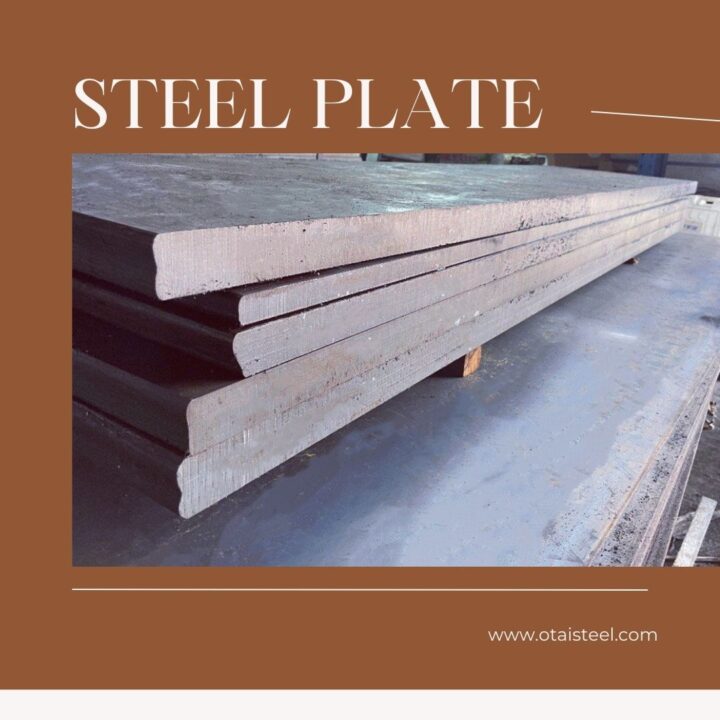
A steel supplier can help buyers compare available 4140 dimensions, delivery conditions and processing options. This support is useful when a project includes thick plates, large components or customized blanks that must enter a defined welding and machining sequence.
For example, a buyer planning to weld a thick 4140 component may need to compare annealed and QT material. The correct choice depends on the final mechanical requirements and whether the assembly will receive additional heat treatment. The supplier can provide available material information and documentation to support the engineering review.
Processing and inspection support
In addition to supplying the steel, a capable supplier may coordinate cutting, machining, grinding and inspection according to the agreed order requirements. These services can help reduce preparation work and improve dimensional consistency before the material reaches the fabrication facility.
For welding projects, buyers should clarify which services are included in the quotation. Material supply, cutting, heat treatment, welding procedure qualification and welding itself are different scopes of work. The purchase documents should identify the responsible party for each activity.
Choose a supplier that understands export requirements
International projects often involve additional requirements for material certificates, identification, packaging and shipment documentation. Buyers should confirm these details before placing an order, particularly when the steel will pass through several processing and inspection stages.
OTAI supplies 4140 alloy steel products for industrial customers and supports dimensional preparation, quality documentation and export arrangements. Buyers can review the AISI 4140 alloy steel product information and provide their required dimensions, delivery condition and project specifications for review.
When requesting a quotation, include the welding project’s material requirements and the intended fabrication sequence. This allows the supplier to check the available product options and identify any information that needs confirmation before the order proceeds.
🏭 Company Advantages
- More than 10,000 tons of total inventory across different alloy steel and tool steel product categories.
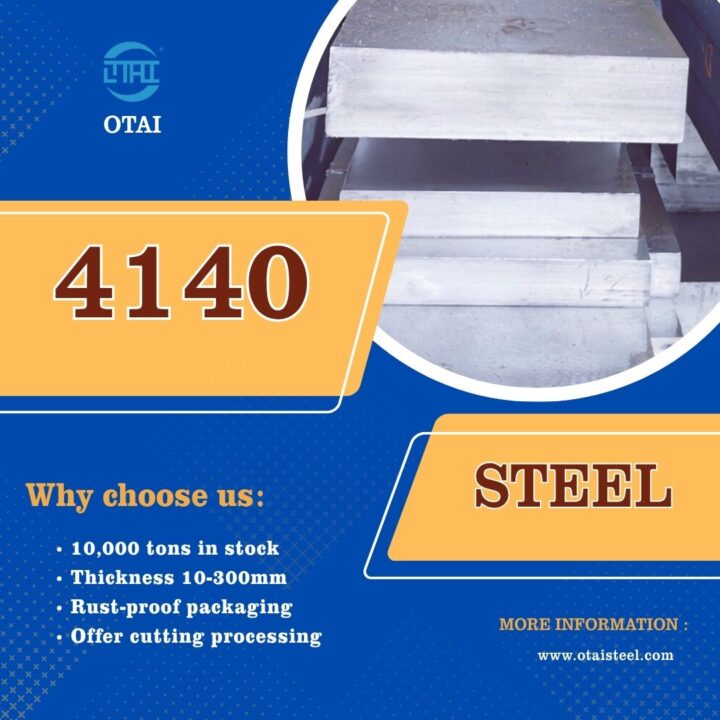
- 4140 steel plate stock: thickness range of 4–380 mm, subject to confirmation of current availability.
- 4140 QT plate stock: thickness range of 13–200 mm, subject to confirmation of current availability.
- 20 saw cutting machines for material cutting and preparation.
- CNC machining and grinding services to support customized dimensions and tolerances.
- One-stop service covering material supply, cutting, machining coordination, inspection support and export packaging.
- Material testing and ultrasonic testing support according to agreed project requirements.
- Third-party inspection coordination when requested by the buyer.
- Anti-rust protection, strapping, bundling and wooden-case packaging for export orders.
- Export experience serving customers in more than 54 countries since 1999.
- Experience supplying alloy steel and tool steel to international industrial customers, including Fortune 500 companies.
For 4140 welding projects, buyers should provide the required plate thickness, delivery condition, quantity, applicable standard and inspection requirements. Actual dimensions and stock quantities should be confirmed before order placement.
❓ Frequently Asked Questions
1. Does 4140 steel always require preheating before welding?
Not every welding situation has the same preheat requirement, but 4140 is a hardenable alloy steel that generally needs careful thermal control. The required preheat depends on material thickness, actual condition, joint restraint, welding process, heat input and hydrogen level. Buyers should follow a qualified welding procedure rather than assume that one temperature applies to every 4140 component.
2. What is a typical preheating temperature for 4140 steel?
Some 4140 welding recommendations use an indicative range around 200–300°C (392–572°F). However, the correct minimum temperature must be established for the specific material, joint and welding procedure. Thick sections, highly restrained joints and different material conditions may require different controls.
3. Is preheating enough to prevent hydrogen cracking in 4140?
No. Preheating helps slow cooling and supports hydrogen diffusion, but it is only one part of crack prevention. Fabricators must also use suitable low-hydrogen consumables, keep joint surfaces clean and dry, control interpass temperature and follow the approved welding sequence. Inspection timing should also account for possible delayed cracking.
4. Can quenched and tempered 4140 be welded?
It can be welded under a carefully qualified procedure, but the welding thermal cycle may change the local hardness and mechanical properties. The HAZ can develop hard regions or softened areas, depending on the thermal cycle. Buyers should specify the original delivery hardness, required final properties and approved PWHT conditions before fabrication.
5. What should buyers include when ordering 4140 steel for a welding project?
Buyers should provide the grade and standard, product form, dimensions, quantity, delivery condition, required hardness or mechanical properties, material certificate requirements and inspection criteria. They should also share the intended welding process and any project-specific preheat, interpass and PWHT requirements. This information helps the supplier confirm suitable material options and prepare an accurate quotation.