Percent Carbon in 4140 Steel: What Should Buyers Check on the MTC?
📑 Table of Contents
- 🔍 What Is the Carbon Percentage in 4140 Steel?
- 📊 4140 Steel Carbon Content: Standard Range vs. Actual Analysis
- 📄 Where Can Buyers Find Carbon Content on an MTC?
- ⚙️ How Does Carbon Content Affect 4140 Steel Properties?
- 🔬 How Can Buyers Verify the Carbon Percentage?
- 📋 What Other Chemical Elements Should Buyers Check?
- 🏭 Does Carbon Content Affect 4140 Steel Purchasing Decisions?
- 📦 How Should Buyers Confirm 4140 Steel Quality Before Shipment?
- 🏢 Company Advantages
- ❓ Frequently Asked Questions
When purchasing 4140 alloy steel, buyers often check tensile strength, hardness, dimensions, and delivery condition. However, chemical composition deserves the same attention. In particular, the carbon percentage in 4140 steel influences its response to heat treatment and contributes to the strength and hardness that manufacturers expect from this chromium-molybdenum alloy.
For procurement teams, knowing the nominal carbon content is only the first step. The more important question is whether the actual chemical analysis recorded on the Material Test Certificate (MTC) meets the specification stated in the purchase order. A supplier may describe a product as 4140 steel, but buyers still need traceable documentation that connects the delivered material to its chemical analysis and heat number.
This article explains the commonly specified carbon range, how to read the MTC, which testing methods can verify carbon content, and what else buyers should check before accepting a shipment.
🔍 What Is the Carbon Percentage in 4140 Steel?
Common carbon range: 0.38–0.43%
4140 steel is a medium-carbon chromium-molybdenum alloy steel. Its commonly specified carbon range is 0.38–0.43% by weight. This range appears in widely used 4140 material specifications, although buyers should always identify the exact standard and edition that governs their order.
In practical terms, carbon accounts for approximately 0.38 to 0.43 kilograms in every 100 kilograms of steel. The figure may look small, but carbon has a significant influence on steel’s response to hardening and its achievable mechanical properties.
| Item | Typical information for 4140 |
|---|---|
| Steel classification | Medium-carbon chromium-molybdenum alloy steel |
| Common carbon range | 0.38–0.43% by weight |
| Often-quoted nominal carbon level | Approximately 0.40% |
| Verification document | Material Test Certificate (MTC) |
| Suitable analytical method | Optical Emission Spectrometry (OES) |
Does the number 40 in 4140 mean exactly 0.40% carbon?
The AISI/SAE designation provides a useful clue about the steel grade’s approximate carbon level. In 4140, the final two digits are commonly associated with a nominal carbon content of about 0.40%. However, this designation does not guarantee that every heat contains exactly 0.40% carbon.
Actual carbon content varies within the permitted specification range. For example, one heat may have a reported result of 0.39%, while another may show 0.42%. Both results can meet the commonly specified range, provided the material complies with the applicable standard and any additional purchase requirements.
Why should buyers pay attention to the percentage?
Carbon contributes to the formation of harder microstructures during heat treatment. Therefore, it affects how 4140 responds to quenching and tempering. Nevertheless, carbon content alone cannot predict the final hardness or tensile strength. Chromium, molybdenum, manganese, section size, cooling conditions, and the selected heat-treatment process also matter.
For this reason, buyers should treat the carbon range as one essential part of material verification rather than a complete measure of steel quality.
📊 4140 Steel Carbon Content: Standard Range vs. Actual Analysis
Understand the difference between a specification and a test result
When buyers review a steel quotation or technical datasheet, they may see a carbon range such as 0.38–0.43%. This range describes the chemical composition limits required by a particular specification. It does not tell buyers the exact carbon content of the material in a specific shipment.
The actual result comes from chemical analysis of the steel. Mills normally record this information against a heat or cast number. The MTC then provides the test results that buyers can compare with the applicable acceptance limits.
These three terms should not be confused:
- Specified range: The permitted chemical composition limits in the governing standard or purchase specification.
- Typical analysis: An illustrative composition that represents a common production result, not a guaranteed value for every heat.
- Actual heat analysis: The measured chemical composition reported for a particular steel heat, normally documented on the MTC.
Why does the applicable standard matter?
4140 is widely recognized as an AISI/SAE grade, but buyers may also source comparable materials under other national or international designations. Similar grades do not automatically have identical chemical limits, testing rules, or delivery requirements.
For example, a buyer may compare 4140 with 42CrMo4 or SCM440. These grades are often considered related alternatives, but the purchaser should not assume that their specifications are interchangeable in every application. The governing standard, product form, delivery condition, and contractual requirements determine acceptance.
Before approving a certificate, confirm the following information:
- The specified grade and its recognized designation.
- The standard number and edition stated in the order.
- The applicable product form, such as plate, bar, or forged material.
- Whether the chemical limits apply to heat analysis, product analysis, or both.
- Any additional composition limits agreed between buyer and supplier.
Can a carbon result of 0.44% be accepted?
If the purchase specification requires a maximum carbon content of 0.43%, a reported result of 0.44% would exceed that limit. Buyers should not accept the material simply because the difference appears small. Instead, they should request clarification, verify the governing specification, and follow the agreed nonconformance procedure.
Likewise, a result within the range does not automatically establish full compliance. The remaining chemical elements and other contractual requirements must also meet their respective limits. A proper purchasing decision therefore considers the complete certificate, not one isolated number.
📄 Where Can Buyers Find Carbon Content on an MTC?
Locate the chemical composition section
The Material Test Certificate is one of the most important documents in a steel purchase. Depending on the mill and certificate format, it may also be called a mill test certificate or inspection certificate. Buyers should look for a section titled Chemical Composition, Chemical Analysis, Ladle Analysis, or Heat Analysis.
Within this section, carbon may appear under the symbol C. The reported value is normally expressed as a percentage by weight. A certificate might show a result such as 0.40% C. Buyers should compare this number with the permitted range in the applicable specification rather than relying on a supplier’s general product description.
Check the heat number and traceability
A chemical analysis result is useful only when buyers can connect it to the material being delivered. The heat number, also known as the cast number, identifies a particular steelmaking batch. It should appear consistently across relevant documents and, where applicable, material markings or bundle labels.
For a shipment containing multiple heats, buyers should check whether the MTC identifies each heat separately. One certificate should not be assumed to cover every plate or bar unless the document clearly establishes that relationship.
Example of an MTC review
The following table illustrates how a buyer might review a simplified chemical analysis. These figures are examples only, not a guaranteed analysis for every 4140 heat or a substitute for the governing specification.
| MTC item | Illustrative result | Buyer action |
|---|---|---|
| Grade | AISI 4140 | Compare with the purchase order. |
| Carbon (C) | 0.40% | Check against the specified carbon range. |
| Chromium (Cr) | 0.95% | Verify the applicable chromium limit. |
| Molybdenum (Mo) | 0.20% | Verify the applicable molybdenum limit. |
| Heat number | Example: H24001 | Match it with material identification. |
Do not judge the certificate solely by whether it displays a carbon value within the expected range. Check the document’s issuer, inspection details, grade designation, heat number, and relationship to the delivered goods. If the certificate contains unclear abbreviations or missing information, ask the supplier for an explanation before shipment approval.
⚙️ How Does Carbon Content Affect 4140 Steel Properties?
Carbon contributes to strength and hardness
Carbon plays an important role in the mechanical behavior of 4140 steel. During suitable heat treatment, it helps the steel form a hardened microstructure. This contributes to the grade’s ability to achieve useful combinations of strength, hardness, and toughness after quenching and tempering.
However, a higher carbon result within the permitted range does not automatically mean that a finished component will have higher hardness or better performance. The final result depends on several interacting factors, including the heat-treatment temperature, holding time, quenching medium, tempering temperature, and the size of the component.
Why chromium and molybdenum also matter
4140 is not simply a carbon steel. Chromium and molybdenum contribute to its hardenability, helping the steel develop suitable hardened properties through a greater section depth than many plain-carbon steels under comparable conditions.
Consequently, two 4140 heats with similar carbon levels may still respond differently if their other alloying elements, cleanliness, or processing histories differ. Buyers should evaluate the complete chemistry and the required mechanical properties together.
Carbon content and heat-treatment planning
For manufacturers, the carbon percentage helps establish whether the selected material is appropriate for the intended heat-treatment route. Nevertheless, the supplier’s material certificate cannot replace a properly developed heat-treatment procedure.
For example, a component that requires a specific hardness after quenching and tempering needs more than a carbon check. Its dimensions, geometry, section thickness, machining allowance, and service conditions all influence process selection. A thick component may not achieve the same through-section properties as a smaller specimen under identical treatment conditions.
Buyers should therefore communicate the intended delivery condition clearly. If the order requires annealed, normalized, quenched-and-tempered, or another specified condition, the supplier should confirm that condition in the quotation and supporting documentation.
Do not use carbon content as a substitute for mechanical testing
Chemical composition confirms whether the material meets the relevant chemistry requirements. It does not independently prove tensile strength, yield strength, impact toughness, or hardness. When the application requires specific mechanical properties, buyers should specify the relevant tests and acceptance criteria in the purchase order.
In short, carbon content helps explain how 4140 behaves, but the complete material condition determines whether the delivered steel meets the component’s engineering requirements.
🔬 How Can Buyers Verify the Carbon Percentage?
Optical Emission Spectrometry (OES)
Optical Emission Spectrometry is a suitable method for determining carbon content in steel. During the test, the instrument analyzes light emitted by the sample after electrical excitation. The resulting spectrum helps identify and quantify elements, including carbon.
For buyers who need to verify whether 4140 steel meets a specified carbon range, OES is generally more appropriate than relying on a handheld X-ray fluorescence analyzer. The testing laboratory should use a suitable instrument, calibration, sample preparation procedure, and method for the required accuracy.
Why ordinary XRF testing is not enough for carbon
X-ray fluorescence (XRF) is widely used for identifying many metallic alloying elements. It can help screen elements such as chromium and molybdenum in steel. However, ordinary handheld XRF equipment generally cannot measure carbon accurately enough to certify the carbon percentage in 4140 steel.
Therefore, buyers should be careful when a supplier presents an XRF report as complete proof of the steel’s carbon content. Ask whether the test method specifically supports carbon measurement. If the purchase specification requires carbon verification, request an appropriate analytical method such as OES or another validated laboratory method.
When should buyers request third-party inspection?
Third-party inspection can provide additional confidence when the order has strict chemical requirements, a high material value, or demanding customer approval procedures. It may also help when the buyer cannot visit the supplier’s facility before shipment.
Before arranging an inspection, define the scope in writing. A useful inspection request may include:
- Verification of the grade and material identification.
- Review of the MTC and heat-number traceability.
- Independent chemical analysis using an appropriate method.
- Dimensional checks against the purchase order.
- Hardness or mechanical testing when required by the specification.
- Review of packaging and shipment markings.
Agree on testing before production or shipment
Testing requirements should form part of the purchasing agreement. Buyers should identify who will arrange the inspection, where samples will be taken, which testing standard will apply, and who will bear the cost. They should also clarify the acceptance procedure if a result falls outside the agreed limits.
This approach avoids disputes caused by different expectations after the material has already been cut, processed, or shipped.
📋 What Other Chemical Elements Should Buyers Check?
Review the complete chemistry, not carbon alone
Although carbon is an important element in 4140 steel, it is only one part of the alloy’s chemical composition. Chromium and molybdenum are especially important because they contribute to the grade’s hardenability and overall performance. Manganese and silicon also influence the steel’s properties and processing behavior.
In addition, buyers should check elements such as phosphorus and sulfur. These are generally controlled as residual or impurity-related elements because excessive levels can negatively affect certain properties and processing performance.
| Element | Why it matters | Buyer check |
|---|---|---|
| Carbon (C) | Contributes to hardness and strength after suitable heat treatment. | Confirm the specified range and actual result. |
| Chromium (Cr) | Contributes to hardenability and wear-related performance. | Check the applicable alloy range. |
| Molybdenum (Mo) | Supports hardenability and tempering performance. | Verify the reported heat analysis. |
| Manganese (Mn) | Contributes to strength and hardenability. | Compare with the specified limits. |
| Silicon (Si) | Acts as a deoxidizer and contributes to strength. | Check the actual analysis. |
| Phosphorus (P) | Excessive levels can reduce toughness. | Confirm compliance with the maximum limit. |
| Sulfur (S) | Can affect machinability and transverse properties. | Check the limit and any special requirements. |
Why chemistry limits must match the purchase specification
Buyers may find different composition tables across technical websites, supplier datasheets, and standards. Some tables show a typical analysis, while others provide specified limits. These figures serve different purposes and should not be treated as interchangeable.
For procurement, the safest approach is to use the composition requirements in the standard and edition named in the purchase order. If a customer requires a tighter range or additional restrictions, record those requirements in the order before production begins.
Consider the intended application
A component used in a high-load mechanical assembly may require a different combination of strength, toughness, and fatigue performance from a component designed mainly for general machining. As a result, the buyer should communicate the service conditions and relevant technical requirements to the supplier.
Reviewing the complete chemistry helps prevent a common sourcing mistake: selecting material based on a single carbon figure while overlooking other elements that influence the final properties.
🏭 Does Carbon Content Affect 4140 Steel Purchasing Decisions?
Match the material to the required performance
When sourcing 4140 steel, buyers should begin with the component’s actual requirements. These may include strength, hardness, toughness, wear resistance, machinability, fatigue performance, and the expected operating environment. Carbon content helps determine whether the grade is suitable, but the complete specification must support the application.
For example, manufacturers producing shafts, gears, connecting components, and other mechanical parts often consider 4140 because it can achieve a useful combination of strength and toughness after appropriate heat treatment. However, the exact grade, product condition, and mechanical-property requirements still need engineering confirmation.
Specify the delivery condition clearly
4140 steel may be supplied in different conditions, including annealed, normalized, and quenched and tempered. Each condition affects the material’s hardness, machinability, and readiness for subsequent processing.
If a buyer needs material for further machining and heat treatment, the required starting condition should be stated clearly. If the buyer needs quenched-and-tempered material, the order should define the required hardness or mechanical properties and the applicable acceptance criteria.
Do not assume that two products with the same carbon percentage will have the same mechanical performance. Their delivery conditions and processing histories may differ significantly.
Confirm product form and dimensions
Product form also affects sourcing decisions. Plate, round bar, and forged material may have different dimensional tolerances, testing requirements, and available size ranges. Buyers should provide the required thickness, width, length, diameter, cutting tolerance, and quantity when requesting a quotation.
For plate purchases, thickness is especially important because section size can influence heat-treatment response. If the component requires specific through-section properties, the buyer should discuss the intended dimensions and testing requirements with the supplier before placing the order.
Compare suppliers using more than price
A low quotation does not necessarily represent the best purchasing value. Buyers should compare the grade, standard, delivery condition, actual stock dimensions, MTC availability, inspection scope, machining service, packaging, and delivery schedule.
It is also useful to confirm whether the supplier can provide cutting to the requested dimensions. Accurate cutting can reduce material waste and shorten the customer’s production preparation time. For international orders, buyers should additionally review export packaging, rust prevention, shipping arrangements, and document support.
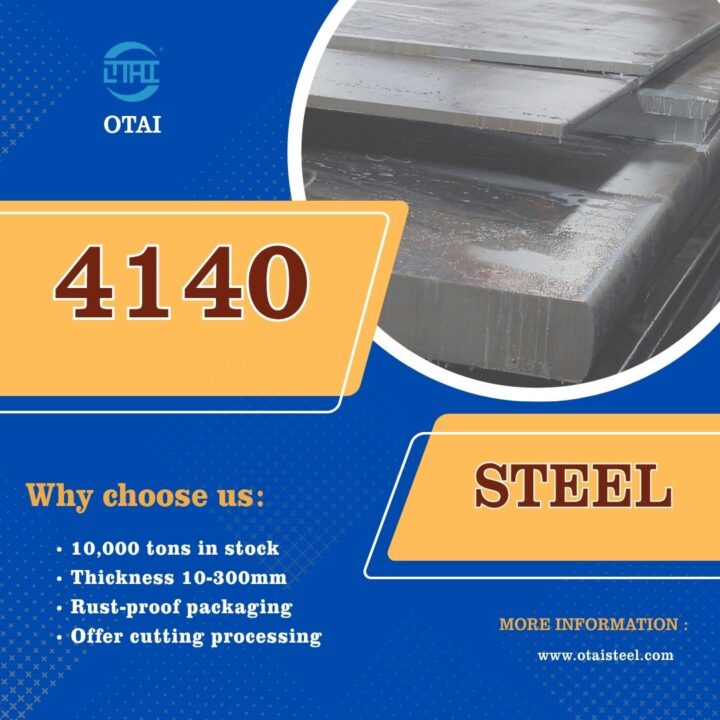
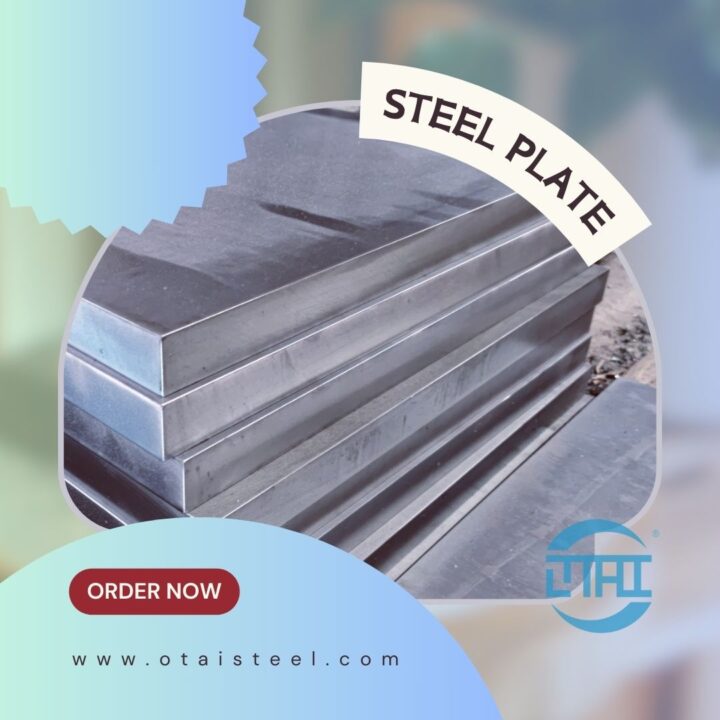
For product details and available 4140 steel plate options, buyers can refer to OTAI’s 4140 alloy steel plate product page and confirm current specifications and availability with the sales team.
📦 How Should Buyers Confirm 4140 Steel Quality Before Shipment?
Use a practical pre-shipment checklist
Before approving a 4140 steel shipment, buyers should review the material against the purchase order rather than relying only on the supplier’s product label. A structured checklist helps procurement teams identify missing information while there is still time to resolve discrepancies.
| Inspection item | What buyers should confirm |
|---|---|
| Grade and standard | The material designation, standard number, and edition match the order. |
| Carbon percentage | The reported result meets the applicable carbon requirement. |
| Complete chemistry | All specified alloying and residual elements meet their limits. |
| Heat traceability | Heat numbers on the MTC correspond to the delivered material. |
| Delivery condition | The supplied condition matches the agreed requirements. |
| Dimensions | Thickness, width, length, diameter, and tolerances meet the order. |
| Mechanical testing | Required hardness, tensile, impact, or other tests are documented. |
| Additional inspection | Ultrasonic testing or third-party inspection is completed when specified. |
| Packaging and documents | Rust prevention, labels, packing lists, and export documents are ready. |
Clarify nonconformance procedures in advance
If the MTC shows a carbon result outside the agreed range, buyers should pause acceptance and ask the supplier to investigate. The parties may need to review the original test report, heat identification, sampling method, or an independent laboratory result. Any retesting should follow an agreed procedure and should not replace the original result without a documented technical basis.
Likewise, if the chemistry meets the specification but the hardness or mechanical test fails, the issue requires a separate investigation. Chemical compliance and mechanical-property compliance are related, but they are not the same acceptance criterion.
Protect quality during international delivery
Steel quality control should continue through packing and shipment. Suppliers should use suitable rust-prevention measures, secure bundling, clear identification labels, and wooden cases or other protective packaging when the order requires them.
Before dispatch, buyers should confirm that the MTC, packing list, commercial invoice, and material markings provide consistent information. For orders involving several grades, sizes, or heats, clear separation and labeling can reduce receiving errors at the destination.
Ultimately, a reliable 4140 steel purchase combines compliant chemistry, suitable mechanical properties, traceable documentation, accurate dimensions, and appropriate export handling. Checking the carbon percentage on the MTC is an important part of that process, but it should always sit within a broader quality-verification plan.
🏢 Company Advantages
- 4140 steel plate stock: Plate thickness range of 4–380 mm, subject to current inventory confirmation.
- 4140 QT plate stock: Quenched-and-tempered plate thickness range of 13–200 mm, subject to current inventory confirmation.
- Large stock capacity: More than 10,000 tons of steel stock across the company’s product range.
- Cutting capability: 20 saw cutting machines support order-based cutting and customized dimensions.
- Machining services: CNC machining and grinding help customers prepare material for further manufacturing.
- Quality support: Material documentation, quality checks, ultrasonic testing, and third-party inspection support can be arranged according to order requirements.
- Customized service: Support for specified sizes, tolerances, processing requirements, and packaging arrangements.
- Export experience: Supplying international customers in more than 54 countries since 1999.
- One-stop supply: Support covering material selection, cutting, processing coordination, inspection, rust prevention, and export packaging.
- International customer experience: Experience serving global industrial buyers, including customers from major multinational companies.
When purchasing 4140 steel, buyers should provide the required standard, dimensions, delivery condition, quantity, and inspection requirements. OTAI can then help confirm suitable stock options, documentation, processing services, and shipment arrangements.
❓ Frequently Asked Questions
1. What is the carbon percentage in 4140 steel?
4140 steel commonly has a specified carbon range of 0.38–0.43% by weight. The often-quoted nominal value is approximately 0.40%, but the actual carbon content varies between heats. Buyers should check the applicable material specification and the actual analysis on the MTC.
2. Does every 4140 steel heat contain exactly 0.40% carbon?
No. Approximately 0.40% is a nominal value, not a fixed requirement for every heat. A result such as 0.39% or 0.42% may comply with a specification that permits 0.38–0.43%, provided all other requirements are also satisfied.
3. Can an XRF analyzer measure carbon in 4140 steel?
Ordinary handheld XRF analyzers generally cannot measure carbon in steel with the accuracy required for reliable carbon certification. Buyers who need to verify carbon content should request OES testing or another validated analytical method suitable for carbon measurement.
4. Does higher carbon content always make 4140 steel stronger?
No. Carbon contributes to strength and hardness, especially after suitable heat treatment, but it does not determine final mechanical properties by itself. Chromium, molybdenum, section size, processing history, quenching conditions, and tempering temperature also influence performance.
5. What should buyers check on a 4140 steel MTC?
Buyers should verify the grade, applicable standard and edition, heat number, carbon percentage, complete chemical analysis, delivery condition, and required mechanical test results. They should also confirm that the certificate can be traced to the actual plates or bars in the shipment.